The Omaha Tribe is considered by some anthropologists to be the most important and comprehensive study ever written about a Native American tribe. First published in 1911 as a report of the Bureau of American Ethnology, this classic treatise is based on twenty-nine years of study and observation in the field. "Nothing has been borrowed from other observers," Alice C. Fletcher asserts. "Only original material gathered directly from the native people has been used, and the writer has striven to make so far as possible the Omaha his own interpreter."Volume I is devoted to tribal origins and early history, beliefs about the environment, rites pertaining to the individual, tribal organization and government, the sacred pole, and the quest for food. Volume II, also available as a Bison Book, considers language, social life, music, religion, warfare, treatment of disease, and death and burial customs.
Originally published in 1911 by the Bureau of American Ethnology, The Omaha Tribe is an irreplaceable classic, the collaboration of a pioneering anthropologist and a prominent Omaha ethnologist.Volume II takes up the language, social life, music, religion, warfare, healing practices, and death and burial customs of the Omahas. The first volume covered tribal origins and early history, organization and government, various beliefs and rites, and food gathering.
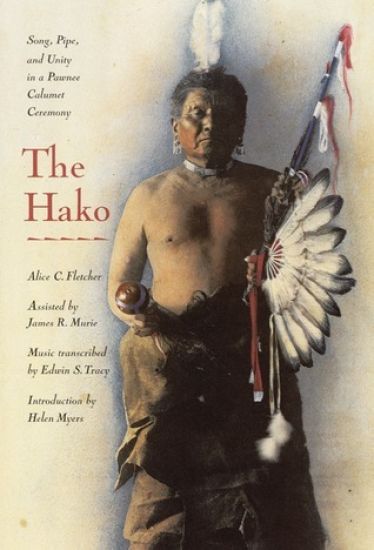
One of the more complex and widespread rituals practiced by Native American groups focused on the calumet, a sacred pipe with a feathered shaft. The Calumet Ceremony was a powerful ritual through which members of another tribe were adopted. It also promoted social unity within tribes and facilitated contact and trade between them. Perhaps the most detailed description of a Calumet Ceremony was recorded near the turn of the century by ethnographer Alice C. Fletcher. Fletcher witnessed the Hako, a version of the Calumet Ceremony practiced by the Chaui clan of the Pawnee. With the invaluable assistance of Tahirussawichi, a Pawnee Ku'rahus or ceremonial leader, and renowned Indian scholar James R. Murie, himself a Pawnee, the author describes in marvelous detail the intricate rhythm and structure of the ceremony. Each song of the Hako is transcribed, translated, interpreted by the Pawnee Ku'rahus, and later analyzed by the author. Fletcher concludes that the Hako promised longevity, fertility, and prosperity to individuals and worked to insure "friendship and peace" between clans and tribes.The Hako, was originally published in 1904.
Explore the rich tapestry of Native American culture with Alice C. Fletcher's "Indian Games and Dances with Native Songs." This meticulously prepared edition offers a fascinating glimpse into the rituals, songs, and dances of indigenous peoples across North America. Delve into the heart of Native American music and its integral role in community life. Fletcher's work provides invaluable insight into the cultural anthropology of various tribes, documenting their traditions and customs through the lens of ethnomusicology. Discover the significance of Indian dance as a form of storytelling, spiritual expression, and communal celebration. This book preserves a vital part of North American history, offering a deep appreciation for the traditions that have shaped the continent. A timeless resource for anyone interested in indigenous cultures and their artistic expressions.This work has been selected by scholars as being culturally important, and is part of the knowledge base of civilization as we know it.This work is in the public domain in the United States of America, and possibly other nations. Within the United States, you may freely copy and distribute this work, as no entity (individual or corporate) has a copyright on the body of the work.Scholars believe, and we concur, that this work is important enough to be preserved, reproduced, and made generally available to the public. We appreciate your support of the preservation process, and thank you for being an important part of keeping this knowledge alive and relevant.
Explore the rich tapestry of Native American culture with Alice C. Fletcher's "Indian Games and Dances with Native Songs." This meticulously prepared edition offers a fascinating glimpse into the rituals, songs, and dances of indigenous peoples across North America. Delve into the heart of Native American music and its integral role in community life. Fletcher's work provides invaluable insight into the cultural anthropology of various tribes, documenting their traditions and customs through the lens of ethnomusicology. Discover the significance of Indian dance as a form of storytelling, spiritual expression, and communal celebration. This book preserves a vital part of North American history, offering a deep appreciation for the traditions that have shaped the continent. A timeless resource for anyone interested in indigenous cultures and their artistic expressions.This work has been selected by scholars as being culturally important, and is part of the knowledge base of civilization as we know it.This work is in the public domain in the United States of America, and possibly other nations. Within the United States, you may freely copy and distribute this work, as no entity (individual or corporate) has a copyright on the body of the work.Scholars believe, and we concur, that this work is important enough to be preserved, reproduced, and made generally available to the public. We appreciate your support of the preservation process, and thank you for being an important part of keeping this knowledge alive and relevant.
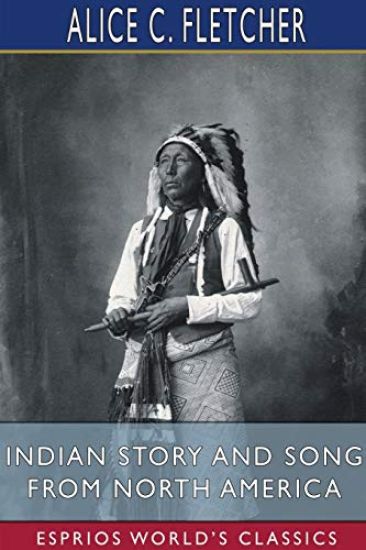
Explore the rich tapestry of Native American music and folklore with Alice C. Fletcher's "Indian Story and Song from North America." This enduring work delves into the songs and musical traditions of the Indigenous peoples of North America, offering a valuable glimpse into their cultural heritage. A seminal text in ethnomusicology and Indigenous studies, this collection preserves authentic melodies and narratives, providing insights into the history, customs, and spiritual beliefs of various tribes. Fletcher's meticulous research captures the essence of Indian music, presenting a unique and powerful record of a vibrant cultural landscape. Journey through captivating stories and poignant songs, carefully documented to retain their original beauty and significance. Perfect for anyone interested in the diverse musical heritage of North America, "Indian Story and Song" remains a timeless resource for understanding and appreciating the enduring legacy of Native American traditions. This edition is a faithful print republication of a historically significant work.This work has been selected by scholars as being culturally important, and is part of the knowledge base of civilization as we know it.This work is in the public domain in the United States of America, and possibly other nations. Within the United States, you may freely copy and distribute this work, as no entity (individual or corporate) has a copyright on the body of the work.Scholars believe, and we concur, that this work is important enough to be preserved, reproduced, and made generally available to the public. We appreciate your support of the preservation process, and thank you for being an important part of keeping this knowledge alive and relevant.
Explore the rich tapestry of Native American music and folklore with Alice C. Fletcher's "Indian Story and Song from North America." This enduring work delves into the songs and musical traditions of the Indigenous peoples of North America, offering a valuable glimpse into their cultural heritage. A seminal text in ethnomusicology and Indigenous studies, this collection preserves authentic melodies and narratives, providing insights into the history, customs, and spiritual beliefs of various tribes. Fletcher's meticulous research captures the essence of Indian music, presenting a unique and powerful record of a vibrant cultural landscape. Journey through captivating stories and poignant songs, carefully documented to retain their original beauty and significance. Perfect for anyone interested in the diverse musical heritage of North America, "Indian Story and Song" remains a timeless resource for understanding and appreciating the enduring legacy of Native American traditions. This edition is a faithful print republication of a historically significant work.This work has been selected by scholars as being culturally important, and is part of the knowledge base of civilization as we know it.This work is in the public domain in the United States of America, and possibly other nations. Within the United States, you may freely copy and distribute this work, as no entity (individual or corporate) has a copyright on the body of the work.Scholars believe, and we concur, that this work is important enough to be preserved, reproduced, and made generally available to the public. We appreciate your support of the preservation process, and thank you for being an important part of keeping this knowledge alive and relevant.
Alice Cunningham Fletcher (March 15, 1838 in Havana - April 6, 1923 in Washington, DC.) was an American ethnologist, anthropologist, and social scientist who studied and documented American Indian culture. Fletcher taught school and later became a public lecturer to support herself, arguing that anthropologists and archaeologists were best at uncovering ancient history of humans. She also advocated for the education of Native Americans. Fletcher credited Frederic Ward Putnam for stimulating her interest in American Indian culture and began working with him at the Peabody Museum of Archaeology and Ethnology, Harvard University. She studied the remnants of the Indian civilization in the Ohio and Mississippi valleys, and became a member of the Archaeological Institute of America in 1879.
This is a ground-breaking study of one of America's leading designers of nineteenth-century publishers' highly decorated bookbindings.This fully illustrated volume documents the life and work of Alice C. Morse. Included in this book is a biography of Morse by Grolier Club member Mindell Dubansky and two essays on her work and influence by scholars in the field of nineteenth-century decorative arts, followed by a comprehensive and lavishly illustrated survey of all the known works by the designer drawn from the personal collection of Mindell Dubansky and from the resources of the Metropolitan Museum of Art.Alice C. Morse (1863-1961) was a prolific and versatile designer during the heyday of the American Decorative Arts Movement. Though her fame has waned since the early twentieth century, her work will be familiar to admirers of artist-designed publishers' bindings of the period 1890-1910. She came to prominence during the late 1880s, when a small group of exceptional American publishers began to commission artist-designers such as Morse, and her contemporaries Sarah Wyman Whitman and Margaret Armstrong, to design the covers of case bindings. The Grolier Club exhibition marked the first time since 1923 that Morse's work was displayed to the public; and this present volume is the first to collect all of Morse's book design work, as well as literary posters and other ephemeral materials relating to her work.
Multiple (or extended) exponence is the occurrence of multiple realizations of a single morphosemantic feature, bundle of features, or derivational category within a word. This book provides data and direction to the discussion of ME, which has gone in a variety of directions and suffers from lack of evidence. Alice Harris addresses the question of why ME is of interest to linguists and traces the discussion of this concept in the linguistic literature. The four most commonly encountered types of ME are characterized, with copious examples from a broad variety of languages; these types form the basis for discussion of the processing of ME, the acquisition of ME, the historical development of ME, and analysis of ME. The book addresses some of the most important questions involving ME, including why it exists at all.