This story collection of five stories is composed of five different elements, like Panchatatva or, say, Panchamrit. Each story underlines different aspects of life. Some events or characters become so real that a particular aspect of it does not divert the reader's attention quickly. Each story in this collection will repeatedly break the myth of your mind. Every story gives something different, something new.
In this book, Alok will take you to a self-decoding journey where you will not only understand who you are and what you want but also start progressively realizing them with simple but impactful actions.This book is neither a self-help book nor a book of great ideas to get what you want. This book is a ticket to your long journey towards a successful (I will call it meaningful) life. As the famed Earl Nightingale once said, "Success is the progressive realization of a worthy ideal, I am calling this book the pathway to that progressive realization."Alok lives by the philosophy that the world is full of good people, and they will come to help you if you dream and dare to ask. This book will help in opening you up for that big mind change."This is not just a self-help book but a Talking Book towards your goals. I like the simplicity of the language used by Alok."-Anuja Deshpande (IIM, Lucknow)
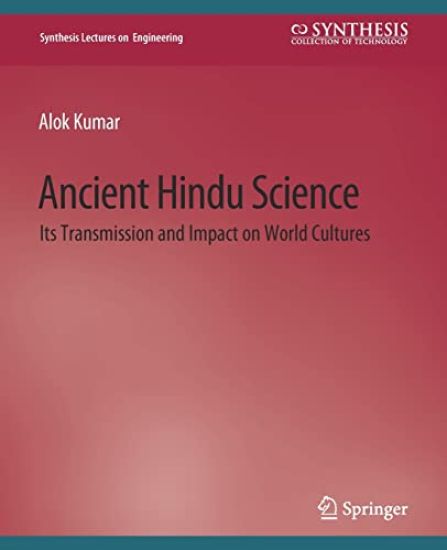
To understand modern science as a coherent story, it is essential to recognize the accomplishments of the ancient Hindus. They invented our base-ten number system and zero that are now used globally, carefully mapped the sky and assigned motion to the Earth in their astronomy, developed a sophisticated system of medicine with its mind-body approach known as Ayurveda, mastered metallurgical methods of extraction and purification of metals, including the so-called Damascus blade and the Iron Pillar of New Delhi, and developed the science of self-improvement that is popularly known as yoga. Their scientific contributions made impact on noted scholars globally: Aristotle, Megasthenes, and Apollonius of Tyana among the Greeks; Al-Biruni, Al-Khwarizmi, Ibn Labban, and Al-Uqlidisi, Al-Ja?iz among the Islamic scholars; Fa-Hien, Hiuen Tsang, and I-tsing among the Chinese; and Leonardo Fibbonacci, Pope Sylvester II, Roger Bacon, Voltaire and Copernicus from Europe. In the modern era, thinkers and scientists as diverse as Ralph Waldo Emerson, Johann Wolfgang von Goethe, Johann Gottfried Herder, Carl Jung, Max Müller, Robert Oppenheimer, Erwin Schrödinger, Arthur Schopenhauer, and Henry David Thoreau have acknowledged their debt to ancient Hindu achievements in science, technology, and philosophy. The American Association for the Advancement of Science (AAAS), one of the largest scientific organizations in the world, in 2000, published a timeline of 100 most important scientific finding in history to celebrate the new millennium. There were only two mentions from the non-Western world: (1) invention of zero and (2) the Hindu and Mayan skywatchers astronomical observations for agricultural and religious purposes. Both findings involved the works of the ancient Hindus. The Ancient Hindu Science is well documented with remarkable objectivity, proper citations, and a substantial bibliography. It highlights the achievements of this remarkable civilization through painstaking research of historical and scientific sources. The style of writing is lucid and elegant, making the book easy to read. This book is the perfect text for all students and others interested in the developments of science throughout history and among the ancient Hindus, in particular.
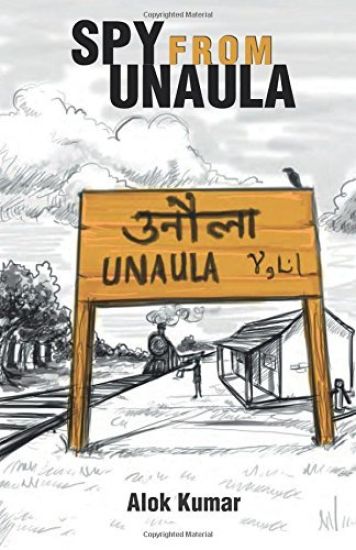
"Spy from Unaula takes us to a small sleepy village of Unaula and shows the simple joys, trials and tribulations of Ramchandra's life.Coming from meager means, Ramchandra overcomes unimaginable odds and his dexterous attitude lets him elevate himself from a lowly life. Having lost his mother early, and father averse to the idea of education, he seeks help from his rebellious brother to be able to pursue his dream of being well educated and a career of an officer in the armed forces. This dream did not come easy as the social obligations and customs of those times compelled him to take drastic decisions to fulfill his dreams. In search of a livelihood and bagful of dreams he travels to the ""City of Dreams"" of his time in search of opportunities that would fulfill his dreams.From the famous Mills of Mumbai to being a cycle rickshaw driver in Agra, he consistently moves slowly and steadily towards his goals without complaining of any hardships he bore. Luck favours the brave, and once opportunity struck he seized the opportunity to train himself in the skills needed to land a government job. Starting from the lowest civilian ranks he moves up with an exciting job in Military Intelligence, eventually becoming a spy.The three wars of 1962 with China and 1965 and 1971 with Pakistan were action packed for Ramchandra. Breaking codes, analyzing information over radio to interrogating the war prisoners and eventually participating in the liberation of Bangladesh in 1971 opens up the secret world of intelligence and spying in those times.From war duties to political unrest and busting espionage rings in the country, Ramchandra never failed to find excitement on his job, while his struggle to ensure that his children found the best education, which he himself struggled to get, never ceased inspite of all odds. This book will appeal to readers with its sharp-drawn perspective of life and the journey of a man with a dream and a lot of action from the secret quarters of covert intelligence agencies."
DESCRIPTION Understanding how users think, feel, and interact with digital products is crucial for creating designs that not only look good but also deliver exceptional user satisfaction. This book will help designers learn the fundamentals of design through the lenses of psychology, gamification, and biases. It includes numerous examples from actual mobile apps and websites, both Indian and global, allowing readers to connect the dots and deeply understand the psychological reasons behind various designs.Readers will understand how Fitt's law, Hick's law, and Miller's law shape layouts and decisions. They will also learn to use Gestalt principles for intuitive interfaces. You will discover how user behavior is influenced by the Zeigarnik effect, Halo effect, and Goal Gradient effect. The book will help you discover tips and tricks for gamifying your product, leading to better user acquisition and retention. Readers will learn about key biases that can impact design decisions. Featuring examples from well-known brands like Myntra, LinkedIn, Airbnb, MakeMyTrip, Swiggy, Zepto, Amazon, Flipkart, Walmart, and many more, this book connects with the products you use daily, helping you apply similar insights to your designs.Non-designers will also benefit from this book, as it provides valuable insights into the thought processes behind the design of physical and digital products, enabling them to observe and appreciate the design elements in their surroundings.KEY FEATURES ● Learn design with examples from booming startups and digital products.● Learn how the fundamentals of psychology help enhance design and process.● Learn gamification with the product's examples you use everyday.WHAT YOU WILL LEARN● Understand the psychological reasons behind every design.● Predict user behavior and make informed design decisions.● Motivate users to perform specific tasks.● Apply gamification theories to enhance user adoption.● Avoid biases during design development and review.WHO THIS BOOK IS FORThis book is intended for UX designers, UI designers, graphic designers, product managers, and any other designers interested in understanding their audience better.
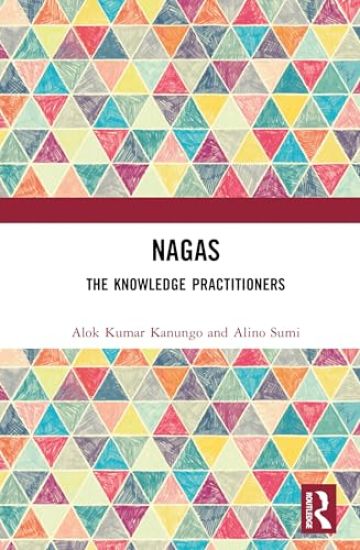
Nagas addresses the nature-embedded belief systems and subsistence strategies of the Naga people. Knowledge systems that were once spread across the Naga communities but are now confined to specific villages and communities, are examined with respect and support for the sustainable futures of Indigenous peoples. Chapters cover various Naga crafts-ancient sciences through representative case studies featuring Naga communities who still practice the same indigenous methods. Through exploring the adherence to these practices, the volume reflects on the Naga’s original worldview and is an indispensable guide to their origins. Such practices are vanishing rapidly, and this book helps preserve the knowledge for future generations. Providing the invaluable perspectives of a scholar who has devoted his life to the study of the Nagas and an Indigenous researcher with unique experiences of growing up in Nagaland, this book is suitable for researchers in archaeology, anthropology and Indigenous Studies.
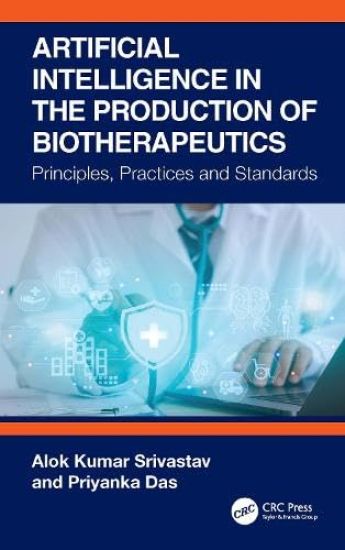
The transformative role of artificial intelligence (AI) in modern biomanufacturing, focusing on key areas such as Process Analytical Technology (PAT), Good Manufacturing Practice (GMP) compliance, predictive analytics, and AI-driven quality systems. It bridges cutting-edge AI applications with the complexities of biotherapeutic production, offering insights into automation, real-time monitoring, and process optimization.Delving into the core of biomanufacturing, the book provides a structured journey through its critical phases. It begins with an introduction to modern biomanufacturing principles, quality-by-design approaches, and the integration of AI. Subsequent chapters examine raw material management, lean manufacturing practices, and the application of predictive analytics to optimize supply chains. Readers will explore advanced tools such as AI-enhanced data acquisition in PAT, automated standard operating procedures (SOPs), and AI-driven process controls for fermenters and chromatography systems. The text also addresses GMP essentials, including personnel management, hygienic facility design, and pharmaceutical water systems. Key chapters highlight AI's role in validation processes, sterile packaging, and regulatory compliance, referencing global guidelines from organizations such as the WHO, FDA, and ICH. Real-world case studies featuring therapeutic proteins, monoclonal antibodies, and vaccines underscore the practical applications of AI in scaling and maintaining biotherapeutic production.This book equips readers with a comprehensive understanding of AI's potential to enhance efficiency, accuracy, and compliance in biomanufacturing. Whether you are a professional, researcher, or student, this guide offers actionable insights into leveraging AI to revolutionize biotherapeutic production while adhering to the highest industry standards.What You Will Learn· Understand how AI enhances every phase of biotherapeutic production, from raw material management to regulatory compliance, optimizing efficiency, accuracy, and quality.· Explore the role of AI in advanced data acquisition, process control, and continuous improvement, including applications in fermenters, flow filtration, and chromatography systems.· Gain insights into leveraging AI for automating standard operating procedures (SOPs), predictive maintenance, quality assurance, and adhering to global GMP standards like WHO and FDA guidelines.· Learn how AI transforms upstream and downstream processes, ensures sterility in packaging, and supports case studies on therapeutic proteins, monoclonal antibodies, and human vaccines.· Discover the potential of AI in shaping the future of biomanufacturing, including challenges, data security, and the ethical implications of AI-driven automation.
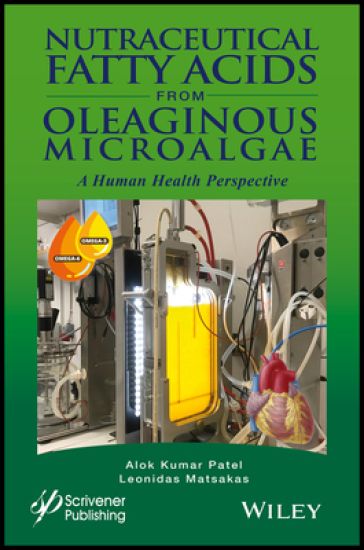
Over the past several years, extensive research has been done on the microbial production of polyunsaturated fatty acids (PUFA). Regardless, research on the oleaginous microalgae used as feedstock for biofuels production and the overall story about the production of nutraceutical fatty acids from oleaginous microalgae has been very limited. This volume provides an exclusive insight on the production of nutraceutical fatty acids from oleaginous microalgae and their role on human health. Some saturated and monounsaturated fatty acids can be synthesized by humans, whereas long-chain polyunsaturated fatty acids (PUFAs) such as a-linolenic acid and linoleic acid cannot and are deemed essential. The products of these acids, such as DHA, which is important for early visual and neurological development, are extremely important to human health. Replacing SFAs with omega-3 and omega-6 fatty acids in the diet reduce the risk of cardiovascular diseases and prevent Alzheimer's, bipolar disorder, and schizophrenia, among other benefits. The ever-rising global demand for omega-3 & 6 PUFAs, however, cannot be met solely by fish oil, due to diminishing fish stocks and pollution of marine ecosystems, which has led to increased interest in alternative sustainable sources. Vegetable oils from genetically engineered plant oilseeds and microorganisms are two potential alternatives to fish oil, even though omega-3 PUFAs are highest in the latter. Although transgenic plants present numerous advantages, their production is dependent on seasonal and climatic conditions and the availability of arable land. Moreover, there are public concerns regarding the cultivation of transgenic crops in open ecosystems. These, together with regulatory issues restrict the large-scale production of genetically modified crops. Microorganisms, however, are known natural producers of microbial oils similar to those obtained from plants and animals and a possible source of nutritionally important omega-3 & 6 PUFAs. This groundbreaking volume presents invaluable new research on essential fatty acids, their production from various oleaginous microorganisms, biochemical and metabolic engineering to improve PUFAs content in oil, extraction and purification of omega 3 fatty acids, and the current market scenario. Whether a veteran engineer or scientist using it as a reference or a professor using it as a textbook, this outstanding new volume is a must-have for any engineer or scientist working in food science.
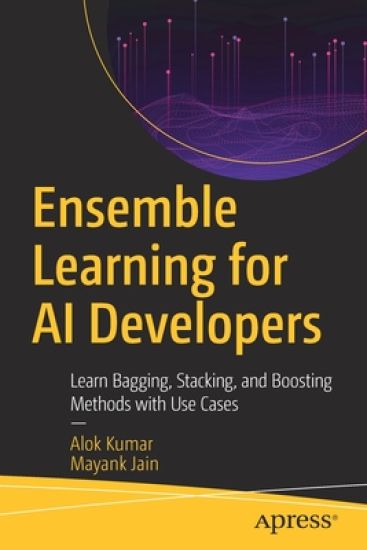
Use ensemble learning techniques and models to improve your machine learning results.Ensemble Learning for AI Developers starts you at the beginning with an historical overview and explains key ensemble techniques and why they are needed. You then will learn how to change training data using bagging, bootstrap aggregating, random forest models, and cross-validation methods. Authors Kumar and Jain provide best practices to guide you in combining models and using tools to boost performance of your machine learning projects. They teach you how to effectively implement ensemble concepts such as stacking and boosting and to utilize popular libraries such as Keras, Scikit Learn, TensorFlow, PyTorch, and Microsoft LightGBM. Tips are presented to apply ensemble learning in different data science problems, including time series data, imaging data, and NLP. Recent advances in ensemble learning are discussed. Sample code is provided in the form of scripts and the IPython notebook.What You Will LearnUnderstand the techniques and methods utilized in ensemble learningUse bagging, stacking, and boosting to improve performance of your machine learning projects by combining models to decrease variance, improve predictions, and reduce biasEnhance your machine learning architecture with ensemble learningWho This Book Is ForData scientists and machine learning engineers keen on exploring ensemble learning