Kirjojen hintavertailu. Mukana 11 244 527 kirjaa ja 12 kauppaa.

Kirjahaku

Etsi kirjoja tekijän nimen, kirjan nimen tai ISBN:n perusteella.

1000 tulosta hakusanalla Ambrose Edson

Ambrose's Patriarchs

Ambrose's Patriarchs

Marcia L. Colish

University of Notre Dame Press
2005
nidottu
In this welcome new book Marcia L. Colish offers the only monograph-length study of the patriarch treatises of Ambrose of Milan (c. 340-397), in which he develops, for the first time in the patristic period, an ethics for the laity. Ambrose the ethicist has been viewed primarily as the author of advice to those with special callings in the church, such as priests, widows, and consecrated virgins. His views have been characterized as advocating asceticism and promoting a Platonic view of human nature, in which the body is a moral problem. Ambrose's patriarch treatises, argues Colish, are instead aimed at lay people who did not have special callings in the church, but who led active lives in the world as spouses, parents, heads of households, professionals, and citizens. These treatises reveal a different side of Ambrose and show that he developed an ethics of moderation based on an Aristotelian and Stoic anthropology, which he modified in the light of biblical ethics and St. Paul's view of human nature. Colish's analysis sharply revises previous estimates of Ambrose the ethicist through a careful consideration of the patriarch treatises in their historical context, as Lenten sermons delivered by Ambrose to the catechumens in his Milanese church whom he was preparing during Lent for their coming Easter baptism. The pastoral context and intended audience of these treatises have largely been ignored in previous scholarship. Colish contends that when the treatises are read as Ambrose intended for them to be received, as a corpus of works aimed at the conversion of pagan Roman adults to Christianity, Ambrose's vision of a Christian ethics for the common man emerges.
Ambrose Bierce Takes on the Railroad

Ambrose Bierce Takes on the Railroad

Daniel Lindley

Praeger Publishers Inc
1999
sidottu
An account of California journalist and wit Ambrose Bierce and his struggle with the railroad octopus controlled by the Big Four (Collis P. Huntington, Leland Stanford, Charles Crocker, and Mark Hopkins). This is the first book to look at Bierce's early muckraking campaign in depth through Bierce's acid journalism and the railroad's private and public reactions. After a brief literature review and biography of Bierce, one of America's greatest wits, journalists, and short-story writers, the study turns to his thirty-year battle with the Central Pacific Railroad, which controlled much of California's economy and politics, often through bribery of politicians and newspaper editors and publishers. Lindley looks at the initial funding of the railroad through the U.S. government, the development of railroads as symbols of hope and progress, and the eventual corruption of that optimistic outlook by railroad owners and politicians.Bierce attacked the railroads in his columns during his tenure at three San Francisco periodicals, the Argonaut, the Wasp, and the Examiner. His efforts culminated in a trip to Washington, D.C., in 1896 to cover the funding bill debate in Congress, during which railroad officials attempted to avoid repaying millions of dollars in government loans. Bierce did not consider himself a muckraker. He derided the generation of Progressive journalists who followed him a decade after he ended his campaign against the railroad. Yet, Bierce's journalism was a precursor of what is popularly known as the muckraking period, 1902-1914.
Ambrose Bierce

Ambrose Bierce

S. T. Joshi; David E. Schultz

Greenwood Press
1999
sidottu
Ambrose Bierce is well known to readers as the author of The Devil's Dictionary (1906) and numerous short stories, such as the Civil War tales gathered in Tales of Soldiers and Civilians (1891) and the horror stories collected in Can Such Things Be? (1893). But, in his own day, he was best known as a prolific and fearless jounalist, and in the 40 years of his literary career he wrote thousands of articles for newspapers and magazines in San Francisco, London, and elsewhere. Most of the articles and poems that Bierce published in his own 12-volume Collected Works (1909-12) first appeared in his newspaper columns, as did his celebrated tales. With the growing scholarly interest in Bierce, these contributions are eliciting more attention.This bibliography is the first to attempt an exhaustive catalog of Bierce's entire body of published work. While the volume includes a chapter of separate publications by Bierce, such as individual books, its most important feature is a chapter listing entries for his contributions to books and periodicals. These entries identify the first appearances of his stories, articles, and poems. An additional chapter lists reprints of his works, and the volume also provides information about manuscript holdings. Joshi and Schultz demonstrate that in addition to being a master short story writer, fabulist, and epigrammatist, Bierce may also have been the leading American journalist of the 19th century.
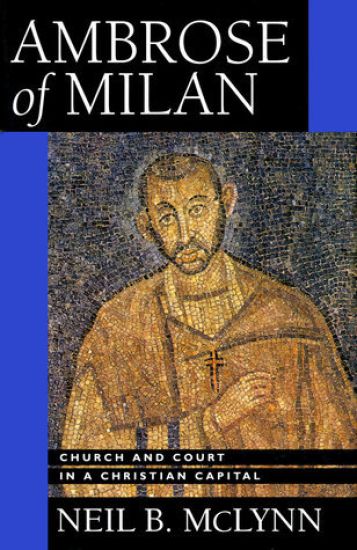
Ambrose of Milan

Ambrose of Milan

Neil B. McLynn

University of California Press
1994
sidottu
In this new and illuminating interpretation of Ambrose, bishop of Milan from 374 to 397, Neil McLynn thoroughly sifts the evidence surrounding this very difficult personality. The result is a richly detailed interpretation of Ambrose's actions and writings that penetrates the bishop's painstaking presentation of self. McLynn succeeds in revealing Ambrose's manipulation of events without making him too Machiavellian. Having synthesized the vast complex of scholarship available on the late fourth century, McLynn also presents an impressive study of the politics and history of the Christian church and the Roman Empire in that period. Admirably and logically organized, the book traces the chronology of Ambrose's public activity and reconstructs important events in the fourth century. McLynn's zesty, lucid prose gives the reader a clear understanding of the complexities of Ambrose's life and career and of late Roman government.
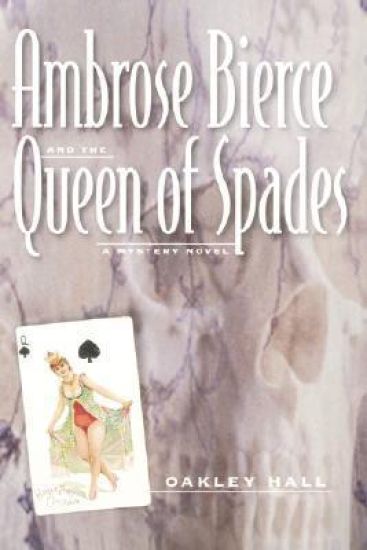
Ambrose Bierce and the Queen of Spades

Ambrose Bierce and the Queen of Spades

Oakley Hall

University of California Press
1998
sidottu
The Morton Street Slasher has been leaving the corpses of his victims around San Francisco's Union Square. On the women's naked bodies are spade playing cards. The city's infamous newspaperman, Ambrose Bierce, blames the rash of murders on his old enemy, the Southern Pacific Railroad. A naive reporter at Bierce's Hornet pursues the case, uncovering conspiracy at every turn. In a fast-paced novel that is a combination of murder mystery, historical fiction, and quirky biography, Oakley Hall draws the reader into 1880s San Francisco and the changing world that was California in the latter part of the nineteenth century. Local and state politics, the exploitation of the Chinese, the power of the mining and railroad barons, and San Francisco's colorful history provide a backdrop for this irresistible thriller. The novel's chapters are introduced by appropriate excerpts from Bierce's The Devil's Dictionary and narrated by the young reporter Tom Redmond. Redmond is interested in the murders because of his attraction to a woman threatened by the Slasher, and Bierce encourages him because of his personal vendetta against the Big Four of the Railroad. Bierce's misogyny is an influence as well, which Hall uses to advantage in portraying the enigmatic journalist. Hall knows his territory and his characters well. The sights and smells of late-nineteenth-century California are cleverly evoked, and the story's key players are refreshingly authentic. Bierce brandishes his famed cynicism with all the aplomb of the sharp-eyed, sharp-witted newspaperman he was. Cameo appearances by such California worthies as Ina Coolbrith and Joaquin Miller add to the novel's historical richness. Intelligent, gripping, and often quite funny, Ambrose Bierce and the Queen of Spades will satisfy any reader who craves adventure, mystery, romance, and fine writing.
Ambrose of Milan

Ambrose of Milan

Neil B. McLynn

University of California Press
2014
pokkari
In this new and illuminating interpretation of Ambrose, bishop of Milan from 374 to 397, Neil McLynn thoroughly sifts the evidence surrounding this very difficult personality. The result is a richly detailed interpretation of Ambrose's actions and writings that penetrates the bishop's painstaking presentation of self. McLynn succeeds in revealing Ambrose's manipulation of events without making him too Machiavellian. Having synthesized the vast complex of scholarship available on the late fourth century, McLynn also presents an impressive study of the politics and history of the Christian church and the Roman Empire in that period. Admirably and logically organized, the book traces the chronology of Ambrose's public activity and reconstructs important events in the fourth century. McLynn's zesty, lucid prose gives the reader a clear understanding of the complexities of Ambrose's life and career and of late Roman government.
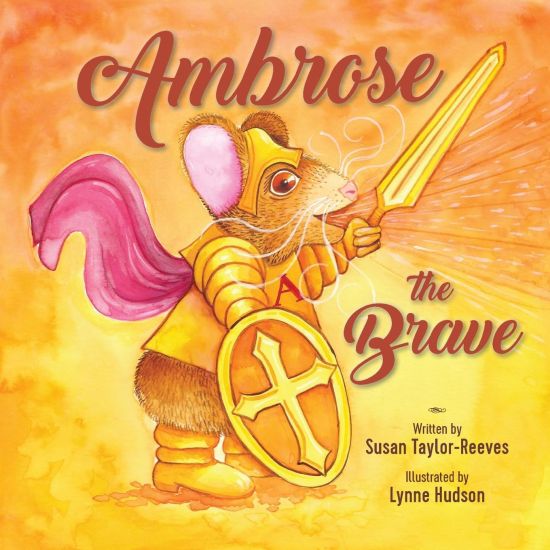
Ambrose the Brave

Ambrose the Brave

Susan Taylor-Reeves

Ark House Kids
2023
pokkari
Ambrose the Brave is made different.Follow his amazing journey, and as you do, you will see where he gets his strength from."If you look inside, you can find your strength "
The Complete Short Stories of Ambrose Bierce

The Complete Short Stories of Ambrose Bierce

Ambrose Bierce; Cathy N. Davidson

Bison Books
1984
pokkari
Before he trailed off into the wilds of Mexico, never to be heard from again, Ambrose Bierce achieved a public persona as "bitter Bierce" and "the devil's lexicographer." He left behind a nasty reputation and more than ninety short stories that are perfect expressions of his sardonic genius. Brought together in this volume, these stories represent an unprecedented accomplishment in American literature. In their iconoclasm and needle-sharp irony, their formal and thematic ingenuity and element of surprise, they differ markedly from the fiction admired in Bierce's time. Readers familiar with the classic An Occurrence at Owl Creek Bridge will want to turn to Bierce's other Civil War stories. Also included here are his horror stories, among them The Death of Halpin Frayser and The Damned Thing, and such tall tales as Oil of Dog and A Cargo of Cat.
The Civil War Short Stories of Ambrose Bierce
In The Devil's Dictionary Ambrose Bierce defined "war" as "a by-product of the arts of peace." A Civil War veteran, Bierce had absolutely no illusions about "courage," "honor," and "glory" on the battlefield. These stories form one of the great antiwar statements in American literature. Included here are the classic An Occurrence at Owl Creek Bridge, Chickamauga, The Mocking Bird, The Coup de Grâce, Parker Anderson, Philosopher, and other stories celebrated for their intensity, startling insight, and mastery of form.
Poems of Ambrose Bierce

Poems of Ambrose Bierce

Ambrose Bierce

University of Nebraska Press
1996
pokkari
Ambrose Bierce is one of the most colorful figures in American literary history. A writer whose Devil's Dictionary remains the delight of misanthropes and fans of satire throughout the English-speaking world, he was also a master of the short story form. From the late 1860s through the early 1900s, he worked as a journalist, gaining wide renown in the 1890s and 1900s as a satirical columnist for William Randolph Hearst's chain of newspapers. In 1913 Bierce traveled to Mexico and joined Pancho Villa's army as an observer. He disappeared late that year and his fate has been a matter of dispute ever since. The poems that Bierce wrote throughout his career are less well known than his stories, journalistic pieces, and aphoristic observations on human folly. Nevertheless, his work as a poet, as critic Donald Sidney-Fryer has argued, "clearly merits the attention of the discriminating lover and student of poetry." Varied in form and subject matter, most of his poems are (not surprisingly) satires.This volume contains a generous selection of Bierce's poems; they are alternately ironic, melancholy, bitter, and wickedly amusing. There are also fifteen essays and letters on poetry, poets, and such topics as "Wit and Humor" and "The Passing of Satire." Certainly there have been few authors more intimately familiar with wit and satire than the brilliant, iconoclastic Bierce. As editor M. E. Grenander makes plain in her introduction, both are abundantly present in this collection of "some of the most remarkable verse in American literary history."
Ambrose of Milan?s Method of Mystagogical Preaching

Ambrose of Milan?s Method of Mystagogical Preaching

Craig A. Satterlee

Liturgical Press
2002
pokkari
Mystagogy, or sustained reflection on baptism and the Eucharist, is the method of postbaptismal catechesis used in the R.C.I.A. In Ambrose of Milan's Method of Mystagogical Preaching, Craig Satterlee provides a method of mystagogical preaching for today's Church by looking at the sermons of Ambrose of Milan. Confronted by a culture that increasingly cannot be counted on to reinforce the Christian faith or participate in the formation of Christians, the Church today questions the nature of the connection between Word and Sacrament, and liturgy and mission. In addressing these same questions, the catechumenate of the early Church took seriously that they lived in a culture at odds with the faith, particularly the period of mystagogy which is characterized by sermons that probe the rites of initiation. Their biblical importance for Christian life, continues to hold great potential for the Church today. However, it remains largely undefined. By asking such questions as, what did Ambrose do and how did Ambrose do it? Satterlee explains that the best way to learn to preach mystagogicaly is by using a fourth-century mystagogue as our guide. In chapter one Satterlee establishes the need for mystagogy. Chapter two lays out the historical context of Ambrose and his church. Chapters three through eight are a series of six historical studies on Ambrose and his church that correspond to the components of a homiletic method. Chapter nine proposes a method of mystagogy for the contemporary church based on Ambrose's preaching. A brief biography of Saint Ambrose, history of the church of Milan, and a look at patristic exegesis are also included. Modeled after William Harmless'sAugustine and the Catechumenate, Ambrose of Milan's Method of Mystagogical Preaching serves as a companion volume to that work. Chapters are 'You saw what is seen, but not what is done': The Need for Mystagogy;" "'Having been renewed by baptism, hold fast to the style of life that befits those who have been washed clean': Setting the Stage;" "'I yield to my desire to teach': Ambrose: The Preacher;" "'This family clothed in white': The Newly Baptized of Milan: The Listeners;" "'I shall begin now to speak of the sacraments which you have received': Initiation in Milan: The Text;" "'Gather from the holy scriptures': Interpreting the Rites;" "'Milky speech': The Shape of Mystagogy;" "'But now my voice grows weak and time is running out': Mystagogy as Proclamation Event: Delivery;" "'We too are not without discernment': Discerning a Method of Mystagogical Preaching."Craig A. Satterlee, PhD, an ordained minister of the Evangelical Lutheran Church in America, is assistant professor of homiletics and co-director of the Doctor of Ministry program at the Lutheran School of Theology at Chicago. He is a contributing author of Worship,published by The Liturgical Press. "
Ambrose Bierce - American Writers 37

Ambrose Bierce - American Writers 37

Robert A. Wiggins

University of Minnesota Press
2009
nidottu
Ambrose Bierce - American Writers 37 was first published in 1964. Minnesota Archive Editions uses digital technology to make long-unavailable books once again accessible, and are published unaltered from the original University of Minnesota Press editions.
Ambrose Bierce's ""Civilians and Soldiers"" in Context

Ambrose Bierce's ""Civilians and Soldiers"" in Context

Donald Blume

Kent State University Press
2004
sidottu
Ambrose Bierce's In the Midst of Life, the second volume of The Collected Works of Ambrose Bierce, is hailed by critics and scholars alike as his most important literary work. In Ambrose Bierce's Civilians and Soldiers in Context: A Critical Study, Donald T. Blume refutes this and instead identifies Bierce's original 1892 collection as his most definitive and authoritative work. The two subsequent collections, appearing in 1898 and 1909, although containing subtle clues pointing back to the importance of the 1892 collection, are in their primary effect literary red herrings. This new study reveals that the nineteen stories that comprised the original Tales of Soldiers and Civilians consist of carefully developed and interrelated meanings and themes that can only be fully understood by examining the complex circumstances of their original productions. By considering each of the nineteen tales in the order in which they were first published and by drawing heavily on contemporary related materials, Blume re-creates much of original milieu into which Bierce carefully placed his short stories. Blume systematically examines many of Bierce's editing flaws, exposing that Bierce's decisions often weakened the original literary merits of his stories. Ultimately this story reveals, tale by tale and layer by layer, that the nineteen stories included in Bierce's 1892 collection were masterpieces of fiction, destined to become classics. Historians and Civil War enthusiasts, as well as literary scholars, will welcome this new study.