Kirjojen hintavertailu. Mukana 11 627 220 kirjaa ja 12 kauppaa.

Kirjahaku

Etsi kirjoja tekijän nimen, kirjan nimen tai ISBN:n perusteella.

1000 tulosta hakusanalla Amy E. Robillard

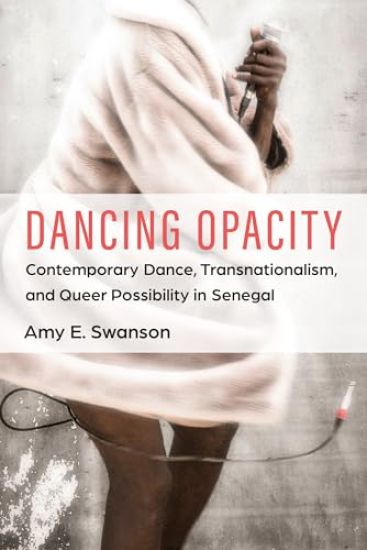
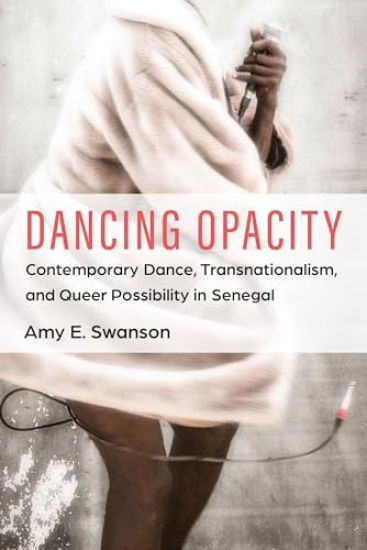
Dancing Opacity

Dancing Opacity

Amy E. Swanson

THE UNIVERSITY OF MICHIGAN PRESS
2025
nidottu
Amy Swanson’s Dancing Opacity chronicles the ways in which contemporary dancers in Senegal navigate the global contemporary dance circuit while challenging heteropatriarchal ideologies at home. A longstanding hub of African performing arts, Senegal was at the forefront of the explosion of contemporary dance across the continent at the turn of the twenty-first century. Swanson demonstrates how Senegalese choreographers and dancers contend with entrenched racialized prejudices about Africa outside the continent, while pushing back against the repressive regulations of gender and sexuality within Senegal. Drawing on the concept of opacity as a refusal to adhere to the colonial logic of transparency for dominant gazes, artists create work that is intentionally ambiguous with multiple layers of meaning that are not immediately transparent to all viewers to evade Senegalese cultural norms that govern gender and sexual expression, while challenging their international audiences to expand their perceptions of African dance. Drawing on ethnographic research, Dancing Opacity highlights Senegalese artists’ accounts of their pedagogies, performances, aesthetics, and lived realities, as well as Africanist conceptions of gender, sexuality, and queerness that have yet to be applied to dance. Swanson presents contemporary dance as an intercultural and intercontinental entanglement shaped in large part by artists of color in the Global South, moving dance studies away from narratives depicting the progressive avant-garde as the prerogative of the white West while confining Africa as merely a source of dance traditions.
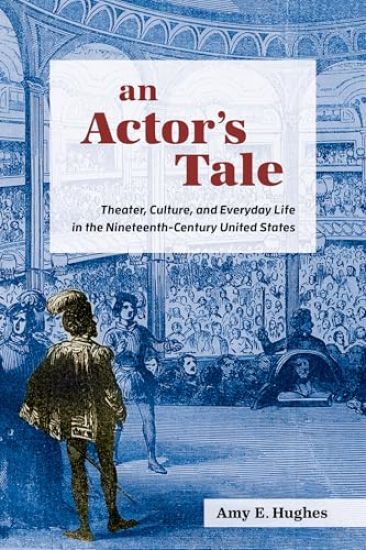
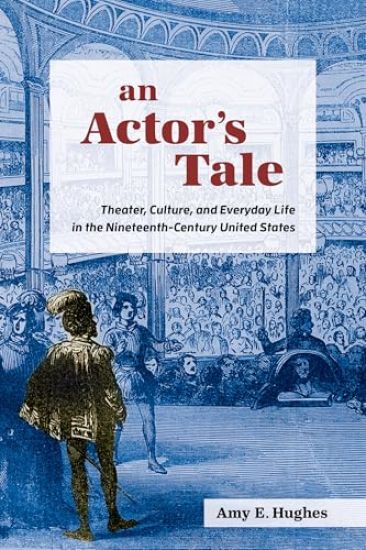
An Actor's Tale

An Actor's Tale

Amy E. Hughes

THE UNIVERSITY OF MICHIGAN PRESS
2025
nidottu
Harry Watkins was no one special. During a career that spanned four decades, this nineteenth-century actor yearned for fame, but merely skirted the edges of it. He performed alongside the brightest stars, wrote scores of plays, and toured the United States and England, but he never became a household name. Inspired by this average performer's life and labor, An Actor's Tale offers an alternative history of nineteenth-century theater, focusing on the daily rhythms and routines of theatrical life rather than the celebrated people, plays, and exceptional events that tend to dominate histories of US theater and performance. In the process, Hughes asks uncomfortable questions about the existence, predominance, and erasure of White male mediocrity in American culture, both in the past and present. When historians focus only on performers and plays with artistic "merit," what communities, perspectives, and cultural trends remain invisible? How did men like Watkins advance themselves professionally, despite their mediocrity? Why did they embrace and perpetuate myths like the American Dream, the "self-made man," and meritocracy, and how have these ideals shaped casting, producing, and celebrity worship in today's US entertainment industry? Ultimately, Hughes reveals how this actor's tale illuminates the widespread tendency to ignore, deny, and forgive White male mediocrity in American culture, and how a deeper understanding of people like Watkins can transform our understanding of the past--and our understanding of ourselves.
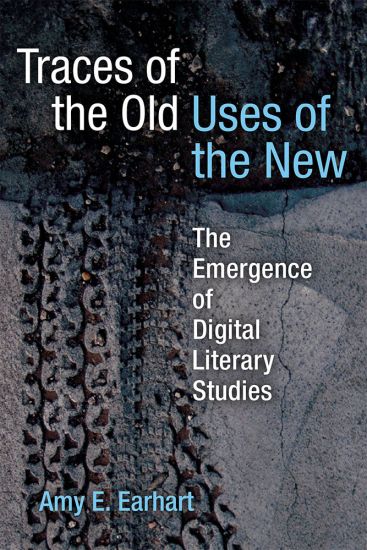
Traces of the Old, Uses of the New

Traces of the Old, Uses of the New

Amy E. Earhart

The University of Michigan Press
2015
sidottu
Digital Humanities remains a contested, umbrella term covering many types of work in numerous disciplines, including literature, history, linguistics, classics, theater, performance studies, film, media studies, computer science, and information science. In Traces of the Old, Uses of the New: The Emergence of Digital Literary Studies, Amy Earhart stakes a claim for discipline-specific history of digital study as a necessary prelude to true progress in defining Digital Humanities as a shared set of interdisciplinary practices and interests. Traces of the Old, Uses of the New focuses on twenty-five years of developments, including digital editions, digital archives, e-texts, text mining, and visualization, to situate emergent products and processes in relation to historical trends of disciplinary interest in literary study. By reexamining the roil of theoretical debates and applied practices from the last generation of work in juxtaposition with applied digital work of the same period, Earhart also seeks to expose limitations in need of alternative methods—methods that might begin to deliver on the early (but thus far unfulfilled) promise that digitizing texts allows literature scholars to ask and answer questions in new and compelling ways. In mapping the history of digital literary scholarship, Earhart also seeks to chart viable paths to its future, and in doing this work in one discipline, this book aims to inspire similar work in others.
Dancing Opacity

Dancing Opacity

Amy E. Swanson

THE UNIVERSITY OF MICHIGAN PRESS
2025
sidottu
Amy Swanson’s Dancing Opacity chronicles the ways in which contemporary dancers in Senegal navigate the global contemporary dance circuit while challenging heteropatriarchal ideologies at home. A longstanding hub of African performing arts, Senegal was at the forefront of the explosion of contemporary dance across the continent at the turn of the twenty-first century. Swanson demonstrates how Senegalese choreographers and dancers contend with entrenched racialized prejudices about Africa outside the continent, while pushing back against the repressive regulations of gender and sexuality within Senegal. Drawing on the concept of opacity as a refusal to adhere to the colonial logic of transparency for dominant gazes, artists create work that is intentionally ambiguous with multiple layers of meaning that are not immediately transparent to all viewers to evade Senegalese cultural norms that govern gender and sexual expression, while challenging their international audiences to expand their perceptions of African dance. Drawing on ethnographic research, Dancing Opacity highlights Senegalese artists’ accounts of their pedagogies, performances, aesthetics, and lived realities, as well as Africanist conceptions of gender, sexuality, and queerness that have yet to be applied to dance. Swanson presents contemporary dance as an intercultural and intercontinental entanglement shaped in large part by artists of color in the Global South, moving dance studies away from narratives depicting the progressive avant-garde as the prerogative of the white West while confining Africa as merely a source of dance traditions.
An Actor's Tale

An Actor's Tale

Amy E. Hughes

THE UNIVERSITY OF MICHIGAN PRESS
2025
sidottu
Harry Watkins was no one special. During a career that spanned four decades, this nineteenth-century actor yearned for fame, but merely skirted the edges of it. He performed alongside the brightest stars, wrote scores of plays, and toured the United States and England, but he never became a household name. Inspired by this average performer’s life and labor, An Actor’s Tale offers an alternative history of nineteenth-century theater, focusing on the daily rhythms and routines of theatrical life rather than the celebrated people, plays, and exceptional events that tend to dominate histories of US theater and performance. In the process, Hughes asks uncomfortable questions about the existence, predominance, and erasure of White male mediocrity in American culture, both in the past and present. When historians focus only on performers and plays with artistic “merit,” what communities, perspectives, and cultural trends remain invisible? How did men like Watkins advance themselves professionally, despite their mediocrity? Why did they embrace and perpetuate myths like the American Dream, the “self-made man,” and meritocracy, and how have these ideals shaped casting, producing, and celebrity worship in today’s US entertainment industry? Ultimately, Hughes reveals how this actor’s tale illuminates the widespread tendency to ignore, deny, and forgive White male mediocrity in American culture, and how a deeper understanding of people like Watkins can transform our understanding of the past—and our understanding of ourselves.
Spectacles of Reform

Spectacles of Reform

Amy E. Hughes

The University of Michigan Press
2012
sidottu
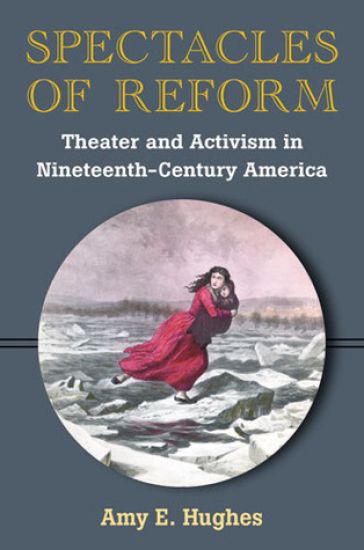
In the nineteenth century, long before film and television brought us explosions, car chases, and narrow escapes, it was America's theaters that thrilled audiences, with “sensation scenes” of speeding trains, burning buildings, and endangered bodies, often in melodramas extolling the virtues of temperance, abolition, and women's suffrage. Amy E. Hughes scrutinizes these peculiar intersections of spectacle and reform, revealing the crucial role that spectacle has played in American activism and how it has remained central to the dramaturgy of reform. Hughes traces the cultural history of three famous sensation scenes—the drunkard with the delirium tremens, the fugitive slave escaping over a river, and the victim tied to the railroad tracks—assessing how these scenes conveyed, allayed, and denied concerns about the rights and responsibilities of citizenship. These images also appeared in printed propaganda, suggesting that the coup de théâtre was an essential part of American reform culture. Additionally, Hughes argues that today’s producers and advertisers continue to exploit the affective dynamism of spectacle, reaching an even broader audience through film, television, and the Internet.To be attuned to the dynamics of spectacle, Hughes argues, is to understand how we see. Her book will interest not only theater historians, but also scholars and students of political, literary, and visual culture who are curious about how U.S. citizens saw themselves and their world during a pivotal period in American history.
Visual Intelligence

Visual Intelligence

Amy E. Herman

HARPERCOLLINS PUBLISHERS INC
2023
pokkari
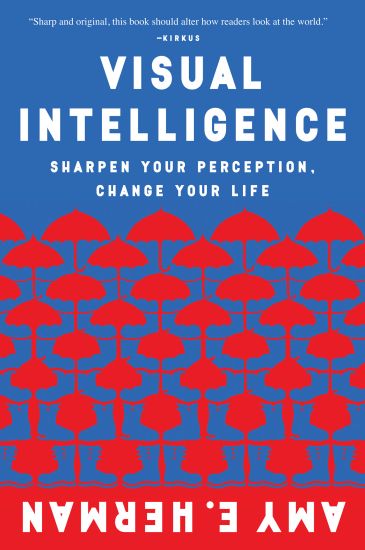
"Sharp and original, this book should alter how readers look at the world. " --Kirkus "This fascinating and beautifully illustrated book will make you see the world more clearly than you ever have before. And that clarity will transform how you deal with the challenges and opportunities you face every day." -- Leonard Mlodinow, author of Subliminal and The Drunkard's Walk How could looking at Monet's water lily paintings help save a company millions? How can noticing people's footwear foil a terrorist attack? How can your choice of adjective win an argument, calm your children, or catch a thief? In her celebrated seminar, The Art of Perception, art historian Amy Herman has trained experts from many fields to perceive and communicate better. By showing people how to look closely at images, she helps them hone their "visual intelligence," a set of skills we all possess but few of us know how to use effectively. She has spent more than a decade teaching doctors to observe patients instead of their charts, helping police officers separate facts from opinions when investigating a crime, and training professionals from the FBI, the State Department, Fortune 500 companies, and the military to recognize the most pertinent and useful information. Her lessons highlight far more than the physical objects you may be missing; they teach you how to recognize the talents, opportunities, and dangers that surround you every day. "Herman offers a compelling case for the life-enhancing value--and central importance--of careful observation . . . Visual Intelligence is a fascinating book and an important one--and it is a great read." --Daniel Weiss, president of the Metropolitan Museum of Art
Cataloged for Catastrophe

Cataloged for Catastrophe

Amy E Lilly

Bella Lilly Press
2022
pokkari
Librarian Ophelia "Phee" Jefferson is on the case again Phee is so excited to help Juliet with her upcoming wedding that she agrees to tear down her old gardenshed to make way for an outdoor wedding. Wedding plans quickly come to a halt when a skeleton isunearthed during demolition. Phee's sister, Juliet, swears her pending nuptials are cursed and threatensto call the wedding off. Phee is determined to see her sister married - curse or no curse.Phee is on the case to solve the crime so love can move forward - but not everyone wants their old secretsdiscovered. When someone who knows the identity of the skeleton in Phee's backyard is murdered, Phee knows that her cold case is red hot.
There's a Rainbow in Every Snowflake

There's a Rainbow in Every Snowflake

Amy E Osgood

Amy E. Osgood
2020
pokkari
There's a Rainbow in Every Snowflake tells the story of how a simple stay-at-home mom found meaning in God's faithfulness. You will read true stories from Amy's parenting journey, as well as her candid inner dialogue with God. Discover how motherhood taught Amy lessons about identity, surrender, forgiveness, redemption, and the mysterious ways of God. The author challenges you to discover and learn these same lessons right where God has planted you, wherever that may be. She believes with all her heart that it is no accident you are holding this book in your hands.
Maybe You'll Be an Archaeologist

Maybe You'll Be an Archaeologist

Amy E Reid

Center for Archaeological Studies, Texas State University
2021
pokkari
This wonderfully illustrated picture book presents a story about a young girl named Brea who was inspired to become an Archaeologist. Readers of all ages will learn about what Archaeology is and why it is important.
Once Upon A December

Once Upon A December

Amy E. Reichert

Penguin Putnam Inc
2022
nidottu
A one-of-a-kind Christmas market offers holiday magic in the new romance from the author of The Kindred Spirits Supper Club. With a name like Astra Noel Snow, holiday spirit isn't just a seasonal specialty--it's a way of life. But after a stinging divorce, Astra's yearly trip to the Milwaukee Christmas market takes on a whole new meaning. She's ready to eat, drink, and be merry, especially with the handsome stranger who saves the best kringle for her at his family bakery. For Jack Clausen, the Julemarked with its snowy lights and charming shops stays the same, while the world outside the joyful street changes, magically leaping from one December to the next every four weeks. He's never minded living this charmed existence until Astra shows him the life he's been missing outside of the festive red brick alley. After a swoon-worthy series of dates, some Yuletide magic, and the unexpected glow of new love, Astra and Jack must decide whether this relationship can weather all seasons, or if what they're feeling is as ephemeral as marshmallows in a mug of hot cocoa.
Race, Rigor, and Selectivity in U.S. Engineering

Race, Rigor, and Selectivity in U.S. Engineering

Amy E. Slaton

Harvard University Press
2010
sidottu
Despite the educational and professional advances made by minorities in recent decades, African Americans remain woefully underrepresented in the fields of science, technology, mathematics, and engineering. Even at its peak, in 2000, African American representation in engineering careers reached only 5.7 percent, while blacks made up 15 percent of the U.S. population. Some forty-five years after the Civil Rights Act sought to eliminate racial differences in education and employment, what do we make of an occupational pattern that perpetually follows the lines of race?Race, Rigor, and Selectivity in U.S. Engineering pursues this question and its ramifications through historical case studies. Focusing on engineering programs in three settings—in Maryland, Illinois, and Texas, from the 1940s through the 1990s—Amy E. Slaton examines efforts to expand black opportunities in engineering as well as obstacles to those reforms. Her study reveals aspects of admissions criteria and curricular emphases that work against proportionate black involvement in many engineering programs. Slaton exposes the negative impact of conservative ideologies in engineering, and of specific institutional processes—ideas and practices that are as limiting for the field of engineering as they are for the goal of greater racial parity in the profession.