Kirjojen hintavertailu. Mukana 12 390 323 kirjaa ja 12 kauppaa.

Kirjahaku

Etsi kirjoja tekijän nimen, kirjan nimen tai ISBN:n perusteella.

1000 tulosta hakusanalla Amy F Ryan

The New START Treaty: Central Limits and Key Provisions: R41219

The New START Treaty: Central Limits and Key Provisions: R41219

Amy F. Woolf; Congressional Research Service

Createspace Independent Publishing Platform
2016
nidottu
New START contains detailed definitions and counting rules that will help the parties calculate the number of warheads that count under the treaty limits. Moreover, the delivery vehicles and their warheads will count under the treaty limits until they are converted or eliminated according to the provisions described in the treaty's Protocol. These provisions are far less demanding than those in the original START Treaty and will provide the United States and Russia with far more flexibility in determining how to reduce their forces to meet the treaty limits.The monitoring and verification regime in the New START Treaty is less costly and complex than the regime in START. Like START, though, it contains detailed definitions of items limited by the treaty; provisions governing the use of national technical means (NTM) to gather data on each side's forces and activities; an extensive database that identifies the numbers, types, and locations of items limited by the treaty; provisions requiring notifications about items limited by the treaty; and inspections allowing the parties to confirm information shared during data exchanges.New START does not limit current or planned U.S. missile defense programs. It does ban the conversion of ICBM and SLBM launchers to launchers for missile defense interceptors, but the United States never intended to pursue such conversions when deploying missile defense interceptors. Under New START, the United States can deploy conventional warheads on its ballistic missiles, but these will count under the treaty limit on nuclear warheads. The United States may deploy a small number of these systems during the time that New START is in force.The Obama Administration and outside analysts argue that New START strengthens strategic stability and enhances U.S. national security. Critics, however, question whether the treaty serves U.S. national security interests, as Russia was likely to reduce its forces with or without an arms control agreement and because the United States and Russia no longer need arms control treaties to manage their relationship.
Meaning in the Moment – How Rituals Help Us Move through Joy, Pain, and Everything in Between
Life has its ups and downs, and it can feel like we're always in the middle of a transition. Whether it's a painful end or a joyful beginning--or even an uncertain middle--theologian and minister Amy Davis Abdallah has found something that helps: rituals. In Meaning in the Moment, she shows why we need rituals to help survive and even thrive through various seasons of life.Starting with the foundation that rituals are a core, and underexplored, part of Christian practice, Davis Abdallah draws from theology, psychology, and personal experiences in creating rituals for herself and others. She offers practical guidance for readers to create their own meaningful rituals, including three types requiring varying levels of planning and participation: right now, with friends, and at church. Readers will emerge with fresh ways to bring their faith to life for themselves, their families, and their church communities--and ready to experience the transformative power of rituals. The book includes a foreword by W. David O. Taylor.
U.S. Nuclear Weapons

U.S. Nuclear Weapons

Amy F Woolf

Nova Biomedical
2005
nidottu
The Bush Administration conducted a review of US nuclear weapons force posture during its first year in office. Although the review sought to adjust US nuclear posture to address changes in the international security environment at the start of the new century, it continued many of the policies and programs that had been a part of the US nuclear posture during the previous decades and during the Cold War. This book provides an overview of the US nuclear posture to highlight areas of change and areas of continuity. During the Cold War, the United States sought to deter the Soviet Union and its allies from attacking the United States and its allies by convincing the Soviet Union that any level of conflict could escalate into a nuclear exchange and, in that exchange, the United States would plan to destroy the full range of valued targets in the Soviet Union. Other nations were included in US nuclear war plans due to their alliances with the Soviet Union. After the Cold War, the United States maintained a substantial nuclear arsenal to deter potential threats from Russia. It would not forswear the first use of nuclear weapons in conflicts with other nations, armed with chemical or biological weapons, and formed contingency plans for such conflicts. The Bush Administration has emphasised that the United States and Russia are no longer enemies and that the United States will no longer plan or size its nuclear force to deter a 'Russian threat'. Instead, the United States will maintain a nuclear arsenal with the capabilities needed to counter capabilities of any potential adversary, focusing on 'how we will fight' rather than 'who we will fight'. Furthermore, US nuclear weapons will combine with missile defences, conventional weapons, and a responsive infrastructure in seeking to assure US allies, dissuade US adversaries, deter conflict, and defeat adversaries if conflict should occur. Analysts and observers have identified several issues raised by the Administration's Nuclear Posture Review. These include the role of nuclear weapons in US national security policy, how to make the US nuclear deterrent 'credible', the relationship between the US nuclear posture and the goal of discouraging nuclear proliferation, plans for strategic nuclear weapons, and the future of non-strategic nuclear weapons.
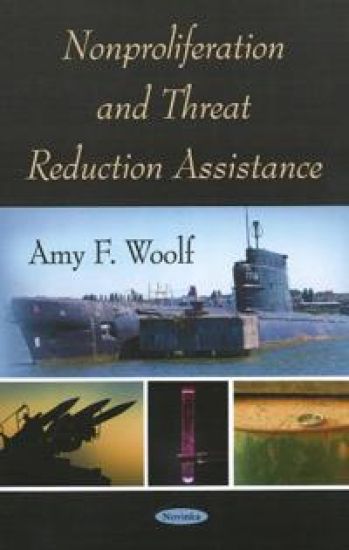
Nonproliferation & Threat Reduction Assistance

Nonproliferation & Threat Reduction Assistance

Amy F Woolf

Nova Science Publishers Inc
2008
nidottu
Congress passed the Nunn-Lugar amendment, authorizing U.S. threat reduction assistance to the former Soviet Union, in November 1991, after a failed coup in Moscow and the disintegration of the Soviet Union raised concerns about the safety and security of Soviet nuclear weapons. The annual program has grown from $400 million in the DOD budget around $1.1 billion across three agencies -- DOD, DOE and the State Department. It has also evolved from an emergency response to impending chaos in the Soviet Union, to a more comprehensive threat reduction and nonproliferation effort, to a broader program seeking to keep nuclear, chemical, and biological weapons from leaking out of the former Soviet Union and into the hands of rogue nations or terrorist groups. The Department of Defense manages the Cooperative Threat Reduction (CTR) Program, which provides Russia, Ukraine, Belarus, and Kazakhstan with assistance in transporting, storing, and dismantling nuclear, chemical, and biological weapons. U.S. assistance has helped these nations eliminate the delivery systems for nuclear weapons under the START I Treaty, secure weapons storage areas, construct a storage facility for nuclear materials removed from weapons, construct a destruction facility for chemical weapons, and secure biological weapons materials. The State Department manages the International Science and Technology Centers in Moscow and Kiev. These centers provide research grants to scientists and engineers so that they will not sell their knowledge to other nations or terrorist groups. The State Department has also provided assistance with export and border control programs in the former Soviet states. The Department of Energy manages programs that seek to improve the security of nuclear materials at civilian, naval, and nuclear weapons complex facilities. It also funds programs that help nuclear scientists and engineers find employment in commercial enterprises. DOE is also helping Russia dispose of plutonium removed from nuclear weapons and shut-down its remaining plutonium-producing reactors by replacing them with fossil-fuel plants. Analysts have debated numerous issues related to U.S. nonproliferation and threat reduction assistance. These include questions about the coordination of and priority given to these programs in the U.S. government, questions about Russia's willingness to provide the United States with access to its weapons facilities, questions about the President's ability to waive certification requirements so that the programs can go forward, and questions about the need to expand the efforts into a global program that receives funding from numerous nations and possibly extends assistance to others outside the former Soviet Union.
The Trees Speak

The Trees Speak

Amy F. Pilato

Amy F Pilato
2020
nidottu
An imaginative girl who likes being in nature finds herself asking the trees, "what do you need from me?" Her question sets off a playful journey that speaks to the power of deep listening, wonder, and gratitude. This is a tale about the spirit of giving, making offerings, and appreciating our connection to the natural world. This story is an ode to the trees, to the divine mother earth we walk upon, and to the beauty of a grateful heart.
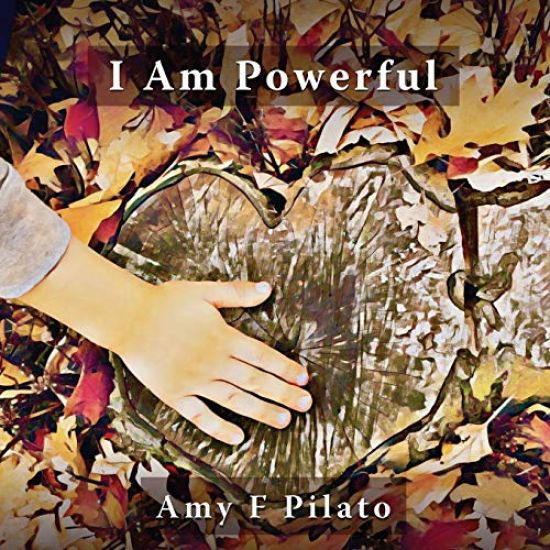
I Am Powerful

I Am Powerful

Amy F Pilato

Amy F Pilato
2020
pokkari
I Am Powerful is an empowering children's book about how nature reflects our own true and powerful nature back to us. The trees, clouds, birds, sun and moon all have things to teach us about who we really are. This book introduces children to the simple, beautiful affirmation I Am Powerful."Beautiful nature paintings link the mother's insights to a child's realization of various types of power already within, creating an evocative and ethereal read that mothers can use to not just interact with a child, but build a better awareness of self and strengths.Any parent seeking ways of using higher-level thinking as an early learning tool will find I Am Powerful offers just the right blend of call-and-response and introspective advice to help adults and children engage on a more meaningful level. It's a highly recommended pick for parents who want to encourage young children in such discussions and thought processes.D. Donovan, Senior Reviewer, Midwest Book Review
I Am Powerful

I Am Powerful

Amy F Pilato

Sephyrus Press
2019
pokkari
Take a walk through the woods with mother and child and discover all the ways in which you are powerful. The inviting illustration and prose will capture you and your child's spirit.
Global Threat Reduction

Global Threat Reduction

Sharon Squassoni; Amy F Woolf

Nova Science Publishers Inc
2006
nidottu
Non-proliferation assistance programs are a relatively new tool in combating the proliferation of weapons of mass destruction. The Co-operative Threat Reduction (CTR) programs, funded by the Department of Defense (DOD), are the most visible of these programs. Begun in 1991, CTR initially aimed to help Russia meet its START obligations to reduce strategic nuclear weapons; 1. Within a decade, however, CTR took on the goal of reducing the threat of terrorist access to weapons of mass destruction (WMD); 2. Experts realised that Russia needed to protect its Cold War overhang of WMD materials, scientists, and equipment from those who might exploit insider opportunities and who had incentives (particularly financial) to sell WMD technology to anyone. Now, however, many analysts support expanding co-operative threat reduction programs beyond Russia to other geographic areas. The Bush Administration itself stated in early 2003, that it had 'expanded the strategic focus of the CTR program' to support the war on terrorism. This book surveys options for applying CTR programs to states that pose a WMD and terrorism threat.
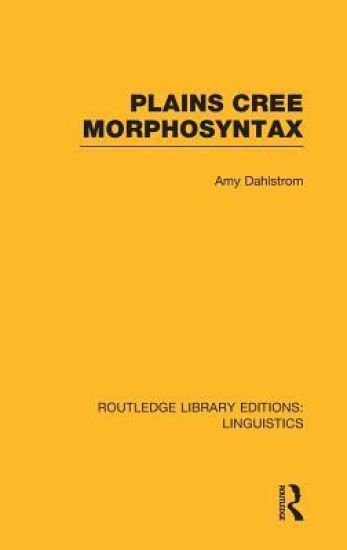
Plains Cree Morphosyntax (RLE Linguistics F: World Linguistics)
This book explores several topics in Cree morphology, syntax and discourse structure. Cree, an Algonquian language, is non-configurational: the grammatical relations of subject and object are not expressed by word order or other constituent structure relations, as they are in a configurational language like English. Instead, subjects and objects are expressed by means of the inflection on the verb. Cree is typical of non-configurational languages in allowing a great deal of word order variation. This study examines in detail aspects of the Plains Cree dialect, giving a valuable insight into the structure of this endangered language.
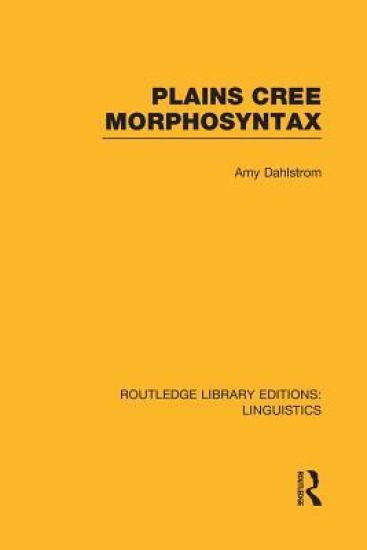
Plains Cree Morphosyntax (RLE Linguistics F: World Linguistics)
This book explores several topics in Cree morphology, syntax and discourse structure. Cree, an Algonquian language, is non-configurational: the grammatical relations of subject and object are not expressed by word order or other constituent structure relations, as they are in a configurational language like English. Instead, subjects and objects are expressed by means of the inflection on the verb. Cree is typical of non-configurational languages in allowing a great deal of word order variation. This study examines in detail aspects of the Plains Cree dialect, giving a valuable insight into the structure of this endangered language.
Good Manners for Nice People Who Sometimes Say F*CK
We live in a world that's very different from the one in which Emily Post came of age. Many of us who are nice (but, who also sometimes say "f*ck") are frequently at a loss for guidelines about how to be a good person who deals effectively with the onslaught of rudeness we all encounter. To lead us through this miasma of modern manners, syndicated columnist Amy Alkon - The Advice Goddess - gives us a new set of manners for our 21st century lives. In chapters titled "The Telephone", "The Internet", "The Apology" and "Communicating", among others, Alkon maps out new rules that go beyond what fork to use to answer real questions we all have: When is it okay to phone somebody instead of emailing or texting? When is it rude? Why shouldn't you tweet about a guest at a private dinner party? Everybody knows privacy is dead, right? How do you shut the guy up in the pharmacy line with his cell phone on speaker? When is it right to approach somebody who's crying in public and when is it right to leave him alone? When should you un-friend somebody on Facebook and what do you say when she calls you on it? If you have an STD, when do you tell people, what do you say and do you have to contact everyone you've ever had sex with? Real advice for today with more than a touch of humour, Good Manners for Nice People Who Sometimes Say "F*ck" is destined to give good old Emily a shove off the etiquette shelf (if that's not too rude to say).