Kirjojen hintavertailu. Mukana 12 390 323 kirjaa ja 12 kauppaa.

Kirjahaku

Etsi kirjoja tekijän nimen, kirjan nimen tai ISBN:n perusteella.

1000 tulosta hakusanalla Andrew P. Smith

Getting Started with R

Getting Started with R

Andrew P. Beckerman; Dylan Z. Childs; Owen L. Petchey

Oxford University Press
2017
nidottu
R is rapidly becoming the standard software for statistical analyses, graphical presentation of data, and programming in the natural, physical, social, and engineering sciences. Getting Started with R is now the go-to introductory guide for biologists wanting to learn how to use R in their research. It teaches readers how to import, explore, graph, and analyse data, while keeping them focused on their ultimate goals: clearly communicating their data in oral presentations, posters, papers, and reports. It provides a consistent workflow for using R that is simple, efficient, reliable, and reproducible. This second edition has been updated and expanded while retaining the concise and engaging nature of its predecessor, offering an accessible and fun introduction to the packages dplyr and ggplot2 for data manipulation and graphing. It expands the set of basic statistics considered in the first edition to include new examples of a simple regression, a one-way and a two-way ANOVA. Finally, it introduces a new chapter on the generalised linear model. Getting Started with R is suitable for undergraduates, graduate students, professional researchers, and practitioners in the biological sciences.
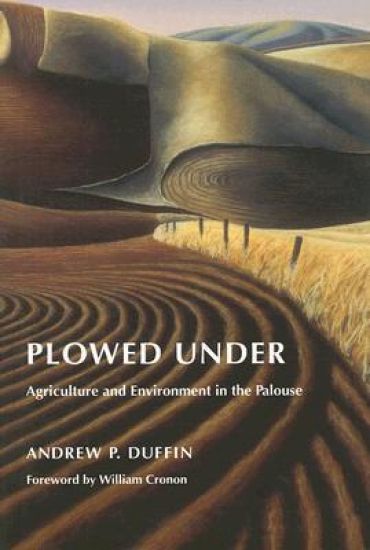
Plowed Under

Plowed Under

Andrew P. Duffin; William Cronon

University of Washington Press
2007
sidottu
The transformation of the Palouse region of Washington and Idaho from land thought unusable and unproductive to a wealth-generating agricultural paradise is traced in this study that weighs the consequences of this progress.
Plowed Under

Plowed Under

Andrew P. Duffin; William Cronon

University of Washington Press
2010
pokkari
In Plowed Under, Andrew P. Duffin traces the transformation of the Palouse region of Washington and Idaho from land thought unusable and unproductive to a wealth-generating agricultural paradise, weighing the consequences of what this progress has wrought. During the twentieth century, the Palouse became synonymous with wheat, and the landscape was irrevocably altered. At the dawn of the twenty-first century, native vegetation is almost nonexistent, stream water is so dirty that it is often unfit for even livestock, and 94 percent of all land has been converted to agriculture.Commercial agriculture also created a less noticeable ecological change: soil erosion. While common to industrial agriculture nationwide, topsoil loss evoked different political and social reactions in the Palouse. Farmers all over the nation take pride in their freedom and independence, but in the Palouse, Duffin shows, this mentality - a remnant of an older agrarian past - has been taken to the extreme and is partly responsible for erosion problems that are among the worst in the nation.In the hope of charting a better, more sustainable future, Duffin argues for a candid look at the land, its people, their decisions, and the repercussions of those decisions. As he notes, the debate is not over whether to use the land, but over what that use will look like and its social and ecological results.
Regulation by Litigation

Regulation by Litigation

Andrew P. Morriss; Bruce Yandle; Andrew Dorchak

Yale University Press
2008
sidottu
Federal and state regulatory agencies are increasingly making use of litigation as a means of regulation. In this book, three experts in regulatory law and theory offer a systematic analysis of the use of litigation to impose substantive regulatory measures, including a public choice-based analysis of why agencies choose to litigate in some circumstances. The book examines three major cases in which litigation was used to achieve regulatory ends: the EPA’s suit against heavy duty diesel engine manufacturers; asbestos and silica dust litigation by private attorneys; and private and state lawsuits against cigarette manufacturers. The authors argue that litigation is an inappropriate means for establishing substantive regulatory provisions, and they conclude by suggesting a variety of reforms to help curb today’s growing reliance on such practice.
International Theory

International Theory

Andrew P. Dunne

Praeger Publishers Inc
1996
sidottu
This pathmaking treatise on macrotheoretical science argues that a brink separates an explanatory theory of international politics from those approaches that lack basic standards for theoretical construction—a brink which must be bridged if the discipline is to develop. Formulated on the basis of a pragmatic philosophy of science, its most general arguments cross the boundaries of the social sciences, including the standard subdisciplinary boundaries of international relations. Although the substantive theories in the book tend to be about systems usually characterized as power politics, the basic approach and categories could be used to analyze systems of international political economy, international organization, or comparative politics.
The Image of Manhood in Early Modern Literature

The Image of Manhood in Early Modern Literature

Andrew P. Williams

Praeger Publishers Inc
1999
sidottu
The numerous and multifaceted ways in which masculinities emerge and are expressed within cultures prompt a broad ranging examination and reconsideration of what it means to be a man. Within the study of masculinity, the early modern period stands between the Renaissance, when conceptions of manhood were primarily dominated by chivalric and humanistic traditions, and the latter half of the 18th century, which marked the beginnings of modern conceptions of masculine identity. But rather than a transitional period, the early modern era was a key moment in the evolutionary dynamics of masculine representation. Political forces, such as the Puritan revolution, the Restoration, and the shift in power from the courtier class to the growing middle class forced a reconsideration of the masculine ideal in light of the experiences of the masses. At the same time, the emergence of print culture provided a means of transmitting the new masculine ideal, and literature of the period reflected the changing notions of masculinity. The chapters in this volume explore the various strategies used by early modern writers to represent masculinity. Together, the expert contributors offer a broad perspective on the social and political dynamics of early modern masculine identity. Included are chapters on such writers as Thomas Carew, Andrew Marvell, Francis Beaumont and John Fletcher, John Dryden, Daniel Defoe, and Samuel Richardson. Though incorporating a variety of critical approaches, the contributors all explore the inherent anxiety associated with masculinity and its representation. The chapters demonstrate how significant literary texts of the period provided not only idealized images of early modern manhood but also contesting ones. By focusing on the literary, historical, and social dynamics which construct cultural perceptions of masculinity, this volume ultimately illustrates the literary representation of manhood in the early modern period to be a dynamic and evolving process which often challenged Western notions of what it means to be a man.
MATLAB Programming for Biomedical Engineers and Scientists

MATLAB Programming for Biomedical Engineers and Scientists

Andrew P. King; Paul Aljabar

ELSEVIER SCIENCE TECHNOLOGY
2022
nidottu
MATLAB Programming for Biomedical Engineers and Scientists, Second Edition provides an easy-to-learn introduction to the fundamentals of computer programming in MATLAB. The book explains the principles of good programming practice, while also demonstrating how to write efficient and robust code that analyzes and visualizes biomedical data. Aimed at the biomedical engineering student, biomedical scientist and medical researcher with little or no computer programming experience, this is an excellent resource for learning the principles and practice of computer programming using MATLAB. The book enables the reader to analyze problems and apply structured design methods to produce elegant, efficient and well-structured program designs, implement a structured program design in MATLAB, write code that makes good use of MATLAB programming features, including control structures, functions and advanced data types, and much more.
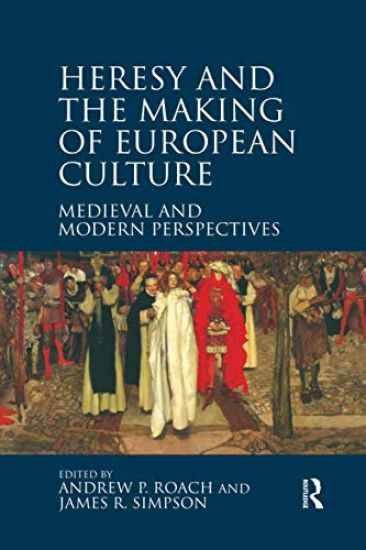
Heresy and the Making of European Culture

Heresy and the Making of European Culture

Andrew P. Roach; James R. Simpson

Routledge
2020
nidottu
Scholars and analysts seeking to illuminate the extraordinary creativity and innovation evident in European medieval cultures and their afterlives have thus far neglected the important role of religious heresy. The papers collected here - reflecting the disciplines of history, literature, theology, philosophy, economics and law - examine the intellectual and social investments characteristic of both deliberate religious dissent such as the Cathars of Languedoc, the Balkan Bogomils, the Hussites of Bohemia and those who knowingly or unknowingly bent or broke the rules, creating their own 'unofficial orthodoxies'. Attempts to understand, police and eradicate all these, through methods such as the Inquisition, required no less ingenuity. The ambivalent dynamic evident in the tensions between coercion and dissent is still recognisable and productive in the world today.
Handbook of Systems Engineering and Management

Handbook of Systems Engineering and Management

Andrew P. Sage; William B. Rouse

John Wiley Sons Inc
2009
sidottu
The trusted handbook—now in a new edition This newly revised handbook presents a multifaceted view of systems engineering from process and systems management perspectives. It begins with a comprehensive introduction to the subject and provides a brief overview of the thirty-four chapters that follow. This introductory chapter is intended to serve as a "field guide" that indicates why, when, and how to use the material that follows in the handbook. Topical coverage includes: systems engineering life cycles and management; risk management; discovering system requirements; configuration management; cost management; total quality management; reliability, maintainability, and availability; concurrent engineering; standards in systems engineering; system architectures; systems design; systems integration; systematic measurements; human supervisory control; managing organizational and individual decision-making; systems reengineering; project planning; human systems integration; information technology and knowledge management; and more. The handbook is written and edited for systems engineers in industry and government, and to serve as a university reference handbook in systems engineering and management courses. By focusing on systems engineering processes and systems management, the editors have produced a long-lasting handbook that will make a difference in the design of systems of all types that are large in scale and/or scope.
Economic Systems Analysis and Assessment

Economic Systems Analysis and Assessment

Andrew P. Sage; William B. Rouse

John Wiley Sons Inc
2011
sidottu
An Authoritative Introduction to a Major Subject in Systems Engineering and Management This important volume fills the need for a textbook on the fundamentals of economic systems analysis and assessment, illustrating their vital role in systems engineering and systems management. Providing extensive coverage on key topics, it assumes no prior background in mathematics or economics in order to comprehend the material. The book is comprised of five major parts: Microeconomics: a concise overview that covers production and the theory of the firm; theory of the consumer; market equilibria and market imperfections; and normative or welfare economics, including imperfect competition effects and consumer and producer surplus Program Management Economics: discusses economic valuation of programs and projects, including investment rates of return; cost-benefit and cost-effectiveness analysis; earned value management; cost structures and estimation of program costs and schedules; strategic and tactical pricing issues; and capital investment and options Cost Estimation: reviews cost-estimation technologies involving precedented and unprecedented development, commercial-off-the-shelf (COTS) software, software reuse, application generators, and fourth-generation languages Strategic Investments in an Uncertain World: addresses alternative methods for valuation of firms including Stern Stewart's EVA, Holt's CFROI, and various competing methodologies Contemporary Perspectives: covers ongoing extensions to theory and practice that enable satisfactory treatment of the increasing returns to scale, network effects, and path-dependent issues generally associated with contemporary ultra-large-scale telecommunications and information networks Also discussed in this comprehensive text are normative or welfare economics and behavioral economics; COCOMO I and II and COSYSMO as examples of a cost model; and options-based valuation models and valuation of information technology intensive enterprises. Economic Systems Analysis and Assessment serves as an ideal textbook for senior undergraduate and first-year graduate courses in economic systems analysis and assessment, as well as a valuable reference for engineers and managers involved with information technology intensive systems, professional economists, cost analysts, investment evaluators, and systems engineers.
Introduction to Systems Engineering

Introduction to Systems Engineering

Andrew P. Sage; James E. Armstrong

John Wiley Sons Inc
2000
sidottu
An easy-to-use, comprehensive guide to systems engineering methods. Systems engineering (SE), or the engineering of large-scale systems, is key to achieving reliable, efficient, cost-effective products and services in diverse fields, including communication and network systems, software engineering, information systems, manufacturing, command and control, and defense systems acquisition and procurement. This book offers a unique introduction to the world of systems engineering, focusing on analysis and problem-solving techniques that can be applied throughout the life cycle of product systems and service systems. While the authors provide a framework for the functional levels involved in systems engineering processes and system management, the bulk of the discussion is devoted to the practical application of formulation, analysis, and interpretation methods. Through the use of real-world examples and useful graphs, readers will learn to:*Choose the most appropriate methods and tools for a given project*Apply issue formulation methods to assure that the right problem has been identified*Work with formal analysis methods to assure that the problem is solved correctly*Apply issue interpretation methods to insure that decisions reflect human values and technological realities, and thereby make interpretation work for them in the decision-making process*Develop an appreciation for the engineering and troubleshooting of large systems
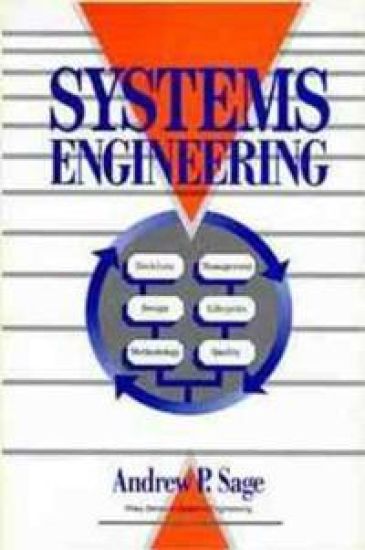
Systems Engineering

Systems Engineering

Andrew P. Sage

John Wiley Sons Inc
1992
sidottu
Addresses some fundamental considerations associated with the engineering of large scale systems. The first part deals with systems methodology, design and management including a detailed examination of operational and task level system quality assurance through configuration management, audits and reviews, standards and systems integration. The second part discusses a variety of systems design and management approaches, particularly those concerned with system effectiveness evaluation and the human role in systems.
Transfigured

Transfigured

Andrew P. Wilson

T. T.Clark Ltd
2007
sidottu
At first glance the Markan transfiguration scene (Mk. 9:2-8) is all about light, sound and spectacle. Commentators see revealed in this scene a sparkling vision of God's glory the light that banishes the shadow of incomprehension and by which the hidden truth of the Gospel finally becomes clear. But have commentators been blinded by their dazzling evaluations of Mark's theology? For, despite all the splendor and sparkle, the Markan transfiguration remains a difficult scene to interpret. Transfigured asks what would be seen if one were to squint past the sun-like glory that dominates this vision. Wilson focuses on the problematic elements, the gaps and inconsistencies of the scene, and re-evaluates them in order to re-read the transfiguration from an altered perspective. The theoretical work of Jacques Derrida, particularly his notion of "otherness," which draws together and realigns the reader (subject), the reading (method), and what is read (text), will be central to the orientation of this re-reading. Ultimately, the transfiguration story can be seen ably to accommodate readings that challenge traditionally prescribed metaphysical structures and presuppositions. In the end, the application of Derridean theory issues its own challenges to traditional scholarship in such a way that the approach to the Markan transfiguration and the theology one inevitably brings to it, require a certain amount of reformulation.
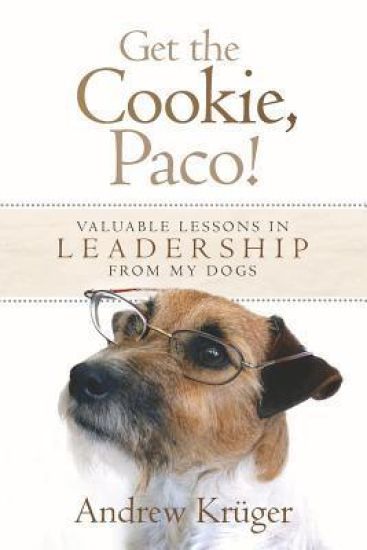
Get the Cookie, Paco!: Valuable Lessons in Leadership from My Dogs
To date, most of the discourse revolving around leadership has either been too superficial to be useful or far too academic and dry to appeal-and make sense to-the general public. Bringing the most important findings from leadership studies and presenting their key lessons and concepts in an approachable and enjoyable format, Andrew Kr ger's debut changes that paradigm forever. While it can be characterized as fifty-one practical ways you can increase your leadership ability at home or in the office, Kr ger's book is much more than that. Using the behavior of his two dogs to make sophisticated concepts more readily understood and memorable, he displays a multitude of cogent points such as leaders must act without knowing all the information, leaders are aware of their strengths and limitations and use them effectively and efficiently, as well as lessons including personal resilience, emotional intelligence, and fear-based leading versus love-based leading. The concepts are broken down into five key categories to further delineate and underscore the importance of the overall framework of a leader: working on yourself, working with others, reading others, leading others, and the bigger picture. Combined, the information presented paints a clear and vibrant picture of how to change your life-and style of leadership-for the better. By taking the success of the business parable format of Johnson in Who Moved My Cheese and combining it with logical and endearing observations of our canine friends in such books as Marley & Me and The Other End of the Leash, Kr ger creates an enjoyable, playful, and casual approach to self-improvement in all facets of your life. The perfect read traveling companion, Get the Cookie, Paco : Valuable Lessons in Leadership from My Dogs will change the way you run your business-and the business of your life. From the author: "The concept of leadership is one that has been gaining popularity in recent years. In business school it was a required course, even though many of my hardened classmates felt it was too 'soft' to be of any use. I disagreed then, and I still do. In my ensuing years as a consultant I witnessed how the human element of business continues to wreak havoc for owners and employees alike. There is a pervasive assumption that if you have the technical answer to a problem it should be solved. As long as you know what should be done, then people should fall in line. How wrong this is. It completely ignores the human element, the fact that emotions rule decision- making. This is true both in and out of the office. Many people are kept back from their potential, and from inspiring others, because they haven't been taught-or simply don't consider-what it is to be a leader and how to become one. They don't know how to effectively implement change through motivating others. As one client told me "The problem with business is that you have to deal with people." And that's messy. It struck me that most people couldn't imagine themselves as leaders. The role to them is mysterious and opaque, a peak in the distance with no path up. It's viewed as an all-or-nothing condition. The common misconception is that there are leaders, and there are followers, but nothing in between. I disagree. The more I work with the concept of leadership the more I realize that it's like climbing a mountain: there are easy ways up and difficult ones. Some people are in better shape than others. Guidance, either in the form of a map, GPS, or skilled guide, always helps. Most importantly, not everyone is going to reach the summit but with a little effort they can climb a bit higher and enjoy the view."
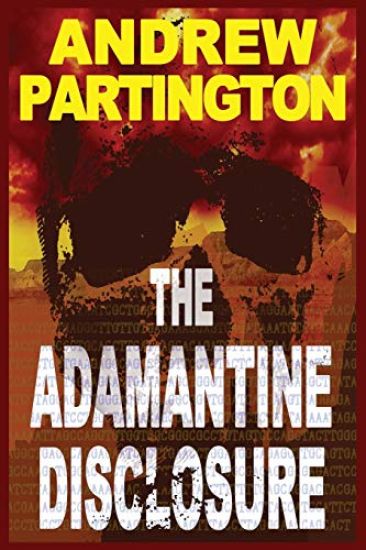
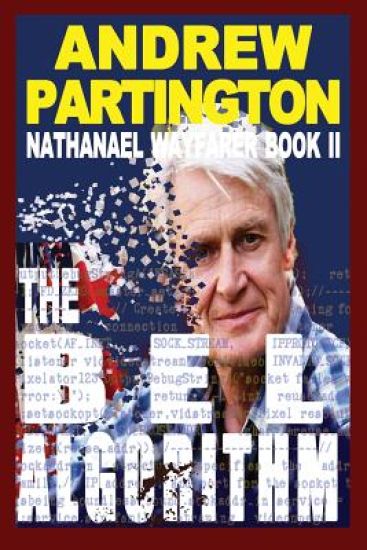
The Adamantine Disclosure

The Adamantine Disclosure

Andrew P Partington

Submarine Media Pty Ltd
2019
pokkari
Nathanael Wayfarer, tormented by his ex-wife's sudden nasty turn in their divorce negotiations, crashes his car while on holiday in the Grand Canyon. With his legs still in external fixators he finds himself being wheeled out of the hospital by a mysterious woman who claims he is being pursued, Natasha Chase, a computer programmer and hacker. Unable to know whether he can trust her, he tries to escape. Soon Nathanael is evading tenacious pursuers using government surveillance to find him and kill him, and fighting a mysterious organisation that combines occult beliefs with the manipulation of DNA and the robbery of ancient human remains. The first book in the Nathanael Wayfarer series will keep you on the edge of your seat in a gut-wrenching journey into the heart of a conspiracy involving palaeontology, biblical history and the pre-history of the world, genetics and incredible ideas. A Christian technothriller that will not disappoint.