

Kirjahaku
Etsi kirjoja tekijän nimen, kirjan nimen tai ISBN:n perusteella.
1000 tulosta hakusanalla Andrew Prevot


In 1992, Hurricane Andrew passed over the city of Homestead, Florida, and changed the lives of the residents that lived there. Wayne Stover, a thirtysomething single man, was caught up in the category 5 hurricane. Thankful for his life being spared, Wayne wants to give back to the community. He also wants the change in the air to bring change to him. His life's pattern is as a journeyman philosopher, he is unable to focus his desire and talents to achieve anything productive. Wayne finds out that there are many lessons and perils to learn on the rooftops repairing the damage from the hurricane. Wayne has a burning feeling inside him that he was meant for something significant. His privileged upbringing and wide experiences as an American youth growing up in Europe should not be wasted. He is tormented by the thoughts of his father's wishes for him. Wayne's father is a great and accomplished man Wayne loves and respects as a mentor. However, he is unable to please his father. It is written in the Bible that Andrew approached Jesus and asked Jesus to teach him. Jesus said, "Come with me, and we will change the world." That is all that Wayne wants, in some small way to change the world.



Andrew Watson was the first black footballer in the UK. Find out how he reached this position and what life was like for professional footballers in 1870 in this biography of the sportsman by Adam Sunderland. Collins Big Cat Progress books are specifically designed for children at Key Stage 2 who have a Key Stage 1 reading level, giving them age-appropriate texts that they can read, building their confidence and fostering positive attitudes towards reading.Text type: A biographyCurriculum links: History, P.EThis book has been quizzed for Accelerated Reader.

By "the foremost Jacksonian scholar of our time" (New York Times), the critically acclaimed and most concise biography of Andrew Jackson that takes a comprehensive look at the political, personal, and military life of the seventh president of the United States.

"A revelation. No one will ever view Andrew Wyeth's apparently tranquil works the same way again after reading this vivid and astonishing portrait of the turbulent, driven man who paints them. Richard Meryman has written a wonderful book." - Geoffrey C. Ward At its most fundamental level, this stunning and unique biography describes a distinguished painter's enterprise of transmitting emotion onto a flat surface. It explores all the factors that have combined to create Andrew Wyeth -- his childhood in a hothouse of creativity; his hypersensitivity; his formidable wife; his identification with people marginalized and misunderstood -- all which have made him an American icon. In the process, his realist works in watercolor and tempera, including the famous "Christina's World," have gained him a special and secure niche in the history of American art. The book is a portrait of obsession -- how single-mindedness has affected Wyeth's relationships and transformed his world into a realm of secrecy and fervid imagination. Those who read this book will never look at Wyeth's work as they did before. It reveals the artist's dark depths, as well as the ruthless, angry, child/man fantasist who paints the basic brutalities of existence -- death and madness --that vibrate eerily beneath his pictures' calm surfaces. Richard Meryman's narrative is almost novelistic, with its larger-than-life characters and subplots: the tragedy of C.C. Wyeth; Betsy Wyeth's campaign for independence and individuality; the byzantine 15-year-long drama of the Helga paintings; the eccentric and creative Wyeth clan; and the idiosyncratic land and people of Maine and Pennsylvania. Based on 30 years of research, frequent visits and countless conversations with the artist, his family, friends, admirers and critics, Andrew Wyeth: A Secret Life is the only book about the man and the artist that gets behind his carefully guarded screen, tells the full story of his life and reveals his complex personality and the motivations for his paintings.

Celebrated historian David Nasaw, whom The New York Times Book Review has called "a meticulous researcher and a cool analyst," brings new life to the story of one of America's most famous and successful businessmen and philanthropists—in what will prove to be the biography of the season.Born of modest origins in Scotland in 1835, Andrew Carnegie is best known as the founder of Carnegie Steel. His rags to riches story has never been told as dramatically and vividly as in Nasaw's new biography. Carnegie, the son of an impoverished linen weaver, moved to Pittsburgh at the age of thirteen. The embodiment of the American dream, he pulled himself up from bobbin boy in a cotton factory to become the richest man in the world. He spent the rest of his life giving away the fortune he had accumulated and crusading for international peace. For all that he accomplished and came to represent to the American public—a wildly successful businessman and capitalist, a self-educated writer, peace activist, philanthropist, man of letters, lover of culture, and unabashed enthusiast for American democracy and capitalism—Carnegie has remained, to this day, an enigma.Nasaw explains how Carnegie made his early fortune and what prompted him to give it all away, how he was drawn into the campaign first against American involvement in the Spanish-American War and then for international peace, and how he used his friendships with presidents and prime ministers to try to pull the world back from the brink of disaster.With a trove of new material—unpublished chapters of Carnegie's Autobiography; personal letters between Carnegie and his future wife, Louise, and other family members; his prenuptial agreement; diaries of family and close friends; his applications for citizenship; his extensive correspondence with Henry Clay Frick; and dozens of private letters to and from presidents Grant, Cleveland, McKinley, Roosevelt, and British prime ministers Gladstone and Balfour, as well as friends Herbert Spencer, Matthew Arnold, and Mark Twain—Nasaw brilliantly plumbs the core of this facinating and complex man, deftly placing his life in cultural and political context as only a master storyteller can.

In a remarkable literary career, Andrew Lang challenged the increasing specialism that accompanied the advance of modernity and science in the last quarter of the nineteenth century, authoring an extraordinary body of rigorous, scholarly works in the fields of social anthropology, folklore, Homeric studies, history, and religion, while simultaneously turning out novels, poems for periodicals, and inexhaustible columns of prose journalism to make money. He was widely regarded as one of the most influential men of letters and reviewers of his day. He was a founding member and later President of the Folklore Society, and, with his wife, helped transform the taste in children's literature with their anthologized fairy stories for young people. G. K. Chesterton, paying tribute on Lang's death in 1912 to the scale and diversity of his legacy to the humanities, compared him to a 'kind of Indian god with a hundred hands'. Drawing on a wealth of unpublished correspondence and new sources of information, this first full biography of Lang documents in compelling detail his double existence as a scholar and journalist, the intellectual impact of his cross-disciplinary approach to learning and writing, and the critical controversies he courted as a writer and thinker to advance knowledge in the human sciences. The book also throws new light on Lang's personal life: on the uncomfortable legacy of his grandfather, whose notorious part in the Sutherland Clearances earlier in the century left its mark on the family; on the enduring influence on him of his early Scottish education and its generalist traditions of learning; and on his friendships with fellow writers, among them Robert Louis Stevenson, Henry James, Rider Haggard, Edmund Gosse, Rhoda Broughton, and William Henley. The result is a fascinating portrait of a man who lived one of the most productive lives in literature, sought to make knowledge available to everyone, and bridged, as no other, the university and the literary world, the proverbial 'Grub Street and the ivory tower'.

Andrew Carter Anthems
Oxford University Press
2002
muu
A collection of 10 of Andrew Carter's finest and most popular pieces.
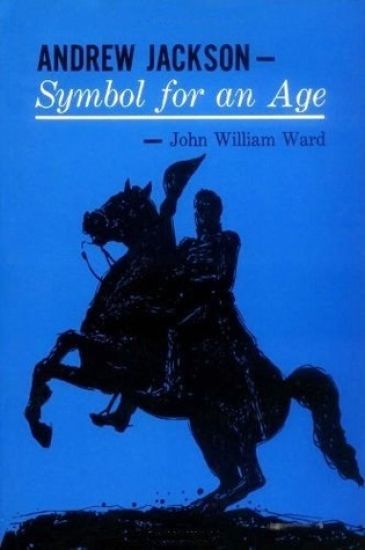
Was the man who lent his name to "Jacksonian America" a rough-hewn frontiersman? A powerful, victorious general? Or merely a man of will? Separating myth from reality, John William Ward here demonstrates how Andrew Jackson captured the imagination of a generation of Americans and came to represent not just leadership but the ideal of courage, foresight, and ability.


An essential work on the Civil War period, this classic of Reconstruction scholarship challenges the longstanding myth of Andrew Johnson as misunderstood statesman, revealing him as a small-minded, vindictive, and stubborn man, whose rigid determination to defy Northern majority opinion thwarted the post-war reunion of North and South.

Few today think of Andrew Jackson, the American military hero and president, as a religious man. Nevertheless, Jackson considered himself a Christian throughout his life. Raised a "rigid presbeterian," Jackson's mother wanted her son to grow up to become a clergyman, and despite suffering tragedies and losing his family in the American Revolution, Jackson never rejected the fundamental Christian teachings of his youth. Although he gained notoriety as a rakish young man, religion's influence on him ebbed and flowed as he established himself as part of the South's planter elite. With his devout wife, Rachel, he attended church and knew his Bible and religious subjects well, and while his determination to preserve his reputation involved him in numerous personal conflicts--including a duel that led to his killing a rival--he blended the principles of the antebellum South's honor-based culture with his belief in a traditional, orthodox version of Christianity. Likewise, he easily reconciled his religion with his ownership of slaves and his advocacy of Native American removal, and while he equated his enemies with the forces of evil, he always attributed his military and political accomplishments to the blessings of Providence. As he aged, Jackson became more devout, but he never experienced a dramatic conversion--contradicting the expectations of the leading revivalists of his era's Second Great Awakening--and he consistently promoted religious liberty and separation of church and state as core republican principles. Ultimately, Jackson's faith reflected a version of Christianity widespread in his era, and his frequent appeals for divine guidance and for God's blessing on his nation further encouraged the development of an American civil religion.

Andrew Marvell, Orphan of the Hurricane
Derek Hirst; Steven N. Zwicker
Oxford University Press
2012
sidottu
Andrew Marvell, Orphan of the Hurricane studies the poetry and polemics of one of the greatest of early modern writers, a poet of immense lyric talent and political importance. The book situates these writings and this writer within the patronage networks and political upheavals of mid seventeenth-century England. Derek Hirst and Steven Zwicker track Marvell's negotiations among personalities and events; explores his idealizations, attachments, and subversions, and speculate on the meaning of the narratives that he told of himself within his writings -- what they call his 'imagined life'. Hirst and Zwicker draw the figure of an imagined life from the repeated traces Marvell left of lyric yearning and satiric anger, and suggest how these were rooted both in the body and in the imagination. The book sheds new light on some of Marvell's most familiar poems -- 'Upon Appleton House', 'The Garden',' To His Coy Mistress', and 'Horatian Ode' -- but at its centre is an extended reading of Marvell's 'The unfortunate Lover', his least familiar and surely most mysterious lyric, and his most sustained narrative of the self. By attending to the lyric, the polemical, and the parliamentary careers together, this book offers a reading, for the first time, of Marvell and his writings as an interpretable whole.

The newest addition to Palgrave's Great Generals series focuses on Andrew Jackson's career including his time as a general in Tennessee and his rise up the Army ranks. Jackson's effective use of spies in war time and of martial law in peace time sparked a debate about the curtailing of civil liberties in the name of national security that continues to this day. Most of all, Jackson was a great motivator who could, with a few carefully selected words and by his own brave example, turn around starved, deserting troops, convincing them to fight. With dramatic scenes of fierce battles and victories, Remini reveals here why Jackson's bold leadership as a general led to his election as President of the United States in 1828.
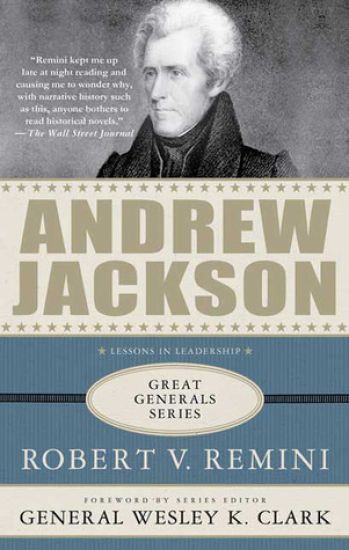
The newest addition to Palgrave's Great Generals series focuses on Andrew Jackson's career including his time as a general in Tennessee and his rise up the Army ranks. Jackson's effective use of spies in war time and of martial law in peace time sparked a debate about the curtailing of civil liberties in the name of national security that continues to this day. Most of all, Jackson was a great motivator who could, with a few carefully selected words and by his own brave example, turn around starved, deserting troops, convincing them to fight. With dramatic scenes of fierce battles and victories, Remini reveals here why Jackson's bold leadership as a general led to his election as President of the United States in 1828.