Kirjojen hintavertailu. Mukana 11 627 428 kirjaa ja 12 kauppaa.

Kirjahaku

Etsi kirjoja tekijän nimen, kirjan nimen tai ISBN:n perusteella.

1000 tulosta hakusanalla Anjali Bindra Patel

Blackstone's Police Q&A's 2024 Volume 3: General Police Duties
Blackstone's Police Q&As 2024 are the essential revision tool for all police officers sitting the NPPF Step Two Legal Examination. They are created to follow Blackstone's Police Manuals, the only study guides endorsed by the College of Policing, providing the most authoritative means of self-testing outside of the promotion examinations. Blackstone's Police Q&A Volume 3: General Police Duties 2024 contains hundreds of multiple-choice questions designed to reinforce knowledge and understanding of the General Police Duties Manual. Each question, presented in the 'Type A' format, has a detailed and comprehensive answer that highlights not only the correct response, but also the reasoning so that you understand the law and how it should be applied in practice and, as importantly, why the incorrect responses are wrong. This is essential for building your understanding of the syllabus and how it will be examined and also allows candidates to highlight any gaps or weaknesses in their knowledge. Each Q&A includes full cross-references to the relevant Manual paragraphs, while a question checklist helps you track your progress. The 2024 editions of this popular series contain important updates, reflecting changes to the 2024 versions of the Blackstone's Police Manuals and the NPPF Syllabus 2024. This edition of General Police Duties includes new questions from across the 2024 syllabus, in line with legislative and case law updates. Other titles in the series include Crime Q&A 2024 and Evidence and Procedure Q&A 2024. Blackstone's Police Q&As are also available as part of our online Blackstone's Police Manuals and Q&As service: http://www.blackstonespoliceservice.com This product is not endorsed by the College of Policing.
Blackstone's Police Q&A's Volume 3: General Police Duties 2025
Blackstone's Police Q&As 2025 are the essential revision tool for all police officers sitting the NPPF Step Two Legal Examination. They are created to follow Blackstone's Police Manuals, the only study guides endorsed by the College of Policing, providing the most authoritative means of self-testing outside of the promotion examinations. Blackstone's Police Q&A Volume 3: General Police Duties 2025 contains hundreds of multiple-choice questions designed to reinforce knowledge and understanding of the General Police Duties Manual. Each question, presented in the 'Type A' format, has a detailed and comprehensive answer that highlights not only the correct response, but also the reasoning so that you understand the law and how it should be applied in practice and, as importantly, why the incorrect responses are wrong. This is essential for building your understanding of the syllabus and how it will be examined and also allows candidates to highlight any gaps or weaknesses in their knowledge. Each Q&A includes full cross-references to the relevant Manual paragraphs, while a question checklist helps you track your progress. The 2025 editions of this popular series contain important updates, reflecting changes to the 2025 versions of the Blackstone's Police Manuals and the NPPF Syllabus 2025. This edition of General Police Duties includes new questions from across the 2025 syllabus, in line with legislative and case law updates. Other titles in the series include Crime Q&A 2025 and Evidence and Procedure Q&A 2025. Blackstone's Police Q&As are also available as part of our online Blackstone's Police Manuals and Q&As service: http://www.blackstonespoliceservice.com This product is not endorsed by the College of Policing.
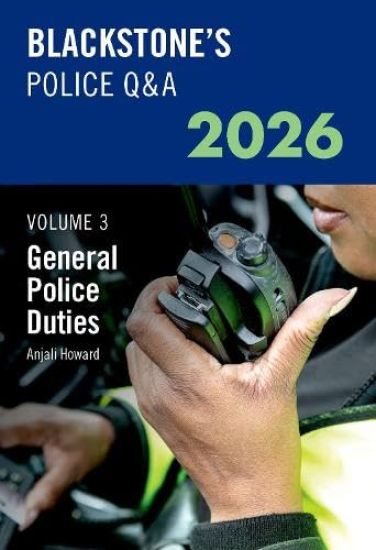
Blackstone's Police Q&A Volume 3: General Police Duties 2026
Blackstone's Police Q&As 2026 are the essential revision tool for all police officers sitting the NPPF Step Two Legal Examination. They are created to follow Blackstone's Police Manuals, the only study guides endorsed by the College of Policing, providing the most authoritative means of self-testing outside of the promotion examinations. Blackstone's Police Q&A Volume 3: General Police Duties 2026 contains hundreds of multiple-choice questions designed to reinforce knowledge and understanding of the General Police Duties Manual. Each question, presented in the 'Type A' format, has a detailed and comprehensive answer that highlights not only the correct response, but also the reasoning so that you understand the law and how it should be applied in practice and, as importantly, why the incorrect responses are wrong. This is essential for building your understanding of the syllabus and how it will be examined and also allows candidates to highlight any gaps or weaknesses in their knowledge. Each Q&A includes full cross-references to the relevant Manual paragraphs, while a question checklist helps you track your progress. The 2026 editions of this popular series contain important updates, reflecting changes to the 2026 versions of the Blackstone's Police Manuals and the NPPF Syllabus 2026. This edition of General Police Duties includes new questions from across the 2026 syllabus, in line with legislative and case law updates. Other titles in the series include Crime Q&A 2026 and Evidence and Procedure Q&A 2026. Blackstone's Police Q&As are also available as part of our online Blackstone's Police Manuals and Q&As service: http://www.blackstonespoliceservice.com This product is not endorsed by the College of Policing.
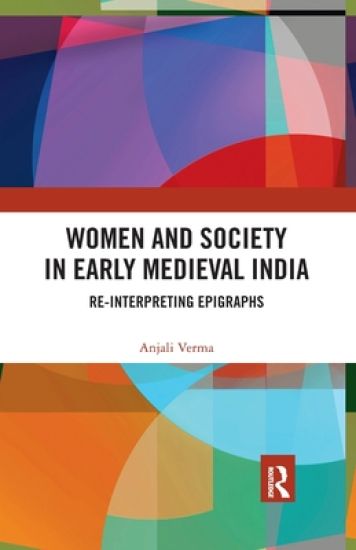
Women and Society in Early Medieval India

Women and Society in Early Medieval India

Anjali Verma

Routledge India
2020
nidottu
This book examines women and society in India during 600–1200 CE through epigraphs. It offers an analysis of inscriptional data at the pan-India level to explore key themes, including early marriage, deprivation of girls from education, property rights, widowhood and sati, as well as women in administration and positions of power. The volume also traces gender roles and agency across religions such as Hinduism and Jainism, the major religions of the times, and sheds light on a range of political, social, economic and religious dimensions. A panoramic critique of contradictions and conformity between inscriptional and literary sources, including pieces of archaeological evidence against traditional views on patriarchal stereotypes, as also regional parities and disparities, the book presents an original understanding of women’s status in early medieval South Asian society.Rich in archival material, this book will be useful to scholars and researchers of ancient and medieval Indian history, social history, archaeology, epigraphy, sociology, cultural studies, gender studies and South Asian studies.
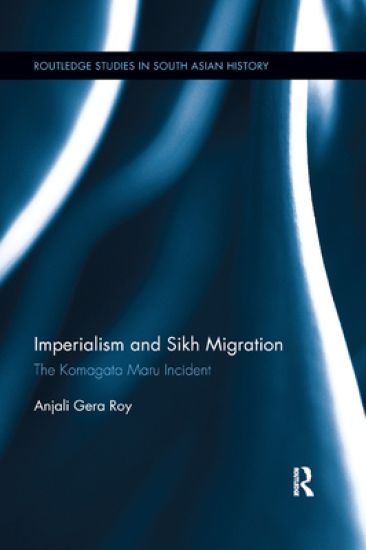
Imperialism and Sikh Migration
In the Punjab, a culture of migration and mobility had already emerged in the nineteenth century. Imperial policies produced a category of hypermobile Sikhs, who left their villages in Punjab to seek their fortunes in South East Asia, Australia, America and Canada. The practices of the British Indian government and the Canada government offer telling instances of the exercise of governmentality through which both old imperialism and the new Empire assert their sovereignty. This book focuses on the Komagata Maru episode of 1914. This Japanese ship was chartered by Gurdit Singh, a prosperous Sikh businessman from Malaya. It carried 376 passengers from Punjab and was not permitted to land in Vancouver on grounds of a stipulation about a continuous journey from the port of departure and forced to return to Kolkata where the passengers were fired at, imprisoned or kept under surveillance. The author isolates juridical procedures, tactics and apparatus of security through which the British Empire exercised power on imperial subjects by investigating the significance of this incident to colonial and postcolonial migration. Juxtaposing public archives including newspapers, official documents and reports against private archives and interviews of descendants, the book analyses the legalities and machineries of surveillance that regulate the movements of people in the old and new Empire.Addressing contemporary discourse on neo-imperialism and resistance, migration, diaspora, multiculturalism and citizenship, this book will be of interest to scholars in the field of diaspora studies, post colonialism, minority studies, migration studies, multiculturalism and Sikh /Punjab and South Asian studies.
Seaglass Summer

Seaglass Summer

Anjali Banerjee

Yearling Books
2011
nidottu
Eleven-year-old Poppy Ray longs to be a veterinarian, but she's never had a pet. This summer, she's going to spend a month with her uncle Sanjay, veterinarian and owner of the Furry Friends Animal Clinic on an island off the Washington coast. Poppy is in for big surprises. She loves tending to the dogs, cats, and even a bird, and she discovers the fun of newborn puppies and the satisfaction of doing a good job. But she learns that there's more to caring for animals than the stethoscope and cotton swabs in her Deluxe Veterinarian First-Aid Kit. She's not prepared for quirky pet owners, gross stuff, or scary emergencies. With help from a boy named Hawk, a chunk of seaglass, and a touch of intuition, Poppy gains a deeper understanding of the pain and joy of working with animals. With warmth and humor, Anjali Banerjee tells the story of a resourceful, determined girl who can't wait to grow up, but begins to realize just how much she has left to discover.
Angel Numbers Coloring Book: Discover the Wisdom of Numerology
Enter the inspiring world of numerology and Angel Numbers, where numerical patterns carry divine messages and reveal hidden truths about one's personality, life, path, and destiny. Explore this fascinating coloring book of number symbolism in 46 imaginative designs featuring flowers, plants, animals, and other natural elements. Accompanying text explains the significance of each number and how colorists can connect with its qualities. Looking for a cosmic wink from your guardian angel? Uncover the powerful connections between numbers and their meanings in this creative coloring book detailed with gold foil accents on the cover.
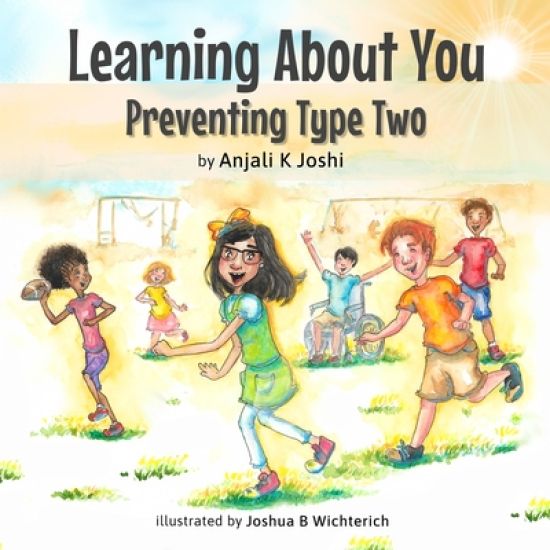
Learning About You Preventing Type Two

Learning About You Preventing Type Two

Anjali K. Joshi

Anjali K Joshi
2020
nidottu
Anika has a problem Her grandmother is ill. She wants to learn more about how to prevent type two diabetes and share the information with her friends. From throwing vegetables across the classroom to having an impromptu dance party, Anika conveys her message with humor and brings awareness to this disease. This book also includes healthy recipes and interactive elements.
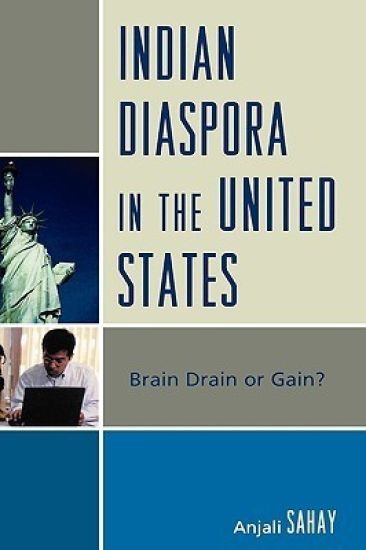
Indian Diaspora in the United States

Indian Diaspora in the United States

Anjali Sahay

Lexington Books
2009
sidottu
Indian Diaspora in the United States takes a new perspective on the topic of brain drain, departing from the traditional literature to include discussions on brain gain and brain circulation using Indian migration to the United States as a case study. Sahay acknowledges that host country policies create the necessary conditions for brain drain to take place, but argues that source countries may also benefit from out-migration of their workers and students. These benefits are measured as remittances, investments, and savings associated with return, and social networking that links expatriates with their country of origin. Through success and visibility in host societies, diaspora workers further influence economic and political benefits for their home countries. This type of brain gain becomes an element of soft power for the source country in the long term. Indian Diaspora in the United States is a ground-breaking work that intersects economic and political issues to the dimension of migration and the concerns over brain drain. With its rigorous, connectionist approach, this book is a valuable contribution to the fields of diaspora, labor, globalization, and Indian studies.
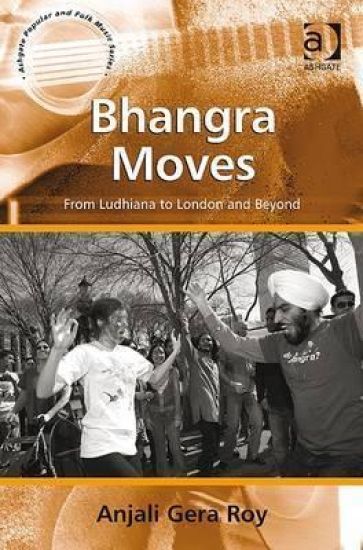
Bhangra Moves

Bhangra Moves

Anjali Gera Roy

Ashgate Publishing Limited
2010
sidottu
Bhangra is commonly understood as the hybrid music produced in Britain by British Asian music producers through mixing Panjabi folk melodies with western pop and black dance rhythms. This is derived from a Punjabi harvest dance of the same name. This book looks at Bhangra's global flows from one of its originary sites, the Indian subcontinent, to contribute to the understanding of emerging South Asian cultural practices such as Bhangra or Bollywood in multi-ethnic societies. It seeks to trace Bhangra's moves from Punjab and its 'return back' to look at the forces that initiate and regulate global flows of local texts and to ask how their producers and consumers redirect them to produce new definitions of culture, identity and nation. The critical importance of this book lies in understanding the difference between the present globalizing wave and previous trans-local movements. Gera Roy contrasts the frames of cultural imperialism with those of cultural invasion to show how Indian cultures have constantly reinvented themselves by cross-pollinating with 'invading' cultures such as Hellenic, Persian, Arabic and many others in the past. By looking at Bhangra's flows to and from India, the book revises the relation between culture, space and identity and challenges boundaries. It weighs both the uses and costs of visibility provided by global networks to marginalized groups in diverse localities and explores whether collaborations between Bhangra practitioners, largely of working class origin, give ordinary people any control over the circulation of culture in the global village. Finally, the book considers whether cultural practices can alter hierarchies and power structures in the real world.
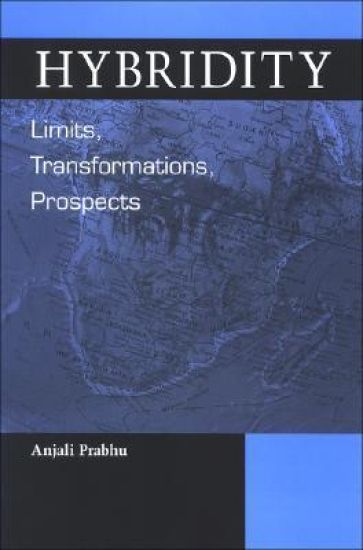
Hybridity

Hybridity

Anjali Prabhu

State University of New York Press
2007
pokkari
Critical reevaluation of the concept of hybridity within postcolonial studies.This critical engagement with some of the most prominent contemporary theorists of postcolonial studies reevaluates recent theories of hybridity and agency. Challenging the claim that hybridity provides a site of resistance to hegemonic and homogenizing forces in an increasingly globalized world, Anjali Prabhu pursues the ways in which hybridity plays out in the Creole, postcolonial societies of Mauritius and La Réunion, two small islands in the Indian Ocean, and offers an introduction to the literature and culture of this lesser-known region of Francophonie. She also reconsiders two major theorists from the Francophone context, Edouard Glissant and Frantz Fanon, through a provocatively Marxian framing that reveals these two writers shared more in common about agency and society than has previously been recognized.
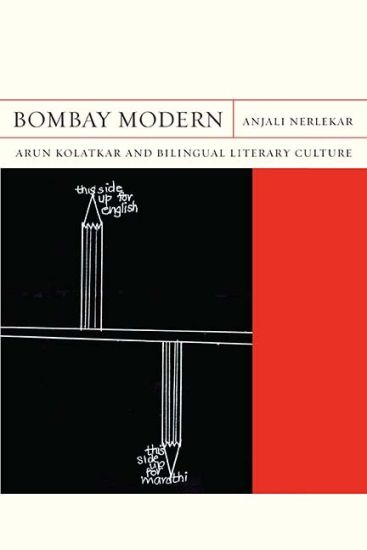
Bombay Modern

Bombay Modern

Anjali Nerlekar

Northwestern University Press
2016
nidottu
Anjali Nerlekar's Bombay Modern is a close reading of Arun Kolatkar's canonical poetic works that relocates the genre of poetry to the center of both Indian literary modernist studies and postcolonial Indian studies. Nerlekar shows how a bilingual, materialist reading of Kolatkar's texts uncovers a uniquely resistant sense of the ""local"" that defies the monolinguistic cultural pressures of the post-1960 years and straddles the boundaries of English and Marathi writing.Bombay Modern uncovers an alternative and provincial modernism through poetry, a genre that is marginal to postcolonial studies, and through bilingual scholarship across English and Marathi texts, a methodology that is currently peripheral at best to both modernist studies and postcolonial literary criticism in India. Eschewing any attempt to define an overarching or universal modernism, Bombay Modern delimits its sphere of study to ""Bombay"" and to the ""post-1960"" (the sathottari period) in an attempt to examine at close range the specific way in which this poetry redeployed the regional, the national, and the international to create a very tangible yet transient local.
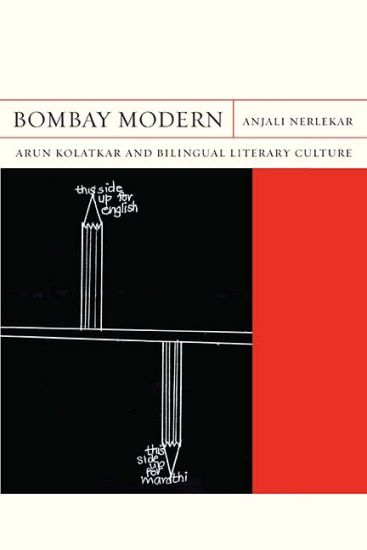
Bombay Modern

Bombay Modern

Anjali Nerlekar

Northwestern University Press
2016
sidottu
Anjali Nerlekar's Bombay Modern is a close reading of Arun Kolatkar's canonical poetic works that relocates the genre of poetry to the center of both Indian literary modernist studies and postcolonial Indian studies. Nerlekar shows how a bilingual, materialist reading of Kolatkar's texts uncovers a uniquely resistant sense of the ""local"" that defies the monolinguistic cultural pressures of the post-1960 years and straddles the boundaries of English and Marathi writing.Bombay Modern uncovers an alternative and provincial modernism through poetry, a genre that is marginal to postcolonial studies, and through bilingual scholarship across English and Marathi texts, a methodology that is currently peripheral at best to both modernist studies and postcolonial literary criticism in India. Eschewing any attempt to define an overarching or universal modernism, Bombay Modern delimits its sphere of study to ""Bombay"" and to the ""post-1960"" (the sathottari period) in an attempt to examine at close range the specific way in which this poetry redeployed the regional, the national, and the international to create a very tangible yet transient local.
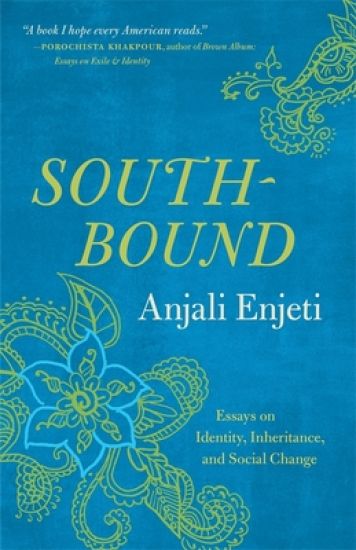
Southbound

Southbound

Anjali Enjeti

University of Georgia Press
2021
pokkari
A move at age ten from a Detroit suburb to Chattanooga in 1984 thrusts Anjali Enjeti into what feels like a new world replete with Confederate flags, Bible verses, and whiteness. It is here that she learns how to get her bearings as a mixed-race brown girl in the Deep South and begins to understand how identity can inspire, inform, and shape a commitment to activism. Her own evolution is a bumpy one, and along the way Enjeti, racially targeted as a child, must wrestle with her own complicity in white supremacy and bigotry as an adult. The twenty essays of her debut collection, Southbound, tackle white feminism at a national feminist organization, the early years of the AIDS epidemic in the South, voter suppression, gun violence and the gun sense movement, the whitewashing of southern literature, the 1982 racialized killing of Vincent Chin, social media’s role in political accountability, evangelical Christianity’s marriage to extremism, and the rise of nationalism worldwide. In our current era of great political strife, this timely collection by Enjeti, a journalist and organizer, paves the way for a path forward, one where identity drives coalition-building and social change.
Enterprise Size, Financing Patterns, and Credit Constraints in Brazil

Enterprise Size, Financing Patterns, and Credit Constraints in Brazil

Anjali Kumar; Manuela Francisco

World Bank Publications
2005
nidottu
Enterprise Size, Financing Patterns, and Credit Constraints in Brazil investigates the importance of firm size with respect to accessing credit. The principal findings are that size strongly affects access to credit compared to firm performance, and other factors, such as management education, location or the industrial sector to which the firm belongs. Additional findings are that the impact of size on access to credit is greater for longer term loans and that public financial institutions are more likely to lend to large firms. Finally, financial access constraints may have a less significant differential impact across firms of different sizes than other constraints, though cost of finance as a constraint is very important.
For the Record

For the Record

Anjali Arondekar

Duke University Press
2009
sidottu
Anjali Arondekar considers the relationship between sexuality and the colonial archive by posing the following questions: Why does sexuality (still) seek its truth in the historical archive? What are the spatial and temporal logics that compel such a return? And conversely, what kind of “archive” does such a recuperative hermeneutics produce? Rather than render sexuality’s relationship to the colonial archive through the preferred lens of historical invisibility (which would presume that there is something about sexuality that is lost or silent and needs to “come out”), Arondekar engages sexuality’s recursive traces within the colonial archive against and through our very desire for access.The logic and the interpretive resources of For the Record arise out of two entangled and minoritized historiographies: one in South Asian studies and the other in queer/sexuality studies. Focusing on late colonial India, Arondekar examines the spectacularization of sexuality in anthropology, law, literature, and pornography from 1843 until 1920. By turning to materials and/or locations that are familiar to most scholars of queer and subaltern studies, Arondekar considers sexuality at the center of the colonial archive rather than at its margins. Each chapter addresses a form of archival loss, troped either in a language of disappearance or paucity, simulacrum or detritus: from Richard Burton’s missing report on male brothels in Karáchi (1845) to a failed sodomy prosecution in Northern India, Queen Empress v. Khairati (1884), and from the ubiquitous India-rubber dildos found in colonial pornography of the mid-to-late nineteenth century to the archival detritus of Kipling’s stories about the Indian Mutiny of 1857.
For the Record

For the Record

Anjali Arondekar

Duke University Press
2009
pokkari
Anjali Arondekar considers the relationship between sexuality and the colonial archive by posing the following questions: Why does sexuality (still) seek its truth in the historical archive? What are the spatial and temporal logics that compel such a return? And conversely, what kind of “archive” does such a recuperative hermeneutics produce? Rather than render sexuality’s relationship to the colonial archive through the preferred lens of historical invisibility (which would presume that there is something about sexuality that is lost or silent and needs to “come out”), Arondekar engages sexuality’s recursive traces within the colonial archive against and through our very desire for access.The logic and the interpretive resources of For the Record arise out of two entangled and minoritized historiographies: one in South Asian studies and the other in queer/sexuality studies. Focusing on late colonial India, Arondekar examines the spectacularization of sexuality in anthropology, law, literature, and pornography from 1843 until 1920. By turning to materials and/or locations that are familiar to most scholars of queer and subaltern studies, Arondekar considers sexuality at the center of the colonial archive rather than at its margins. Each chapter addresses a form of archival loss, troped either in a language of disappearance or paucity, simulacrum or detritus: from Richard Burton’s missing report on male brothels in Karáchi (1845) to a failed sodomy prosecution in Northern India, Queen Empress v. Khairati (1884), and from the ubiquitous India-rubber dildos found in colonial pornography of the mid-to-late nineteenth century to the archival detritus of Kipling’s stories about the Indian Mutiny of 1857.