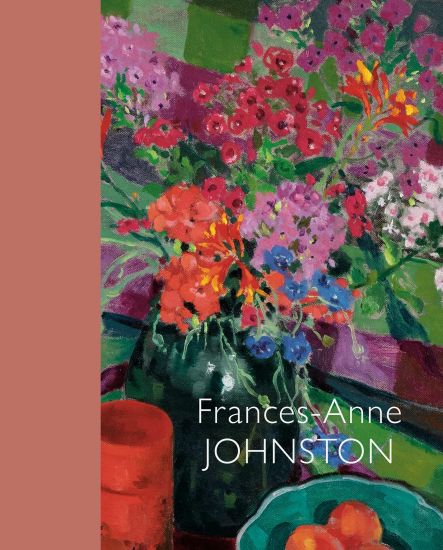
This publication is the first-ever monograph on artist Frances-Anne Johnston, one of Canada's foremost painters of still lifes, flowers, and interiors. Exploring the extensive artistic career of this under-represented artist, the book also situates her within 20th-century Canadian art history and feminist theoretical contexts. In addition to beautiful colour illustrations of Johnston's work, this volume features critical essays, and an extensive exhibition history.Through primary research, curator Rebecca Basciano interprets Johnston's mastery of technique and subject matter, while demonstrating the artist's unique aesthetic and skill through an exploration of several important artworks. Similarly, art historian and scholar Catharine Mastin, in her ongoing investigation of Canadian "artist couples," exposes the challenges faced by women artists -- including Johnston -- who often juggled their own artistic practices with the demands of child-rearing and supporting their husbands' careers.Finally, as a critical aspect of this reclamation work, Frances-Anne Johnston's own voice is revealed in a republished article that she wrote in 1955 for Mayfair. Together, these insightful essays constitute a feminist recovery project by not only situating Johnston among her male contemporaries, but also by creating new space for the appreciation and validation of a practice that was shaped by domestic realities, including motherhood.
In 1867, Frances Anne Rollin, a Black writer and teacher from South Carolina, traveled to Boston to seek a publisher for her biography of famed Black abolitionist, writer, and Civil War veteran Martin R. Delany—the first full-length biography written by an African American. Beginning in January 1868, Rollin kept a diary while in Boston documenting her progression on Delany’s biography, negotiations with publishers, visits from friends, attendance at lectures and readings, and her marriage to William J. Whipper, a Black politician and jurist. Rollin’s diary is one of the earliest known diaries by a Southern Black woman. In this critical edition Jennifer Putzi offers the first complete transcription and annotation of Rollin’s diary, along with a robust introduction providing important biographical, historical, cultural, and literary contexts for readers. Rollin’s diary provides one of the fullest pictures of an African American woman as an author, activist, and well-connected and politically involved individual during the Reconstruction era—filling a gap in the literature and scholarly analysis of such preserved works by nineteenth-century African American women.
In 1867, Frances Anne Rollin, a Black writer and teacher from South Carolina, traveled to Boston to seek a publisher for her biography of famed Black abolitionist, writer, and Civil War veteran Martin R. Delany—the first full-length biography written by an African American. Beginning in January 1868, Rollin kept a diary while in Boston documenting her progression on Delany’s biography, negotiations with publishers, visits from friends, attendance at lectures and readings, and her marriage to William J. Whipper, a Black politician and jurist. Rollin’s diary is one of the earliest known diaries by a Southern Black woman. In this critical edition Jennifer Putzi offers the first complete transcription and annotation of Rollin’s diary, along with a robust introduction providing important biographical, historical, cultural, and literary contexts for readers. Rollin’s diary provides one of the fullest pictures of an African American woman as an author, activist, and well-connected and politically involved individual during the Reconstruction era—filling a gap in the literature and scholarly analysis of such preserved works by nineteenth-century African American women.
Because of the didactic nature of the historical genre, many scholars ancient and modern have seen connections between history and rhetoric. So far, discussion has centered on fifth-century authors -- Herodotus and Thucydides, along with the sophists and early philosophers. Pownall extends the focus of this discussion into an important period. By focusing on key intellectuals and historians of the fourth century (Plato and the major historians -- Xenophon, Ephorus, and Theopompus), she examines how these prose writers created an aristocratic version of the past as an alternative to the democratic version of the oratorical tradition.Frances Pownall is Professor of History and Classics, University of Alberta.
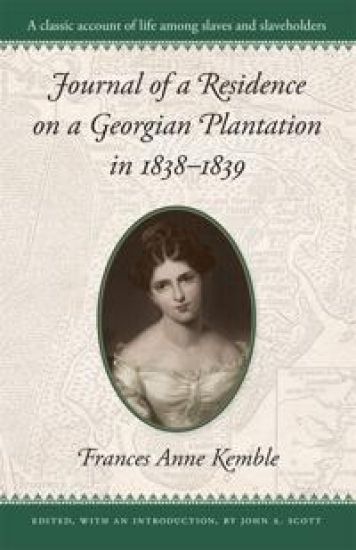
Originally published in 1863, out-of-print and unavailable for almost a century, Frances Anne Kemble's Journal has long been recognized by historians as unique in the literature of American slavery and invaluable for obtaining a clear view of the "peculiar institution" and of life in the antebellum South.Fanny Kemble was one of the leading lights of the English stage in the nineteenth century. During a tour of America in the 1830s she met and married a wealthy Philadelphian, Pierce Butler, part of whose fortune derived from his family's vast cotton and rice plantation on the Sea Islands of Georgia. After their marriage she spent several months living on the plantation. Profoundly shocked by what she saw, she recorded her observations of plantation life in a series of journal entries written as letters to a friend. But she never sent the letters, and not until the Civil War was on and Fanny was divorced from Pierce Butler and living in England were they published.This Brown Thrasher edition incorporates the valuable introduction written by John A. Scott for the 1961 edition published by Alfred A. Knopf, together with the editor's appendices to that edition. It provides the modern reader with the historical and biographical background to move freely and with ease in Mrs. Kemble's world.