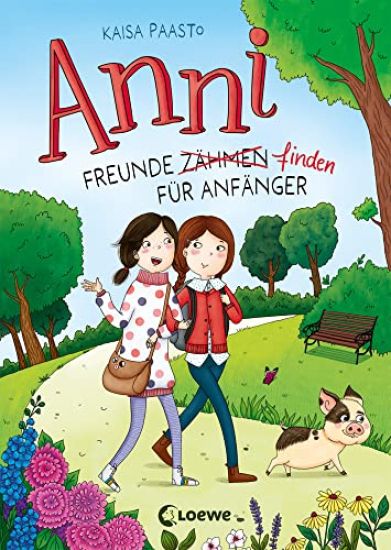
Anni ist ein kleines M dchen, welches mit ihrem imagin ren Freund und ihrer Mama, auf die Suche nach ihrem Schn ffeltuch geht. Anni l sst ihrer Fantasie freien Lauf und erlebt viele Abenteuer.
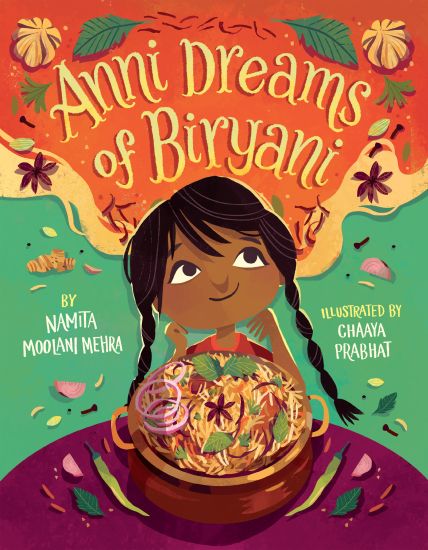
Anni’s on a mission to YUM! The café across the street from Anni’s home in Little India makes the best biryani in the world. Fluffy and fragrant, spicy and succulent—Anni could eat it every day. In fact, Anni loves that biryani so much that she’s determined to uncover the secret to the recipe. She has so many questions for Uncle, the grumpy chef and owner of the café. But he isn’t providing any easy clues. So, with some careful planning, Anni sets out on a mission to find out the secret ingredients to this most special dish. Will Anni get the answers she’s looking for…before it’s too late?
A colorful exploration of the artwork and influences of Anni Albers, this engaging book introduces young readers to the fundamentals of weaving and the world of textiles Bert, a plucky but sometimes lazy bird, wakes up one morning to discover that his nest has fallen apart. After an unsuccessful search for a quick fix, he finds himself in the studio of the legendary artist Anni Albers, who shows him that weaving may be the perfect way to restore his home into something that's useful and beautiful. A colorful exploration of the artwork and influences of Anni Albers--who changed our ideas about what is art and what is craft and what is both--this engaging book introduces young readers to the fundamentals of weaving and the world of textiles.
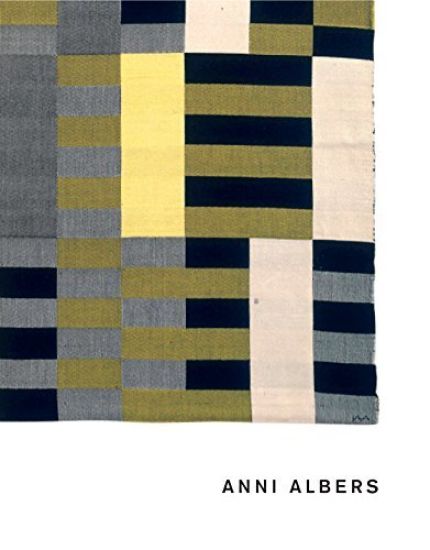
The first in-depth study of a monumental wall hanging—rediscovered after many years—by renowned Bauhaus artist Anni Albers.Albers was influential in elevating textiles from craft to fine art. Her exquisite wall hanging Camino Real—seen for the first time outside of Mexico City at David Zwirner, New York, in 2019, and the subject of this book—is a superb example of this modern master’s work.In 1967, noted architects Ricardo Legorreta and Luis Barragán commissioned Albers to create a work for the newly built Hotel Camino Real in Mexico City. Completed in 1968, her striking wall hanging Camino Real is heavily influenced by Latin American art and culture. Showcasing Albers’s approach to working with textiles as a “many-sided practice,” it is accompanied in this book by works Albers made following her move to the United States in 1933, including innovative wall hangings, weavings, and a range of works on paper. Together, these works reflect Albers’s brilliant embrace of different materials and techniques and her ability to work at varied scales. The works in this publication offer additional context and motifs, demonstrating the artist’s pioneering investment in textiles as an art form and her parallel interest in mass-produced designs.Published on the occasion of the Anni Albers exhibition presented at David Zwirner, New York, in 2019, this catalogue features new scholarship from the show’s curator, Brenda Danilowitz, art historian and chief curator of The Josef and Anni Albers Foundation, and T’ai Smith, an expert on Bauhaus craft and weaving.
A spectacular and unprecedented visual biography of the leading pioneers and protagonists of modern art and design Josef - painter, designer, and teacher - and Anni Albers - textile artist and printmaker - are among the twentieth century's most important abstract artists, and this is the first monograph to celebrate the rich creative output and beguiling relationship of these two masters in one elegant volume. It presents their life and work as never before, from their formative years at the Bauhaus in Germany to their remarkable influence at Black Mountain College in the United States through their intensely productive period in Connecticut. Accessibly written, the book is packed with more than 750 artworks, archival images, and documents - many published here for the first time - all tracing the remarkable lives and careers of this legendary couple. Dispersed throughout area series of short essays on artists that focuses on the Alberses relationship with a number of important artists and architects of the 20th century, like Ruth Asawa, Marcel Breuer, Merce Cunningham, Philip Johnson, Paul Klee, Jacob Lawrence, and many more. The beautifully cloth-bound package utilizes an elegant color palette and design that speaks to the work of both artists. This comprehensive visual biography showcases the artists' rich and dynamic lives, and their infinite influence on each other, as they shared the profound conviction that art was central to human existence.
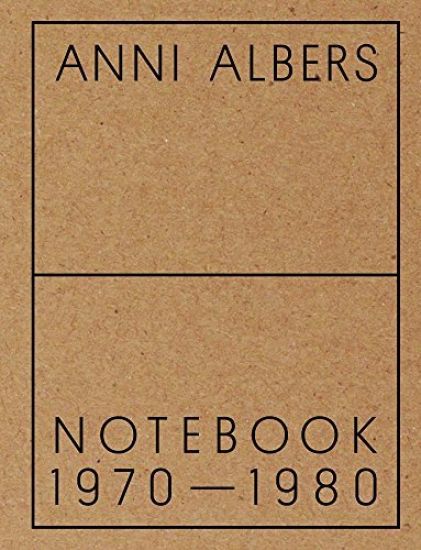
A superb facsimile of the only known notebook of legendary modernist polymath Anni AlbersBeginning in 1970, Albers filled her graph-paper notebook regularly for ten years. This rare and previously unpublished document of her working process contains intricate drawings for her large body of graphic work, as well as studies for her late knot drawings. The notebook follows Albers' deliberations and progression as a draftsman in their original form. It reveals the way she went about making complex patterns, exploring them piece by piece, line by line, in a visually dramatic and mysteriously beautiful series of geometric arrangements. An afterword by Brenda Danilowitz, Chief Curator of The Josef and Anni Albers Foundation, contextualizes the notebook and explores the role studies played in the development of Albers' work.
Anni und Toto lieben sich, doch dann muss Anni mit ihrer Familie umziehen. Eine zarte Liebesgeschichte zwischen Zweien, die keine Kinder mehr sind, aber auch noch keine Jugendlichen.
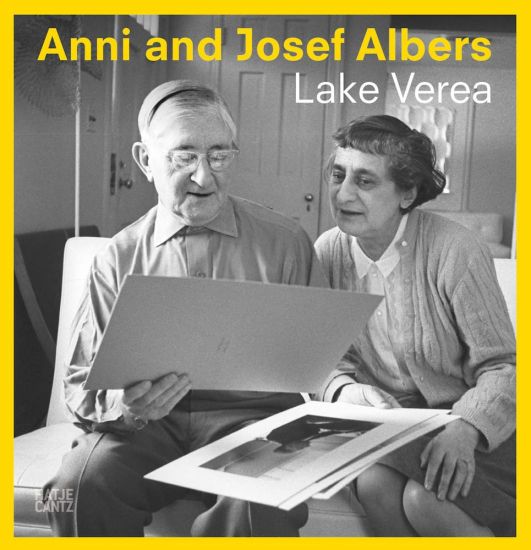
They were not only two of the outstanding artists of the Bauhaus, but also a well-known couple. Their many famous works and the artists they influenced as teachers and role models bear witness to their life and work. But that is not all, as another ingenious couple literally shows us. The photographer duo Lake Verea has joined forces with the Josef and Anni Albers Foundation to trace the material and intellectual traces of their artistic creativity in their estate. Correspondence with Bauhaus colleagues, tubes of paint and fabric fibers are captured with an extraordinary feel and vividness. Seeing the objects gives wings to the imagination. For inevitably, one sees the hands of the artists at work, who formed their very own contribution to 20th century art history from these objects, conversations and trains of thought.