Randomised Response-Adaptive Designs in Clinical Trials presents methods for the randomised allocation of treatments to patients in sequential clinical trials. Emphasizing the practical application of clinical trial designs, the book is designed for medical and applied statisticians, clinicians, and statisticians in training. After introducing clinical trials in drug development, the authors assess a simple adaptive design for binary responses without covariates. They discuss randomisation and covariate balance in normally distributed responses and cover many important response-adaptive designs for binary responses. The book then develops response-adaptive designs for continuous and longitudinal responses, optimum designs with covariates, and response-adaptive designs with covariates. It also covers response-adaptive designs that are derived by optimising an objective function subject to constraints on the variance of estimated parametric functions. The concluding chapter explores future directions in the development of adaptive designs.
Since the 6th century, this has been one of the most influential documents of Western thought and civilization. Full of plain wisdom, the words of St. Benedict are a guide for work, prayer, study, and community life.
Mechanical engineering, an engineering discipline forged and shaped by the needs of the industrial revolution, is once again asked to do its substantial share in the call for industrial renewal. The general call is urgent as we face profound issues of productivity and competitiveness that require engineering solutions. The Mechanical Engineering Series features graduate texts and research mono graphs intended to address the need for information in contemporary areas of mechanical engineering. The series is conceived as a comprehensive one that covers a broad range of concentrations important to mechanical engineering graduate education and re search. We are fortunate to have a distinguished roster of consulting editors on the advisory board, each an expert in one of the areas of concentration. The names of the consulting editors are listed on the facing page of this volume. The areas of concentration are applied mechanics, biomechanics, computational me chanics, dynamic systems and control, energetics, mechanics of materials, proc essing, production systems, thermal science, and tribology.
Why We Wrote This Book This book is about using graphs to explore and model continuous multi variate data. Such data are often modelled using the multivariate normal distribution and, indeed, there is a literatme of weighty statistical tomes presenting the mathematical theory of this activity. Our book is very dif ferent. Although we use the methods described in these books, we focus on ways of exploring whether the data do indeed have a normal distribution. We emphasize outlier detection, transformations to normality and the de tection of clusters and unsuspected influential subsets. We then quantify the effect of these departures from normality on procedures such as dis crimination and duster analysis. The normal distribution is central to our book because, subject to our exploration of departures, it provides useful models for many sets of data. However, the standard estimates of the parameters, especially the covari ance matrix of the observations, are highly sensitive to the presence of outliers. This is both a blessing and a curse. It is a blessing because, if we estimate the parameters with the outliers excluded, their effect is appre ciable and apparent if we then include them for estimation. It is however a curse because it can be hard to detect which observations are outliers. We use the forward search for this purpose.
Introduction to Contact Mechanics, Second Edition is a gentle introduction to the mechanics of solid bodies in contact for graduate students, post doctoral individuals, and the beginning researcher. This second edition maintains the introductory character of the first with a focus on materials science as distinct from straight solid mechanics theory. Every chapter has been updated to make the book easier to read and more informative. A new chapter on depth sensing indentation has been added, and the contents of the other chapters have been completely overhauled with added figures, formulae and explanations. The author begins with an introduction to the mechanical properties of materials, general fracture mechanics and the fracture of brittle solids. This is followed by a detailed description of indentation stress fields for both elastic and elastic-plastic contact. The discussion then turns to the formation of Hertzian cone cracks in brittle materials, subsurface damage in ductile materials, and the meaning of hardness. The author concludes with an overview of practical methods of indentation.
Setting out the debates and reviewing the evidence that links health outcomes with social and physical environments, this new edition of the well-established text offers an accessible overview of the theoretical perspectives, methodologies, and research in the field of health geography Includes international examples, drawn from a broad range of countries, and extensive illustrationsUnique in its approach to health geography, as opposed to medical geographyNew chapters focus on contemporary concerns including neighborhoods and health, ageing, and emerging infectious diseaseOffers five new case studies and an fresh emphasis on qualitative research approachesWritten by two of the leading health geographers in the world, each with extensive experience in research and policy
When was the last time your company improved productivity from 20 percent to 60 percent-in only four days? Or cut inventory by 50 percent in the same amount of time? Remarkable results like these were delivered by teams of employees and those who participated in the Association for Manufacturing Excellence Kaizen BlitzSM events. Using the Kaizen Blitz, employees learned how to work as a team to tackle problems from the shop floor and, most importantly, how to solve them quickly. That's what The Kaizen Blitz can teach you. Simply translated as "continuous improvement," kaizen is a highly focused process aimed at producing incremental performance improvements in narrowly targeted areas. The Kaizen Blitz is a powerful technique that delivers breakthrough improvements throughout an organization-fast. This book will show you how the Kaizen Blitz works and how to bring the extraordinary benefits of this approach to your company. Coauthored by executives of the AME, the book provides a frank discussion of what kaizen will and won't do, the preparation necessary, obstacles to be wary of, and the results you can expect. The Kaizen Blitz involves everyone across an organization-managers and workers alike. 44t is a low-cost, hands-on process, where all team members are equal and everyone gets their hands dirty. This thorough guide explains how your company can put together your own Kaizen Blitz teams to rapidly develop, test, and refine solutions to problems, leaving a new process in place in just a few days. It outlines how employees can work side by side to implement the best of their ideas for reaching common business goals, such as inventory reduction, capacity expansion, cost reduction, and leveraging capital investments. You will discover how the application of a few simple tools in a straightforward, common-sense approach can bring about real and profound change, provided that management is fully committed and ready to lead the process. In addition, the authors of this important book: * Help you determine whether your organization is ready to attempt the Kaizen Blitz * Outline what you need for an initial Kaizen Blitz project-and what to avoid * Explain why software package-driven process change has limitations * Cite results and applications in top U.S. manufacturers. If you are committed to adopting lean manufacturing; if you want an effective tool to address specific problems in your company; if you need radical change to happen now, The Kaizen Blitz will deliver beyond your highest expectations. The Association for Manufacturing Excellence has pioneered a powerful version of kaizen-a process for achieving continuous improvement in an organization-called the Kaizen Blitz.SM This book will show you how to use this remarkable tool to deliver breakthrough improvements in your company in areas like productivity, inventory reduction, capacity expansion, and much more. You'll learn how to assemble a kaizen team that will determine solutions to your company's specific problems by designing new systems, correcting mistakes quickly and moving on, running and refining procedures, and ultimately demonstrating a new process in place in just a few days. You'll also read about top U.S. manufacturers who have successfully used the Kaizen Blitz to bring about radical, positive change. If your company is ready to achieve dramatic results by implementing new processes-not just proposed, but in place and functioning-in a matter of days, the Kaizen Blitz is the way to make it happen.
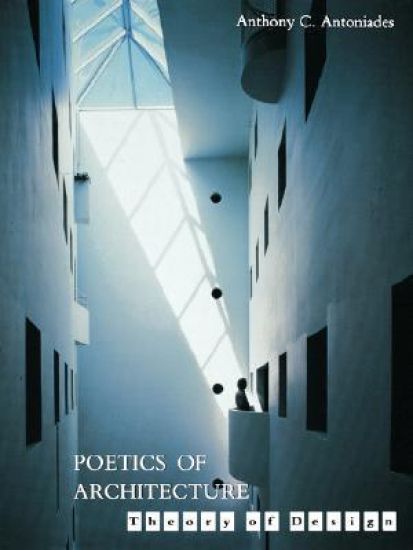
In order for a book to succeed in presenting a theory of architecture, it must address aspects of imagination and creativity as well as the channels one can use to achieve truly significant architectural design. Poetics of Architecture explores the fundamental theories of Modern and Postmodern design and attempts to reconcile all that is worthwhile in these two movements into a new inclusivist attitude toward architecture. Anthony C. Antoniades looks at the many intangible and tangible channels one can harness in creating architectural design. By opening up architecture to the full range of creative influences, he tries to help readers produce designs that are richer on spatial, sensual, spiritual, and environmental levels. Some of the intangible channels to creativity explored in the book include fantasy, metaphor, the paradoxical and metaphysical, the primordial and untouched, poetry and literature, and the exotic and multicultural. Among the tangible channels covered are history and the study of precedents, mimesis and literal interpretation, geometry, materials, and the role of nature. The author presents rich and imaginative discussions of these various channels, explaining which were favored during the Modern and Postmodern movements and clarifying his theoretical analyses through the use of many vivid examples, tables, and illustrations. Included among the examples in the volume are many distinguished projects and theories by a wide range of noted architects such as Asplund, Aalto, Utzon, Pikionis, Barragín, Pietilä, Predock, and Legorreta, who are latecomers to the attention of the media. Antoniades also provides fascinating material on the study of architectural biographies as a means of achieving an all-inclusive creativity in architectural design. Highly original yet based on solid principles, Poetics of Architecture will help architects, designers, and students increase their versatility and creativity in the studio. It will also deepen their understanding and appreciation of the creative process and its many influences.
This book presents the major themes of the economic literature on natural resources and the environment. It is designed to bring the reader, in part with the aid of a unified model of optimal resource use, to the frontiers of the discipline, using only elementary mathematical models. Features special to exhaustible and renewable resources, including the problems posed by market imperfections, are treated as extensions of the basic model. The theoretical discussion is enriched with examples and applications, including a systematic investigation of the behaviour of resource reserves, costs, prices, and substitution possibilities. Substantial attention to environmental, as well as extractive, resources is a distinctive aspect of this book. The author describes methods of estimating the environmental costs of resource development and other projects, and presents some key empirical findings. Policy instruments to protect the environment, such as taxes, subsidies, marketable permits, and direct controls, are carefully analysed from a welfare-theoretic point of view.
A woman's story during a Marxist revolution in Africa. Write, Africa, write!The terrorist nature of the Marxist revolution in Mocambique is starkly reflected in this story of a brave Portuguese girl who survives assault, tries to rebuild a life in the country of her adoption, but finally has to escape by sea to reach South Africa. Today, thanks to western help, Mocambique is recovering, and Children of Adamastor is a strong reminder of the trauma that her people had to endure under communist rule. "Fleischer has opted to tell Ines's story in the first person, a notoriously difficult feat for a man, but his writing is spare, restrained, almost skeletal, and the narrative voice rings true. His authorial voice is a whisper rather than a shout and all the more powerful for that." Frances Coburn, The Star, Johannesburg.
An Introduction to Philosophical Logic has been a popular mainstay among students taking courses in philosophical logic and the philosophy of language since it was first published in 1982.
In this clear, practical, and relatively brief commentary, Anthony Thiselton brings to bear his intimate knowledge of Paul's theology, the ancient city of Corinth, and Paul's epistles to the church of that city. The commentary is not only critical and exegetical, but also has a focus on practical and pastoral reflection. 2 Corinthians is Paul's most passionate epistle. It shows him to be a man of very deep feeling, who sometimes has to be frank, even blunt, with those who seek to undermine his work. In this commentary, we see the inner turmoil of a devoted missionary pastor and apostle. We also have the opportunity to explore how power can be expressed through weakness by pastors and all Christians who follow a Christ crucified and risen.
This book focuses on a reading of Frantz Fanon’s work and life, asking how the work of a revolutionary writer such as Fanon might be best appropriated for contemporary political and cultural issues. Separate chapters introduce Fanon’s life and examine the question of Fanon as our contemporary; review the field of “Fanon studies” that has grown up around his work; bring Fanon into conversation with the critical contemporary figures Edward Said, Michel Foucault, Jamaica Kincaid, and Paul Gilroy; and turn to Fanon’s work to think through the contemporary popular uprisings that have come to be known as the “Arab Spring.” The book concludes by arguing that a reevaluation of Fanon’s life and work can provide us with a particular set of lessons about solidarity—lessons that are crucial for the contemporary political struggles that face us today and that will continue to confront us in the future. Finding Something Different: Frantz Fanon and the Future of Cultural Politics is inspired by Fanon’s unsparing struggle against the depredations of racism and colonialism, and his lifelong commitment to finding something different.
This book focuses on a reading of Frantz Fanon’s work and life, asking how the work of a revolutionary writer such as Fanon might be best appropriated for contemporary political and cultural issues. Separate chapters introduce Fanon’s life and examine the question of Fanon as our contemporary; review the field of “Fanon studies” that has grown up around his work; bring Fanon into conversation with the critical contemporary figures Edward Said, Michel Foucault, Jamaica Kincaid, and Paul Gilroy; and turn to Fanon’s work to think through the contemporary popular uprisings that have come to be known as the “Arab Spring.” The book concludes by arguing that a re-evaluation of Fanon’s life and work can provide us with a particular set of lessons about solidarity, lessons that are crucial for the contemporary political struggles that face us today and that will continue to confront us in the future. Finding Something Different: Frantz Fanon and the Future of Cultural Politics is inspired by Fanon’s unsparing struggle against the depredations of racism and colonialism, and his lifelong commitment to finding something different.
Hermeneutics is an interdisciplinary study of how we interpret texts, especially biblical texts, in the light of theories of understanding in philosophy, meaning in literary theory, and of theology. This volume brings together the seminal thought of a leading contemporary pioneer in this field. Thiselton's The Two Horizons was a classic on how horizons of biblical texts engage creatively with the horizons of the modern world. The author's later New Horizons in Hermeneutics explored still more deeply the transforming capacities of biblical texts, while his massive commentary on 1 Corinthians interpreted an epistle. This volume collects many of Anthony Thiselton's more notable writings from some seven books and 70 articles, to which he adds his own re-appraisals of earlier work. It uniquely expounds the thought of a major contemporary British theologian through his own words, and includes his own critical assessments.