Kirjojen hintavertailu. Mukana 12 390 323 kirjaa ja 12 kauppaa.

Kirjahaku

Etsi kirjoja tekijän nimen, kirjan nimen tai ISBN:n perusteella.

1000 tulosta hakusanalla Aristotle

The Basic Works of Aristotle

The Basic Works of Aristotle

Aristotle

Modern Library Inc
2001
pokkari
Preserved by Arabic mathematicians and canonized by Christian scholars, Aristotle's works have shaped Western thought, science, and religion for nearly two thousand years. Richard McKeon's The Basic Works of Aristotle-constituted out of the definitive Oxford translation and in print as a Random House hardcover for sixty years-has long been considered the best available one-volume Aristotle. Appearing in paperback at long last, this edition includes selections from the Organon, On the Heavens, The Short Physical Treatises, Rhetoric, among others, and On the Soul, On Generation and Corruption, Physics, Metaphysics, Nicomachean Ethics, Politics, and Poetics in their entirety.
Aristotle's Poetics

Aristotle's Poetics

Aristotle

WW Norton Co
1983
nidottu
Aristotle's doctrines are basic to every critical discussion of Greek tragedy and of other literary forms. Although the Poetics has often been denounced or rejected, such rejection is usually the result of a misunderstanding of what Aristotle says. And that is where Hutton's work is uniquely important. Commentators have long recognized the need to view the Poetics in the context of its creation and it re-emergence in the Renaissance. Few, if any, however, have had the necessary combination of talents that James Hutton possessed as an accomplished Hellenist with a particularly strong background in Greek philosophy, a graceful stylist in English, and a leading authority on the Renaissance humanists. To supplement his translation, Hutton has provided full explanatory and glossarial notes. In his introduction he discusses the work in terms of Aristotelian thought and its Platonic roots, thereby correcting the dogmatism that often attends study of the Poetics. The introduction also fully outlines the work's historical influence.
Aristotle

Aristotle

David Ross

TAYLOR FRANCIS LTD
1995
nidottu
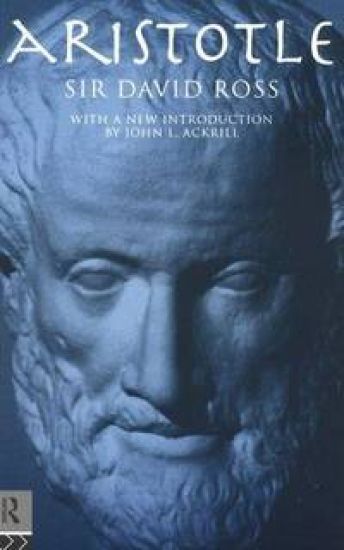
Sir David Ross was one of the most distinguished and influential Aristotelians of this century; his study has long been established as an authoritative survey of the life, work and philosophy of Aristotle.This clear and lucid account contains useful summaries of theories and arguments, with brief, suggestive critical comments. Aristotle's work encompassed all the branches of science and learning which were central to the intellectual life of the ancient world: logic, the philosophy of nature, biology, psychology, metaphysics, ethics, politics, rhetoric and poetics. Aristotle's borrowings from his predecessors, and his own fundamental influence on later philosophy, are also examined. Important Greek terms in Aristotle's work are explained and discussed.Aristotle is now re-issued with a new introduction by John L. Ackrill, which reviews developments in Aristotelian studies since Sir David Ross originally wrote his classic study. The bibliography has been supplemented by references to recent works. Both students of philosophy and general rea ders will find the volume an indispensable guide to Aristotle's thought.
Aristotle
The works of Aristotle are central to the Western philosophical tradition, and scholarship on Aristotle, especially in English, has burgeoned enormously in the last forty years. Aristotle: Critical Assessments collects together articles on Aristotle's philosophy otherwise scattered over many philosophical, classical and historical scientific journals. The set thus provides a significant resource for those approaching the literature for the first time and for those already studying Aristotle in a professional capacity. Aristotle has been so influential and remains so in so many distinct areas that it is often the case that, say, a reader is acquainted with the literature on metaphysics or ethics but knows nothing about the literature on psychology or the philosophy of biology.Guided by new editorial introductions, this set guides the researcher, teacher or student through the issues of major concern in contemporary Aristotelian scholarship in the English-speaking world. The articles are arranged as follows:* Volume I covers Logic and Metaphysics* Volume II covers Physics, Cosmology and Biology* Volume III covers Psychology and Ethics* Volume IV covers Politics, Rhetoric and Aesthetics
Aristotle

Aristotle

John B. Morrall

Routledge
2003
sidottu
First published in 1977 this volume is the only account published in English in the 20th century to be exclusively devoted to an interpretation of Aristotle's political thought (as distinct from commentaries, translations and works on Aristotelean philosophy in general). It places Aristotle in his background of the Greek political experience.
Aristotle

Aristotle

Sir David Ross

Routledge
1995
nidottu
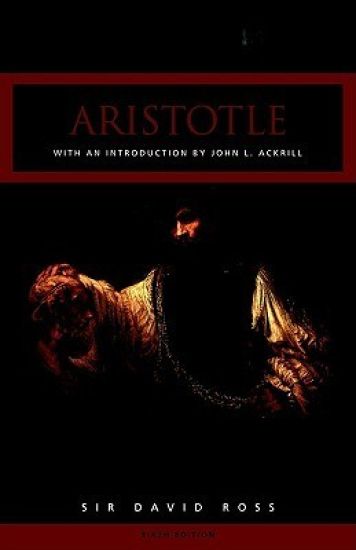
Written by renowned Aristotle scholar Sir David Ross, this study has long been established as one of the foremost surveys of Aristotle's life, work and philosophy. With John L. Ackrill's introduction and updated bibliography, created for the sixth edition, the book continues to serve as a standard guide, both for the student of ancient history and the general reader.
Aristotle

Aristotle

John B. Morrall

Routledge
2011
nidottu
First published in 1977 this volume is the only account published in English in the 20th century to be exclusively devoted to an interpretation of Aristotle's political thought (as distinct from commentaries, translations and works on Aristotelean philosophy in general). It places Aristotle in his background of the Greek political experience.
Aristotle

Aristotle

Christopher Shields

Routledge
2013
sidottu
In this extensively revised new edition of his excellent guidebook, Christopher Shields introduces the whole of Aristotle’s philosophy, showing how his powerful conception of human nature shaped much of his thinking on the nature of the soul and the mind, ethics, politics, and the arts.Beginning with a brief biography, Shields carefully explains the fundamental elements of Aristotle’s thought: his explanatory framework, his philosophical methodology, and his four-causal explanatory scheme. Subsequently he discusses Aristotle’s metaphysics, the theory of categories, logical theory, and his conception of the human being as a composite of soul and body.The last part concentrates on Aristotle’s value theory as applied to ethics and politics, and assesses his approach to happiness, virtue, and the best life for human beings, before turning to a consideration of Aristotle's theory of rhetoric and the arts, with a special focus on his perennially controversial treatment of tragedy.This second edition includes an expanded discussion of Aristotle's method, and new sections on key issues in perception, thought, akrasia, and mimesis. It concludes with an expanded assessment of Aristotle's legacy, sketching currently emerging Neo-Aristotelian movements in metaphysics and virtue ethics.
Aristotle

Aristotle

Christopher Shields

Routledge
2013
nidottu
In this extensively revised new edition of his excellent guidebook, Christopher Shields introduces the whole of Aristotle’s philosophy, showing how his powerful conception of human nature shaped much of his thinking on the nature of the soul and the mind, ethics, politics, and the arts.Beginning with a brief biography, Shields carefully explains the fundamental elements of Aristotle’s thought: his explanatory framework, his philosophical methodology, and his four-causal explanatory scheme. Subsequently he discusses Aristotle’s metaphysics, the theory of categories, logical theory, and his conception of the human being as a composite of soul and body.The last part concentrates on Aristotle’s value theory as applied to ethics and politics, and assesses his approach to happiness, virtue, and the best life for human beings, before turning to a consideration of Aristotle's theory of rhetoric and the arts, with a special focus on his perennially controversial treatment of tragedy.This second edition includes an expanded discussion of Aristotle's method, and new sections on key issues in perception, thought, akrasia, and mimesis. It concludes with an expanded assessment of Aristotle's legacy, sketching currently emerging Neo-Aristotelian movements in metaphysics and virtue ethics.
The Philosophy of Aristotle
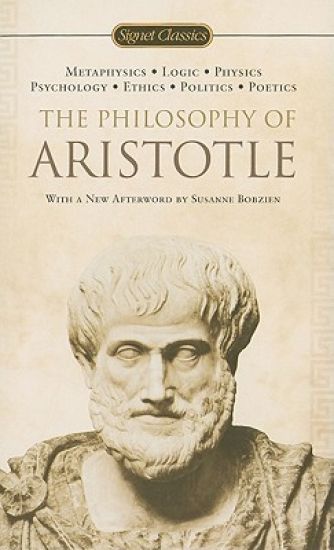
More than two thousand years ago, Aristotle established unique standards of philosophic inquiry, observation, and judgment. This book offers a contemporary reevaluation of the philosophy of the master of Western thought, and shows his vital, continuing influence in our modern world.
Aristotle

Aristotle

Aristotle

Cambridge University Press
1968
pokkari
Dr Lloyd writes for those who want to discover and explore Aristotle's work for themselves. He acts as mediator between Aristotle and the modern reader. The book is divided into two parts. The first tells the story of Aristotle's intellectual development as far as it can be reconstructed; the second presents the fundamentals of his thought in the main fields of inquiry which interested him: logic and metaphysics, physics, psychology, ethics, politics, and literary criticism. The final chapter considers the unity and coherence of Aristotle's philosophy, and records briefly his later influence on European thought. This is a concise and lucid account of the work of a difficult and profound thinker. Dr Lloyd's business is only with the essentials; but he does not shirk the difficulties which arise in their interpretation, nor does he invest Aristotle with a spurious modernity.
Aristotle

Aristotle

Lear Jonathan

Cambridge University Press
1988
pokkari
This is a philosophical introduction to Aristotle, and Professor Lear starts where Aristotle himself starts. The first sentence of the Metaphysics states that all human beings by their nature desire to know. But what is it for us to be animated by this desire in this world? What is it for a creature to have a nature; what is our human nature; what must the world be like to be intelligible; and what must we be like to understand it systematically? Through a consideration of these questions Professor Lear introduces us to the essence of Aristotle’s philosophy and guides us through the central Aristotelian texts - selected from the Physics, Metaphysics, Ethics, Politics and from the biological and logical works. The book is written in a direct, lucid style which engages the reader with the themes in an active, participatory manner.
Aristotle: 'Historia Animalium': Volume 1, Books I-X: Text
David Balme's major critical edition of Aristotle's largest and perhaps least studied treatise is based on a collation of the 26 known extant manuscripts and a study of the early Latin translations. Begun in 1975, with his work towards the Loeb editio minor of books VII–X, this edition of all ten books, including a very full apparatus criticus, was largely complete by 1989 when Professor Balme died, but it needed extensive work to put it in publishable form. This work has been carried out by Allan Gotthelf, Balme's friend and associate. Volume I of the edition contains the complete text of the Historia Animalium, the critical apparatus, and Balme's introduction to the manuscripts, expanded and updated with the assistance of Friederike Berger, and in consultation with the editors of forthcoming editions of the extant medieval translations. A substantial index to the text has been provided by Liliane Bodson in collaboration with Professor Gotthelf.
Aristotle: The Politics and the Constitution of Athens
This new collection of Aristotle's political writings provides the student with all the necessary materials for a full understanding of his work as a political scientist. Not only does it offer an unusually lucid and accessible account of The Politics, it also shows the relation between this and his studies as a constitutional historian. Only one of Aristotle's many constitutions - The Constitution of Athens -has survived and this is now presented here alongside The Politics so that the student can appreciate both the empirical and the theoretical aspects of Aristotle's political science. This expanded Cambridge Texts edition contains an extensive guide to further reading and an index of names with biographical notes, in addition to a revised and extended introduction. Presentation of The Politics and The Constitution of Athens in a single volume will make this the most attractive and convenient student edition of these seminal works currently available.
Aristotle: The Politics and the Constitution of Athens
This new collection of Aristotle’s political writings provides the student with all the necessary materials for a full understanding of his work as a political scientist. Not only does it offer an unusually lucid and accessible account of The Politics, it also shows the relation between this and his studies as a constitutional historian. Only one of Aristotle’s many constitutions - The Constitution of Athens -has survived and this is now presented here alongside The Politics so that the student can appreciate both the empirical and the theoretical aspects of Aristotle’s political science. This expanded Cambridge Texts edition contains an extensive guide to further reading and an index of names with biographical notes, in addition to a revised and extended introduction. Presentation of The Politics and The Constitution of Athens in a single volume will make this the most attractive and convenient student edition of these seminal works currently available.