Kirjojen hintavertailu. Mukana 11 244 527 kirjaa ja 12 kauppaa.

Kirjahaku

Etsi kirjoja tekijän nimen, kirjan nimen tai ISBN:n perusteella.

1000 tulosta hakusanalla Arjun Subedi

Arjun The One

Arjun The One

Shankar S Kurup

WissenPress
2024
nidottu
In "Arjun The One," a gripping tale of suspense and destiny unfolds as Arjun, Abhimanyu, and their close-knit group of friends are thrust into a chilling adventure that transcends time. Haunted by the ominous warnings of a restless spirit, they find themselves entangled in a life-or-death mission that is deeply rooted in their past lives.As the spirit's messages grow increasingly dire, the friends must delve into the mysteries of their previous incarnations, unearthing secrets that have long been buried. Each clue they uncover not only brings them closer to understanding their shared history but also to the realization that their fates are intertwined in ways they never imagined.With time running out, the group races against an unseen enemy, facing trials that test their courage, loyalty, and resolve. The line between friend and foe blurs as they navigate a labyrinth of ancient prophecies, hidden truths, and supernatural forces."Arjun The One" is a thrilling blend of mystery, adventure, and the supernatural, where the past and present collide in a high-stakes battle for survival. Can Arjun and his friends piece together the puzzle of their pasts before it's too late, or will they fall victim to the spirit's ominous prophecy?

Ek  Arjun Duryodhan Hazaar

Ek Arjun Duryodhan Hazaar

Ashwani Kapoor; ??????? ????

Westland Publications Limited
2023
nidottu
About the Bookअश्विनी कपूर की द्वारा रचित कविताओं का नवीनतम संकलन जीवन के हर पहलू को सीधे-सरल शब्दों में व्यक्त करने का एक सुंदर प्रयास है । अश्विनी शब्दों का जाल नहीं बुनता, बस सीधे- सरल शब्दों में जीवन की सच्चाई को अपनी लेखनी से चित्रित कर देता है । अश्विनी की कविताओं में जीवन की सच्चाई और सकारात्मक सोच छिपी है " जीवन तरंग " कविता के शब्द कवि की मन स्थिति को स्पष्ट रूप से दर्शाते हैं " जीवन मिला, स्वर साथ मिला, हर नई सुबह, नए भाव मिले, प्रतिपल नए सोपान मिले। कोई माँ रूप में मिला, कोई पिता भाव में आया, कोई मित्र-बंधु, कोई राह चलता राहगीर मिला " --अश्विनी सपने देखता है; उसकी कविताओं में, दिन -रात अपने लक्ष्य के प्रति सजग रहने का सन्देश मिलता है, अपने कर्तव्य के प्रति निष्ठावान रहने का उत्साह दिखता है जीवन के प्रति एक नई सोच के साथ आगे बढ़ने की प्रेरणा मिलती है और अपने लक्ष्य के प्रति निष्ठावान और निरंतर संघर्ष में जुटे रहने का भाव दिखाई देता है, जो हमारे प्राचीन महाकाव्यों और भारतीय परंपराओं के आलंकारिक विवरणों में व्यक्त किया गया है About the Authorअश्विनी भावना से कवि हैं और पेशे से निवेशक और रियल एस्टेट डेवलपर रहे हैं । वह जीवन, ऊर्जावान कार्य, और सकारात्मक दृष्टिकोण से हम कैसे लाभ प्राप्त कर सकते हैं और हम जरा -सी लापरवाही से कैसे सब कुछ खोते हैं, पर लिखते हैं। उनके विचार उत्तेजक हैं, उनकी भाषा सरल है और उनके शब्द सच लगते हैं। उन्होंने तीन उपन्यास, 50 से अधिक लघु कथाएँ और 200 से अधिक कविताएँ लिखी हैं।
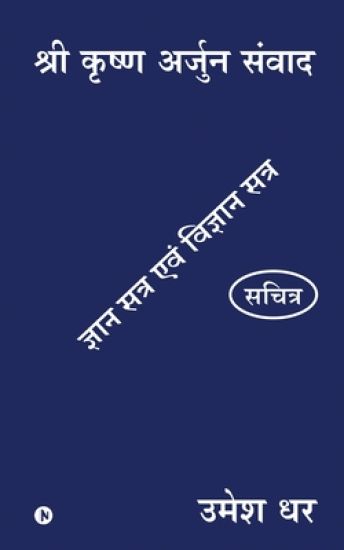
Shri Krishn Arjun Samvaad

Shri Krishn Arjun Samvaad

Umesh Dhar

Notion Press
2020
pokkari
Through his research based book the author has brought up the Theoretical Knowledge Session and the Practical Knowledge Session which Lord Krishna had given to Arjuna. The readers may feel elated to discover a good number of very valuable things on these special topics which are being mostly missed out generation after generation.Keeping in view the Yoga Science experience which was revealed to Arjuna in Geeta Chapter 11/9 (Practical Process, though, is not available in there) Umesh Dhar has tracked the progress of Arjuna to those great moments when he surrendered to Lord Krishna with full faith leaving behind the shelters of the prevailing religions and Yoga concepts.Whatever Umesh Dhar has discovered through his meticulous research over the period since 1967 have been very humbly but also very explicitly brought up in this book. For each and every point highlighted the relevant Shloka(s) of Geeta have been mentioned alongside. The "All In One" Bhagwadgeeta conversation has been retold by the Author in the formats of Prose and in an easy to recite 73 stanza Poetry in the ways which would attract the readers' attention to the Theoretical Knowledge Session and the Practical Knowledge Session that Lord Krishna gave. The Author's "Discovery Inputs" shall intensify and resound the essential basics of Lord Krishna's message. To "Go By Them" or "Go Past Them" would always be the readers' personal choice.
Happy Birthday Arjun - The Big Birthday Activity Book: Personalized Children's Activity Book
Happy Birthday Arjun is a personalized kids activity book, it includes personalized crosswords, word searches, number puzzles, jokes, drawing and coloring >It is suitable for children between 6-11 years old It is the perfect birthday present for Arjun, and is a great keepsake for parents to remember their child's early years and birthdays This personalized book is available for other names also This is a great gift for children and an amazing keepsake for parents Happy Birthday Arjun
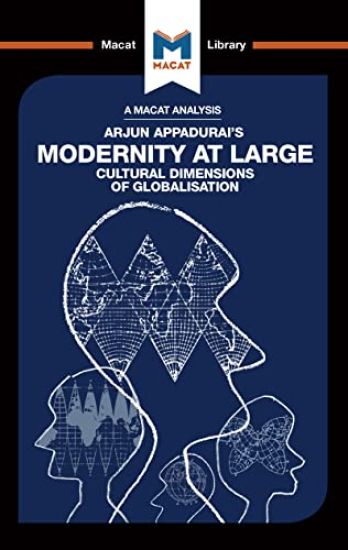
An Analysis of Arjun Appadurai's Modernity at Large

An Analysis of Arjun Appadurai's Modernity at Large

Amy Young Evrard

Macat International Limited
2017
nidottu
Arjun Appadurai’s 1996 collection of essays Modernity At Large: Cultural Dimensions of Globalization helped reshape how anthropologists, geographers and philosophers saw and understood the key topic of our times: globalization.Globalization has long been recognized as one of the crucial factors shaping the modern world – a force that allows goods, people, money, information and culture to flow across borders with relative ease. But if globalization is reshaping the world, it is also viewed with increasing suspicion – and it is still not clear how to understand and conceptualise the huge shifts that are taking place. Appadurai’s work is now considered one of the most influential contributions to the field, largely because of its brilliantly creative approach to the conceptual problems posed by the deep and rapid changes that are involved.Critical thinking lies at the heart of the author’s approach to his writing. A common tactic among gifted creative thinkers is to shift a problem or argument into a novel interpretative framework, and this is exactly what Appadurai did. Modernity at Large interrogates modernity through Appadurai’s notion of ‘scapes,’ a set of separate, interacting flows that, he suggests, cross the globalized world: ethnoscapes (the flow of people), mediascapes (flow of media), technoscapes (technological interactions), financescapes (capital flow), and ideoscapes (the flow of ideologies). By constructing this creative framework, it becomes possible to undertake, as Appadurai does, a brilliant and original investigation of what globalization really means.
An Analysis of Arjun Appadurai's Modernity at Large

An Analysis of Arjun Appadurai's Modernity at Large

Amy Young Evrard

Macat International Limited
2017
sidottu
Arjun Appadurai’s 1996 collection of essays Modernity At Large: Cultural Dimensions of Globalization helped reshape how anthropologists, geographers and philosophers saw and understood the key topic of our times: globalization.Globalization has long been recognized as one of the crucial factors shaping the modern world – a force that allows goods, people, money, information and culture to flow across borders with relative ease. But if globalization is reshaping the world, it is also viewed with increasing suspicion – and it is still not clear how to understand and conceptualise the huge shifts that are taking place. Appadurai’s work is now considered one of the most influential contributions to the field, largely because of its brilliantly creative approach to the conceptual problems posed by the deep and rapid changes that are involved.Critical thinking lies at the heart of the author’s approach to his writing. A common tactic among gifted creative thinkers is to shift a problem or argument into a novel interpretative framework, and this is exactly what Appadurai did. Modernity at Large interrogates modernity through Appadurai’s notion of ‘scapes,’ a set of separate, interacting flows that, he suggests, cross the globalized world: ethnoscapes (the flow of people), mediascapes (flow of media), technoscapes (technological interactions), financescapes (capital flow), and ideoscapes (the flow of ideologies). By constructing this creative framework, it becomes possible to undertake, as Appadurai does, a brilliant and original investigation of what globalization really means.
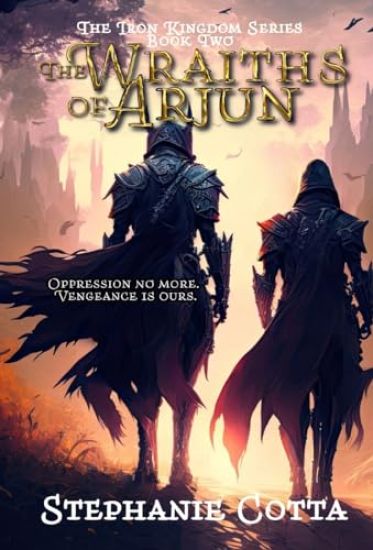
The Wraiths of Arjun

The Wraiths of Arjun

Stephanie Cotta

Monarch Educational Services, L.L.C.
2023
sidottu
Tribute Day has come. For a century, the Kingdom of Mestria has oppressed the people of Arjun. Those who cannot pay the brutal tax suffer a grim fate: enslavement, conscription, or imprisonment. As an Iron Baron, Rowan wants nothing more than to shield his tenants from the Mestrians' wrath and get through the tribute unscathed. But when he defies the Mestrian Enforcer who rules Arjun with an iron fist, Rowan learns that his actions have dire consequences for everyone around him.Tahira yearns to explore the ancient magic that courses through her veins. Yet in her quest to hone her conjuring abilities, a secret she's kept from Rowan, she risks losing his affection if her deception is exposed.Akaran, the wealthiest Iron Baron in Arjun, detests the Mestrians' tyranny. After the Enforcer levies a hefty tax on Akaran's estate, he makes a fateful decision, thereby signing his own death warrant. Only a handfast partnership with the devious but charming Marah can save his lands from falling into Mestrian hands.When the Enforcer unleashes his savagery, Rowan and Akaran join forces in a daring plan to revive the legend of the Wraiths and rebel against the Mestrian regime. But beneath their iron masks lies a haunting truth: if the uprising fails, they will all face the hangman's noose-or worse.
The Wraiths of Arjun

The Wraiths of Arjun

Stephanie Cotta

Monarch Educational Services, L.L.C.
2023
pokkari
Tribute Day has come. For a century, the Kingdom of Mestria has oppressed the people of Arjun. Those who cannot pay the brutal tax suffer a grim fate: enslavement, conscription, or imprisonment. As an Iron Baron, Rowan wants nothing more than to shield his tenants from the Mestrians' wrath and get through the tribute unscathed. But when he defies the Mestrian Enforcer who rules Arjun with an iron fist, Rowan learns that his actions have dire consequences for everyone around him.Tahira yearns to explore the ancient magic that courses through her veins. Yet in her quest to hone her conjuring abilities, a secret she's kept from Rowan, she risks losing his affection if her deception is exposed.Akaran, the wealthiest Iron Baron in Arjun, detests the Mestrians' tyranny. After the Enforcer levies a hefty tax on Akaran's estate, he makes a fateful decision, thereby signing his own death warrant. Only a handfast partnership with the devious but charming Marah can save his lands from falling into Mestrian hands.When the Enforcer unleashes his savagery, Rowan and Akaran join forces in a daring plan to revive the legend of the Wraiths and rebel against the Mestrian regime. But beneath their iron masks lies a haunting truth: if the uprising fails, they will all face the hangman's noose-or worse.
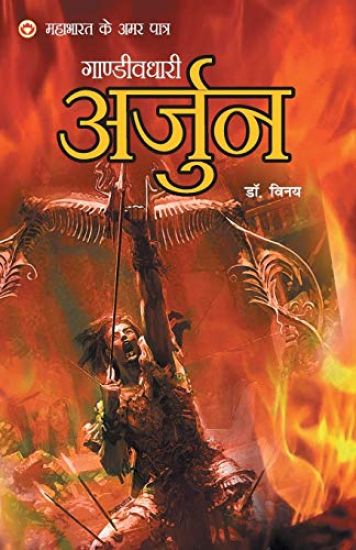
Mahabharat Ke Amar Paatra - Gandivdhari Arjun
अर्जुन महाभारत के मुख्य पात्र हैं। महाराज पाण्डु एवं रानी कुन्ती के वह तीसरे पुत्र थे। अर्जुन सबसे अच्छे धनुर्धर और द्रोणाचार्य के शिष्य थे। जीवन में अनेक अवसर पर उन्होंने इसका परिचय दिया। इन्होंने द्रौपदी को स्वयंवर में जीता था। कुरुक्षेत्र के युद्ध में ये प्रमुख योद्धा थे। अर्जुन ने ही कुरुक्षेत्र में श्रीकृष्ण से अलौकिक प्रश्न किये, जो गीता में वर्णित हैं। द्रोणाचार्य को ऐसे योद्धाओं की आवश्यकता थी जो राजा द्रुपद से प्रतिशोध ले सके। इसी कारण वे हस्तिनापुर के 105 राजकुमारों को शिक्षा देने लगे, जिनमें से एक अर्जुन भी थे।
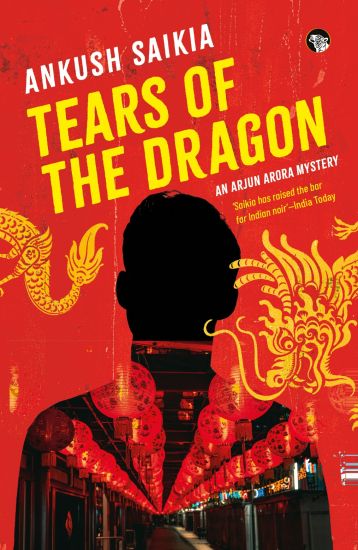
Tears of the Dragon an Arjun Arora Mystery

Tears of the Dragon an Arjun Arora Mystery

Ankush Saikia

Speaking Tiger Publishing Private Limited
2023
pokkari
DeScriPtionDetective Arjun Arora feels his life is crumbling around him. His father haspassed away, and he cannot forgive the corrupt police officer who sent Arjuninto a coma a year back. And then, a young widow visits him and presses himto take on a new case: to investigate her husband's mysterious death. RohitVats was a pharmaceutical company executive who had recently returnedhome to Delhi from a work trip to China. Soon after, he turned up in a seedypart of Kolkata-dead.Was it a love affair gone wrong, geo-political intrigue, or corporate rivalrywhich led to Vats' death? Arjun finds that Vats might have been looking intoillegal wildlife trafficking and zoonotic diseases like SARS. Increasingly, itappears that the answer to the mystery might lie in China.
Diamond in the Hills: A Biography of Sadguru Sri Sri Arjun
"This is a real story of a school dropout tribal youth named Arjun who was professionally a carpenter working for Hindustan Aeronautics Limited, a struggling householder far from sophistication of city life, but who, capitalising on his intrinsic inquisitiveness and divine virtues single-mindedly journeyed through the science route to the peak of spiritual realization, to become a spiritual master (Sadguru) at an early age of just 34 and revealed 'Divya Darshan or The Philosophy Divine' for the whole of humanity irrespective of caste, creed or religiosity. 'Divya Darshan, The Philosophy Divine', presents, for the self-benefit of mankind, the true knowledge based on non-dualistic principles in a simple style by which man can arouse the inert power within, blossom the latent divine virtues while observing the Law of Eternity for taking care of not only his own existence but ensuring happy and peaceful social living ultimately to get rid of the ignorance-generated sins and sufferings. "Ignorance is the cause of sufferings. Dispel ignorance by enkindling knowledge within and get rid of all sufferings. You alone can liberate yourself by acquiring true knowledge and divine virtues. Regain your lost paradise and enjoy peace and bliss. Remember; you are immortal and ever-free.""
What's my name? ARJUN

What's my name? ARJUN

Tiina Walsh

Createspace Independent Publishing Platform
2017
nidottu
A personalised storybook for boys called ARJUN. The story is based on the letters of the child's own name. All books are different from one another. The boy wakes up but can't remember his name. Magic Mouse knows how to solve the problem. They go on a wonderful adventure in the Magic Bus Translated and adapted by the author from the top-selling Finnish language children's namebook series "Tytt /Poika, joka unohti nimens ". The beautiful hand-drawn pictures will delight both the young and the young-at-heart Looking for a namebook "What's my name?" but couldn't find a book for the name you are looking for? Please don't hesitate to contact me with your name request -Tiina Walsh Author fb.me/whatsmynamestorybooks for more details about the storybooks
Four Steps to Royalty: "secret" to Achieve Success in Everything!
Have you tried using the law of attraction and not get any result? Have you tried any subconscious mind exercise and still find it difficult to get it? Have you been doing meditations and mantras to manifest; but get nothing but disappointment? And does it make you feel that the 'cosmos does not help you' If yes, then it is a clear indication that you need to learn a systematic approach to use these laws. Meditations, law of attraction or else subconscious programming work with those who have Inner clarity and sound inner health. Have you ever attended any self-help author or motivational speaker's lectures and observed them carefully? You will find that they all use the same technique to be successful. This book will teach the exact same technique to you which is used by every successful person around you. You will be gifted with deep clarity about your desire and healing your belief system forever. And guess what, you will be gifted with more deeper and more powerful laws than mentioned in first paragraphs. Because cosmos is limitless and it can give you better than just law of attraction
Digital Curation in the Digital Humanities

Digital Curation in the Digital Humanities

Arjun Sabharwal

Chandos Publishing (Oxford) Ltd
2015
nidottu
Archives and special collections departments have a long history of preserving and providing long-term access to organizational records, rare books, and other unique primary sources including manuscripts, photographs, recordings, and artifacts in various formats. The careful curatorial attention to such records has also ensured that such records remain available to researchers and the public as sources of knowledge, memory, and identity. Digital curation presents an important framework for the continued preservation of digitized and born-digital collections, given the ephemeral and device-dependent nature of digital content. With the emergence of analog and digital media formats in close succession (compared to earlier paper- and film-based formats) came new standards, technologies, methods, documentation, and workflows to ensure safe storage and access to content and associated metadata. Researchers in the digital humanities have extensively applied computing to research; for them, continued access to primary data and cultural heritage means both the continuation of humanities scholarship and new methodologies not possible without digital technology. Digital Curation in the Digital Humanities, therefore, comprises a joint framework for preserving, promoting, and accessing digital collections. This book explores at great length the conceptualization of digital curation projects with interdisciplinary approaches that combine the digital humanities and history, information architecture, social networking, and other themes for such a framework. The individual chapters focus on the specifics of each area, but the relationships holding the knowledge architecture and the digital curation lifecycle model together remain an overarching theme throughout the book; thus, each chapter connects to others on a conceptual, theoretical, or practical level.
The Myth of International Order

The Myth of International Order

Arjun Chowdhury

Oxford University Press Inc
2018
sidottu
In February of 2011, Libyan citizens rebelled against Muammar Qaddafi and quickly unseated him. The speed of the regime's collapse confounded many observers, and the ensuing civil war showed Foreign Policy's index of failed states to be deeply flawed--FP had, in 2010, identified 110 states as being more likely than Libya to descend into chaos. They were spectacularly wrong, but this points to a larger error in conventional foreign policy wisdom: failed, or weak and unstable, states are not anomalies but are instead in the majority. More states resemble Libya than Sweden. Why are most states weak and unstable? Taking as his launching point Charles Tilly's famous dictum that 'war made the state, and the state made war,' Arjun Chowdhury argues that the problem lies in our mistaken equation of democracy and economic power with stability. But major wars are the true source of stability: only the existential crisis that such wars produced could lead citizens to willingly sacrifice the resources that allowed the state to build the capacity it needed for survival. Developing states in the postcolonial era never experienced the demands major interstate war placed on European states, and hence citizens in those nations have been unwilling to sacrifice the resources that would build state capacity. For example, India and Mexico are established democracies with large economies. Despite their indices of stability, both countries are far from stable: there is an active Maoist insurgency in almost a quarter of India's districts, and Mexico is plagued by violence, drug trafficking, and high levels of corruption in local government. Nor are either effective at collecting revenue. As a consequence, they do not have the tax base necessary to perform the most fundamental tasks of modern states: controlling organized violence in a given territory and providing basic services to citizens. By this standard, the majority of states in the world--about two thirds--are weak states. Chowdury maintains that an accurate evaluation of international security requires a normative shift : the language of weakness and failure belies the fact that strong states are exceptions. Chowdhury believes that dismantling this norm is crucial, as it encourages developing states to pursue state-building via war, which is an extremely costly approach--in terms of human lives and capital. Moreover, in our era, such an approach is destined to fail because the total wars of the past are highly unlikely to occur today. Just as importantly, the non-state alternatives on offer are not viable alternatives. For better or worse, we will continue to live in a state-dominated world where most states are weak. Counterintuitive and sweeping in its coverage, The Myth of International Order demands that we fundamentally rethink foundational concepts of international politics like political stability and state failure.
The Myth of International Order

The Myth of International Order

Arjun Chowdhury

Oxford University Press Inc
2018
nidottu
In February of 2011, Libyan citizens rebelled against Muammar Qaddafi and quickly unseated him. The speed of the regime's collapse confounded many observers, and the ensuing civil war showed Foreign Policy's index of failed states to be deeply flawed--FP had, in 2010, identified 110 states as being more likely than Libya to descend into chaos. They were spectacularly wrong, but this points to a larger error in conventional foreign policy wisdom: failed, or weak and unstable, states are not anomalies but are instead in the majority. More states resemble Libya than Sweden. Why are most states weak and unstable? Taking as his launching point Charles Tilly's famous dictum that 'war made the state, and the state made war,' Arjun Chowdhury argues that the problem lies in our mistaken equation of democracy and economic power with stability. But major wars are the true source of stability: only the existential crisis that such wars produced could lead citizens to willingly sacrifice the resources that allowed the state to build the capacity it needed for survival. Developing states in the postcolonial era never experienced the demands major interstate war placed on European states, and hence citizens in those nations have been unwilling to sacrifice the resources that would build state capacity. For example, India and Mexico are established democracies with large economies. Despite their indices of stability, both countries are far from stable: there is an active Maoist insurgency in almost a quarter of India's districts, and Mexico is plagued by violence, drug trafficking, and high levels of corruption in local government. Nor are either effective at collecting revenue. As a consequence, they do not have the tax base necessary to perform the most fundamental tasks of modern states: controlling organized violence in a given territory and providing basic services to citizens. By this standard, the majority of states in the world--about two thirds--are weak states. Chowdury maintains that an accurate evaluation of international security requires a normative shift : the language of weakness and failure belies the fact that strong states are exceptions. Chowdhury believes that dismantling this norm is crucial, as it encourages developing states to pursue state-building via war, which is an extremely costly approach--in terms of human lives and capital. Moreover, in our era, such an approach is destined to fail because the total wars of the past are highly unlikely to occur today. Just as importantly, the non-state alternatives on offer are not viable alternatives. For better or worse, we will continue to live in a state-dominated world where most states are weak. Counterintuitive and sweeping in its coverage, The Myth of International Order demands that we fundamentally rethink foundational concepts of international politics like political stability and state failure.
Banking on Words

Banking on Words

Arjun Appadurai

University of Chicago Press
2015
sidottu
In this provocative look at one of the most important events of our time, renowned scholar Arjun Appadurai argues that the economic collapse of 2008-while indeed spurred on by greed, ignorance, weak regulation, and irresponsible risk-taking-was, ultimately, a failure of language. To prove this sophisticated point, he takes us into the world of derivative finance, which has become the core of contemporary trading and the primary target of blame for the collapse and all our subsequent woes. With incisive argumentation, he analyzes this challengingly technical world, drawing on thinkers such as J. L. Austin, Marcel Mauss, and Max Weber as theoretical guides to showcase the ways language-and particular failures in it-paved the way for ruin. Appadurai moves in four steps through his analysis. In the first, he highlights the importance of derivatives in contemporary finance, isolating them as the core technical innovation that markets have produced. In the second, he shows that derivatives are essentially written contracts about the future prices of assets-they are, crucially, a promise. Drawing on Mauss's The Gift and Austin's theories on linguistic performatives, Appadurai, in his third step, shows how the derivative exploits the linguistic power of the promise through the special form that money takes in finance as the most abstract form of commodity value. Finally, he pinpoints one crucial feature of derivatives (as seen in the housing market especially): that they can make promises that other promises will be broken. He then details how this feature spread contagiously through the market, snowballing into the systemic liquidity crisis that we are all too familiar with now. With his characteristic clarity, Appadurai explains one of the most complicated-and yet absolutely central-aspects of our modern economy. He makes the critical link we have long needed to make: between the numerical force of money and the linguistic force of what we say we will do with it.
Banking on Words

Banking on Words

Arjun Appadurai

University of Chicago Press
2015
nidottu
In this provocative look at one of the most important events of our time, renowned scholar Arjun Appadurai argues that the economic collapse of 2008-while indeed spurred on by greed, ignorance, weak regulation, and irresponsible risk-taking-was, ultimately, a failure of language. To prove this sophisticated point, he takes us into the world of derivative finance, which has become the core of contemporary trading and the primary target of blame for the collapse and all our subsequent woes. With incisive argumentation, he analyzes this challengingly technical world, drawing on thinkers such as J. L. Austin, Marcel Mauss, and Max Weber as theoretical guides to showcase the ways language-and particular failures in it-paved the way for ruin. Appadurai moves in four steps through his analysis. In the first, he highlights the importance of derivatives in contemporary finance, isolating them as the core technical innovation that markets have produced. In the second, he shows that derivatives are essentially written contracts about the future prices of assets-they are, crucially, a promise. Drawing on Mauss's The Gift and Austin's theories on linguistic performatives, Appadurai, in his third step, shows how the derivative exploits the linguistic power of the promise through the special form that money takes in finance as the most abstract form of commodity value. Finally, he pinpoints one crucial feature of derivatives (as seen in the housing market especially): that they can make promises that other promises will be broken. He then details how this feature spread contagiously through the market, snowballing into the systemic liquidity crisis that we are all too familiar with now. With his characteristic clarity, Appadurai explains one of the most complicated-and yet absolutely central-aspects of our modern economy. He makes the critical link we have long needed to make: between the numerical force of money and the linguistic force of what we say we will do with it.