Arthur Benjamin Reeve (October 15, 1880 - August 9, 1936) was an American mystery writer. He is best known for creating the series character Professor Craig Kennedy, sometimes called "The American Sherlock Holmes", and Kennedy's Dr. Watson-like sidekick Walter Jameson, a newspaper reporter, in 18 detective novels. The bulk of Reeve's fame is based on the 82 Craig Kennedy stories, published in Cosmopolitan magazine between 1910 and 1918. These were collected in book form; with the third collection, the short stories were stitched together into pseudo-novels. The 12-volume Craig Kennedy Stories were released in 1918; it reissued Reeve's books-to-date as a matched set.
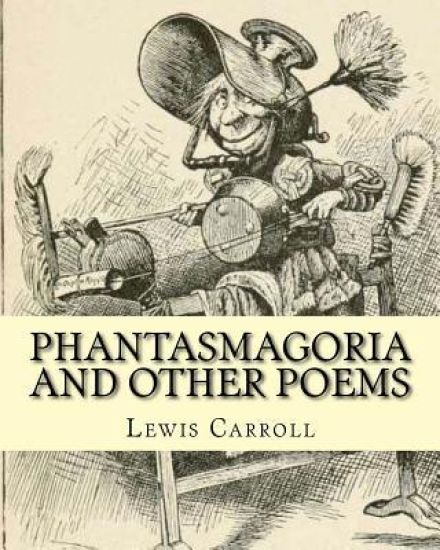
"Phantasmagoria" is a poem written by Lewis Carroll and first published in 1869 as the opening poem of a collection of verse by Carroll entitled Phantasmagoria and Other Poems. The collection was also published under the name Rhyme? And Reason? It is Lewis Carroll's longest poem. Both the poem and the collection were illustrated by A.B. Frost."Phantasmagoria" is a narrative discussion written in seven cantos between a ghost (a Phantom) and a man named Tibbets. Carroll portrays the ghost as not so different from human beings: although ghosts may jibber and jangle their chains, they, like us, simply have a job to do and that job is to haunt. Just as in our society, in ghost society there is a hierarchy, and ghosts are answerable to the King (who must be addressed as "Your Royal Whiteness") if they disregard the "Maxims of Behaviour". Ghosts, our Phantom tells the narrator, fear the same things that we often fear, only sometimes in the reverse: "Allow me to remark That ghosts has just as good a right, In every way to fear the light, As men to fear the dark."... Charles Lutwidge Dodgson (27 January 1832 - 14 January 1898), better known by his pen name Lewis Carroll, was an English writer, mathematician, logician, Anglican deacon, and photographer. His most famous writings are Alice's Adventures in Wonderland, its sequel Through the Looking-Glass, which includes the poem "Jabberwocky", and the poem The Hunting of the Snark, all examples of the genre of literary nonsense. He is noted for his facility at word play, logic and fantasy. There are societies in many parts of the world dedicated to the enjoyment and promotion of his works and the investigation of his life. Dodgson's family was predominantly northern English, with Irish connections, conservative and High Church Anglican. Most of Dodgson's male ancestors were army officers or Church of England clergy. His great-grandfather, also named Charles Dodgson, had risen through the ranks of the church to become the Bishop of Elphin.His paternal grandfather, another Charles, had been an army captain, killed in action in Ireland in 1803 when his two sons were hardly more than babies.The older of these sons - yet another Charles Dodgson - was Carroll's father. He went to Westminster School and then to Christ Church, Oxford. He reverted to the other family tradition and took holy orders. He was mathematically gifted and won a double first degree, which could have been the prelude to a brilliant academic career. Instead, he married his first cousin Frances Jane Lutwidge in 1827 and became a country parson. Dodgson was born in the small parsonage at Daresbury in Cheshire near the towns of Warrington and Runcorn, the eldest boy but already the third child of the four-and-a-half-year-old marriage. Eight more children followed. When Charles was, his father was given the living of Croft-on-Tees in North Yorkshire, and the whole family moved to the spacious rectory. This remained their home for the next 25 years. Charles's father was an active and highly conservative cleric of the Church of England who later became the Archdeacon of Richmond and involved himself, sometimes influentially, in the intense religious disputes that were dividing the church. He was High Church, inclining to Anglo-Catholicism, an admirer of John Henry Newman and the Tractarian movement, and did his best to instil such views in his children. Young Charles was to develop an ambiguous relationship with his father's values and with the Church of England as a whole..... Arthur Burdett Frost (January 17, 1851 - June 22, 1928), was an American illustrator, graphic artist and comics writer.
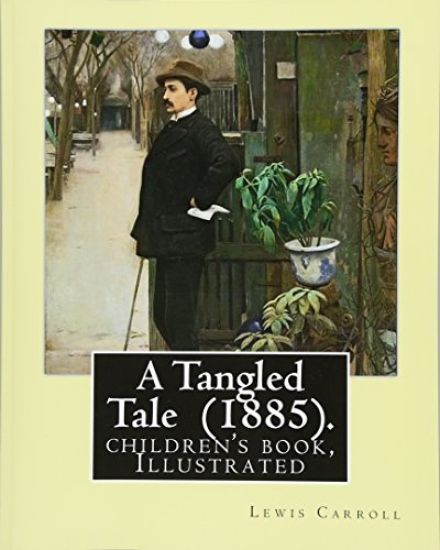
A Tangled Tale is a collection of 10 brief humorous stories by Lewis Carroll (Charles Lutwidge Dodgson), published serially between April 1880 and March 1885 in The Monthly Packet magazine. Arthur B. Frost added illustrations when the series was printed in book form. The stories, or Knots as Carroll calls them, present mathematical problems. In a later issue, Carroll gives the solution to a Knot and discusses readers' answers. The mathematical interpretations of the Knots are not always straightforward. The ribbing of readers answering wrongly - giving their names - was not always well received (see Knot VI below). In the December 1885 book preface Carroll writes: The writer's intention was to embody in each Knot (like medicine so dexterously, but ineffectually, concealed in the jam of our early childhood) one or more mathematical questions - in Arithmetic, Algebra, or Geometry, as the case might be - for the amusement, and possible edification, of the fair readers of that magazine. Describing why he was ending the series, Carroll writes to his readers that the Knots were "but a lame attempt." Others were more receptive: In 1888 Stuart Dodgson Collingwood wrote, "With some people, this is the most popular of all his books; it is certainly the most successful attempt he ever made to combine mathematics and humour."They have more recently been described as having "all the charm and wit of his better-known works"............ Arthur Burdett Frost (January 17, 1851 - June 22, 1928), usually cited as A. B. Frost, was an American illustrator, graphic artist and comics writer. He was also well known as a painter. Frost's work is well known for its dynamic representation of motion and sequence. Frost is considered one of the great illustrators in the "Golden Age of American Illustration". Frost illustrated over 90 books and produced hundreds of paintings; in addition to his work in illustrations, he is renowned for realistic hunting and shooting prints..... Charles Lutwidge Dodgson ( 27 January 1832 - 14 January 1898), better known by his pen name Lewis Carroll, was an English writer, mathematician, logician, Anglican deacon, and photographer. His most famous writings are Alice's Adventures in Wonderland, its sequel Through the Looking-Glass, which includes the poem "Jabberwocky", and the poem The Hunting of the Snark - all examples of the genre of literary nonsense. He is noted for his facility at word play, logic and fantasy. There are societies in many parts of the world dedicated to the enjoyment and promotion of his works and the investigation of his life. From a young age, Dodgson wrote poetry and short stories, contributing heavily to the family magazine Mischmasch and later sending them to various magazines, enjoying moderate success. Between 1854 and 1856, his work appeared in the national publications The Comic Times and The Train, as well as smaller magazines such as the Whitby Gazette and the Oxford Critic. Most of this output was humorous, sometimes satirical, but his standards and ambitions were exacting. "I do not think I have yet written anything worthy of real publication (in which I do not include the Whitby Gazette or the Oxonian Advertiser), but I do not despair of doing so some day," he wrote in July 1855. Sometime after 1850, he did write puppet plays for his siblings' entertainment, of which one has survived: La Guida di Bragia. In 1856, he published his first piece of work under the name that would make him famous. A romantic poem called "Solitude" appeared in The Train under the authorship of "Lewis Carroll". ....
This exhibition catalog showcases the work of two important American artists of the late nineteenth and early twentieth centuries. Davies was a prominent figure in the American modernist movement and is best known for his colorful, abstract paintings. Newman was a self-taught visionary artist who created intricate, dreamlike landscapes. The catalog includes full-color reproductions of the artists' work as well as critical essays by leading art historians. This is an essential resource for anyone interested in American art and culture.This work has been selected by scholars as being culturally important, and is part of the knowledge base of civilization as we know it.This work is in the "public domain in the United States of America, and possibly other nations. Within the United States, you may freely copy and distribute this work, as no entity (individual or corporate) has a copyright on the body of the work.Scholars believe, and we concur, that this work is important enough to be preserved, reproduced, and made generally available to the public. We appreciate your support of the preservation process, and thank you for being an important part of keeping this knowledge alive and relevant.
This work has been selected by scholars as being culturally important and is part of the knowledge base of civilization as we know it.This work is in the public domain in the United States of America, and possibly other nations. Within the United States, you may freely copy and distribute this work, as no entity (individual or corporate) has a copyright on the body of the work.Scholars believe, and we concur, that this work is important enough to be preserved, reproduced, and made generally available to the public. To ensure a quality reading experience, this work has been proofread and republished using a format that seamlessly blends the original graphical elements with text in an easy-to-read typeface.We appreciate your support of the preservation process, and thank you for being an important part of keeping this knowledge alive and relevant.
This work has been selected by scholars as being culturally important and is part of the knowledge base of civilization as we know it.This work is in the public domain in the United States of America, and possibly other nations. Within the United States, you may freely copy and distribute this work, as no entity (individual or corporate) has a copyright on the body of the work.Scholars believe, and we concur, that this work is important enough to be preserved, reproduced, and made generally available to the public. To ensure a quality reading experience, this work has been proofread and republished using a format that seamlessly blends the original graphical elements with text in an easy-to-read typeface.We appreciate your support of the preservation process, and thank you for being an important part of keeping this knowledge alive and relevant.
Based on a workshop held at the Santa Fe Institute in June, 1990, this book explores structure in organisms,both physical and dynamical,and presents the current status of the search for natural pathways, principles of organization, and the theory of design for organisms. Topics discussed include dynamical systems analysis the pathways of evolution development, physiology, and functional morphology and the principles of dynamical change in connectivity within the networks of processes.The aim of the workshop was to seek principles of organization in organisms and a theory that could generate those principles, as Newtonian mechanics generates Kepler's laws of planetary motion. The object of the theory is to explain patterns of structure in living or past organisms, or patterns to be expected in future organisms. The book proposes principles of organization that are independent of time scale and level of organization, and that make predictions about structure without recourse to micro-level details. Among them are principles of coordination, evolution to the edge of chaos, the matching of processes to constraints, and the evolution of higher-level processes as a way to surmount resource limitations. These general principles, which may be characteristic of any evolving complex system, may then be used in conjunction with properties of the specific materials and processes in organisms to understand biological structure.


![Elbow-Room; A Novel Without A Plot. by Max Adeler [Pseud.] Illustrated by Arthur B.Frost.](/covers/9781425541170.jpg)