Kirjojen hintavertailu. Mukana 12 459 402 kirjaa ja 12 kauppaa.

Kirjahaku

Etsi kirjoja tekijän nimen, kirjan nimen tai ISBN:n perusteella.

1000 tulosta hakusanalla Arthur C. Danto

The Philosophical Disenfranchisement of Art

The Philosophical Disenfranchisement of Art

Arthur C. Danto; Jonathan Gilmore

Columbia University Press
2004
sidottu
In this acclaimed work, first published in 1986, world-renowned scholar Arthur C. Danto explored the inextricably linked but often misunderstood relationship between art and philosophy. In light of the book's impact-especially the essay "The End of Art," which dramatically announced that art ended in the 1960s-this enhanced edition includes a foreword by Jonathan Gilmore that discusses how scholarship has changed in response to it. Complete with a new bibliography of work on and influenced by Danto's ideas, The Philosophical Disenfranchisement of Art continues to be of interest to anyone who thinks seriously about art, as well as to philosophers, aestheticians, and art historians.
The Philosophical Disenfranchisement of Art

The Philosophical Disenfranchisement of Art

Arthur C. Danto; Jonathan Gilmore

Columbia University Press
2004
pokkari
In this acclaimed work, first published in 1986, world-renowned scholar Arthur C. Danto explored the inextricably linked but often misunderstood relationship between art and philosophy. In light of the book's impact-especially the essay "The End of Art," which dramatically announced that art ended in the 1960s-this enhanced edition includes a foreword by Jonathan Gilmore that discusses how scholarship has changed in response to it. Complete with a new bibliography of work on and influenced by Danto's ideas, The Philosophical Disenfranchisement of Art continues to be of interest to anyone who thinks seriously about art, as well as to philosophers, aestheticians, and art historians.
Narration and Knowledge

Narration and Knowledge

Arthur C. Danto; Lydia Goehr; Franklin Rudolf Ankersmit

Columbia University Press
2007
sidottu
Now in its third edition, Narration and Knowledge is a classic work exploring the nature of historical knowledge and its reliance on narrative. Analytical philosopher Arthur C. Danto introduces the concept of "narrative sentences," in which an event is described with reference to later events (for example, "the Thirty Years' War began in 1618") and discusses why such sentences cannot be understood until the later event happens (no one could have said in 1618 that "the Thirty Years' War began today"). Danto compares narrative and scientific explanation and explores the legitimacy of historical laws. He also argues that history is an autonomous and humanist discipline incapable of being reduced to scientific descriptions. Lydia Goehr's new introduction illustrates Danto's main arguments by questioning her very role, first, as an introducer of a book that has not yet been read by readers and, second, as an interpreter of a book written forty years ago. Frank Ankersmit's conclusion revisits the initial impact of the publication of Narration and Knowledge and considers its enduring legacy.
Narration and Knowledge

Narration and Knowledge

Arthur C. Danto; Lydia Goehr; Franklin Rudolf Ankersmit

Columbia University Press
2007
pokkari
Now in its third edition, Narration and Knowledge is a classic work exploring the nature of historical knowledge and its reliance on narrative. Analytical philosopher Arthur C. Danto introduces the concept of "narrative sentences," in which an event is described with reference to later events (for example, "the Thirty Years' War began in 1618") and discusses why such sentences cannot be understood until the later event happens (no one could have said in 1618 that "the Thirty Years' War began today"). Danto compares narrative and scientific explanation and explores the legitimacy of historical laws. He also argues that history is an autonomous and humanist discipline incapable of being reduced to scientific descriptions. Lydia Goehr's new introduction illustrates Danto's main arguments by questioning her very role, first, as an introducer of a book that has not yet been read by readers and, second, as an interpreter of a book written forty years ago. Frank Ankersmit's conclusion revisits the initial impact of the publication of Narration and Knowledge and considers its enduring legacy.
Art and Posthistory

Art and Posthistory

Arthur C. Danto; Demetrio Paparoni; Barry Schwabsky

Columbia University Press
2022
sidottu
From the 1990s until just before his death, the legendary art critic and philosopher Arthur C. Danto carried out extended conversations about contemporary art with the prominent Italian critic Demetrio Paparoni. Their discussions ranged widely over a vast range of topics, from American pop art and minimalism to abstraction and appropriationism. Yet they continually returned to the concepts at the core of Danto’s thinking—posthistory and the end of aesthetics—provocative notions that to this day shape questions about the meaning and future of contemporary art.Art and Posthistory presents these rich dialogues and correspondence, testifying to the ongoing importance of Danto’s ideas. It offers readers the opportunity to experience the intellectual excitement of Danto in person, speculating in a freewheeling yet erudite style. Danto and Paparoni discuss figures such as Andy Warhol, Marcel Duchamp, Franz Kline, Sean Scully, Clement Greenberg, Cindy Sherman, and Wang Guangyi, offering both insightful comments on individual works and sweeping observations about wider issues. On occasion, the artist Mimmo Paladino and the philosopher Mario Perniola join the conversation, enlivening the discussion and adding their own perspectives.The book also features an introductory essay by Paparoni that provides lucid analysis of Danto’s thinking, emphasizing where the two disagree as well as what they learned from each other.
Art and Posthistory

Art and Posthistory

Arthur C. Danto; Demetrio Paparoni; Barry Schwabsky

Columbia University Press
2022
pokkari
From the 1990s until just before his death, the legendary art critic and philosopher Arthur C. Danto carried out extended conversations about contemporary art with the prominent Italian critic Demetrio Paparoni. Their discussions ranged widely over a vast range of topics, from American pop art and minimalism to abstraction and appropriationism. Yet they continually returned to the concepts at the core of Danto’s thinking—posthistory and the end of aesthetics—provocative notions that to this day shape questions about the meaning and future of contemporary art.Art and Posthistory presents these rich dialogues and correspondence, testifying to the ongoing importance of Danto’s ideas. It offers readers the opportunity to experience the intellectual excitement of Danto in person, speculating in a freewheeling yet erudite style. Danto and Paparoni discuss figures such as Andy Warhol, Marcel Duchamp, Franz Kline, Sean Scully, Clement Greenberg, Cindy Sherman, and Wang Guangyi, offering both insightful comments on individual works and sweeping observations about wider issues. On occasion, the artist Mimmo Paladino and the philosopher Mario Perniola join the conversation, enlivening the discussion and adding their own perspectives.The book also features an introductory essay by Paparoni that provides lucid analysis of Danto’s thinking, emphasizing where the two disagree as well as what they learned from each other.
After the End of Art

After the End of Art

Arthur C. Danto; Lydia Goehr

Princeton University Press
2014
pokkari
Originally delivered as the prestigious Mellon Lectures on the Fine Arts in 1995, After the End of Art remains a classic of art criticism and philosophy, and continues to generate heated debate for contending that art ended in the 1960s. Arthur Danto, one of the best-known art critics of his time, presents radical insights into art's irrevocable deviation from its previous course and the decline of traditional aesthetics. He demonstrates the necessity for a new type of criticism in the face of contemporary art's wide-open possibilities. This Princeton Classics edition includes a new foreword by philosopher Lydia Goehr.
Wake of Art

Wake of Art

Arthur C. Danto; Gregg Horowitz; Tom Huhn; Saul Ostrow

Routledge
1998
sidottu
Since the mid-1980s, Arthur C. Danto has been increasingly concerned with the implications of the demise of modernism. Out of the wake of modernist art, Danto discerns the emergence of a radically pluralistic art world. His essays illuminate this novel art world as well as the fate of criticism within it. As a result, Danto has crafted the most compelling philosophy of art criticism since Clement Greenberg. Gregg Horowitz and Tom Huhn analyze the constellation of philosophical and critical elements in Danto's new- Hegelian art theory. In a provocative encounter, they employ themes from Kantian aesthetics to elucidate the continuing persistence of taste in shaping even this most sophisticated philosophy of art.
Wake of Art

Wake of Art

Arthur C. Danto; Gregg Horowitz; Tom Huhn; Saul Ostrow

Routledge
1998
nidottu
Since the mid-1980s, Arthur C. Danto has been increasingly concerned with the implications of the demise of modernism. Out of the wake of modernist art, Danto discerns the emergence of a radically pluralistic art world. His essays illuminate this novel art world as well as the fate of criticism within it. As a result, Danto has crafted the most compelling philosophy of art criticism since Clement Greenberg. Gregg Horowitz and Tom Huhn analyze the constellation of philosophical and critical elements in Danto's new- Hegelian art theory. In a provocative encounter, they employ themes from Kantian aesthetics to elucidate the continuing persistence of taste in shaping even this most sophisticated philosophy of art.
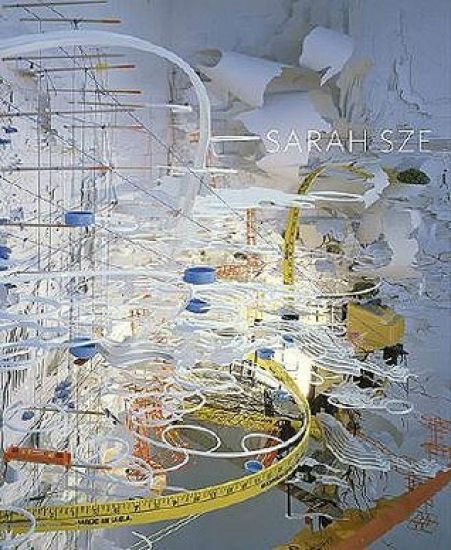
Sarah Sze

Sarah Sze

Linda Norden; Arthur C. Danto

Abrams
2007
sidottu
With her uncanny ability to monumentalize the miniscule and to give permanence to the ephemeral, Sarah Sze has become one of the most original and ambitious artists working today, with solo exhibitions at major art musuems. As the first monograph to span the course of her career including sculptures, site-specific installations, and drawings, Sarah Sze reveals the artist’s working process and gives insight into the thoughtful precision and care that goes into each and every one of her creations.Elaborately transforming everyday materials into elegant sculptures and installations, Sze eloquently finesses the line between sculpture and architecture. In her essay, writer and curator Linda Norden explores the question of how matter takes on value, both temporally and spatially. With its stunning photography, Sarah Sze makes it clear that the exhilarating and challenging aspect of this artist’s work lies in all of its minute details.
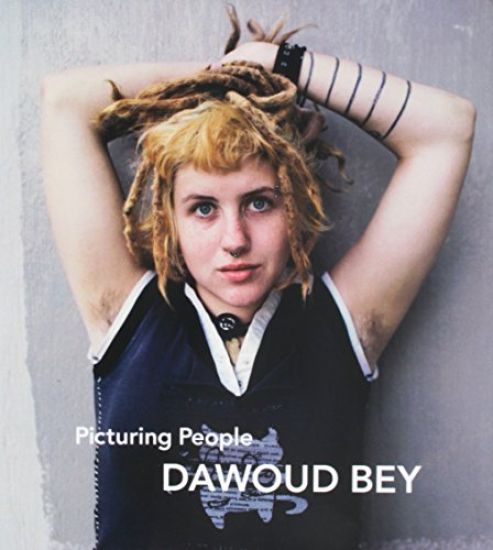
Dawoud Bey – Picturing People

Dawoud Bey – Picturing People

Julie Bernson; Arthur C. Danto; Hamza Walker; Dawoud Bey

Renaissance Society at the University of Chicago
2012
sidottu
Since 1975, photographer Dawoud Bey has developed a body of work distinguished for its commitment to portraiture as a means for reflecting social circumstances. Ranging from street encounters to studio portraits, Bey has investigated numerous photographic methods to find increased engagement with his subjects. The Renaissance Society exhibition this catalogue accompanies (May 13 – July 13, 2012) included selections from Bey's work spanning the thirty years from 1982 to the present. The exhibition offered a comprehensive look at Bey's oeuvre, and provided an opportunity to explore related subjects in art history and social discourse, such as the presentation of self, race, site, and the relationship between artist and subject. Includes essays by Arthur Danto and Julie Bernson as well as an interview between Bey and the Renaissance Society's Associate Curator and Director of Education, Hamza Walker.
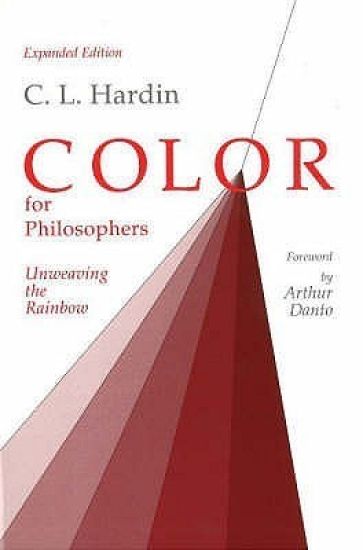
Color for Philosophers

Color for Philosophers

C. L. Hardin; Arthur Danto

Hackett Publishing Co, Inc
1988
sidottu
This expanded edition of C. L. Hardin's ground-breaking work on color features a new chapter, Further Thoughts: 1993, in which the author revisits the dispute between color objectivists and subjectivists from the perspective of the ecology, genetics, and evolution of color vision, and brings to bear new data on individual variability in color perception.
Encouraging Authenticity and Spirituality in Higher Education

Encouraging Authenticity and Spirituality in Higher Education

Arthur W. Chickering; Jon C. Dalton; Liesa Stamm

Jossey-Bass Inc.,U.S.
2005
sidottu
This groundbreaking book provides a comprehensive resource that addresses the growing movement for incorporating spirituality as an important aspect of the meaning and purpose of higher education. Written by Arthur W. Chickering, Jon C. Dalton, and Leisa Stamm—experts in the field of educational leadership and policy—Encouraging Authenticity and Spirituality in Higher Education shows how to encourage increased authenticity and spiritual growth among students and education professionals by offering alternative ways of knowing, being, and doing. Encouraging Authenticity and Spirituality in Higher Education includes a rich array of examples to guide the integration of authenticity and spirituality in curriculum, student affairs, community partnerships, assessment, and policy issues. Many of these illustrative examples represent specific policies and programs that have successfully been put in place at diverse institutions across the country. In addition, the authors cover the theoretical, historical, and social perspectives on religion and higher education and examine the implications for practice. They include the results of recent court cases that deal with church-state issues and offer recommendations that pose no legal barrier to implementation.
Arthur C. Clarke

Arthur C. Clarke

Gary Westfahl

University of Illinois Press
2018
sidottu
Already renowned for his science fiction and scientific nonfiction, Arthur C. Clarke became the world's most famous science fiction writer after the success of 2001: A Space Odyssey. He then produced novels like Rendezvous with Rama and The Fountains of Paradise that many regard as his finest works. Gary Westfahl closely examines Clarke's remarkable career, ranging from his forgotten juvenilia to the passages he completed for a final novel, The Last Theorem. As Westfahl explains, Clarke's science fiction offered original perspectives on subjects like new inventions, space travel, humanity's destiny, alien encounters, the undersea world, and religion. While not inclined to mysticism, Clarke necessarily employed mystical language to describe the fantastic achievements of advanced aliens and future humans. Westfahl also contradicts the common perception that Clarke's characters were bland and underdeveloped, arguing that these reticent, solitary individuals, who avoid conventional relationships, represent his most significant prediction of the future, as they embody the increasingly common lifestyle of people in the twenty-first century.
Arthur C. Clarke

Arthur C. Clarke

Gary Westfahl

University of Illinois Press
2018
nidottu
Already renowned for his science fiction and scientific nonfiction, Arthur C. Clarke became the world's most famous science fiction writer after the success of 2001: A Space Odyssey. He then produced novels like Rendezvous with Rama and The Fountains of Paradise that many regard as his finest works. Gary Westfahl closely examines Clarke's remarkable career, ranging from his forgotten juvenilia to the passages he completed for a final novel, The Last Theorem. As Westfahl explains, Clarke's science fiction offered original perspectives on subjects like new inventions, space travel, humanity's destiny, alien encounters, the undersea world, and religion. While not inclined to mysticism, Clarke necessarily employed mystical language to describe the fantastic achievements of advanced aliens and future humans. Westfahl also contradicts the common perception that Clarke's characters were bland and underdeveloped, arguing that these reticent, solitary individuals, who avoid conventional relationships, represent his most significant prediction of the future, as they embody the increasingly common lifestyle of people in the twenty-first century.
The Collected Stories of Arthur C. Clarke
In a single volume, the complete short fiction of one of the greatest SF writers of the century Author of 2001: A Space Odyssey, Childhood's End, The City and the Stars, and the Hugo and Nebula Award-winning Rendezvous with Rama, Arthur C. Clarke is the most celebrated science fiction author alive. He is--with H. G. Wells, Isaac Asimov, and Robert A. Heinlein--one of the writers who define science fiction in our time. Now Clarke has cooperated in the preparation of a massive, definitive edition of his collected shorter works. From early work like "Rescue Party" and "The Lion of Comarre," through classics like "The Star," "Earthlight," "The Nine Billion Names of God," and "The Sentinel" (kernel of the later novel, and movie, 2001: A Space Odyssey), all the way to later work like "A Meeting with Medusa" and "The Hammer of God," this immense volume encapsulates one of the great SF careers of all time.
Arthur C. Clarke

Arthur C. Clarke

Robin Anne Reid

Greenwood Press
1997
sidottu
One of the most prolific science fiction writers in history, Arthur C. Clarke began publishing science fiction in the 1930s and is working on the fourth novel in the Odyssey series (3001) nearly 60 years later. This study, the only one on his recent work, features detailed analyses of his eight most recent novels within the context of his literary canon. The novels discussed are Rendezvous with Rama, Imperial Earth, The Fountains of Paradise, 2010: Odyssey Two, The Songs of the Distant Earth, 2061: Odyssey Three, Ghost from the Grand Banks, and The Hammer of God. The intention of this study is to provide both conventional and alternative readings so that students and readers who love Clarke's fiction can develop their critical skills. A biographical chapter focuses primarily on Clarke's early interest in science, his work during World War II, his move to Sri Lanka (then Ceylon) in 1956, and his writing career. A chapter on genre discusses the genre of science fiction and Clarke's contribution to it. Each of the eight novels covered is discussed in an individual chapter that features sections on plot development and structure, narrative point of view, character development, and themes. Each novel is also examined from an alternate critical approach, such as feminist, gender, or postcolonial, to provide the reader with another perspective from which to consider the work. A bibliography of Clarke's fiction, selected nonfiction, general and scholarly criticism, and selected reviews and criticism of each of the eight novels completes the volume. Because of its currency, easy to use format, and thorough critical approach, this study is essential for student use and to update the library's critical material on Arthur C. Clarke.