Kirjojen hintavertailu. Mukana 11 699 587 kirjaa ja 12 kauppaa.

Kirjahaku

Etsi kirjoja tekijän nimen, kirjan nimen tai ISBN:n perusteella.

1000 tulosta hakusanalla Arthur M. Saltzman

Openness to Creative Destruction

Openness to Creative Destruction

Arthur M. Diamond

Oxford University Press Inc
2019
nidottu
Life improves under the economic system often called "entrepreneurial capitalism" or "creative destruction," but more accurately called "innovative dynamism." Openness to Creative Destruction: Sustaining Innovative Dynamism shows how innovation occurs through the efforts of inventors and innovative entrepreneurs, how workers on balance benefit, and how good policies can encourage innovation. The inventors and innovative entrepreneurs are often cognitively diverse outsiders with the courage and perseverance to see and pursue serendipitous discoveries or slow hunches. Arthur M. Diamond, Jr. shows how economies grow where innovative dynamism through leapfrog competition flourishes, as in the United States from roughly 1830-1930. Consumers vote with their feet for innovative new goods and for process innovations that reduce prices, benefiting ordinary citizens more than the privileged elites. Diamond highlights that because breakthrough inventions are costly and difficult, patents can be fair rewards for invention and can provide funding to enable future inventions. He argues that some fears about adverse effects on labor market are unjustified, since more and better new jobs are created than are destroyed, and that other fears can be mitigated by better policies. The steady growth in regulations, often defended on the basis of the precautionary principle, increases the costs to potential entrepreneurs and thus reduces innovation. The "Great Fact" of economic history is that after at least 40,000 years of mostly "poor, nasty, brutish, and short" humans in the last 250 years have started to live substantially longer and better lives. Diamond increases understanding of why.
Introduction to Protein Science

Introduction to Protein Science

Arthur M. Lesk

Oxford University Press
2016
nidottu
Over the last century, the centrality of proteins to life on earth has become increasingly clear - from forming enzymes acting as catalysts for specific reactions, to crucial molecules such as antibodies in the immune system, and as signalling molecules between cells. In fact, the more they are studied, the more proteins continue to reveal new and exciting functions. Indeed, by studying amino acid sequences and protein structures it is even possible to unravel some of the mysteries of evolution itself. Introduction to Protein Science, 3rd edition provides a rich and broad introduction to this fascinating field by covering not only the structure and function of proteins, but also the methods and experimental techniques used to study them. The practical applications of our knowledge to diverse fields such as biotechnology and medicine are emphasized throughout, to help students appreciate the relevance of the subject to the real world. Active learning is encouraged by the provision of frequent exercises and problems, with further 'weblems' - web-based problems - on the Online Resource Centre. Online Resource Centre The Online Resource Centre to accompany Introduction to Protein Science features: For students: ·Answers to end-of-chapter exercises, and hints to end-of-chapter problems, so students can check their understanding. ·Rotating structures from the book to help students visualize proteins in 3D. ·Web-based problems for students to complete online. For registered adopters: ·Figures from the book in electronic format, ready to download
Introduction to Genomics

Introduction to Genomics

Arthur M. Lesk

Oxford University Press
2017
nidottu
Our genome is the blueprint for our existence: it encodes all the information we need to develop from a single cell into a hugely complicated functional organism. Yet it is more than a static information store: our genome is a dynamic, tightly-regulated collection of genes, which switch on and off in many combinations to give the variety of cells from which our bodies are formed. But how do we identify the genes that make up our genome? How do we determine their function? And how do different genes form the regulatory networks that direct the processes of life? Introduction to Genomics is the most up-to-date and complete textbook for students approaching the subject for the first time. Lesk's engaging writing style brings a narrative to a disparate field of study and offers a fascinating insight into what can be revealed from the study of genomes. The book covers: the similarities and differences between organisms; how different organisms evolved; how the genome is constructed and how it operates; and what our understanding of genomics means in terms of our future health and wellbeing. The Online Resource Centre accompanying Introduction to Genomics features: For students: - Extensive and imaginative weblems (web-based problems) for each chapter designed to give you practice with the tools required for further study and research in the field - Hints and answers to end-of-chapter problems and exercises support your self-directed learning - Guided tour of websites and major archival databanks in genomics offer a wealth of resources to springboard your own research - Journal club: links to related research articles on topics covered in the book are paired with engaging questions to improve your interpretation of the primary literature - Rotating figures allow you to visualize complex structures For registered adopters: - Downloadable figures from the book.
Philosophy Between the Lines

Philosophy Between the Lines

Arthur M. Melzer

University of Chicago Press
2014
sidottu
Philosophical esotericism - the practice of communicating one's unorthodox thoughts "between the lines"-was a common practice until the end of the eighteenth century. The famous Encyclopedie of Diderot, for instance, not only discusses this practice in over twenty different articles, but admits to employing it itself. The history of Western thought contains hundreds of such statements by major philosophers testifying to the use of esoteric writing in their own work or that of others. Despite this long and well-documented history, however, esotericism is often dismissed today as a rare occurrence. But by ignoring esotericism, we risk cutting ourselves off from a full understanding of Western philosophical thought. Arthur M. Melzer serves as our deeply knowledgeable guide in this capacious and engaging history of philosophical esotericism. Walking readers through both an ancient (Plato) and a modern (Machiavelli) esoteric work, he explains what esotericism is-and is not. It relies not on secret codes, but simply on a more intensive use of familiar rhetorical techniques like metaphor, irony, and insinuation. Melzer explores the various motives that led thinkers in many different times and places to engage in this strange practice, while also exploring the motives that led more recent thinkers not only to dislike and avoid this practice but to deny its very existence. In the book's final section, "A Beginner's Guide to Esoteric Reading," Melzer turns to how we might once again cultivate the long-forgotten art of reading esoteric works. Philosophy Between the Lines is the first comprehensive, book-length study of the history and theoretical basis of philosophical esotericism, and it provides a crucial guide to how many major writings-philosophical, but also theological, political, and literary-were composed prior to the nineteenth century.
Philosophy Between the Lines

Philosophy Between the Lines

Arthur M. Melzer

University of Chicago Press
2017
nidottu
Philosophical esotericism the practice of communicating one's unorthodox thoughts "between the lines" was a common practice until the end of the eighteenth century. The famous Encyclopedie of Diderot, for instance, not only discusses this practice in over twenty different articles, but admits to employing it itself. The history of Western thought contains hundreds of such statements by major philosophers testifying to the use of esoteric writing in their own work or others'. Despite this long and well-documented history, however, esotericism is often dismissed today as a rare occurrence. But by ignoring esotericism, we risk cutting ourselves off from a full understanding of Western philosophical thought. Arthur M. Melzer serves as our deeply knowledgeable guide in this capacious and engaging history of philosophical esotericism. Walking readers through both an ancient (Plato) and a modern (Machiavelli) esoteric work, he explains what esotericism is and is not. It relies not on secret codes, but simply on a more intensive use of familiar rhetorical techniques like metaphor, irony, and insinuation. Melzer explores the various motives that led thinkers in different times and places to engage in this strange practice, while also exploring the motives that lead more recent thinkers not only to dislike and avoid this practice but to deny its very existence. In the book's final section, "A Beginner's Guide to Esoteric Reading," Melzer turns to how we might once again cultivate the long-forgotten art of reading esoteric works. Philosophy Between the Lines is the first comprehensive, book-length study of the history and theoretical basis of philosophical esotericism, and it provides a crucial guide to how many major writings philosophical, but also theological, political, and literary were composed prior to the nineteenth century.
The Natural Goodness of Man

The Natural Goodness of Man

Arthur M. Melzer

University of Chicago Press
2016
nidottu
The true key to all the perplexities of the human condition, Rousseau boldly claims, is the “natural goodness of man.” It is also the key to his own notoriously contradictory writings, which, he insists, are actually the disassembled parts of a rigorous philosophical system rooted in that fundamental principle. What if this problematic claim—so often repeated, but as often dismissed—were resolutely followed and explored? Arthur M. Melzer adopts this approach in The Natural Goodness of Man. The first two parts of the book restore the original, revolutionary significance of this now time-worn principle and examine the arguments Rousseau offers in proof of it. The final section unfolds and explains Rousseau’s programmatic thought, especially the Social Contract, as a precise solution to the human problem as redefined by the principle of natural goodness. The result is a systematic reconstruction of Rousseau’s philosophy that discloses with unparalleled clarity both the complex weave of his argument and the majestic unity of his vision. Melzer persuasively resolves one after another of the famous Rousseauian paradoxes–enlarging, in the process, our understanding of modern philosophy and politics. Engagingly and lucidly written, The Natural Goodness of Man will be of interest to general as well as scholarly readers.
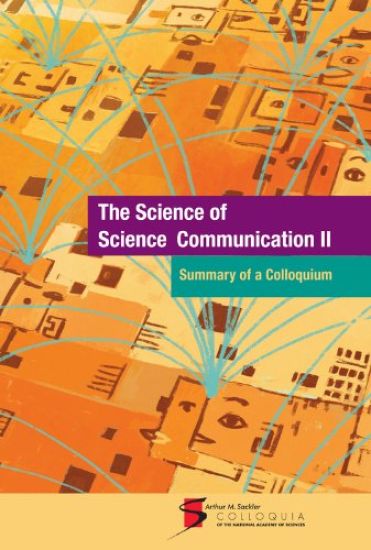
The Science of Science Communication II

The Science of Science Communication II

Arthur M. Sackler

National Academies Press
2014
nidottu
Successful scientists must be effective communicators within their professions. Without those skills, they could not write papers and funding proposals, give talks and field questions, or teach classes and mentor students. However, communicating with audiences outside their profession - people who may not share scientists' interests, technical background, cultural assumptions, and modes of expression - presents different challenges and requires additional skills. Communication about science in political or social settings differs from discourse within a scientific discipline. Not only are scientists just one of many stakeholders vying for access to the public agenda, but the political debates surrounding science and its applications may sometimes confront scientists with unfamiliar and uncomfortable discussions involving religious values, partisan interests, and even the trustworthiness of science. The Science of Science Communication II is the summary of a Sackler Colloquium convened in September 2013 At this event, leading social, behavioral, and decision scientists, other scientists, and communication practitioners shared current research that can improve the communication of science to lay audiences. In the Sackler Colloquia tradition, the meeting also allowed social and natural scientists to identify new opportunities to collaborate and advance their own research, while improving public engagement with science. Speakers provided evidence-based guidance on how to listen to others so as to identify their information needs, ways of thinking about the world, and the cultural stereotypes regarding scientists. They delved deeply into the incentive systems that shape what scientists study and how they report their work, the subtle changes in framing that can influence how messages are interpreted, the complex channels that determine how messages flow, and the potential politicization of scientific evidence.
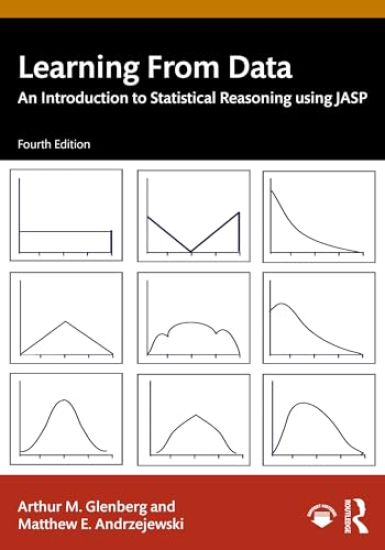
Learning From Data

Learning From Data

Arthur M. Glenberg; Matthew E. Andrzejewski

TAYLOR FRANCIS LTD
2024
nidottu
This fully updated fourth edition explores the foundations of statistical reasoning, focusing on how to interpret psychological data and statistical results. This edition includes three important new features. First, the book is closely integrated with the free statistical analysis program JASP. Thus, students learn how to use JASP to help with tasks such as constructing grouped frequency distributions, making violin plots, conducting inferential statistical tests, and creating confidence intervals. Second, reflecting the growing use of Bayesian analyses in the professional literature, this edition includes a chapter with an introduction to Bayesian statistics (also using JASP). Third, the revised text incorporates adjunct questions, that is, questions that challenge the student’s understanding, after each major section. Cognitive psychology has demonstrated how adjunct questions and related techniques such as self-explanation can greatly improve comprehension.Additional key features of the book include:• A user-friendly approach, with focused attention to explaining the more difficult concepts and the logic behind them. End of chapter tables summarize the hypothesis testing procedures introduced, and exercises support information recall and application.• The consistent use of a six-step procedure for all hypothesis tests that captures the logic of statistical inference.• Multiple examples of each of the major inferential statistical tests.• Boxed media reports illustrate key concepts and their relevance to real-world issues.• A focus on power, with a separate chapter, and power analysis procedures in each chapter.With comprehensive digital resources, including large data sets integrated throughout the textbook, and files for conducting analysis in JASP, this is an essential text for undergraduate or beginning graduate statistics courses in psychology, education, and other applied social and health sciences.
Learning From Data

Learning From Data

Arthur M. Glenberg; Matthew E. Andrzejewski

TAYLOR FRANCIS LTD
2024
sidottu
This fully updated fourth edition explores the foundations of statistical reasoning, focusing on how to interpret psychological data and statistical results. This edition includes three important new features. First, the book is closely integrated with the free statistical analysis program JASP. Thus, students learn how to use JASP to help with tasks such as constructing grouped frequency distributions, making violin plots, conducting inferential statistical tests, and creating confidence intervals. Second, reflecting the growing use of Bayesian analyses in the professional literature, this edition includes a chapter with an introduction to Bayesian statistics (also using JASP). Third, the revised text incorporates adjunct questions, that is, questions that challenge the student’s understanding, after each major section. Cognitive psychology has demonstrated how adjunct questions and related techniques such as self-explanation can greatly improve comprehension.Additional key features of the book include:• A user-friendly approach, with focused attention to explaining the more difficult concepts and the logic behind them. End of chapter tables summarize the hypothesis testing procedures introduced, and exercises support information recall and application.• The consistent use of a six-step procedure for all hypothesis tests that captures the logic of statistical inference.• Multiple examples of each of the major inferential statistical tests.• Boxed media reports illustrate key concepts and their relevance to real-world issues.• A focus on power, with a separate chapter, and power analysis procedures in each chapter.With comprehensive digital resources, including large data sets integrated throughout the textbook, and files for conducting analysis in JASP, this is an essential text for undergraduate or beginning graduate statistics courses in psychology, education, and other applied social and health sciences.
A Short History of Shakespearean Criticism

A Short History of Shakespearean Criticism

Arthur M. Eastman

WW Norton Co
1974
nidottu
The Shakespeare industry, one reviewer has remarked, seems to be one in which there is no unemployment. Each year new interpretations are put forth as hundreds of books and articles are added to the list of critical studies of Shakespeare. Now Arthur M. Eastman’s A Short History of Shakespearean Criticism, a descriptive and analytical survey, fills the needs for an authoritative introduction to the major criticism of Shakespeare from his own time to the present.
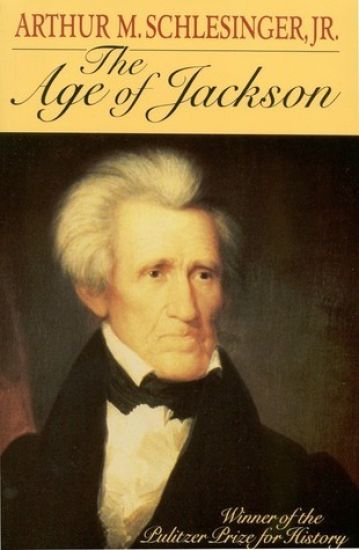
The Cycles of American History

The Cycles of American History

Arthur M. Schlesinger

Houghton Mifflin (Trade)
1999
nidottu
The eminent historian reflects on the "recurring struggle between pragmatism and idealism in the American soul" (Time). The Christian Science Monitor has hailed this book as "first-rate history mixed with a strong sense of public service . . .an excellent and provocative primer on the challenges surrounding the contemporary American political setting."
The Complete Guide to Foodservice in Cultural Institutions

The Complete Guide to Foodservice in Cultural Institutions

Arthur M. Manask; Mitchell Schechter

John Wiley Sons Inc
2001
sidottu
Create, manage, and grow a successful foodservice operation in any cultural institution The Complete Guide to Foodservice in Cultural Institutions provides insight, strategies, and information needed to run an appealing, efficient, and profitable foodservice operation that lives up to the commitment, standards, and quality expectations of any cultural institution. It is a unique and invaluable resource for administrators charged with ensuring the quality, profitability, and safety of foodservice operations in any cultural institution. A series of case studies recounts the problems and shortcomings encountered by a number of cultural institutions’ foodservice programs. These studies demonstrate how to achieve improved financial performance, management efficiencies, visitor satisfaction, and integration with each institution’s mission and culture. Through presentation of these case studies, this comprehensive guide shows administrators at museums, zoos, and other cultural institutions how to: *Use catered special events to encourage membership and sponsorship *Develop and market a private special events program *Create a restaurant that enhances the visitor experience *Evaluate and assess in-house restaurants and special events programs *Renovate or expand an existing foodservice operation *Ensure food quality and safety
Moral Vision in the Histories of Polybius

Moral Vision in the Histories of Polybius

Arthur M. Eckstein

University of California Press
1995
sidottu
Arthur Eckstein's fresh and stimulating interpretation challenges the way Polybius' Histories have long been viewed. He argues that Polybius evaluates people and events as much from a moral viewpoint as from a pragmatic, utilitarian, or even "Machiavellian" one. Polybius particularly asks for "improvement" in his audience, hoping that those who study his writings will emerge with a firm determination to live their lives nobly. Teaching by the use of moral exemplars, Polybius also tries to prove that success is not the sole standard by which human action should be judged.
Mediterranean Anarchy, Interstate War, and the Rise of Rome

Mediterranean Anarchy, Interstate War, and the Rise of Rome

Arthur M. Eckstein

University of California Press
2009
pokkari
This ground-breaking study is the first to employ modern international relations theory to place Roman militarism and expansion of power within the broader Mediterranean context of interstate anarchy. Arthur M. Eckstein challenges claims that Rome was an exceptionally warlike and aggressive state - not merely in modern but in ancient terms - by arguing that intense militarism and aggressiveness were common among all Mediterranean polities from ca 750 B.C. onwards. In his wide-ranging and masterful narrative, Eckstein explains that international politics in the ancient Mediterranean world was, in political science terms, a multipolar anarchy: international law was minimal, and states struggled desperately for power and survival by means of warfare.Eventually, one state, the Republic of Rome, managed to create predominance and a sort of peace. Rome was certainly a militarized and aggressive state, but it was successful not because it was exceptional in its ruthlessness, Eckstein convincingly argues; rather, it was successful because of its exceptional ability to manage a large network of foreign allies, and to assimilate numerous foreigners within the polity itself. This book shows how these characteristics, in turn, gave Rome incomparably large resources for the grim struggle of states fostered by the Mediterranean anarchy - and hence they were key to Rome's unprecedented success.
Senate and General

Senate and General

Arthur M. Eckstein

University of California Press
2021
pokkari
This title is part of UC Press's Voices Revived program, which commemorates University of California Press’s mission to seek out and cultivate the brightest minds and give them voice, reach, and impact. Drawing on a backlist dating to 1893, Voices Revived makes high-quality, peer-reviewed scholarship accessible once again using print-on-demand technology. This title was originally published in 1987.
Senate and General

Senate and General

Arthur M. Eckstein

University of California Press
2021
sidottu
This title is part of UC Press's Voices Revived program, which commemorates University of California Press’s mission to seek out and cultivate the brightest minds and give them voice, reach, and impact. Drawing on a backlist dating to 1893, Voices Revived makes high-quality, peer-reviewed scholarship accessible once again using print-on-demand technology. This title was originally published in 1987.