Kirjojen hintavertailu. Mukana 11 699 587 kirjaa ja 12 kauppaa.

Kirjahaku

Etsi kirjoja tekijän nimen, kirjan nimen tai ISBN:n perusteella.

158 tulosta hakusanalla Arup Bose

Combinatorial Library Design and Evaluation

Combinatorial Library Design and Evaluation

Arup Ghose; Vellerkad Viswanadhan

CRC Press
2019
nidottu
This text traces developments in rational drug discovery and combinatorial library design with contributions from 50 leading scientists in academia and industry who offer coverage of basic principles, design strategies, methodologies, software tools and algorithms, and applications. It outlines the fundamentals of pharmacophore modelling and 3D Quantitative Structure-Activity Relationships (QSAR), classical QSAR, and target protein structure-based design methods.
Innovation, Policy and Law

Innovation, Policy and Law

Arup Christopher

Cambridge University Press
2009
pokkari
Innovation is widely held to be a central concern of economic policy and a key element in the transformation of the economy. This book, first published in 1993, illustrates the connections between innovation, policy and law and shows the ways in which the law can work as a key instrument of innovation policy. A cross-disciplinary study, it considers the ways in which the law has accommodated innovation, and the ways in which a legal framework for facilitating and managing new technologies has developed. As well as canvassing broad theoretical issues, the book presents a number of case studies. These include: intellectual property: patents and living organisms: copyright and computer software: competition and trade: competition law and foreign investment review: and government sponsorship and entrepreneurship: direct grants and tax concessions: telecommunications licensing. Innovation, Policy and Law examines issues in public and industrial policy from the viewpoint of legal studies. The book will increase understanding of the ways in which legal processes can promote innovation and assist in capturing the benefits that innovation brings.
Oracle PL/SQL for DBAs

Oracle PL/SQL for DBAs

Arup Nanda

O'Reilly Media, Inc, USA
2005
nidottu
PL/SQL, Oracle's powerful procedural language, has been the cornerstone of Oracle application development for nearly 15 years. Although primarily a tool for developers, PL/SQL has also become an essential tool for database administration, as DBAs take increasing responsibility for site performance and as the lines between developers and DBAs blur. Until now, there has not been a book focused squarely on the language topics of special concern to DBAs Oracle PL/SQL for DBAs fills the gap. Covering the latest Oracle version, Oracle Database 10g Release 2 and packed with code and usage examples, it contains: * A quick tour of the PL/SQL language, providing enough basic information about language fundamentals to get DBAs up and running * Extensive coverage of security topics for DBAs: Encryption (including both traditional methods and Oracle's new Transparent Data Encryption, TDE); Row-Level Security (RLS), Fine-Grained Auditing (FGA); and random value generation * Methods for DBAs to improve query and database performance with cursors and table functions * Coverage of Oracle scheduling, which allows jobs such as database monitoring and statistics gathering to be scheduled for regular execution Using Oracle's built-in packages (DBMS_CRYPTO, DBMS_RLS, DBMS_FGA, DBMS_RANDOM, DBMS_SCHEDULING) as a base, the book describes ways of building on top of these packages to suit particular organizational needs. Authors are Arup Nanda, Oracle Magazine 2003 DBA of the Year, and Steven Feuerstein, the world's foremost PL/SQL expert and coauthor of the classic reference, Oracle PL/SQL Programming. DBAs who have not yet discovered how helpful PL/SQL can be will find this book a superb introduction to the language and its special database administration features. Even if you have used PL/SQL for years, you'll find the detailed coverage in this book to be an invaluable resource.
Combinatorial Library Design and Evaluation

Combinatorial Library Design and Evaluation

Arup Ghose; Vellerkad Viswanadhan

CRC Press Inc
2001
sidottu
This text traces developments in rational drug discovery and combinatorial library design with contributions from 50 leading scientists in academia and industry who offer coverage of basic principles, design strategies, methodologies, software tools and algorithms, and applications. It outlines the fundamentals of pharmacophore modelling and 3D Quantitative Structure-Activity Relationships (QSAR), classical QSAR, and target protein structure-based design methods.
Higher Education and Intellectual Retrogression

Higher Education and Intellectual Retrogression

Arup Maharatna

TAYLOR FRANCIS LTD
2023
sidottu
This monograph critically analyses the historical evolution of ideas, perceptions and principles on higher education and unravels a few of its interlinked aspects – content, quality, standard, massification, privatization and commercialization. It presents both original and penetrative critique of neoliberal ideas and policies reigning higher education since World War II. The volume argues that with the proliferation of ‘academic capitalism’ the academic quality of higher education has been inevitably compromised and it has thereby heralded a comprehensive ‘intellectual retrogression’. The book offers a meticulous evaluation of global research reflecting on impeccable evidence of decline in academic learning – in its effort, quality, standards and overall intellectual level and rigour. Finally, it illuminates why it is dangerous to continue clinging ideationally to neoliberal reign in education and thereby evading or effacing some of the lasting and universal wisdoms and precepts of the educational reign preceding neoliberal marketoriented predominancy.The book will be of interest to students, teachers and researchers of education, higher education, sociology of education, economics and politics of education. It will also be useful for academicians, higher education administration, policymakers, schoolteachers and those interested in debates and issues around higher education.
Higher Education and Intellectual Retrogression

Higher Education and Intellectual Retrogression

Arup Maharatna

TAYLOR FRANCIS LTD
2024
nidottu
This monograph critically analyses the historical evolution of ideas, perceptions and principles on higher education and unravels a few of its interlinked aspects – content, quality, standard, massification, privatization and commercialization. It presents both original and penetrative critique of neoliberal ideas and policies reigning higher education since World War II. The volume argues that with the proliferation of ‘academic capitalism’ the academic quality of higher education has been inevitably compromised and it has thereby heralded a comprehensive ‘intellectual retrogression’. The book offers a meticulous evaluation of global research reflecting on impeccable evidence of decline in academic learning – in its effort, quality, standards and overall intellectual level and rigour. Finally, it illuminates why it is dangerous to continue clinging ideationally to neoliberal reign in education and thereby evading or effacing some of the lasting and universal wisdoms and precepts of the educational reign preceding neoliberal marketoriented predominancy.The book will be of interest to students, teachers and researchers of education, higher education, sociology of education, economics and politics of education. It will also be useful for academicians, higher education administration, policymakers, schoolteachers and those interested in debates and issues around higher education.
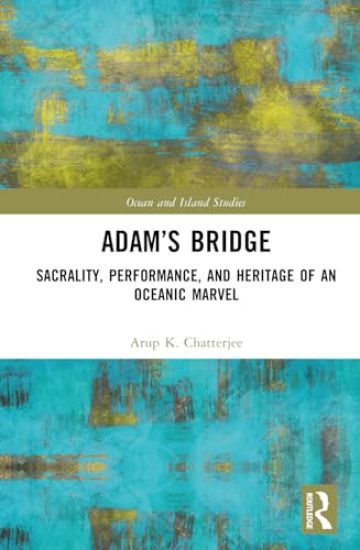
Adam’s Bridge

Adam’s Bridge

Arup K. Chatterjee

TAYLOR FRANCIS LTD
2024
sidottu
Adam’s Bridge offers the first comprehensive transdisciplinary study of the famous eponymous tombolo (also known as Ram Setu) combining its sacral, historical, geological, political, performative, and heritage aspects into one framework, viewed under the critical lenses of island studies and cultural theory.The book elucidates the entanglement of Adam’s Bridge’s discursive history with India’s colonial history, contemporary geology, domestic politics, and the nation’s emerging position in a complex geopolitical order in and around the Indian Ocean region, vis-à-vis increasing Sino-American involvement in Indo-Sri Lankan relations. Without foregrounding any absolute scientific claims on the location of the sandbars that inspired sage Valmiki’s Ram Setu and the Ramayan legacy or hindering narratives of religious faiths and folklore revolving around the structure, this intellectual historiography traces the parallel evolution of traditions of compassionate questioning and devotion for Indic sacred beliefs among commentators across the millennia from both Indian and non-Indian spectra, seen in juxtaposition with the biotic and abiotic diversity of the Gulf of Mannar and Palk Bay. Looking beyond secular-versus-religious debates, this book will be of interest to scholars of ocean and island studies, coastal economies, archipelagic geographies, environmental history, heritage studies, colonial studies, and cultural theory.Adam’s Bridge unifies a consortium of themes, ranging across ecological and livelihood sustainability, environmentalism, soteriology, economic and geostrategic history, and the United Nations Convention on the Law of the Sea, in conceptualizing a compellingly nuanced chronicle for India’s enchanted ‘bridge.’
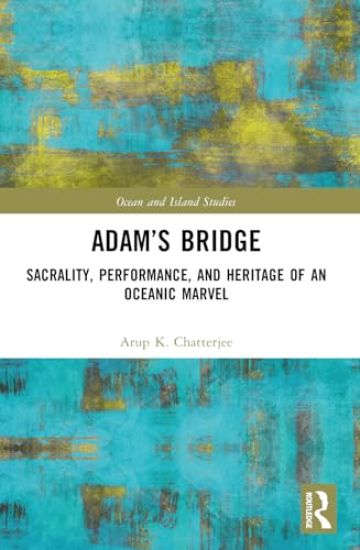
Adam’s Bridge

Adam’s Bridge

Arup K. Chatterjee

TAYLOR FRANCIS LTD
2025
nidottu
Adam’s Bridge offers the first comprehensive transdisciplinary study of the famous eponymous tombolo (also known as Ram Setu) combining its sacral, historical, geological, political, performative, and heritage aspects into one framework, viewed under the critical lenses of island studies and cultural theory.The book elucidates the entanglement of Adam’s Bridge’s discursive history with India’s colonial history, contemporary geology, domestic politics, and the nation’s emerging position in a complex geopolitical order in and around the Indian Ocean region, vis-à-vis increasing Sino-American involvement in Indo-Sri Lankan relations. Without foregrounding any absolute scientific claims on the location of the sandbars that inspired sage Valmiki’s Ram Setu and the Ramayan legacy or hindering narratives of religious faiths and folklore revolving around the structure, this intellectual historiography traces the parallel evolution of traditions of compassionate questioning and devotion for Indic sacred beliefs among commentators across the millennia from both Indian and non-Indian spectra, seen in juxtaposition with the biotic and abiotic diversity of the Gulf of Mannar and Palk Bay. Looking beyond secular-versus-religious debates, this book will be of interest to scholars of ocean and island studies, coastal economies, archipelagic geographies, environmental history, heritage studies, colonial studies, and cultural theory.Adam’s Bridge unifies a consortium of themes, ranging across ecological and livelihood sustainability, environmentalism, soteriology, economic and geostrategic history, and the United Nations Convention on the Law of the Sea, in conceptualizing a compellingly nuanced chronicle for India’s enchanted ‘bridge.’
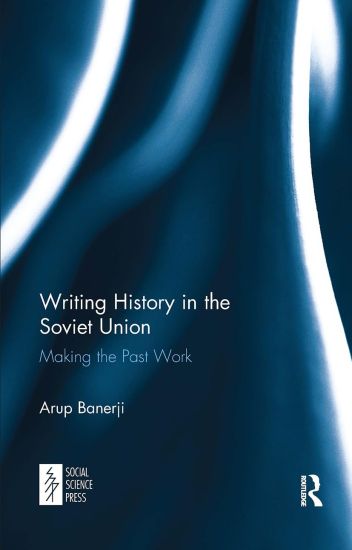
Writing History in the Soviet Union

Writing History in the Soviet Union

Arup Banerji

TAYLOR FRANCIS LTD
2024
nidottu
The history of the Soviet Union has been charted in several studies over the decades. These depictions while combining accuracy, elegance, readability and imaginativeness, have failed to draw attention to the political and academic environment within which these histories were composed. Writing History in the Soviet Union: Making the Past Work is aimed at understanding this environment. The book seeks to identify the significant hallmarks of the production of Soviet history by Soviet as well as Western historians. It traces how the Russian Revolution of 1917 triggered a shift in official policy towards historians and the publication of history textbooks for schools. In 1985, the Soviet past was again summoned for polemical revision as part and parcel of an attitude of openness (glasnost') and in this, literary figures joined their energies to those of historians. The Communist regime sought to equate the history of the country with that of the Communist Party itself in 1938 and 1962 and this imposed a blanket of conformity on history writing in the Soviet Union. The book also surveys the rich abundance of writing the Russian Revolution generated as well as the divergent approaches to the history of the period. The conditions for research in Soviet archives are described as an aspect of official monitoring of history writing. Another instance of this is the manner by which history textbooks have, through the years, been withdrawn from schools and others officially nursed into circulation. This intervention, occasioned in the present circumstance by statements by President Putin himself, in the manner in which history is taught in Russian schools, continues to this day. In other words, over the years, the regime has always worked to make the past work.Please note: Taylor & Francis does not sell or distribute the Hardback in India, Pakistan, Nepal, Bhutan, Bangladesh & Sri Lanka
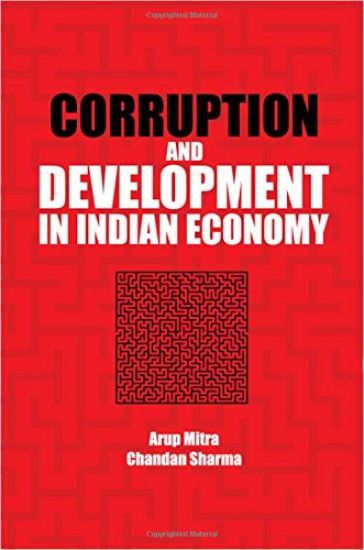
Corruption and Development in Indian Economy

Corruption and Development in Indian Economy

Arup Mitra; Chandan Sharma

Cambridge University Press
2016
sidottu
The book examines how corruption is viewed in theoretical and empirical literature and how various macro- and micro-level approaches have been followed to study the issue. It offers an inter-country comparison of corruption, indicating the role of governance in the context of growth. The volume attempts to work out the extent of understatement of personal income, resulting in the loss of government revenue from personal income tax. It also examines the impact of corruption on performance, and studies determinants of bribery in an attempt to understand why some firms pay bribes while others do not, despite being subject to the same macroeconomic environment, policy and regulations.
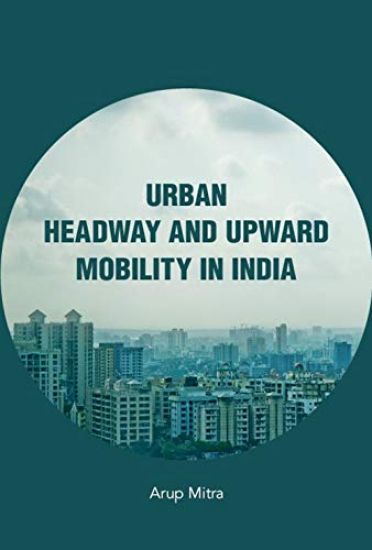
Urban Headway and Upward Mobility in India

Urban Headway and Upward Mobility in India

Arup Mitra

Cambridge University Press
2020
sidottu
Urbanisation in the literature of development economics is expected to bring in a spectrum of social and economic transformations. With this framework in mind, this book focuses on various aspects of urbanisation in India and its impact on socio-economic variables. The study has been conducted at various levels of disaggregation such as state, district and city and the data is sourced from population census, NSSO's surveys on employment-unemployment schemes and results and consumption expenditure, and primary surveys on slum households conducted by the author. Urbanisation is studied as a process particular to developing countries, contextualising it within the study of India. While this brings about gradual changes contributing to overall growth, the pace is remarkably slow. It brings to the forefront the resilience of the social system that can be mitigated through significant interventions into some of the economic variables. Various policy implications of the evidence based research are discussed at the end of each chapter.
Ion Exchange in Environmental Processes

Ion Exchange in Environmental Processes

Arup K. SenGupta

Wiley-Blackwell
2017
sidottu
Provides a comprehensive introduction to ion exchange for beginners and in-depth coverage of the latest advances for those already in the field As environmental and energy related regulations have grown, ion exchange has assumed a dominant role in offering solutions to many concurrent problems both in the developed and the developing world. Written by an internationally acknowledged leader in ion exchange research and innovation, Ion Exchange: in Environmental Processes is both a comprehensive introduction to the science behind ion exchange and an expert assessment of the latest ion exchange technologies. Its purpose is to provide a valuable reference and learning tool for virtually anyone working in ion exchange or interested in becoming involved in that incredibly fertile field. Written for beginners as well as those already working the in the field, Dr. SenGupta provides stepwise coverage, advancing from ion exchange fundamentals to trace ion exchange through the emerging area of hybrid ion exchange nanotechnology (or polymeric/inorganic ion exchangers). Other topics covered include ion exchange kinetics, sorption and desorption of metals and ligands, solid-phase and gas-phase ion exchange, and more. Connects state-of-the-art innovations in such a way as to help researchers and process scientists get a clear picture of how ion exchange fundamentals can lead to new applicationsCovers the design of selective or smart ion exchangers for targeted applications—an area of increasing importance—including solid and gas phase ion exchange processesProvides in-depth discussion on intraparticle diffusion controlled kinetics for selective ion exchangeFeatures a chapter devoted to exciting developments in the areas of hybrid ion exchange nanotechnology or polymeric/inorganic ion exchangers Written for those just entering the field of ion exchange as well as those involved in developing the “next big thing” in ion exchange systems, Ion Exchange in Environmental Processes is a valuable resource for students, process engineers, and chemists working in an array of industries, including mining, microelectronics, pharmaceuticals, energy, and wastewater treatment, to name just a few.
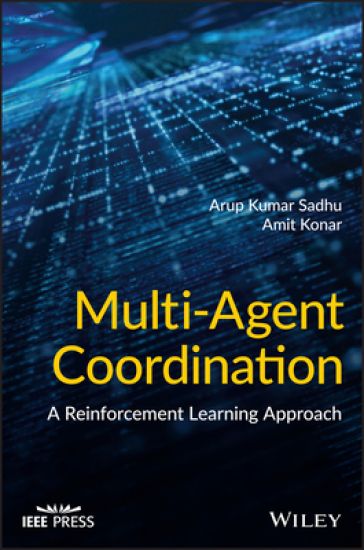
Multi-Agent Coordination

Multi-Agent Coordination

Arup Kumar Sadhu; Amit Konar

Wiley-Blackwell
2021
sidottu
Discover the latest developments in multi-robot coordination techniques with this insightful and original resource Multi-Agent Coordination: A Reinforcement Learning Approach delivers a comprehensive, insightful, and unique treatment of the development of multi-robot coordination algorithms with minimal computational burden and reduced storage requirements when compared to traditional algorithms. The accomplished academics, engineers, and authors provide readers with both a high-level introduction to, and overview of, multi-robot coordination, and in-depth analyses of learning-based planning algorithms. You'll learn about how to accelerate the exploration of the team-goal and alternative approaches to speeding up the convergence of TMAQL by identifying the preferred joint action for the team. The authors also propose novel approaches to consensus Q-learning that address the equilibrium selection problem and a new way of evaluating the threshold value for uniting empires without imposing any significant computation overhead. Finally, the book concludes with an examination of the likely direction of future research in this rapidly developing field. Readers will discover cutting-edge techniques for multi-agent coordination, including: An introduction to multi-agent coordination by reinforcement learning and evolutionary algorithms, including topics like the Nash equilibrium and correlated equilibriumImproving convergence speed of multi-agent Q-learning for cooperative task planningConsensus Q-learning for multi-agent cooperative planningThe efficient computing of correlated equilibrium for cooperative q-learning based multi-agent planningA modified imperialist competitive algorithm for multi-agent stick-carrying applications Perfect for academics, engineers, and professionals who regularly work with multi-agent learning algorithms, Multi-Agent Coordination: A Reinforcement Learning Approach also belongs on the bookshelves of anyone with an advanced interest in machine learning and artificial intelligence as it applies to the field of cooperative or competitive robotics.
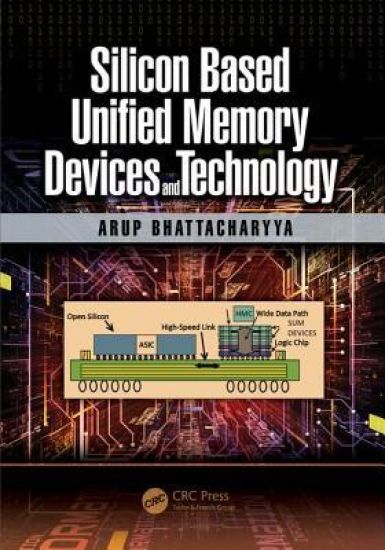
Silicon Based Unified Memory Devices and Technology
The primary focus of this book is on basic device concepts, memory cell design, and process technology integration. The first part provides in-depth coverage of conventional nonvolatile memory devices, stack structures from device physics, historical perspectives, and identifies limitations of conventional devices. The second part reviews advances made in reducing and/or eliminating existing limitations of NVM device parameters from the standpoint of device scalability, application extendibility, and reliability. The final part proposes multiple options of silicon based unified (nonvolatile) memory cell concepts and stack designs (SUMs). The book provides Industrial R&D personnel with the knowledge to drive the future memory technology with the established silicon FET-based establishments of their own. It explores application potentials of memory in areas such as robotics, avionics, health-industry, space vehicles, space sciences, bio-imaging, genetics etc.
Writing History in the Soviet Union
The history of the Soviet Union has been charted in several studies over the decades. These depictions while combining accuracy, elegance, readability and imaginativeness, have failed to draw attention to the political and academic environment within which these histories were composed. Writing History in the Soviet Union: Making the Past Work is aimed at understanding this environment. The book seeks to identify the significant hallmarks of the production of Soviet history by Soviet as well as Western historians. It traces how the Russian Revolution of 1917 triggered a shift in official policy towards historians and the publication of history textbooks for schools. In 1985, the Soviet past was again summoned for polemical revision as part and parcel of an attitude of openness (glasnost') and in this, literary figures joined their energies to those of historians. The Communist regime sought to equate the history of the country with that of the Communist Party itself in 1938 and 1962 and this imposed a blanket of conformity on history writing in the Soviet Union. The book also surveys the rich abundance of writing the Russian Revolution generated as well as the divergent approaches to the history of the period. The conditions for research in Soviet archives are described as an aspect of official monitoring of history writing. Another instance of this is the manner by which history textbooks have, through the years, been withdrawn from schools and others officially nursed into circulation. This intervention, occasioned in the present circumstance by statements by President Putin himself, in the manner in which history is taught in Russian schools, continues to this day. In other words, over the years, the regime has always worked to make the past work.Please note: Taylor & Francis does not sell or distribute the Hardback in India, Pakistan, Nepal, Bhutan, Bangladesh & Sri Lanka
Silicon Based Unified Memory Devices and Technology
The primary focus of this book is on basic device concepts, memory cell design, and process technology integration. The first part provides in-depth coverage of conventional nonvolatile memory devices, stack structures from device physics, historical perspectives, and identifies limitations of conventional devices. The second part reviews advances made in reducing and/or eliminating existing limitations of NVM device parameters from the standpoint of device scalability, application extendibility, and reliability. The final part proposes multiple options of silicon based unified (nonvolatile) memory cell concepts and stack designs (SUMs). The book provides Industrial R&D personnel with the knowledge to drive the future memory technology with the established silicon FET-based establishments of their own. It explores application potentials of memory in areas such as robotics, avionics, health-industry, space vehicles, space sciences, bio-imaging, genetics etc.
Real World SQL and PL/SQL: Advice from the Experts

Real World SQL and PL/SQL: Advice from the Experts

Arup Nanda; Brendan Tierney; Heli Helskyaho; Martin Widlake; Alex Nuijten

McGraw-Hill Education
2016
nidottu
Publisher's Note: Products purchased from Third Party sellers are not guaranteed by the publisher for quality, authenticity, or access to any online entitlements included with the product.Master the Underutilized Advanced Features of SQL and PL/SQLThis hands-on guide from Oracle Press shows how to fully exploit lesser known but extremely useful SQL and PL/SQL features-and how to effectively use both languages together. Written by a team of Oracle ACE Directors, Real-World SQL and PL/SQL: Advice from the Experts features best practices, detailed examples, and insider tips that clearly demonstrate how to write, troubleshoot, and implement code for a wide variety of practical applications. The book thoroughly explains underutilized SQL and PL/SQL functions and lays out essential development strategies. Data modeling, advanced analytics, database security, secure coding, and administration are covered in complete detail.Learn how to:• Apply advanced SQL and PL/SQL tools and techniques• Understand SQL and PL/SQL functionality and determine when to use which language• Develop accurate data models and implement business logic• Run PL/SQL in SQL and integrate complex datasets• Handle PL/SQL instrumenting and profiling• Use Oracle Advanced Analytics and Oracle R Enterprise• Build and execute predictive queries• Secure your data using encryption, hashing, redaction, and masking• Defend against SQL injection and other code-based attacks• Work with Oracle Virtual Private DatabaseCode examples in the book are available for download at www.MHProfessional.com.TAG: For a complete list of Oracle Press titles, visit www.OraclePressBooks.com
Merchants and Markets in Revolutionary Russia, 1917–30
This book explores the history of private internal trade in the USSR during the NEP of the 1920s. Private traders operated in a politically hostile but economically promising environment. Their contribution to post-war reconstruction was a crucial one. An exhaustive portrayal of the markets and dimensions of private trade is contrasted with the felt anxieties of Bolsheviks concerning traders' destabilising intentions and abilities. Retrospectively, many of these apprehensions were misplaced.
Ion Exchange Technology

Ion Exchange Technology

Arup K. SenGupta

CRC Press Inc
1995
sidottu
This book provides comprehensive coverage of developments in ion exchange areas which would continue to have major impacts in the general pursuit of pollution control and pollution prevention. Its nine chapters can be split into four different theme areas: trace contaminants removals; new materials; desalination and finally controlling gaseous pollutants. This would have value for practicing engineers, scientists and researchers who are pertaining to ion exchange technology. It would also server the needs of those trying to explore and identify new technologies in the areas of pollution control and pollution prevention.