Ecosystem-Based Adaptation: Approaches to Sustainable Management of Aquatic Resources presents a close examination of the role of ecosystem-based adaptation in managing river basins, aquifers, flood plains and their vegetation to provide water storage and flood regulation. Furthermore, the book explores improved ecosystem-based services for managing floods, conservation of water and its resources (including watersheds), avoiding water scarcity, and ensuring long-term water security planning, all in the context of sustainable development goals. This book will help scientists pave the way for easy implementation of sustainable development goals, ensuring a secure and sustainable future.
Deliver microservices architecture, step-by-step: from defining business problems through development, deployment, and monitoring Increasingly, organizations are modernizing application development by integrating open source technologies into a holistic architecture for delivering high-quality workloads to the cloud. This is a complete, step-by-step guide to building flexible microservices architecture by leveraging Microsoft Azure cloud services, together with key open source technologies such as Java, Node.JS, .NET Core and Angular. Through a realistic case study project, expert Microsoft engineers Ovais Mehboob Ahmed Khan and Arvind Chandaka guide you through every step of technical implementation required to achieve value: establishing end-to-end infrastructure, developing cloud-native applications, automating deployments, monitoring operations, and more. Microsoft engineers Ovais Mehboob Ahmed Khan and Arvind Chandaka show how to: Define application features and business requirements, and map them onto microservices using modeling techniquesDesign microservices solution architecture that enables high-quality workloadsDevelop an application front-end, and build microservices with open source technologiesLeverage Azure Kubernetes Services for Docker container orchestrationUse various patterns to build reliable and resilient microservicesEnforce microservices app security, and use Azure AD B2C for user authentication/authorizationEstablish an API gateway that provides a unified “front door” to back-end microservicesSet up continuous integration and deployment with Azure DevOpsMonitor microservices with Azure Monitor and Azure Application Insights About This Book For everyone interested in developing microservices, including architects, engineers, and consultants Will help IT professionals build new applications, modernize existing systems, migrate workloads, improve app management, and more.
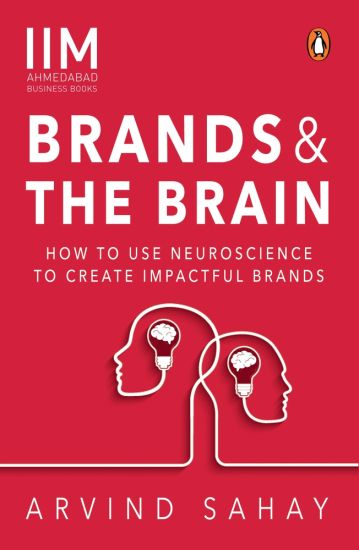
It is evident that some of the most powerful brands are deeply embedded in our unconscious emotions and memories. The purpose of this book is to develop an understanding of the link between the human brain and brand management principles as well as activities. It will educate readers about brain-operating principles and their impact on how humans perceive brands. The book also analyzes how modern brands are created by leveraging brain functioning. In a nutshell, the book explains the indispensable role that the human brain plays in creating, sustaining and rejuvenating brands.
Arguments for protection and against free trade have seen a revival in developed countries such as the United States and Great Britain as well as developing countries such as India. Given the clear benefits trade openness has brought everywhere, this is a surprising development. The benefits of free trade are especially great for emerging market economies. FreeTrade and Prosperityoffers the first full-scale defense of pro-free-trade policies with developing countries at its center. Arvind Panagariya, a professor at Columbia University and former top economic advisor to the government of India, supplies a historically informed analysis of many longstanding but flawed arguments for protection. He starts with an insightful overview of the positive case for free trade, and then closely examines the various contentions of protectionists. One protectionist argument is that "infant" industries need time to grow and become competitive, and thus should be sheltered. Other arguments are that emerging markets are especially prone to coordination failures, they are in need of diversification of their production structures, and they suffer from market imperfections. The panoply of protectionist arguments, including those for import substitution industrialization, fails when subject to close logical and empirical scrutiny. Free trade and outward-oriented policies are preconditions to both sustained rapid growth and poverty alleviation in developing countries. Panagariya provides compelling evidence demonstrating the failures of protectionism and the promise of free trade using detailed case studies of successful countries such as Singapore, Taiwan, South Korea, China and India. Low or declining barriers to free trade and high or rising shares of trade in total income have been key elements in the sustained rapid growth and poverty alleviation in these countries and many others. Free trade is like oxygen: the benefits are ubiquitous and not noticed until they are no longer there. This important book is an essential reminder of the costs of protectionism.
Designed to provide a firm grounding in mathematical methods for chemical engineering practitioners in academic institutions and industry, this volume builds on the reader's previous knowledge of calculus, differential equations and linear algebra. Varma and Morbidelli offer an integrated treatment of linear operator theory from determinants through partial differential equations, and feature extensive chapters on both ordinary differential equations and perturbation methods. Numerous high-quality diagrams and examples from chemical engineering illustrate the textual material and enhance the reader's understanding of complex mathematical systems.
With a GDP that just reached $2.6 trillion, India is poised to become the world's third largest economy in less than a decade. In doing so, it will have moved one step closer to reclaiming its pre-industrial glory when it accounted for one-sixth of the global output and ranked second in economic size. This rapid movement in the absolute size of the economy will be insufficient, however, to bring prosperity to India's vast population. Today, 44% of the country's workforce remains in agriculture and another 42% in small enterprises with fewer than twenty workers. Labor productivity of both sets of workers remains low and they live overwhelmingly on subsistence-level incomes. In New India: Reclaiming the Lost Glory, Arvind Panagariya outlines a concise strategy to transform India from a primarily rural and agricultural economy to an urban and industrial economy with well-paid jobs for those with limited skills. Panagariya argues that the creation of good jobs requires the emergence of medium and large enterprises in industry and services, especially labor-intensive sectors such as apparel, footwear, and other light manufactures. He explains that India needs policies conducive to the growth of firms from small to medium, medium to large, and large to larger still. Such policies include greater outward orientation; more flexible land, labor, and capital markets; concerted effort to improve the quality of higher education; faster urbanization; and improved governance at all levels. Written by a preeminent authority on the Indian economy, New India: Reclaiming the Lost Glory provides a data-driven and persuasive roadmap for India to eliminate abject poverty, accelerate economic growth, and return to its historically prominent position in the global economy.
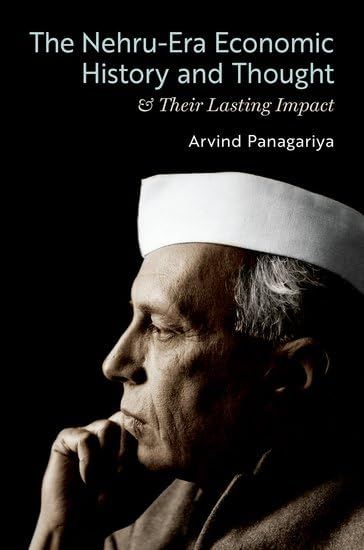
India's economic model underwent transformational change following independence in 1947. The country's first Prime Minister, Jawaharlal Nehru, embarked upon two foundational projects to build modern India: a political project aimed at establishing democracy with universal suffrage, and an economic one aimed at ending poverty. Three-quarters of a century later, his political project is a resounding success, but the opposite is true of the economic one. The Nehru-Era Economic History and Thought & Their Lasting Impact examines the evolution of Nehru's economic philosophy with socialism, self-sufficiency, and heavy-industry development at its core. Through extensive archival research, Arvind Panagariya reconstructs and reinterprets this history, paying particular attention to the administrative processes deployed to implement policies, contemporary economic thought, and important historical events not adequately covered in the existing literature. He assesses the evolution of Nehru's own political beliefs and the construction of the Nehru development model, the resulting regime and exclusionary nature of economic growth, and the lasting intellectual legacy of the Nehru-era socialism on politicians, civil servants, policy analysts, and businesspeople in the six decades since Nehru's death. This book is the fascinating tale of a model with the near-unanimous approval of experts from all around the world at its inception and the impact of its failure.
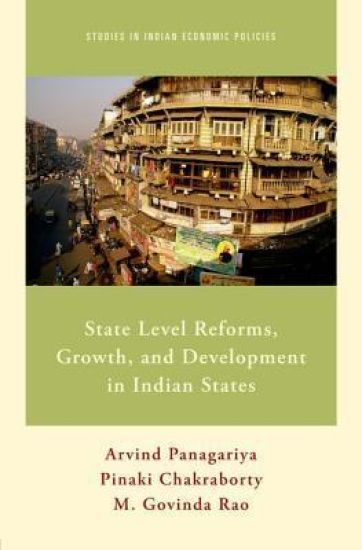
Most discussions of India's substantive economic growth since the 1990s tend to focus on national level statistics or on particular sectors such as the financial and call service sectors or on the pharmaceutical industry. But with a population of 1.2 billion, India demands to be treated like a collection of individual "countries, " rather than a unified nation. Ten of its states have populations equaling or exceeding that of the United Kingdom. If the state of Uttar Pradesh were a country, it would be the fourth largest, behind China, India, and the United States. These facts pointedly tell us that if we are to understand the ongoing experiment in economic reforms and poverty alleviation, we must study India at the level of the state. In this spirit, State Level Reforms and Growth and Development in Indian States provides the first-ever comprehensive analysis of growth at the highly diverse state level. The authors argue that when the national government loosened its stronghold on industry and services, state governments were able to shape the fortunes of their citizens through state-level policy reforms. Because of this, every Indian state experienced accelerated growth, unlike China during the first two decades of its development when the eastern half flourished as the western half lagged. Every Indian state has grown faster in the last decade than any other decade in the post-independence era. In fact, some of the poorest states, notably Bihar and Orissa, have been growing the fastest. Professors Panagariya and Chakraborty and Dr. Rao refute the common assumptions that growth has not occurred or that poverty has not been reduced in all Indian states. The recent reforms have also led to improved access in every state to basic amenities such as permanent houses, electricity, water, and sanitation. These accomplishments notwithstanding, regional inequality on a per capita basis has grown as well. Reforms in state-controlled sectors such as agriculture, industry, healthcare, and education have not advanced as far as some analysts previously predicted. The authors outline the reforms in these areas and draw on the experience of states that have successfully carried out some of them. The authors pay special attention to reforms in the areas of education and health while recognizing that the Indian constitution vests in the states much of this legislative and other authority and while considering the real absolute rise in income, literacy, and health status across all the states.
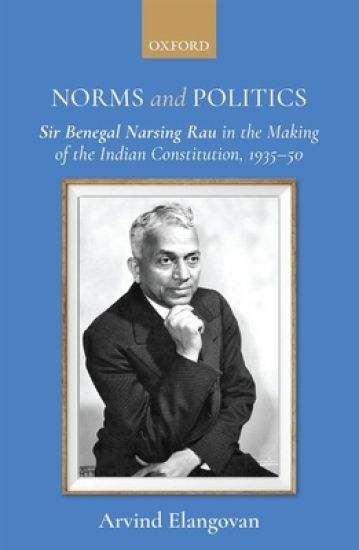
At the twilight of the British rule in India, a little known civil servant, Sir Benegal Narsing Rau (1887-1953) was sought after by the ruling elites - both British and Indian, for his immense knowledge of the nature and working of the constitutions of the world as well as his reputation for being just and impartial between competing political interests. Yet, Rau's ideas and his voice have largely been forgotten today. By examining Rau's constitutional ideas and following its trajectory in late colonial Indian politics, this book shows how the process of the making of the Indian constitution was actually never separated from the politics of conflict that dominated this period. This book demonstrates that it is only by foregrounding this political history that we can simultaneously remember Rau's critical contributions as well as understand why he was forgotten in the first place.
Arguing that intellectual movements, such as deconstruction, postsecular theory, and political theology, have different implications for cultures and societies that live with the debilitating effects of past imperialisms, Arvind Mandair unsettles the politics of knowledge construction in which the category of "religion" continues to be central. Through a case study of Sikhism, he launches an extended critique of religion as a cultural universal. At the same time, he presents a portrait of how certain aspects of Sikh tradition were reinvented as "religion" during the late nineteenth and early twentieth centuries. India's imperial elite subtly recast Sikh tradition as a sui generis religion, which robbed its teachings of their political force. In turn, Sikhs began to define themselves as a "nation" and a "world religion" that was separate from, but parallel to, the rise of the Indian state and global Hinduism. Rather than investigate these processes in isolation from Europe, Mandair shifts the focus closer to the political history of ideas, thereby recovering part of Europe's repressed colonial memory. Mandair rethinks the intersection of religion and the secular in discourses such as history of religions, postcolonial theory, and recent continental philosophy. Though seemingly unconnected, these discourses are shown to be linked to a philosophy of "generalized translation" that emerged as a key conceptual matrix in the colonial encounter between India and the West. In this riveting study, Mandair demonstrates how this philosophy of translation continues to influence the repetitions of religion and identity politics in the lives of South Asians, and the way the academy, state, and media have analyzed such phenomena.
Arguing that intellectual movements, such as deconstruction, postsecular theory, and political theology, have different implications for cultures and societies that live with the debilitating effects of past imperialisms, Arvind Mandair unsettles the politics of knowledge construction in which the category of "religion" continues to be central. Through a case study of Sikhism, he launches an extended critique of religion as a cultural universal. At the same time, he presents a portrait of how certain aspects of Sikh tradition were reinvented as "religion" during the late nineteenth and early twentieth centuries. India's imperial elite subtly recast Sikh tradition as a sui generis religion, which robbed its teachings of their political force. In turn, Sikhs began to define themselves as a "nation" and a "world religion" that was separate from, but parallel to, the rise of the Indian state and global Hinduism. Rather than investigate these processes in isolation from Europe, Mandair shifts the focus closer to the political history of ideas, thereby recovering part of Europe's repressed colonial memory. Mandair rethinks the intersection of religion and the secular in discourses such as history of religions, postcolonial theory, and recent continental philosophy. Though seemingly unconnected, these discourses are shown to be linked to a philosophy of "generalized translation" that emerged as a key conceptual matrix in the colonial encounter between India and the West. In this riveting study, Mandair demonstrates how this philosophy of translation continues to influence the repetitions of religion and identity politics in the lives of South Asians, and the way the academy, state, and media have analyzed such phenomena.
Philosophy of religion, as we know it today, emerged in the West and has been shaped by Western philosophical and theological trends, while the philosophical tradition of India flowed along its own course until the late nineteenth century, when active, if tentative, contact was established between the West and the East. This book provides a definite focus to this interaction by investigating issues raised in Western philosophy of religion from the perspective of Advaita Vedanta, the influential school of Indian thought. In promoting the emergence of a cross-cultural philosophy of religion, Arvind Sharma focuses on John H. Hick and his well-known work The Philosophy of Religion as representative of modern Western philosophy of religion, and on Sankara, along with his modern successors such as M. Hiriyanna and S. Radhakrishnan, as representative of Advaita Vedanta.
Part of the Problem, Part of the Solution unleashes religion's true potential to do good by bridging the modern divide between religion and an ever pervasive secular society, a notion often loathed by individuals on both sides of the religious aisle. As noted scholars such as Huston Smith, Karen Armstrong, Rosemary Radford Reuther, Harvey Cox, and Seyyed Hossein Nasr explain throughout the conversations related in this text, people of varied and conflicting faiths can come together to engage in civil, useful dialogue, and members of quite varied religious traditions can work together for the benefit of all humankind and can help defuse the world's current epidemic of violence. By showing how religion is an instrument in human affairs that can be tuned for both good and evil, this book lays the groundwork for an important cooperative effort to blossom. Furthermore, today's trend of associating all religion with suspicion has spiraled into a dangerous situation-that in discarding all religion because some of it causes harm, one risks throwing away the baby with the bathwater. Books such as When Religion Becomes Evil by Charles Kimball, The God Delusion by Richard Dawkins, The End of Faith by Sam Harris, Breaking the Spell: Religion as a Natural Phenomenon by Daniel Dennett, and God is Not Great: How Religion Poisons Everything by Christopher Hitchens have created quite a sensation, leaving the impression that religion, at its root, brings more heartache than handshakes. This development has dismayed many scholars, students, and practitioners of religion, of all faiths, who believe that only half the story-the negative half-is being told. Although demonstrating that certain religious beliefs have surely contributed to the violence that has occurred in this century, this book also explores how other religious teachings can help solve the epidemic of violence.
This pioneering work examines the existing understanding of Hinduism in relation to human rights discourse. Written by a leading Hindu scholar, Hindu Narratives on Human Rights is organized around specific rights, such as the right to own property, the rights of children, women's rights, and animal rights. Within these categories and in light of the questions they raise, the book provides a guided tour of Hindu narratives on ethics, ranging from the famous religious epics, the Mahabharata and the Ramayana, to various forms of secular literature drawn from almost a thousand years of Indic civilization. The realization that Hindu ethical discourse is narrative rather than propositional is a relatively recent one. Hence, the prevailing tendency in the West has been to overlook it in the context of the discussion of human rights. This book was written to correct that oversight. It shows that the presence of the universal in the particular in Hindu stories is a key to understanding Hindu thinking about human rights—and it indicates ways in which Hindu ethical discourse can interact creatively with modern human rights discourse.
This issue of Dental Clinics of North America focuses on Clinical Microbiology for the General Dentist, and is edited by Drs. Orrett Ogle and Arvind Babu Rajendra Santosh. Articles will include: Clinical microbiology for the dentist; Normal oral flora and the oral ecosystem; Bacterial, viral and fungal infections of the oral cavity; Odontogenic infections: clinical and microbiological evaluation, diagnosis, treatment and prevention; Osteomyelitis: clinical and microbiological evaluation, diagnosis, treatment and prevention; Periodontal infections; Epidemiology of oral microbial infections; Bacterial infections in oral cavity; Fungal infections in oral cavity; Viral infections in oral cavity; Immunization recommendations for the oral health professionals; Opportunistic infections in oral cavity; Microbial carcinogenesis: HPV, HIV, KSV, and EBV; Recent recommendations of HIV treatment; and more!
All arts and sciences, in their own way, ultimately try to come to grips with reality. What sets philosophy, theology and religion apart is that they grapple with ultimate reality. Over the decades spanned by John Hick's life, in the course of this grappling (reminiscent of Jacob's nocturnal encounter with the angel) philosophy became analytic, theology dialogical and religion comparative along one line of development. In these essays, written in honour of Professor Hick, leading world scholars in these fields share their most recent insights. They are, so to speak, postcards from the cutting edge.
This is a fictional story of Karimi's trials and tribulations, love and loss. Join Karimi in his journey across beautiful mountains and magnificent seas of the African Continent as he escapes from oppression, ethnic cleansing, corrupt power-hungry politicians and sultry sirens who are comfortable using their bodies to achieve their goals. Surviving with a never-say-die spirit, and from unexpected people, when all seemed lost.
This class-tested textbook is designed for a semester-long graduate or senior undergraduate course on Computational Health Informatics. The focus of the book is on computational techniques that are widely used in health data analysis and health informatics and it integrates computer science and clinical perspectives. This book prepares computer science students for careers in computational health informatics and medical data analysis.Features Integrates computer science and clinical perspectives Describes various statistical and artificial intelligence techniques, including machine learning techniques such as clustering of temporal data, regression analysis, neural networks, HMM, decision trees, SVM, and data mining, all of which are techniques used widely used in health-data analysis Describes computational techniques such as multidimensional and multimedia data representation and retrieval, ontology, patient-data deidentification, temporal data analysis, heterogeneous databases, medical image analysis and transmission, biosignal analysis, pervasive healthcare, automated text-analysis, health-vocabulary knowledgebases and medical information-exchange Includes bioinformatics and pharmacokinetics techniques and their applications to vaccine and drug development
The Structured Credit Handbook is a comprehensive introduction to all types of credit-linked financial instruments. This book provides state-of-the-art primers on single tranche collateralized debt obligations (CDOs), collateralized loan obligations (CLOs), credit derivatives (such as credit default swaps and swaptions), and iBoxx indexes. Filled with in-depth insight and expert advice, The Structured Credit Handbook covers all aspects of the synthetic arbitrage CDO market, including new instruments such as CDO2. Readers will also gain a firm understanding of the investment rationale, risks, and rewards associated with CDO investments through this valuable resource. The exploding use of credit derivatives and collateralized debt obligations (CDOs) has transformed the world of credit, creating an $18 trillion market almost overnight and resulting in innumerable investment and career opportunities globally. The Structured Credit Handbook provides the reader with a comprehensive and clear roadmap to today's new credit landscape. The full spectrum of structured credit products, from single-name CDS to CDOs, is explained in a simple, clear fashion that is free from the financial jargon and mathematical complexity which characterize many other derivative texts. The handbook begins with an in-depth explanation of the building blocks of the structured credit markets, single-name default swaps and indexes, and it culminates with complex products such as credit options, synthetic tranches, CDOs based on bank loans and asset-backed securities, and CDO-squareds. Written by experienced practitioners who have participated in this market since its infancy, each of the thirteen chapters introduces and analyzes a new product and explains its practical applications. A rich set of real-life case studies illustrate the application of each product in a concrete market setting. The book may be used in a semester-long course on structured credit as part of a business or finance curriculum. Whether you are a market professional, a university student or faculty member, or simply a financially savvy layperson, look no further for an up-to-date and thorough introduction to this rapidly growing and exciting field. Dr. Arvind Rajan, Managing Director, Citigroup Global Markets, is engaged in proprietary trading of Structured Credit products, and until recently, was global head of Structured Credit Research and Strategy at Citigroup. Glen McDermott (New York, NY) is Director of Fixed Income Sales and the former head of CDO Research at Citigroup Global Markets Inc. Ratul Roy is head of CDO Strategy for Citigroup Global Markets and has spent the prior nine years in structuring or analyzing CDOs and other structured credit products.