Kirjojen hintavertailu. Mukana 11 627 542 kirjaa ja 12 kauppaa.

Kirjahaku

Etsi kirjoja tekijän nimen, kirjan nimen tai ISBN:n perusteella.

272 tulosta hakusanalla Ashanti Luke

Ashanti proverbs, the primitive ethics of a savage people
This book has been considered by academicians and scholars of great significance and value to literature. This forms a part of the knowledge base for future generations. So that the book is never forgotten we have represented this book in a print format as the same form as it was originally first published. Hence any marks or annotations seen are left intentionally to preserve its true nature.
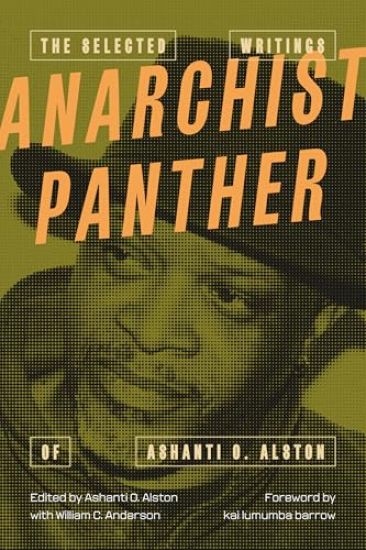
Anarchist Panther: The Selected Writings of Ashanti O. Alston
First collection by a beloved thinker in Black anarchism One of the enduring legacies of the Black Power Era is the turn by some revolutionaries toward a politics that questioned hierarchical leadership, patriarchy, and the role of the state in social transformation. This practice came to define a distinct form of anarchism rooted in the Black experience. Ashanti Omawali Alston helped nurture and define this turn through his experiences with the Black Panther Party and Black Liberation Army, and through social movement activity from the late 1960s to today. Anarchist Panther collects, for the first time, his thoughts that have influenced generations of radicals the world over. These essays, interviews, and speeches trace Alston's ideas and influences, including those on psychology, political prisoner support, feminism, the legacy of the Black Panther Party, the Zapatista rebellion, and Black anarchism. Edited alongside William C. Anderson and introduced by kai lumumba barrow, Anarchist Panther brings to life the beautiful movement expression "all power to the people "
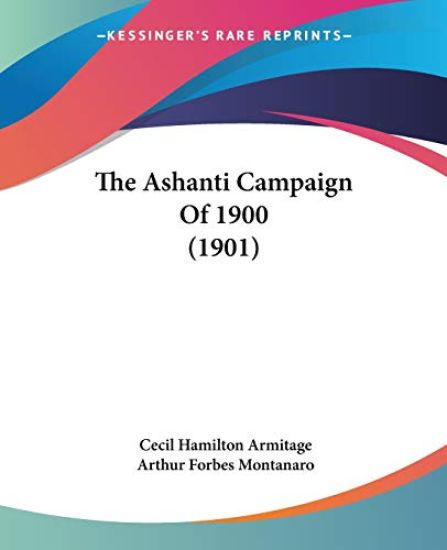
The Ashanti Campaign of 1900

The Ashanti Campaign of 1900

Cecil Hamilton Armitage; Arthur Forbes Montanaro

Cambridge University Press
2011
pokkari
In March 1900, Frederick Hodgson, the British Governor of the Gold Coast, demanded to sit on the Golden Stool of the Ashanti people in Ghana. The Golden Stool had great historical and symbolic significance for the Ashanti people and the Governor's demand was perceived as nothing short of a declaration of war: they responded by besieging the garrison in the city of Kumasi. British troops were sent in and recaptured the city in September 1900. C. H. Armitage (1869–1933), private secretary to Hodgson (and later himself to serve as Governor of Gambia) and A. F. Montanaro (1862–1914) were in the British retaliatory force, and as such perfectly positioned to give a first-hand account of the episode. The book was originally published in 1901 and is divided into two parts. The first part, by Armitage, describes the Ashanti siege of Kumasi, and in the second part Montanaro relates the British response.
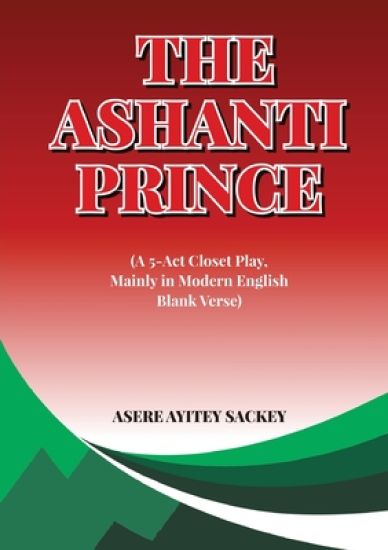
The Ashanti Prince (A 5-Act Closet Play, Mainly in Modern English Blank Verse)
This is verse drama of epic proportions draped in iambic pentameter with echoes of Greek drama, commingled with entry and exit points of an omniscient narrator. In this experimental theatre, the author succeeds in an interesting innovation that merges lofty versification with straight-forward prose and histrionics such that interesting elements of Modern Theatre are brought together in an innovative way. Patrons and students of the theatre would find thought-provoking ideas of experimentation to grapple with in The Ashanti Prince. In the end the power play shifts towards a dichotomy of ethics and aesthetics.
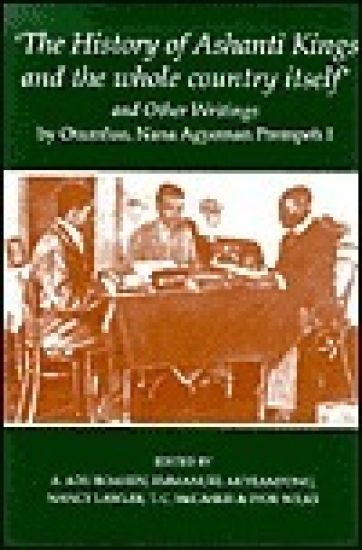
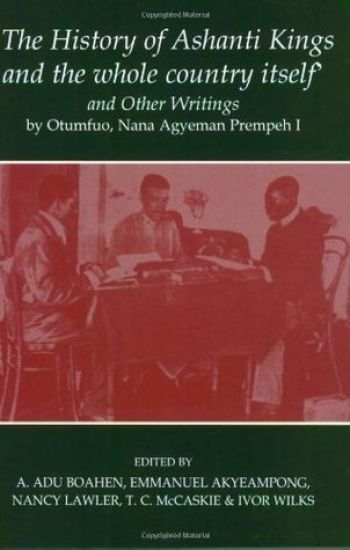
'The History of Ashanti Kings and the Whole Country Itself' and Other Writings, by Otumfuo, Nana Agyeman Prempeh I
'The History of Ashanti Kings and the Whole Country Itself' is a key text for understanding the history of the great West African kingdom of Asante (now in Ghana). It is also an early - and perhaps the earliest - example of history writing in English by an African ruler and his amanuenses. It was begun in 1907 in the Seychelles on the instructions of the Asantehene Agyeman Prempeh I, who had been in British captivity with his family since 1896, during which time he had acquired proficiency in English. The chief source of information was his mother the Asantehemaa Yaa Kyaa, who possessed an encyclopaedic knowledge of the oral history of her own lineage, which was also the royal dynasty of Asante. The result is an indispensably detailed document that charts the history of the Asante monarchy from the seventeenth to the nineteenth centuries. Context is provided by the inclusion of other writings by or about Agyeman Prempeh, together with four introductory essays by the world's leading scholars of Asante history.This fascinating volume evokes the rich historical experience of a renowned kingdom, and is of compelling interest to all concerned with the production of indigenous historical knowledge in Africa.
'The History of Ashanti Kings and the Whole Country Itself' and Other Writings, by Otumfuo, Nana Agyeman Prempeh I

'The History of Ashanti Kings and the Whole Country Itself' and Other Writings, by Otumfuo, Nana Agyeman Prempeh I

Agyeman Prempeh; E. Akyeampong; A. Adu Boahen; N. Lawler; T. C. McCaskie; I. Wilks

Oxford University Press
2008
nidottu
The History of Ashanti Kings and the Whole Country Itself is a key text for understanding the history of the great West African kingdom of Asante (now in Ghana). It is also an early - and perhaps the earliest - example of history writing in English by an African ruler and his amanuenses. It was begun in 1907 in the Seychelles on the instructions of the Asantehene Agyeman Prempeh I, who had been in British captivity with his family since 1896, during which time he had acquired proficiency in English. The chief source of information was his mother the Asantehemaa Yaa Kyaa, who possessed an encyclopaedic knowledge of the oral history of her own lineage, which was also the royal dynasty of Asante. The result is an indispensably detailed document that charts the history of the Asante monarchy from the seventeenth to the nineteenth centuries. Context is provided by the inclusion of other writings by or about Agyeman Prempeh, together with four introductory essays by the world's leading scholars of Asante history. This fascinating volume evokes the rich historical experience of a renowned kingdom, and is of compelling interest to all concerned with the production of indigenous historical knowledge in Africa.
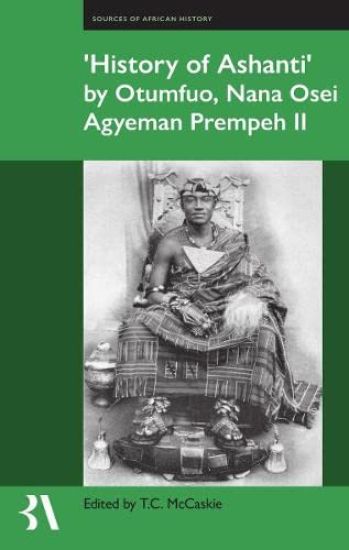
?History of Ashanti' by Otumfuo, Nana Osei Agyeman Prempeh II
History of Ashanti is unusual, perhaps unique, in that it provides a long historical account of the great West African forest kingdom of Asante by a ruler of that society. Thus, it is African history written by an African king and his assistants. This is, without a doubt, a very important document for historians of Africa. It has too a much wider resonance at the present time: here the Asante 'voice' is speaking directly to all those across the globe who claim ancestral links to the African continent, and who are still engaged in the struggle to define, to strengthen and to assert their identities in a world that long discounted the value, or even the existence, of their historical experience.