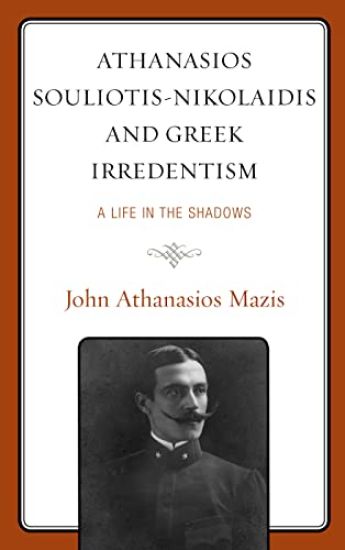
Athanasios Souliotis-Nikolaidis (1878–1945) was a Greek military officer, undercover agent, author, and politician who is not as well known in Greece today as he should be. Inasmuch as he is remembered at all today, Souliotis-Nikolaidis is associated with the much better-known Ion Dragoumis with whom he was connected with bonds of friendship and ideology. In this work the author examines the subject's role and contribution to Greece's irredentist activities of the early 20th century and answers some key questions. What were Souliotis-Nikolaidis's achievements as an undercover agent in Ottoman Macedonia? What was his behind-the-scenes role in the early elections of the Ottoman Empire following the Young Turk Revolt? What was his relationship with important individuals and organizations of the Greek Diaspora? What was his contribution to the unique idea about the future of Greeks and Turks in a unified federal state? In this work the author reveals that Souliotis-Nikolaidis, far from being a minor player in Greek irredentism was an important actor whose many contributions deserve recognition.
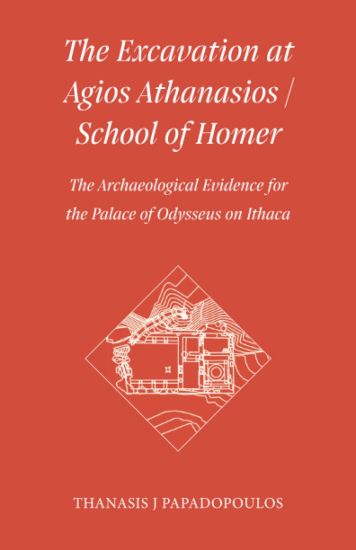
The archaeological paper presented here gives the evidence for the location of the historic Palace of Odysseus on the Greek island of Ithaca. The record of this excavation has been well buried. The excavation at Agios Athanasios / School of Homer took place between 1994 and 2011. It was carried out by an archaeological team from the University of Ioannina in Central Greece under Professors Litsa Kontorli-Papadopoulou and Thanasis Papadopoulos. In various ways, and for various reasons, the results of this excavation have been concealed. In May 2016 Professor Thanasis Papadopoulos presented a paper at the 16th International Aegean Conference at the University of Ioannina with the title 'Mycenaean citadels of Western Greece: architecture, purpose and their intricate role in the local communities and their relations with the West' of which this smaller paper forms one section. His full paper was published in 2017 by Peeters of Leuven in a compendium titled 'ΕΣΠΕΡΟΣ/ HESPEROS, the Aegean seen from the West' and they have kindly given me permission to re-publish. The previous titles, both of the paper and of the publication, gave no indication of what lies within, or of its importance. Yet it is gold dust. Archaeological evidence of the historic Palace of Odysseus on Ithaca has been difficult to find. Not only the previous name of this paper but the current name of the site, Agios Athanasios / School of Homer, do nothing to help us in our search. In addition the finds at the site were deeply buried. Habitation there continued from before, during and after the time of Odysseus, through the Dark Ages, the time of Homer, the Classical period and into the Roman rule of Ithaca around the time of Christ. During some 1,200 years following Odysseus' time buildings were demolished and stones re-used. This later digging also disturbed the stratification of the ground, making it difficult for archaeologists to identify the Mycenaean remains hidden below and, as this site has been known for generations, a large amount of looting had taken place. Excavation needed patient and careful work, dedicated to the particular task of uncovering the older ruins that lay below. And this happened. Principally over the last hundred years, claims have grown up that Odysseus centred his kingdom elsewhere. Recently, along with vested interests, these claims have multiplied. The financial crisis of 2008 struck Greece hard and, in 2010, funding for further work on Ithaca was withdrawn. The excavation at Agios Athanasios was left incomplete, and in 2015 the main archaeologist Litsa Kontorli-Papadopoulou died suddenly of a stroke. At the time of her death she had not yet written up her work but fortunately, the following year, her husband Thanasis was able to do this. The correlation between the archaeological site now called Agios Athanasios / School of Homer, and the descriptions given by Homer in The Odyssey, are an extraordinarily good fit. If Professor Papadopoulos is correct the poet Homer used this very megaron (or main hall) as the setting for Odysseus' battle with 108 suitors on his return, after 20 years, from the Trojan War and for his reunion with his faithful wife Penelope. Some may disagree with Papadopoulos' conclusion that this site is that of the Palace of Odysseus described by Homer in The Odyssey. This disagreement has led to the current situation where this known Bronze Age site on Ithaca, with its obvious cultural and literary significance, has been left half-excavated, with no on-site explanation and open pits that are both dangerous and vulnerable. I hope the re-publication of this paper will serve to spread word of this situation and that it can swiftly be rectified.
Hieronymus reagiert mit seinen drei in lateinischer Sprache verfassten Mönchsviten intertextuell auf Athanasios als seinen griechischsprachigen Vorläufer. Insofern dessen Prätext die Motive, Themen, Problemstellungen und Figuren der Viten des Hieronymus beeinflusst, entsteht ein vielseitiger »Dialog«, mit dem Hieronymus seine Helden vom großen Vorbild Antonius abrückt, ohne ihre geistige Verwandtschaft zu leugnen. Einerseits weiß sich Hieronymus dem griechisch-römischen Literaturerbe verpflichtet. Andererseits erlaubt ihm die Perspektive seiner Eremiten, entscheidende christliche Glaubenswahrheiten zu markieren, die den absoluten Wert eines auf Enthaltsamkeit ausgerichteten Lebensideals betonen.
Översatt, med inledning och kommentar av Samuel Rubenson och Tomas Hägg. Den helige Antonios var en av fornkyrkans viktigaste gestalter. Hans betydelse som förebild för ett heligt liv och för den rätta trons seger över villoläror kan knappast överskattas. Athanasios skildring av Antonios liv är den första klassiska helgonbiografin.
Challenging the conventional narrative that the European Union suffers from a "democratic deficit," Athanasios Psygkas argues that EU mandates have enhanced the democratic accountability of national regulatory agencies. This is because EU law has created entry points for stakeholder participation in the operation of national regulators; these avenues for public participation were formerly either not open or not institutionalized to this degree. By focusing on how the EU formally adopted procedural mandates to advance the substantive goal of creating an internal market in electronic communications, Psygkas demonstrates that EU requirements have had significant implications for the nature of administrative governance in the member states. Drawing on theoretical arguments in favor of decentralization traditionally applied to substantive policy-making, this book provides insight into regulatory processes to show how the decentralized EU structure may transform national regulatory authorities into individual loci of experimentation that might in turn develop innovative results. It thus contributes to debates about federalism, governance and public policy, as well as about deliberative and participatory democracy in the United States and Europe. This book informs current understandings of regulatory agency operations and institutional design by drawing on an original dataset of public consultations and interviews with agency officials, industry and consumer group representatives in Paris, Athens, Brussels, and London. The on-the-ground original research provides a strong foundation for the directions the case law could take and small- and larger-scale institutional reforms that balance the goals of democracy, accountability, and efficiency.
Medicine and Surgery for Dentists(previously published as the Oxford Handbook of Dental Patient Care) is the first in a new series of Oxford Specialist Handbooks in Dentistry. Bridging the gap between dental and medical knowledge, it provides postgraduate dental trainees with practical advice on dealing with clinical problems not encountered during their university training. This book covers the many areas of dentistry that overlap with, or border on, other specialities in the field of medicine and surgery-including history taking, examination, emergencies, and the treatment of special care patients. Major updates include general surgery, trauma and orthopaedics, anaesthesia, and critical care. It is the ideal resource to enable dental professionals to treat patients safely and effectively.
Working with Conservation Data provides a practical, step-by-step guide that describes how to approach the issue of documentation in a professional conservation environment.Documentation forms an essential part of conservation work, allowing conservators to preserve essential information about objects over time. With the increasing popularity of digital tools for documenting conservation work, it is important that a solid framework for organising this information is in place. Each chapter within this book corresponds to an individual step of a larger process of documentation, providing readers with not only a reference for specific parts of the process, but also a thorough guide to implementing or improving a conservation documentation system. The book explores important concepts involved in the documentation of conservation, as well as research and practical questions, and an analysis of implicit information embedded within conservation data and how it can be used to answer conservation questions. It also outlines best practices for producing conservation data and recommendations for structuring and sharing conservation data, so that documentation records can be easily retrieved and combined with other data.Working with Conservation Data is an invaluable reference work suitable for conservators working on documentation projects, as well as professionals working in the computing and information departments of museums, galleries, libraries and archives.
Working with Conservation Data provides a practical, step-by-step guide that describes how to approach the issue of documentation in a professional conservation environment.Documentation forms an essential part of conservation work, allowing conservators to preserve essential information about objects over time. With the increasing popularity of digital tools for documenting conservation work, it is important that a solid framework for organising this information is in place. Each chapter within this book corresponds to an individual step of a larger process of documentation, providing readers with not only a reference for specific parts of the process, but also a thorough guide to implementing or improving a conservation documentation system. The book explores important concepts involved in the documentation of conservation, as well as research and practical questions, and an analysis of implicit information embedded within conservation data and how it can be used to answer conservation questions. It also outlines best practices for producing conservation data and recommendations for structuring and sharing conservation data, so that documentation records can be easily retrieved and combined with other data.Working with Conservation Data is an invaluable reference work suitable for conservators working on documentation projects, as well as professionals working in the computing and information departments of museums, galleries, libraries and archives.
This book provides a description of the generalized two layer surface complexation model, data treatment procedures, and thermodynamic constants for sorption of metal cations and anions on gibbsite, the most common form of aluminum oxide found in nature and one of the most abundant minerals in soils, sediments, and natural waters. The book provides a synopsis of aluminum oxide forms and a clearly defined nomenclature. Compilations of available data for sorption of metal cations and anions on gibbsite are presented, and the results of surface complexation model fitting of these data are given. The consistency of the thermodynamic surface complexation constants extracted from the data is examined through development of linear free energy relationships which are also used to predict thermodynamic constants for ions for which insufficient data are available to extract constants. The book concludes with a comparison of constants extracted from data for sorption on gibbsite with those determined previously for hydrous ferric oxide (HFO), hydrous manganese oxide (HMO), and goethite. The overall objective of this book is the development and presentation of an internally consistent thermodynamic database for sorption of inorganic cations and anions on gibbsite, an abundant and reactive mineral in soils, sediments, and aquatic systems. Its surface has a high affinity for sorption of metal cations and anions, including radionuclides. The gibbsite database will enable simulation and prediction of the influence of sorption on the fate of these chemical species in natural systems and treatment processes in which aluminum oxides are abundant. It thus will help to advance the practical application of surface complexation modeling.
During the 1990s there were two major developments to the Common EU Maritime Transport Policy (CMTP): the establishment of European Union policies on safe seas and on shortsea shipping respectively. This book critically analyzes and appraises these and other developments to the CMTP in this period, while also studying policy Europeanization. It focuses on both the economic environment of maritime transport and the interaction of policy makers and organized interests during the policy-making process, with an emphasis on the political dimensions. By developing an innovative economic model, the book examines the ways in which governmental and non-governmental policy makers and their ideas interact within the EU's structure and dynamics, and shows how these factors account for why, when and how the specific common EU policy has developed.
Economic Theory, Welfare, and the State looks at how economic theory can be used to investigate and analyse the operations of market economies and to provide the basis for improvements in government policy-making. The collection begins with two chapters on the history of economic thought, followed by an exploration of possible areas of conflict between the interests of groups and individuals, and an insightful blend of economic history and economic theory that sheds light on the Canadian government's policy of settling the Prairies by providing land grants. Also included are a critical analysis of rational expectations models and their use in econometrics, an examination of why money should be treated as a public good, and two contributions on international trade theory. Two chapters deal with the problem of maintaining satisfactory levels of employment and three chapters examine different aspects of public pensions. Among the contributors to this volume are a former teacher of Weldon's, his fellow students and colleagues, and former students. They are Louis Ascah, Athanasios Asimakopulos, Clarence Lyle Barber, Kenneth E. Boulding, John Burbidge, Robert D. Cairns, John S. Chipman, John H. Dales, Christopher Green, Peter Howitt, Murray C. Kemp, Gideon Rosenbluth, Robin Rowley, Thomas K. Rymes, David Schwartzman, Dan Usher, and Shigemi Yabuuchi.
In this exciting book, Athanasios Moulakis makes available, for the first time in English, the important essay How to Bring Order to Popular Government, by Renaissance thinker Francesco Guicciardini. In addition to his valuable and lucid translation of the essay, Moulakis provides an engaging analysis of this important work. He shows that, far from representing a revival of ancient republicanism, the long maturation of Florentine constitutional thought_brought to lucid expression by Guicciardini_points to a distinctly modern idea of the republican state. Republican Realism in Renaissance Florence is a unique and important book which will be of great value to historians and political theorists alike.
The studies reprinted here deal with the Byzantine empire between the 9th and 11th centuries, with a focus on the period of the Macedonian dynasty, and include four translated into English for this volume. They reflect both historical and prosopographical concerns, but Professor Markopoulos's principle interest is in the analysis of literary works and texts. This he combines with the examination of the ideological context of the period, as shaped in the reigns of Basil I and Constantine VII Porphyrogennetos, and the investigation of gender issues and other approaches. The close analysis of the texts shows how, after the close of Iconoclasm, new styles of writing and new attitudes towards the writing of history emerged, for instance in the use of mythological themes, which exemplify the changing intellectual concerns of the time.
Mathematical models are used to simulate, and sometimes control, the behavior of physical and artificial processes such as the weather and very large-scale integration (VLSI) circuits. The increasing need for accuracy has led to the development of highly complex models. However, in the presence of limited computational, accuracy, and storage capabilities, model reduction (system approximation) is often necessary. Approximation of Large-Scale Dynamical Systems provides a comprehensive picture of model reduction, combining system theory with numerical linear algebra and computational considerations. It addresses the issue of model reduction and the resulting trade-offs between accuracy and complexity. Special attention is given to numerical aspects, simulation questions, and practical applications.
This book defines and investigates the concept of a random object. To accomplish this task in a natural way, it brings together three major areas; statistical inference, measure-theoretic probability theory and stochastic processes. This point of view has not been explored by existing textbooks; one would need material on real analysis, measure and probability theory, as well as stochastic processes - in addition to at least one text on statistics- to capture the detail and depth of material that has gone into this volume.Presents and illustrates ‘random objects’ in different contexts, under a unified framework, starting with rudimentary results on random variables and random sequences, all the way up to stochastic partial differential equations.Reviews rudimentary probability and introduces statistical inference, from basic to advanced, thus making the transition from basic statistical modeling and estimation to advanced topics more natural and concrete.Compact and comprehensive presentation of the material that will be useful to a reader from the mathematics and statistical sciences, at any stage of their career, either as a graduate student, an instructor, or an academician conducting research and requiring quick references and examples to classic topics. Includes 378 exercises, with the solutions manual available on the book's website.121 illustrative examples of the concepts presented in the text (many including multiple items in a single example).The book is targeted towards students at the master’s and Ph.D. levels, as well as, academicians in the mathematics, statistics and related disciplines. Basic knowledge of calculus and matrix algebra is required. Prior knowledge of probability or measure theory is welcomed but not necessary.