Kirjojen hintavertailu. Mukana 11 244 527 kirjaa ja 12 kauppaa.

Kirjahaku

Etsi kirjoja tekijän nimen, kirjan nimen tai ISBN:n perusteella.

1000 tulosta hakusanalla Auguste Marcade

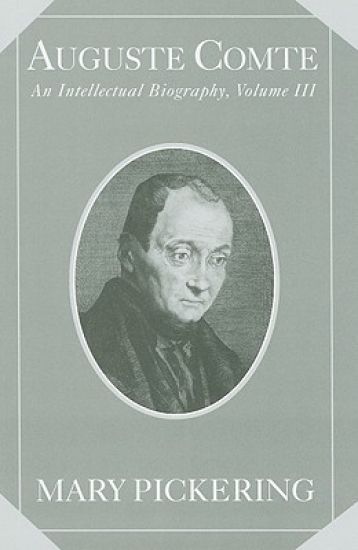
Auguste Comte: Volume 3

Auguste Comte: Volume 3

Mary Pickering

Cambridge University Press
2009
sidottu
This volume continues to explore the life and works of Auguste Comte during his so-called second career. It covers the period from the coup d'état of Louis Napoleon in late 1851 to Comte's death in 1857. During these early years of the Second Empire, Comte became increasingly conservative and anxious to control his disciples. This study offers the first study of the tensions within his movement. Focusing on his second masterpiece, the Système de politique positive, and other important books, such as the Synthèse subjective, Mary Pickering not only sheds light on Comte's intellectual development but also traces the dissemination of positivism and the Religion of Humanity throughout many parts of the world.
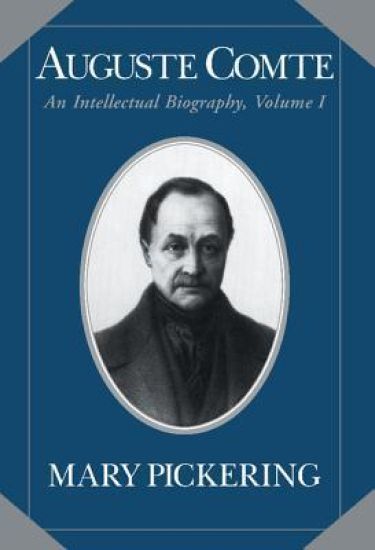
Auguste Comte: Volume 1

Auguste Comte: Volume 1

Mary Pickering

Cambridge University Press
1993
sidottu
This book constitutes the first volume of a two-volume intellectual biography of Auguste Comte, the founder of modern sociology and a philosophical movement called positivism. Volume One offers a reinterpretation of Comte’s ‘first career’, (1798–1842), when he completed the scientific foundation of his philosophy. It describes the interplay between Comte’s ideas and the historical context of post revolutionary France, his struggles with poverty and mental illness, and his volatile relationships with friends, family, and colleagues, including such famous contemporaries as Saint-Simon, the Saint-Simonians, Guizot, and John Stuart Mill. Pickering shows that the man who called for a new social philosophy based on the sciences was not only ill at ease in the most basic human relationships, but also profoundly questioned the ability of the purely scientific spirit to regenerate the political and social world.
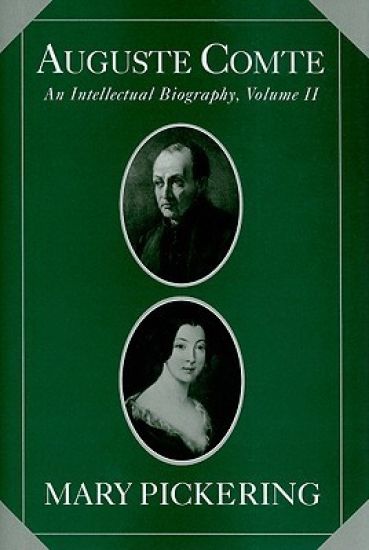
Auguste Comte: Volume 2

Auguste Comte: Volume 2

Mary Pickering

Cambridge University Press
2009
sidottu
This volume begins to explore the life and works of Auguste Comte during his so-called second career, the controversial period that began in 1842 and lasted until his death. This volume covers the years from 1842 to 1852, when Comte transformed his positive philosophy into a political and religious movement. It represents the first in-depth study of that movement. Focusing on key books, such as the Discours sur l'ensemble du positivisme, Mary Pickering connects Comte's intellectual development to the tumultuous historical context and to episodes in his personal life, especially his famous relationship with Clotilde de Vaux. The book examines for the first time why workers, doctors, women, and famous writers, such as John Stuart Mill, George Henry Lewes, and Emile Littré, were drawn to his thought.
Auguste Comte and the Religion of Humanity

Auguste Comte and the Religion of Humanity

Andrew Wernick

Cambridge University Press
2001
sidottu
This 2001 book offers an exciting reinterpretation of Auguste Comte, the founder of French sociology. Following the development of his philosophy of positivism, Comte later focused on the importance of the emotions in his philosophy resulting in the creation of a new religious system, the Religion of Humanity. Andrew Wernick provides the first in-depth critique of Comte's concept of religion and its place in his thinking on politics, sociology and philosophy of science. He places Comte's ideas in the context of post-1789 French political and intellectual history, and of modern philosophy, especially postmodernism. Wernick relates Comte to Marx and Nietzsche as seminal figures of modernity and examines key features of modern and postmodern French social theory, tracing the inherent flaws and disintegration of Comte's system. Wernick offers original and fascinating insights in this rich study which will attract a wide audience from sociologists and philosophers to cultural theorists and historians.
Auguste Comte and Positivism

Auguste Comte and Positivism

Transaction Publishers
1997
nidottu
Although Auguste Comte is conventionally acknowledged as one of the founders of sociology and as a key representative of positivism, few new editions of his writings have been published in the English language in this century. He has become virtually dissociated from the history of modern positivism and the most recent debates about it. Gertrud Lenzer maintains that the work of Comte is, for better or for worse, essential to an understanding of the modern period of positivism. This collection provides new access to the work of Comte and gives practitioners of various disciplines the possibility of reassessing concepts that were first introduced in Comte's writings.Today much of the ordinary business of academic disciplines is conducted under the assumption that the realm of science is essentially separate from the realms of politics and science. A close reading of Comte will reveal how deeply such current ideas and theories were originally embedded in a particular political context. One of his central methodological principles was that the theory of society had to be removed from the arena of political practice precisely in order to control that practice by means of these same sciences. It is in Comte's work that the reader will be able to observe how the forces of social and political reaction began to be powerfully organized to combat the critical forces in its own and later eras. Auguste Comte and Positivism will be of importance to the work of philosophers, sociologists, political theorists, and historians.
Auguste Rodin

Auguste Rodin

Rainer Maria Rilke; Daniel Slager

Archipelago Books
2004
sidottu
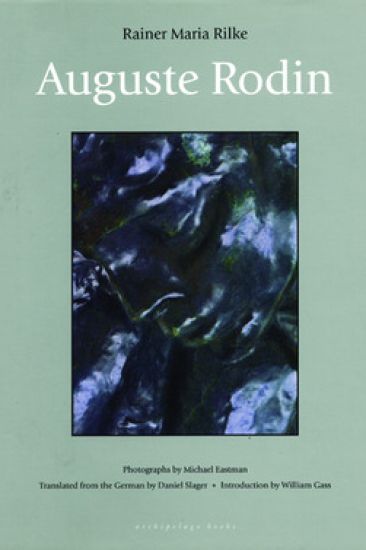
Sculptor Auguste Rodin was fortunate to have his secretary Rainer Maria Rilke, one of the most sensitive poets of our time. These two pieces discussing Rodin's work and development as an artist are as revealing of Rilke as they are of his subject. Written in 1902 and 1907, these essays mark the entry of the poet into the world of letters. Rilke's description of Rodin reveals the profound psychic connection between the two great artists, both masters of giving visible life to the invisible. Michael Eastman's evocative photographs of Rodin's sculptures shed light on both Rodin's art and Rilke's thoughts and catapult them into the 21st century.
Auguste Comte Thinker And Lover

Auguste Comte Thinker And Lover

Jane M. Style

Hassell Street Press
2021
sidottu
This work has been selected by scholars as being culturally important and is part of the knowledge base of civilization as we know it.This work is in the public domain in the United States of America, and possibly other nations. Within the United States, you may freely copy and distribute this work, as no entity (individual or corporate) has a copyright on the body of the work.Scholars believe, and we concur, that this work is important enough to be preserved, reproduced, and made generally available to the public. To ensure a quality reading experience, this work has been proofread and republished using a format that seamlessly blends the original graphical elements with text in an easy-to-read typeface.We appreciate your support of the preservation process, and thank you for being an important part of keeping this knowledge alive and relevant.