Kirjojen hintavertailu. Mukana 12 390 323 kirjaa ja 12 kauppaa.

Kirjahaku

Etsi kirjoja tekijän nimen, kirjan nimen tai ISBN:n perusteella.

1000 tulosta hakusanalla Barbara H Clark

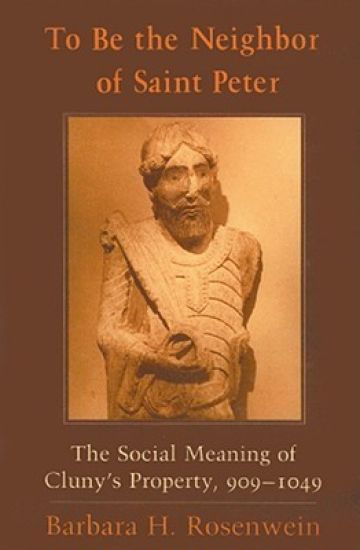
To Be the Neighbor of Saint Peter

To Be the Neighbor of Saint Peter

Barbara H. Rosenwein

Cornell University Press
2006
pokkari
Barbara H. Rosenwein here reassesses the significance of property in the tenth and eleventh centuries, a period of transition from the Carolingian empire to the regional monarchies of the High Middle Ages. In To Be the Neighbor of Saint Peter she explores in rich detail the question of monastic donations, illuminating the human motives, needs, and practices behind gifts of land and churches to the French monastery of Cluny during the 140 years that followed its founding. Donations, Rosenwein shows, were largely the work of neighbors, and they set up and affirmed relationships with Saint Peter, to whom Cluny was dedicated.Cluny was an eminent religious institution and served as a model for other monasteries. It attracted numerous donations and was party to many land transactions. Its charters and cartularies constitute perhaps the single richest collection of information on property for the period 909–1049. Analyzing the evidence found in these records, Rosenwein considers the precise nature of Cluny's ownership of land, the character of its claims to property, and its tutelage over the land of some of the monasteries in its ecclesia.
Emotional Communities in the Early Middle Ages

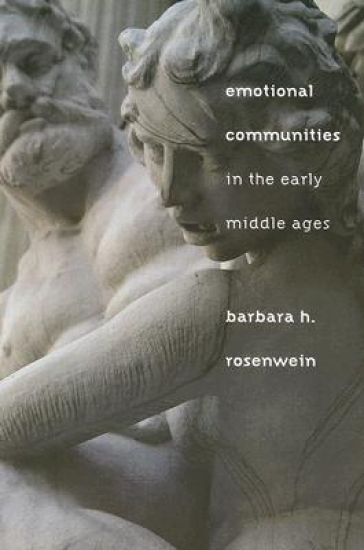
Emotional Communities in the Early Middle Ages

Barbara H. Rosenwein

Cornell University Press
2007
pokkari
"With this book Barbara Rosenwein has made the emotions an essential component of our approach to the changing social history." - Jacques Le Goff Proposing that people lived (and live) in "emotional communities"-each having its own particular norms of emotional valuation and expression-Barbara H. Rosenwein here discusses some instances from the Early Middle Ages. Drawing on extensive microhistorical research, as well as cognitive and social constructionist theories of the emotions, Rosenwein shows that different emotional communities coexisted, that some were dominant at times, and that religious beliefs affected emotional styles even as those styles helped shape religious expression. This highly original book is both a study of emotional discourse in the Early Middle Ages and a contribution to the debates among historians and social scientists about the nature of human emotions. Rosenwein explores the character of emotional communities as discovered in several case studies: the funerary inscriptions of three different Gallic cities; the writings of Pope Gregory the Great; the affective world of two friends, Gregory of Tours and Venantius Fortunatus; the Neustrian court of Clothar II and his heirs; and finally the tumultuous period of the late seventh century. In this essay, the author presents a new way to consider the history of emotions, inviting others to continue and advance the inquiry. For medievalists, early modernists, and historians of the modern world, the book will be of interest for its persuasive critique of Norbert Elias's highly influential notion of the "civilizing process." Rosenwein's notion of emotional communities is one with which all historians and social scientists working on the emotions will need to contend.
Negotiating Space

Negotiating Space

Barbara H. Rosenwein

Cornell University Press
1999
pokkari
Why did early medieval kings declare certain properties to be immune from the judicial and fiscal encroachments of their own agents? Did weakness compel them to prohibit their agents from entering these properties, as historians have traditionally believed? In a richly detailed book that will be greeted as a landmark addition to the literature on the Middle Ages, Barbara H. Rosenwein argues that immunities were markers of power. By placing restraints on themselves and their agents, kings demonstrated their authority, affirmed their status, and manipulated the boundaries of sacred space.Rosenwein transforms our understanding of an institution central to the political and social dynamics of medieval Europe. She reveals how immunities were used by kings and other leaders to forge alliances with the noble families and monastic centers that were central to their power. Generally viewed as unchanging juridical instruments, immunities as they appear here are as fluid and diverse as the disparate social and political conflicts that they at once embody and seek to defuse. Their legacy reverberates in the modern world, where liberal institutions, with their emphasis on state restraint, clash with others that encourage governmental intrusion. The protections against unreasonable searches and seizures provided by English common law and the U.S. Constitution developed in part out of the medieval experience of immunities and the institutions that were elaborated to breach them.
Edge of Crisis

Edge of Crisis

Barbara H. Stein; Stanley J. Stein

Johns Hopkins University Press
2009
sidottu
This authoritative study of colonialism in the Spanish empire at the end of the eighteenth century examines how the Spanish metropole attempted to preserve the links to its richest colony in the western Atlantic, New Spain (Mexico), in the face of international developments. Continuing the approach in Silver, Trade, and War and Apogee of Empire, Barbara and Stanley Stein detail Spain's ad hoc efforts to adjust metropolitan and colonial institutions, structures, and ideology to the pressures of increased competition in the Old and New worlds. In reviewing the attempts at reform, the authors explore networks of individuals and groups, some accepting and others rejecting the Spanish transatlantic trade system. They provide accounts from both sides of the Atlantic to show how economic policy, imperial goals, and consequent social divisions and factionalism in New Spain and Spain undermined the government's efforts at economic and political adjustments. The Steins draw on a wide range of archival material in Mexico, Spain, and France to place the waning of the Spanish empire in an Atlantic perspective. They also show how Spain came to the verge of collapse in a time of revolution and at the beginning of the transition from commercial to industrial capitalism. Comprehensive and carefully researched, Edge of Crisis explains the broad array of factors that led up to the French invasion of Spain in early 1808.
Picturing Faith

Picturing Faith

Barbara H. Jaye; William P. Mitchell

University of Oklahoma Press
2000
sidottu
After the conquest of the Americas in the fifteenth and sixteenth centuries, Roman Catholic clergy developed graphic catechisms to use for the conversion of native inhabitants in Latin America. This book presents and analyzes a mid-nineteenth century Andean pictographic catechism produced for speakers of Quechua. A facsimile of the original pictographs is accompanied by supporting text in English (translated from the original Spanish) and Quechua.The editors provide an introduction that outlines the origin and uses of this catechism as well as the similarities and differences between it and catechisms written for other indigenous groups in Latin America during the colonial period. Endnotes and suggested readings provide further understanding and context for this and other pictographic catechisms from Latin America.
Rhinoceros Bound

Rhinoceros Bound

Barbara H. Rosenwein

University of Pennsylvania Press
1982
sidottu
"The rhinoceros, that is, any powerful man, is bound with a thong so that he may crush the clods of the valleys, that is, the oppressors of the humble."-Odo of Cluny, Vita Geraldi i.8 To the second abbot of the great monastery at Cluny, Saint Odo, tenth-century Europe was a world filled with violent men oppressing at whim the poor and the powerless. As royal authority waned, local magnates, unrestrained by any authority, divine or human, seized the opportunity to enhance their positions. Odo, along with Cluny's other founding spiritual and ideological leaders, created within the protective walls of the monastery a model of restraint, instituting in place of the instability of everyday life an interpretation of the Benedictine Rule that stressed ritual, order, and lawfulness. Such were the beginnings of the monastery that Pope Urban II in the eleventh century would call "the light of the world," the fountainhead of what would become one of the most far-reaching religious reform movements in European history. Barbara Rosenwein in Rhinoceros Bound focuses on Cluny's founding and early growth within the context of a society shaped by the needs of those set adrift in the social upheaval of the tenth century. Examining in the first chapter traditional approaches to Cluniac studies, the author reveals that historians have generally considered Cluny's eleventh-century role in church reform without analyzing the peculiar combination of forces and founders that created the Cluniac ideal and gave it its original momentum. This fundamental problem is the topic of the second chapter. She then examines how the early Cluniacs perceived the world outside the monastery and how they viewed their own world inside of it. Rosenwein concludes with a chapter on Cluny in the tenth century that combines traditional historical techniques with contemporary sociological insights. She provides in this study a significant reassessment of a period crucial to the political development of Europe, as well as a case study of institutional response to acute and political change.
African American Female Speech Communities

African American Female Speech Communities

Barbara H. Hudson

Praeger Publishers Inc
2001
sidottu
In this sociolinguistic study, not only are language and gender researched, but the relationship between language and ethnic group, region, and social class is also discussed. Hudson describes the ways in which some female African American writers use the language of African American female characters to reflect their membership in various speech communities. Materials used for this text include slave narratives, novels, short stories, diaries, plays, and autobiographies. The study bridges the gap between the existing research on that focuses on the Vernacular English spoken mainly by young African American males and the research which mainly focuses on the language used by white middle class females.Research in the area of African American English has investigated both its form and its use in conversational interactions. Hudson explores how African American English encompasses a range of dialects from Standard to Vernacular English, noting that there is a diversity of language types present in the African American female speech community. This book offers language researchers, social scientists, educators, and others valuable insights into language use by minority females.
His Perfect Legacy

His Perfect Legacy

Barbara H. Martin

Barbara H. Martin
2014
nidottu
In this third book in the series of HIS PERFECT CRIME TRILOGY Robert Latimer is asked to the reading of the Will of a wealthy investor. William Carl Hellman, in a video, tells his five spoiled, greedy children that one of them killed him. He charges Latimer with solving the crime. If he cannot, the children will not be paid a penny of the fifty million dollar inheritance each for ten years. The words of the dieing man have a strange, powerful influence on the heirs as the investigation reveals in each the capacity of good and evil, corruption or the courage to change. As the fascinating, psychological drama unfolds, Latimer struggles to find the killer until he is stunned by a sudden revelation he never expected.
Countdown to the Future

Countdown to the Future

Barbara H. Martin

Barbara H. Martin
2016
nidottu
In this sequel to More Than A Dream, having gone from atheist to believer, Thomas Peterson, M.D., rejected by his peers in his Philadelphia hospital, opens up a clinic for the poor in Tiberias, a modern city on the shores of Galilee. As commissioned by Jesus in his dream, signs and wonders follow as he shares his journey into ancient Israel all across Galilee. He and his team are caught up in the tumultuous end times with the persecution of Christians by Jihadists and Jews alike, as well as facing the rise of a new world ruler. Can he and Shalom Outreach survive until the Messiah returns?
Pesto and Caesar

Pesto and Caesar

Barbara H. Sarvis

Barbara Sarvis
2011
nidottu
"Pesto and Caesar danced to the same beat. They wouldn't eat anything that wasn't sweet." When the corner store moved and Caesar the mouse couldn't get sweets anymore, both Pesto and Caesar were forced to eat healthier food. What a surprise, to learn that they loved the taste of fruits and vegetables."Pesto and Caesar continue to eat healthier food. I saw them yesterday looking fit and trim skipping to the kitchen. They were in a very good mood."
Kick Pain in the Kitchen: Holistic Pain Relief You Can Eat

Kick Pain in the Kitchen: Holistic Pain Relief You Can Eat

Barbara H. Searles

Bodyworks Integrative Health LLC
2014
nidottu
"I will definitely recommend Kick Pain in the Kitchen to my patients: Those who are looking to avoid pharmaceutical treatment and those who want to combine western medicine with alternative therapies." Jane A. Swartz, ARNP, MSN, Rheumatology Nurse PractitionerDo you wish for realistic, holistic tools, which will minimize your pain and make you confident in your body?Have you struggled to meet life's demands because managing chronic pain takes so much time and effort, leaving you exhausted?What would life be like if you could minimize your pain and dedicate the extra energy you'd gain to your goals?Based on the author's experience as a massage therapist, holistic health and pain relief coach, and woman in pain, Kick Pain in the Kitchen: Holistic Pain Relief You Can Eat offers you a holistic approach to pain relief that can be integrated with many other treatment plans. It's full of straightforward, every day steps that anyone can start using right away.Your path to health and pain relief starts in your kitchen and supermarket cart The book educates you about why healthy, whole foods based, pain relieving changes can help, while giving you a practical game plan structured through the meals of the day.Kick Pain in the Kitchen is part informational, part inspirational, and part practical. You'll finish the book with plenty of options and a new focus on healthy habits to relieve your pain naturally.
Generations of Feeling

Generations of Feeling

Barbara H. Rosenwein

Cambridge University Press
2015
sidottu
Generations of Feeling is the first book to provide a comprehensive history of emotions in pre- and early modern Western Europe. Charting the varieties, transformations and constants of human sentiments over the course of eleven centuries, Barbara H. Rosenwein explores the feelings expressed in a wide range of 'emotional communities' as well as the theories that served to inform and reflect their times. Focusing specifically on groups within England and France, chapters address communities as diverse as the monastery of Rievaulx in twelfth-century England and the ducal court of fifteenth-century Burgundy, assessing the ways in which emotional norms and modes of expression respond to, and in turn create, their social, religious, ideological, and cultural environments. Contemplating emotions experienced 'on the ground' as well as those theorized in the treatises of Alcuin, Thomas Aquinas, Jean Gerson and Thomas Hobbes, this insightful study offers a profound new narrative of emotional life in the West.