Kirjojen hintavertailu. Mukana 12 360 949 kirjaa ja 12 kauppaa.

Kirjahaku

Etsi kirjoja tekijän nimen, kirjan nimen tai ISBN:n perusteella.

1000 tulosta hakusanalla Barry Eichengreen

In Defense of Public Debt

In Defense of Public Debt

Barry Eichengreen; Asmaa El-Ganainy; Rui Esteves; Kris James Mitchener

Oxford University Press Inc
2021
sidottu
A dive into the origins, management, and uses and misuses of sovereign debt through the ages. Public debts have exploded to levels unprecedented in modern history as governments responded to the Covid-19 pandemic and ensuing economic crisis. Their dramatic rise has prompted apocalyptic warnings about the dangers of heavy debts—about the drag they will place on economic growth and the burden they represent for future generations. In Defense of Public Debt offers a sharp rejoinder to this view, marshaling the entire history of state-issued public debt to demonstrate its usefulness. Authors Barry Eichengreen, Asmaa El-Ganainy, Rui Esteves, and Kris James Mitchener argue that the ability of governments to issue debt has played a critical role in addressing emergencies—from wars and pandemics to economic and financial crises, as well as in funding essential public goods and services such as transportation, education, and healthcare. In these ways, the capacity to issue debt has been integral to state building and state survival. Transactions in public debt securities have also contributed to the development of private financial markets and, through this channel, to modern economic growth. None of this is to deny that debt problems, debt crises, and debt defaults occur. But these dramatic events, which attract much attention, are not the entire story. In Defense of Public Debt redresses the balance. The authors develop their arguments historically, recounting two millennia of public debt experience. They deploy a comprehensive database to identify the factors behind rising public debts and the circumstances under which high debts are successfully stabilized and brought down. Finally, they bring the story up to date, describing the role of public debt in managing the Covid-19 pandemic and recession, suggesting a way forward once governments—now more heavily indebted than before—finally emerge from the crisis.

Gold Standard In Theory & History

Gold Standard In Theory & History

Barry Eichengreen; Marc Flandreau

Routledge
1997
sidottu
Since the successful first edition of The Gold Standard in Theory and History was published in 1985, much new research has been completed. This updated version contains five new essays including:* post 1990 literature on exchange rate target zones* a discussion of the light shed by the gold standard on the European Monetary Union debate* a new introduction by Eichengreen with Marc FlandreauThis will be an invaluable resource for students of macroeconomics, international economics and economic history at all levels.
Gold Standard In Theory & History

Gold Standard In Theory & History

Barry Eichengreen; Marc Flandreau

Routledge
1997
nidottu
Since the successful first edition of The Gold Standard in Theory and History was published in 1985, much new research has been completed. This updated version contains five new essays including:* post 1990 literature on exchange rate target zones* a discussion of the light shed by the gold standard on the European Monetary Union debate* a new introduction by Eichengreen with Marc FlandreauThis will be an invaluable resource for students of macroeconomics, international economics and economic history at all levels.
From Miracle to Maturity

From Miracle to Maturity

Barry Eichengreen; Dwight H. Perkins; Kwanho Shin

Harvard University, Asia Center
2012
sidottu
The economic growth of South Korea has been a remarkable success story. After the Korean War, the country was one of the poorest economies on the planet; by the twenty-first century, it had become a middle-income country, a member of the Organization of Economic Cooperation and Development (the club of advanced economies), and home to some of the world’s leading industrial corporations. And yet, many Koreans are less than satisfied with their country’s economic performance, given the continuing financial volatility and sluggish growth since the Korean economic crisis of 1997–1998.From Miracle to Maturity offers a comprehensive qualitative and quantitative analysis of the growth of the Korean economy, starting with the aggregate sources of growth (growth of the labor force, the stock of capital, and productivity) and then delving deeper into the roles played by structural change, exports, foreign investment, and financial development. The authors provide a detailed examination of the question of whether the Korean economy is now underperforming and ask, if so, what can be done to solve the problem.
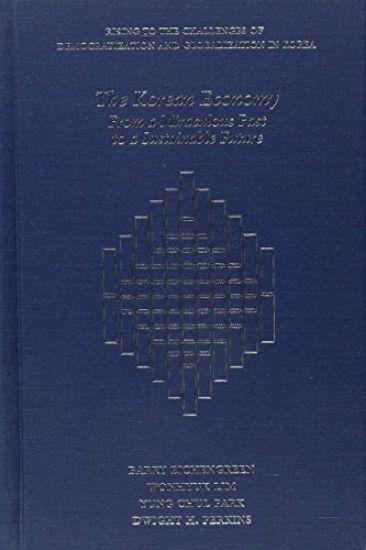
The Korean Economy

The Korean Economy

Barry Eichengreen; Wonhyuk Lim; Yung Chul Park; Dwight H. Perkins

Harvard University, Asia Center
2015
sidottu
South Korea has been held out as an economic miracle—as a country that successfully completed the transition from underdeveloped to developed country status—and as an example of how a middle-income country can continue to move up the technology ladder into the production and export of more sophisticated goods and services. But with these successes have come challenges, among them poverty, inequality, long work hours, financial instability, and complaints about the economic and political power of the country’s large corporate conglomerates, or chaebol.The Korean Economy provides an overview of Korean economic experience since the 1950s, with a focus on the period since democratization in 1987. Successive chapters analyze the Korean experience from the perspectives of political economy, the growth record, industrial organization and corporate governance, financial development and instability, labor and employment, inequality and social policy, and Korea’s place in the world economy. A concluding chapter describes the country’s economic challenges going forward and how they can best be met. The volume also serves to summarize the findings of companion volumes in the Harvard–Korean Development Institute series on the Korean economy, also published by the Harvard University Asia Center.
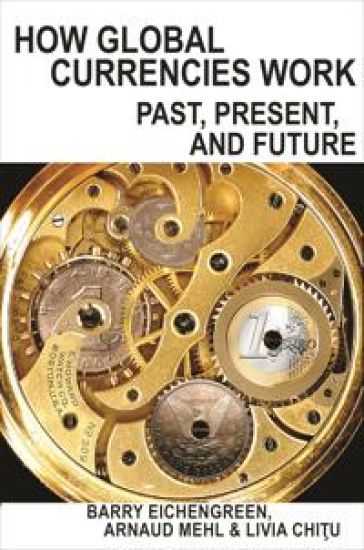
How Global Currencies Work

How Global Currencies Work

Barry Eichengreen; Arnaud Mehl; Livia Chitu

PRINCETON UNIVERSITY PRESS
2017
sidottu
A powerful new understanding of global currency trends, including the rise of the Chinese yuan At first glance, the modern history of the global economic system seems to support the long-held view that the leading world power's currency--the British pound, the U.S. dollar, and perhaps someday the Chinese yuan--invariably dominates international trade and finance. In How Global Currencies Work, three noted economists provide a reassessment of this history and the theories behind the conventional wisdom. Offering a new history of global finance over the past two centuries, and marshaling extensive new data to test established theories of how global currencies work, Barry Eichengreen, Arnaud Mehl, and Livia Chit?u argue for a new view, in which several national monies can share international currency status, and their importance can change rapidly. They demonstrate how changes in technology and in the structure of international trade and finance have reshaped the landscape of international currencies so that several international financial standards can coexist. They show that multiple international and reserve currencies have in fact coexisted in the pastupending the traditional view of the British pound's dominance prior to 1945 and the U.S. dollar's dominance more recently. Looking forward, the book tackles the implications of this new framework for major questions facing the future of the international monetary system, from whether the euro and the Chinese yuan might address their respective challenges and perhaps rival the dollar, to how increased currency competition might affect global financial stability.
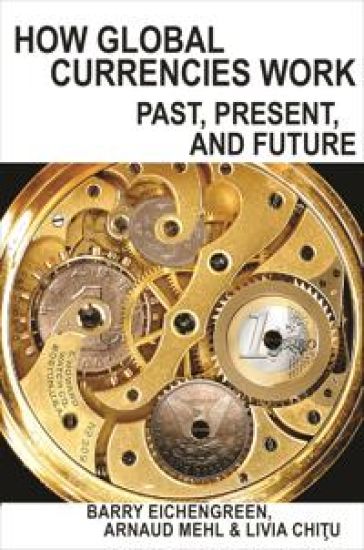
How Global Currencies Work

How Global Currencies Work

Barry Eichengreen; Arnaud Mehl; Livia Chitu

Princeton University Press
2019
pokkari
A powerful new understanding of global currency trends, including the rise of the Chinese yuanAt first glance, the history of the modern global economy seems to support the long-held view that the currency of the world’s leading power invariably dominates international trade and finance. But in How Global Currencies Work, three noted economists overturn this conventional wisdom. Offering a new history of global finance over the past two centuries and marshaling extensive new data to test current theories of how global currencies work, the authors show that several national monies can share international currency status—and that their importance can change rapidly. They demonstrate how changes in technology and international trade and finance have reshaped the landscape of international currencies so that several international financial standards can coexist. In fact, they show that multiple international and reserve currencies have coexisted in the past—upending the traditional view of the British pound’s dominance before 1945 and the U.S. dollar’s postwar dominance. Looking forward, the book tackles the implications of this new framework for major questions facing the future of the international monetary system, including how increased currency competition might affect global financial stability.
Can Nations Agree?

Can Nations Agree?

Richard N. Cooper; Barry Eichengreen; Gerald Holtham; Robert D. Putnam; C. Randall Henning

Brookings Institution
1989
nidottu
In the age of Three Mile Island and Chernobyl, a new international trade in industrial and human waste, the depletion of the ozone layer, and the greenhouse effect, the importance of international cooperation is supremely evident. In the economic arena, such problems include speculative instability in financial and primary commodities markets, competition in tax regimes, and the greatly enhanced scope for tax evasion. Can Nations Agree? examines the crucial issues surrounding international cooperation-conditions that foster cooperation toward common goals; ways to handle the friction arising from conflicting goals; and the structures that best promote cooperation. Although nations recognize the value of cooperation in an independent world, a variety of conditions inhibit the process. In recent decades the number of independent nations has risen rapidly, and so has the variety of decisionmakers and national interests to be reconciled. At the same time, the economic power of the United States has declined in relation to other successful capitalist countries. In the chapters on the 1978 Bonn economic summit, German macroeconomic policy, international cooperation on public health issues, and hegemony and stability, the scholars contributing to this volume analyze the history and process of international cooperation to offer fresh insight for future efforts.
Globalizing Capital

Globalizing Capital

Eichengreen Barry

Princeton University Press
2008
pokkari
First published more than a decade ago, Globalizing Capital remains an indispensable part of the economic literature today. Written by renowned economist Barry Eichengreen, this classic book emphasizes the importance of the international monetary system for understanding the international economy. Brief and lucid, Globalizing Capital is intended not only for economists, but also a general audience of historians, political scientists, professionals in government and business, and anyone with a broad interest in international relations. Eichengreen demonstrates that the international monetary system can be understood and effectively governed only if it is seen as a historical phenomenon extending from the period of the gold standard to today's world of fluctuating prices. This updated edition continues to document the effect of floating exchange rates and contains a new chapter on the Asian financial crisis, the advent of the euro, the future of the dollar, and related topics. Globalizing Capital shows how these and other recent developments can be put in perspective only once their political and historical contexts are understood.
Barry

Barry

Geoffrey A North

The History Press Ltd
1996
nidottu
In this collection of over 200 postcards and family snapshots, author Geoffrey North taps a rich vein of nostalgia for the past of Barry and the surrounding area. The book examines all those settings which have provided the background or stimulus for the many wonderful memories held by residents and holiday-makers alike. Several striking images of pleasure cruises, a packed Barry Island, or of the Docks heaving with ships testify to Barry's dual importance as both a focal point for leisure activities and as a thriving port, despatching the coal of South Wales to all corners of the globe. The cards also reveal the quieter corners as well as the busy town centre. All in all, this is a selection which should delight everybody who holds Barry close to their heart.
Barry

Barry

Geoffrey A North

Nonsuch Publishing
2003
nidottu
With over 200 postcards and family snapshots, the author taps a vein of nostalgia for the past of Barry and the surrounding area. This collection is a series of old and rare photographs and images of Barry.
Barry Sheene 1950–2003

Barry Sheene 1950–2003

Stuart Barker

HarperCollinsWillow
2004
nidottu
This is the life story of the former world 500cc motorcycle champion, Barry Sheene - the Brit whose death-defying crashes and playboy lifestyle made him famous. He achieved success in a variety of fields, overcoming a series of near-fatal crashes, but unfortunately died early in 2003 from cancer.
BARRY LOSER: TOTAL WINNER

BARRY LOSER: TOTAL WINNER

Jim Smith

HARPERCOLLINS PUBLISHERS
2022
nidottu
‘Ridonkulously funny and every kid should get their hooter into this Total Winner of graphic novel’ – JENNY PEARSON,The Super Miraculous Journey of Freddie Yates ‘Hugely enjoyable, surreal chaos’ GUARDIAN on Barry Loser 'The review of the 8-year-old boy in our house,“Can I keep it to give to a friend?” Best recommendation you can get’ OBSERVER Brand new adventures for Barry Loser in this new series of full colour graphic novels from the author of My Big Fat Smelly Poo Diary – perfect for fans of DogMan and Bunny vs Monkey Barry Loser is back! And his adventures are even dafter than before! Dads turning onto vending machines, grown ups stories that send you to sleep and so much more! 3 short brilliantly bit-size full colour graphic novel storiesFull of adventure, silliness, friendship and fun!Bonus ‘how to draw’ sections to help you make your own comic books! In the first book, Barry has had enough of being a loser and wants to prove he’s a Total Winner, but when his parents ban him from gaming he has to think outside of the box … Barry also has a new cat called French Fries – the keelest cat ever amen. Have you got all of Jim Smith’s amazekeel books? Barry Loser: I am not a loser Barry Loser: I am still not a loser Barry Loser: I am so over being a loser Barry Loser: I am sort of a loser Barry Loser and the holiday of doom Barry Loser and the case of the crumpled carton Barry Loser hates half term Barry Loser and the birthday billions Barry Loser: worst school trip ever! Barry Loser is the best at football NOT Barry Loser and the trouble with pets My dad is a loser free ebook My mum is a loser free ebook Future Ratboy and the attack of the killer robot grannies Future Ratboy and the invasion of the nom-noms Future Ratboy and the quest for the missing thingy The Super Weird Mysteries Danger at Donut Diner Attack of the Haunted Lunchbox My Pencil Case is a Time Machine Jim Smith’s books have sold 840k copies in the English language, and sold in 17 territories. He won the Roald Dahl Funny Prize, the Scholastic Lollies award, was shortlisted for the Waterstones prize, and had a World Book Day book.