Kirjojen hintavertailu. Mukana 12 390 323 kirjaa ja 12 kauppaa.

Kirjahaku

Etsi kirjoja tekijän nimen, kirjan nimen tai ISBN:n perusteella.

1000 tulosta hakusanalla Barth John

L'influence des Mille et une nuits sur John Barth et Naguib Mahfouz

L'influence des Mille et une nuits sur John Barth et Naguib Mahfouz

Abdalhadi Abu; Ghada Sasa

Editions Notre Savoir
2024
pokkari
Ce travail traite de l'influence des Mille et une nuits sur la nouvelle Dunyazadiad (1972) de John Barth et sur le roman Mille et une nuits (1981) de Naguib Mahfouz. Il sera divis en trois chapitres et une conclusion. Le premier chapitre sera une introduction th orique sur l'importance des Mille et une nuits dans la litt rature mondiale. Il mettra l'accent sur sa transformation en genres litt raires, savoir la po sie, le th tre, le roman et la nouvelle. Il pr sentera galement quelques th ories critiques comparatives sur Les Mille et une nuits, notamment en ce qui concerne le conte oriental, les techniques de narration et le continuum sociopolitique. Le deuxi me chapitre examinera l'influence des Mille et une nuits sur le Dunyazadiad de Barth. Il montrera comment Barth parodie la trame du conte des Mille et une nuits, le narrateur, les personnages et le d nouement pour critiquer l'esprit d' puisement qui pr vaut sur la sc ne litt raire moderne contemporaine. Le troisi me chapitre tudiera l'influence des Mille et une nuits sur les Mille et une nuits et les jours de Mahfouz. Il tudiera la reformulation par Mahfouz de l'intrigue, du narrateur (premier point de vue), des personnages et du cadre des Mille et une nuits pour critiquer la corruption politique de la soci t arabe en g n ral et de l' gypte en particulier.
A influência de As Noites da Arábia em John Barth e Naguib Mahfouz

A influência de As Noites da Arábia em John Barth e Naguib Mahfouz

Abdalhadi Abu; Ghada Sasa

Edicoes Nosso Conhecimento
2024
pokkari
Este trabalho trata da influ ncia de As Mil e Uma Noites na novela Dunyazadiad (1972), de John Barth, e no romance Noites e Dias rabes (1981), de Naguib Mahfouz. O livro divide-se em tr s cap tulos e uma conclus o. O primeiro cap tulo ser uma introdu o te rica sobre a import ncia de As Mil e Uma Noites na literatura mundial. Destaca-se a sua transforma o em g neros liter rios, nomeadamente a poesia, o drama, o romance e o conto. Apresentar tamb m algumas teorias cr ticas comparativas sobre As Mil e Uma Noites, especialmente no que diz respeito ao conto oriental, s t cnicas de narra o e ao continuum s cio-pol tico. O segundo cap tulo debru a-se sobre a influ ncia de As Mil e Uma Noites na obra Dunyazadiad de Barth. Mostrar como Barth parodia o enredo, o narrador, as caracteriza es e o desfecho de As Mil e Uma Noites para criticar o esp rito de exaust o prevalecente na cena liter ria moderna contempor nea. O terceiro cap tulo estudar a influ ncia de As Mil e Uma Noites na obra Noites e Dias de Mahfouz. Estudar a reformula o que Mahfouz faz do enredo, do narrador (primeiro ponto de vista), das personagens e do cen rio de As Mil e Uma Noites para criticar a corrup o pol tica na sociedade rabe, em geral, e no Egipto.
Das Motiv Der Hochschule Im Romanwerk Von Bernard Malamud Und John Barth
Die Bildungseinrichtung der Hochschule hat im amerikanischen Roman des 20. Jahrhunderts einen festen Platz, sei es in Form nur eines einzelnen Motivs, sei es in Form von Motivbundeln, die sich zu einer Hochschulthematik verdichten konnen. Die vorliegende Studie untersucht im Romanwerk von Malamud und Barth Erscheinungsformen und Wirkungsweisen von Motiven, die die Erfahrungswirklichkeit der Hochschule widerspiegeln. Neben die werkimmanente Betrachtung tritt dabei der ausserliterarische Vergleich zwischen fiktionaler Gestaltung und der amerikanischen Universitat als einer Einrichtung der Erfahrungswirklichkeit in Geschichte und Gegenwart."
L'influenza de Le mille e una notte su John Barth e Naguib Mahfouz
Questo lavoro tratta dell'influenza de Le mille e una notte sulla novella Dunyazadiad (1972) di John Barth e sul romanzo Le mille e una notte (1981) di Naguib Mahfouz. Il testo sar suddiviso in tre capitoli e una conclusione. Il primo capitolo sar un'introduzione teorica sull'importanza de Le mille e una notte nella letteratura mondiale. Sottolineer la sua trasformazione in generi letterari, ovvero la poesia, il dramma, il romanzo e il racconto. Verranno inoltre presentate alcune teorie critiche comparate su Le mille e una notte, in particolare per quanto riguarda il racconto orientale, le tecniche di narrazione e il continuum socio-politico. Il secondo capitolo prender in considerazione l'influenza de Le mille e una notte sul Dunyazadiad di Barth. Mostrer come Barth parodi la cornice narrativa, il narratore, le caratterizzazioni e l'epilogo de Le mille e una notte per criticare lo spirito di esaurimento prevalente nella scena letteraria moderna contemporanea. Il terzo capitolo studier l'influenza de Le mille e una notte su Le mille e una notte di Mahfouz. Studier la riformulazione di Mahfouz della trama, del narratore (primo punto di vista), dei personaggi e dell'ambientazione de Le mille e una notte per criticare la corruzione politica della societ araba in generale e dell'Egitto.
Lost in the Funhouse

Lost in the Funhouse

John Barth

Bantam Doubleday Dell Publishing Group
1988
pokkari
John Barth's lively, highly original collection of short pieces is a major landmark of experimental fiction. Though many of the stories gathered here were published separately, there are several themes common to them all, giving them new meaning in the context of this collection. As the characters search, each in his own way, for their purpose and the meaning of their existence, Lost in the Funhouse takes on a hiliarious, often moving significance.
The Floating Opera and The End of the Road

The Floating Opera and The End of the Road

John Barth

Bantam Doubleday Dell Publishing Group
1997
pokkari
The Floating Opera and The End Of The Road are John Barth's first two novels. Their relationship to each other is evident not only in their ribald subject matter but in the eccentric characters and bitterly humorous tone of the narratives. Both concern strange, consuming love triangles and the destructive effect of an overactive intellect on the emotions. Separately they give two very different views of a universal human drama.
The Development

The Development

John Barth

Mariner Books
2010
nidottu
From one of our most celebrated masters, a touching, comic, deeply humane collection of linked stories about surprising developments in a gated community"I find myself inclined to set down for whomever, before my memory goes kaput altogether, some account of our little community, in particular of what Margie and I consider to have been its most interesting hour: the summer of the Peeping Tom."Something has disturbed the comfortably retired denizens of a pristine Florida-style gated community in Chesapeake Bay country. In the dawn of the new millennium and the evening of their lives, these empty nesters discover that their tidy enclave can be as colorful, shocking, and surreal as any of John Barth's fictional locales.From the high jinks of a toga party to marital infidelities, a baffling suicide pact, and the sudden, apocalyptic destruction of the short-lived development, Barth brings mordant humor and compassion to the lives of characters we all know well. From "one of the most prodigally gifted comic novelists writing in English today" (Newsweek), The Development is John Barth at his most accessible and sympathetic best.
Where Three Roads Meet

Where Three Roads Meet

John Barth

Mariner Books
2006
nidottu
From the acclaimed John Barth, "one of the greatest novelists of our time" (Washington Post Book World) and "a master of language" (Chicago Sun-Times), comes a lively triad of tales that delight in the many possibilities of language and its users.The first novella, "Tell Me," explores a callow undergraduate's initiation into the mysteries of sex, death, and the Heroic Cycle. The second novella, "I've Been Told," traces no less than the history of storytelling and examines innocence and modernity, ignorance and self-consciousness. And the three elderly sisters of the third novella, "As I Was Saying . . .," record an oral history of their youthful muse-like services to (and servicings of) a subsequently notorious and now mysteriously vanished novelist.Sexy, humorous, and brimming with Barth's deep intelligence and playful irreverence, Where Three Roads Meet will surely delight loyal fans and draw new ones."Teller, tale, torrid . . . inspiration: Barth's seventeenth book brings these three narrative 'roads' together inimitably, and thrice. Where Three Roads Meet] employs all of his familiar devices -- alliteration, shifts in diction and time, puns -- to tease and titillate, while at the same time articulate -- obliquely, sadly, angrily, gloriously -- a farewell to language and its objects: us." -- Publishers Weekly, starred review
So the Story Goes

So the Story Goes

John Barth

Johns Hopkins University Press
2005
sidottu
A superlative anthology of short fiction presents the best examples of the genre from the twenty-five years of the series, with contributions from Robley Wilson, Frances Sherwood, Jean McGarry, Judith Grossman, Stephen Dixon, Guy Davenport, Avery Chenoweth, Steve Barthelme, and other writers. Simultaneous.
So the Story Goes

So the Story Goes

John Barth

Johns Hopkins University Press
2005
pokkari
Since its founding in 1979, the Johns Hopkins Poetry and Fiction series has published forty volumes of short fiction, beginning with Guy Davenport's acclaimed Da Vinci's Bicycle. The series was launched with two guiding principles: to publish works of short fiction exhibiting formal excellence and strong emotional appeal and to publish writers at all stages of their careers. So the Story Goes gathers the best short fiction of the series, works exhibiting wit, elegance, and wisdom. Writing about a wide variety of subjects and in a multitude of styles, the twenty writers collected here share a mastery of language and an extraordinary ability to entertain. Ellen Akins from World Like a Knife, "Her Book"Steve Barthelme from And He Tells the Little Horse the Whole Story, "Zorro"Glenn Blake from Drowned Moon, "Marsh"Jennifer Finney Boylan from Remind Me to Murder You Later, "Thirty-six Miracles of Lyndon Johnson"Richard Burgin from Fear of Blue Skies, "Bodysurfing"Avery Chenoweth from Wingtips, "Powerman"Guy Davenport from Da Vinci's Bicycle, "A Field of Snow on a Slope of the Rosenberg"Tristan Davies from Cake, "Counterfactuals"Stephen Dixon from Time to Go, "Time to Go"Judith Grossman from How Aliens Think, "Rovera"Josephine Jacobsen from What Goes without Saying, "On the Island"Greg Johnson from I Am Dangerous, "Hemingway's Cats"Jerry Klinkowitz from Basepaths, "Basepaths"Michael Martone from Safety Patrol, "Safety Patrol"Jack Matthews from Crazy Women, "Haunted by Name Our Ignorant Lips"Jean McGarry from Dream Date, "The Last Time"Robert Nichols from In the Air, "Six Ways of Looking at Farming"Joe Ashby Porter from Lithuania, "West Baltimore"Frances Sherwood from Everything You've Heard Is True, "History"Robley Wilson from The Book of Lost Fathers, "Hard Times"
The National Memorial

The National Memorial

John Barth Jr

Createspace Independent Publishing Platform
2015
nidottu
The gripping story of challenge and action, love and family, scheming and courage in a Maine mill town rocked by scandal. The fate of thousands of orphans hangs in the balance as a family struggles to advance their international project against the wishes of local leaders. A humorous and witty adventure among scoundrels and humanitarians, politicians and teachers, judges and assassins, skeptics and optimists. Can the institutions of democracy save the lives of countless children? $19.95 in hard cover, $7.95 PDF at JohnBarth.Net Book Awards for The National Memorial: London Book Festival New England Book Festival Los Angeles Book Festival Great NorthWest Book Festival ForeWord Clarion Five Stars Reader's Favorite Five-Star Seal Reviewers Praise The National Memorial: "Great book. ... powerful story... very interesting... action, humor... a range of emotions." - Reader's Favorite review no. 1 - Five Stars "Great book... inspiring... interwoven in a beautiful, thought-provoking way... complex and compelling... brilliantly depicted handful of dreamers... a remarkable feat..." - GoodbooksToday.com Reviews "Pits a crusader for a better world against...a dysfunctional society... a wide spectrum of... perspectives... multi-faceted characters... plenty of food for thought." - Reader's Favorite review no. 2 - Five Stars "A poignant literary thriller... sweeping in scope ... a thoughtful look at larger issues... in one small town... many different... points of view... well-rounded characters ... poetic word choice." - Foreword Clarion Reviews - Five Stars "... a gripping tale of... wit, love and courage... the fight for democracy... evocative and humorous, just the right mix... a very well constructed plot." - Reader's Favorite review no. 3 - Five Stars "A story of... courage... a story of hope... both heartwarming and believable... elegant descriptions of Maine's landscapes and towns...an ideal metaphor for the...nation itself." -Ron Jacobs in CounterPunch "Keeps the reader intrigued... fascinating, complex, and well-developed characters ... stories interweave seamlessly... literary, lyrical, and thoughtful... readers savor the words and the situations ... a complex and unique fight for justice." - CreateSpace editor evaluation "...full of challenging life, love, family and action ... good for everyone..." - Reader's Favorite review no. 4 - Five Stars
Letters

Letters

Professor John Barth

Dalkey Archive Press
1994
nidottu
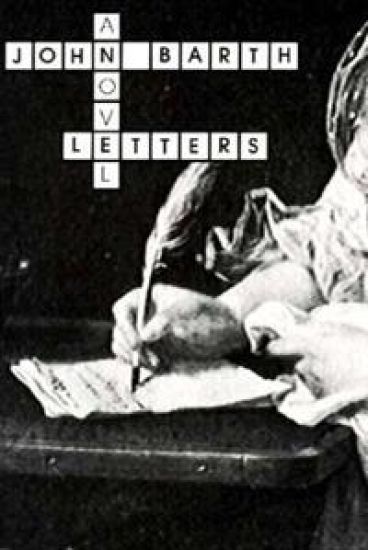
A landmark of postmodern American fiction, Letters is (as the subtitle genially informs us) "an old time epistolary novel by seven fictitious drolls & dreamers each of which imagines himself factual." Seven characters (including the Author himself) exchange a novel's worth of letters during a 7-month period in 1969, a time of revolution that recalls the U.S.'s first revolution in the 18th century - the heyday of the epistolary novel. Recapitulating American history as well as the plots of his first six novels, Barth's seventh novel is a witty and profound exploration of the nature of revolution and renewal, rebellion and reenactment, at both the private and public levels. It is also an ingenious meditation on the genre of the novel itself, recycling an older form to explore new directions, new possibilities for the novel.
Sabbatical

Sabbatical

Professor John Barth

Dalkey Archive Press
1996
nidottu
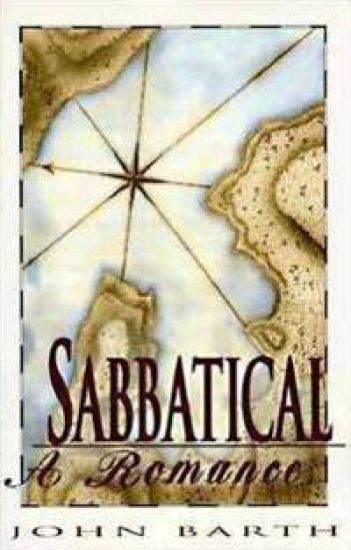
Subtitled "a romance," Sabbatical is the story of Susan Rachel Allan Seckler, a sharp young associate professor of early American literature-part Jewish, part Gypsy, and possibly descended from Edgar Allan Poe-and her husband Fenwick Scott Key Turner, a 50-year-old ex-CIA officer currently between careers, a direct descendant of the author of "The Star Spangled Banner" and himself the author of a troublemaking book about his former employer. Seven years into their marriage, they decide to take a sabbatical, a sailboat journey on which they sum up their years together and try to make important decisions about the years ahead.True to its subtitle, the novel combines the mysterious and marvelous (unexplained disappearances, a fabled sea monster in Chesapeake Bay) with romantic love and daring adventure.Sabbatical is quintessential Barth: it involves sailing, twinship, the joy of love and literature, the sorrow of death and disaster, and a playfully complex narrative. The author has written a foreword for this new edition.
The Last Voyage of Somebody the Sailor

The Last Voyage of Somebody the Sailor

John Barth

Dalkey Archive Press
2016
nidottu
A National Book Award winner offers his most inventive novel to date. Journalist Simon Behler finds himself in the house of Sinbad the Sailor after being washed ashore during a sea-going adventure. Over the course of six evenings, the two take turns recounting their voyages in a brilliantly entertaining weave of stories within stories. "Filled with white nights and golden days . . . lyrical, fresh and sprightly."--Washington Post.
Every Third Thought

Every Third Thought

Professor John Barth

Counterpoint
2012
nidottu
John Barth stays true to form in Every Third Thought, written from the perspective of a character Barth introduced in his short story collection The Development. George I. Newett and his wife Amanda Todd lived in the gated community of Heron Bay Estates until its destruction by a fluke tornado. This event, Newett notes, occurred on the 77th anniversary of the 1929 stock market crash, a detail that would appear insignificant if it were not for several subsequent events. The stress of the tornado's devastation prompts the Newett-Todds to depart on a European vacation, during which George suffers a fall on none other than his 77th birthday, the first day of autumn (or more cryptically, fall). Following this coincidence, George experiences the first of what is to become five serial visions, each appearing to him on the first day of the ensuing seasons, and each corresponding to a pivotal event in that season of his life. As the novel unfolds, so do these uncanny coincidences, and it is clear that, as ever, Barth possesses an unmatched talent in balancing his characteristic style and wit with vivid, page-turning storytelling.
Sot-Weed Factor

Sot-Weed Factor

John Barth

Dalkey Archive Press
2023
pokkari
This is Barth's most distinguished masterpiece. This modern classic is a hilarious tribute to all the most insidious human vices, with a hero who is "one of the most diverting . . . to roam the world since Candide." "A feast. Dense, funny, endlessly inventive (and, OK, yes, long-winded) this satire of the eighteenth-century picaresque novel—think Fielding's Tom Jones or Sterne's Tristram Shandy—is also an earnest picture of the pitfalls awaiting innocence as it makes its unsteady way in the world. It's the late seventeenth century and Ebenezer Cooke is a poet, dutiful son and determined virgin who travels from England to Maryland to take possession of his father's tobacco (or "sot weed") plantation. He is also eventually given to believe that he has been commissioned by the third Lord Baltimore to write an epic poem, The Marylandiad. But things are not always what they seem. Actually, things are almost never what they seem. Not since Candide has a steadfast soul witnessed so many strange scenes or faced so many perils. Pirates, Indians, shrewd prostitutes, armed insurrectionists—Cooke endures them all, plus assaults on his virginity from both women and men. Barth's language is impossibly rich, a wickedly funny take on old English rhetoric and American self-appraisals. For good measure he throws in stories within stories, including the funniest retelling of the Pocahontas tale—revealed to us in the 'secret' journals of Capt. John Smith—that anyone has ever dared to tell." —Time