Kirjojen hintavertailu. Mukana 12 390 323 kirjaa ja 12 kauppaa.

Kirjahaku

Etsi kirjoja tekijän nimen, kirjan nimen tai ISBN:n perusteella.

1000 tulosta hakusanalla Bartholomew David J.

The Diamond Principle: The CEO's Common-Sense, Time-Tested 21st Century Guide to Making Can't-Miss Decisions and Getting Things Done
Explore the Five Simple Rules that have led over 50 companies to achieve their goals. The Diamond Principle gives you a specific roadmap on how to produce immediate and sustainable results for your company.Not just theory, this book is chock full of proven tools that will assist your executive team. The success stories within these pages show how CEO's have improved their company's competitive position, increased employees' and strengthened the customer relationship. satisfaction when decisions companies make do not produce the desired outcomes they violated one or more of five simple rules to achieving results. The rules are explained through the stories of where they were applied in over 50 large and small companies in a variety of industries.A sampling of the tools contained in the book are: - The "Chalk Talk" a powerful approach to getting started.- All-inclusive references to ensure no ideas fall through the cracks.- A "cookbook" of recipes to go along with the submitted management concepts.- How to create Action Plans that are practical and doable for any company.Not only will you see how the Diamond Principle works, but you can also read amazing stories of companies; who have competitively advanced with the Five Rules presented in this book.Take the first step with your company to explore the many facets of The Diamond Principle. Engage your management, employees and customers to achieve measurable results like so many others have done.The Diamond Principle rules gives you timely hands-on solutions to some of the greatest problems companies are facing today. Stories of success from the application of the Diamond Principle rules in aligning management decision-making teams, employees and customers to accelerate better communication and increase the bottom-line will give you action.

The Diamond Principle: The Ceo's Common-Sense, Time-Tested 21st Century Guide to Making Can't-Miss Decisions and Getting Things Done
Explore the Five Simple Rules that have led over 50 companies to achieve their goals. The Diamond Principle gives you a specific roadmap on how to produce immediate and sustainable results for your company. Not just theory, this book is chock full of proven tools that will assist your executive team. The success stories within these pages show how CEO's have improved their company's competitive position, increased employees' and strengthened the customer relationship. satisfaction when decisions companies make do not produce the desired outcomes they violated one or more of five simple rules to achieving results. The rules are explained through the stories of where they were applied in over 50 large and small companies in a variety of industries. A sampling of the tools contained in the book are: - The "Chalk Talk" a powerful approach to getting started. - All-inclusive references to ensure no ideas fall through the cracks. - A "cookbook" of recipes to go along with the submitted management concepts. - How to create Action Plans that are practical and doable for any company. Not only will you see how the Diamond Principle works, but you can also read amazing stories of companies; who have competitively advanced with the Five Rules presented in this book. Take the first step with your company to explore the many facets of The Diamond Principle. Engage your management, employees and customers to achieve measurable results like so many others have done. The Diamond Principle rules gives you timely hands-on solutions to some of the greatest problems companies are facing today. Stories of success from the application of the Diamond Principle rules in aligning management decision-making teams, employees and customers to accelerate better communication and increase the bottom-line will give you action.

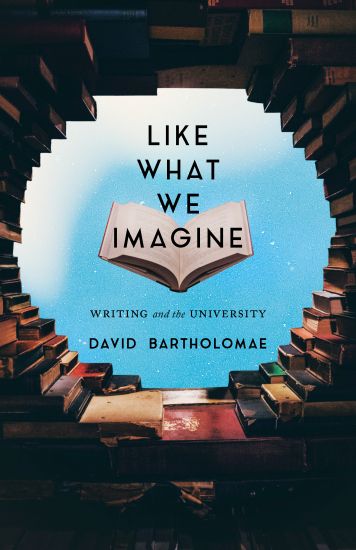
Like What We Imagine

Like What We Imagine

David Bartholomae

University of Pittsburgh Press
2021
sidottu
David Bartholomae has been a prominent figure in the field of composition and rhetoric for almost five decades. Throughout his career, his focus has always been on teaching, writing, and the teaching of writing. These essays, written over the past dozen years, are arranged and unified by a thread that connects some of the books and ideas, people and places, students and courses that have shaped and sustained his work as a teacher of writing. The essays trace his formation as a teacher, writer, and scholar, and open doors to paths of study that speak directly to issues related to global understanding across linguistic and cultural divides. Taken together, the pieces in this collection reveal Bartholomae’s ideas about writing studies and the ways in which student writing and the teaching of writing contribute to and are central to the mission of the university.
Ways of Reading: An Anthology for Writers

Ways of Reading: An Anthology for Writers

David Bartholomae; Anthony Petrosky; Stacey Waite

Bedford Books
2019
nidottu
Reading and writing is difficult, messy work. Ways of Reading embraces this challenge by inviting students into the process and treating them with respect. Based on the concept that texts should be considered in relation to each other, Ways of Reading fosters academic habits of mind as it carefully walks students through analyzing and writing about complicated ideas. With deeply thought-provoking readings from writers like Ta-Nehisi Coates, Judith Butler, and Anna Tsing, combined with a supporting structure of sequenced questions for rereading, discussion, and writing, Ways of Reading empowers students to engage with complex material and difficult concepts. A robust introduction to critical reading, coverage of writing beyond the traditional essay, and assignment sequences all help instructors make the classroom a place of intellectual exploration. This is a book that asks instructors and students to do more -- to approach difficulty as multi-dimensional, in conceptual, historical, narrative, and practical aspects. And especially in this edition, with new readings on topics such as white rage, ethical relationships, and sexual violence, this work pays off, preparing students to address (as community members, citizens, and future leaders) the urgent problems that cannot be ignored, and that soon will be theirs alone to solve.
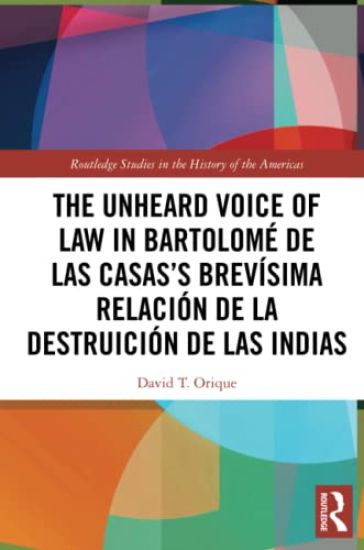
The Unheard Voice of Law in Bartolomé de Las Casas’s Brevísima Relación de la Destruición de las Indias
The Unheard Voice of Law in Bartolomé de las Casas’s Brevísima relación de la destruición de las Indias reinterprets Las Casas’s controversial treatise as a legal document, whose legal character is linked to civil and ecclesial genres of the Early Modern and late Renaissance juridical tradition. Bartolomé de las Casas proclaimed: "I have labored to inquire about, study, and discern the law; I have plumbed the depths and have reached the headwaters." The Unheard Voice also plumbs the depths of Las Casas’s voice of law in his widely read and highly controversial Brevísima relación—a legal document published and debated since the 16th century. This original reinterpretation of his Very Brief Account uncovers the juridical approach voiced in his defense of the Indigenous peoples of the Americas. The Unheard Voice innovatively asserts that the Brevísima relación’s legal character is intimately linked to civil and ecclesial genres of the late Renaissance juridical tradition. This paradigm-shifting book contextualizes the formation of Las Casas’s juridical voice in canon law and theology—initially as a secular cleric, subsequently as a Dominican friar, and finally as a diocesan bishop—and demonstrates how his experienced juridical voice fought for justice in trans-Atlantic debates about Indigenous peoples’ level of humanity, religious freedom, enslavement, and conquest. Reaching the headwaters of Las Casas’s hitherto unheard juridical voice of law in the Brevísima relación provides readers with a previously unheard interpretation—an appealing voice for readers and students of this powerful Early Modern text that still resonates today.The Unheard Voice of Law is a valuable companion text for many in the disciplines of literature, history, theology, law, and philosophy who read Bartolomé de las Casas’s Very Brief Account and study his life, labor, and legacy.
The Unheard Voice of Law in Bartolomé de Las Casas’s Brevísima Relación de la Destruición de las Indias
The Unheard Voice of Law in Bartolomé de las Casas’s Brevísima relación de la destruición de las Indias reinterprets Las Casas’s controversial treatise as a legal document, whose legal character is linked to civil and ecclesial genres of the Early Modern and late Renaissance juridical tradition. Bartolomé de las Casas proclaimed: "I have labored to inquire about, study, and discern the law; I have plumbed the depths and have reached the headwaters." The Unheard Voice also plumbs the depths of Las Casas’s voice of law in his widely read and highly controversial Brevísima relación—a legal document published and debated since the 16th century. This original reinterpretation of his Very Brief Account uncovers the juridical approach voiced in his defense of the Indigenous peoples of the Americas. The Unheard Voice innovatively asserts that the Brevísima relación’s legal character is intimately linked to civil and ecclesial genres of the late Renaissance juridical tradition. This paradigm-shifting book contextualizes the formation of Las Casas’s juridical voice in canon law and theology—initially as a secular cleric, subsequently as a Dominican friar, and finally as a diocesan bishop—and demonstrates how his experienced juridical voice fought for justice in trans-Atlantic debates about Indigenous peoples’ level of humanity, religious freedom, enslavement, and conquest. Reaching the headwaters of Las Casas’s hitherto unheard juridical voice of law in the Brevísima relación provides readers with a previously unheard interpretation—an appealing voice for readers and students of this powerful Early Modern text that still resonates today.The Unheard Voice of Law is a valuable companion text for many in the disciplines of literature, history, theology, law, and philosophy who read Bartolomé de las Casas’s Very Brief Account and study his life, labor, and legacy.
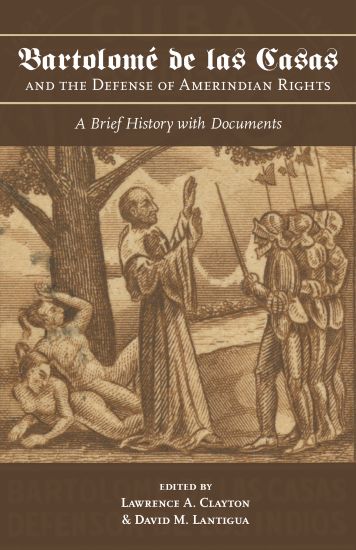
Bartolomé de las Casas and the Defense of Amerindian Rights

Bartolomé de las Casas and the Defense of Amerindian Rights

Lawrence A. Clayton; David M. Lantigua

The University of Alabama Press
2020
nidottu
An accessible reader of both popular and largely unavailable writings of BartolomÉ de las Casas. With the exception of Christopher Columbus, BartolomÉ de las Casas is arguably the most notable figure of the Encounter Age. He is remembered principally as the author of the Black Legend, as well as the protector of American Indians. He was one of the pioneers of the human rights movement, and a Christian activist who invoked law and Biblical scripture to challenge European colonialism in the great age of the Encounter. He was also one of the first and most thorough chroniclers of the conquest, and a biographer who saved the diary of Columbus's first voyage for posterity by transcribing it in his History of the Indies before the diary was lost. BartolomÉ de las Casas and the Defense of Amerindian Rights: A Brief History with Documents provides the most wide-ranging and concise anthology of Las Casas's writings, in translation, ever made available. It contains not only excerpts from his most well-known texts, but also his largely unavailable writings on political philosophy and law, and addresses the underappreciated aspects of his thought. Fifteen of the twenty-six documents are entirely new translations of Las Casas's writings, a number of them appearing in English for the first time. This volume focuses on his historical, political, and legal writings that address the deeply conflicted and violent sixteenth-century encounter between Europeans and indigenous peoples of the Americas. It also presents Las Casas as a more comprehensive and systematic philosophical and legal thinker than he is typically given credit for. The introduction by Lawrence A. Clayton and David M. Lantigua places these writings into a synthetic whole, tracing his advocacy for indigenous peoples throughout his career. By considering Las Casas's ideas, actions, and even regrets in tandem, readers will understand the historical dynamics of Spanish imperialism more acutely within the social-political context of the times.
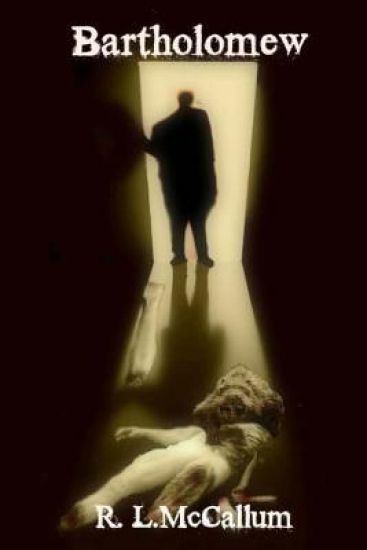
Bartholomew

Bartholomew

Mark Lages

Authorhouse
2022
pokkari
My name is Rick Harper, and the cake is for me. Everyone is here because it's a big deal, because it's not every day you get to celebrate your sixty-fifth birthday. Sixty-five is the magic number - I can start collecting Social Security, and I get to go on Medicare. I quit my job at Wiley & Associates. My golden years are on the horizon, and there isn't a cloud in the sky. There's plenty of sunshine, and lots of vitamin D. I smile. At my age, I'll take all the free vitamins I can get.
Bartholomew

Bartholomew

Carol Lester

Redemption Press
2019
pokkari
Bartholomew, an intelligent iguana with brown-and-green mottled, scaly skin, loves riding the New York City subway. The underground railroad, which clatters and whooshes before it takes off, teems with people, but Bartholomew doesn't mind. He enjoys his escape from his life in a museum exhibit and spends the morning observing other passengers. On his ride, Bartholomew watches several Regulars and learns about their similarities, their differences, and how they interact or don't interact with others. Bubbly Becky radiates joy, and she even sits next to Bartholomew. Fred always wears a bright scarf and sometimes hums, but he keeps to himself. Mrs. Hatmer keeps her four children organized, but some passengers are annoyed by the kids. By the end of Bartholomew's ride, he learns about the value and uniqueness of each person. Bartholomew, Squire of the Subway includes questions in the back to encourage young readers to explore the lessons Bartholomew learns. Carol Lester's children's books spark discussions with adult and school-aged readers alike. With each book, Lester seeks to influence and shape lives, young and old.
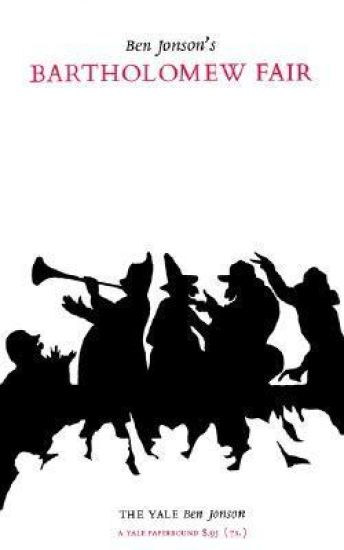
Bartholomew Fair

Bartholomew Fair

Ben Jonson

Yale University Press
2005
pokkari
Not as well known today as Volpne and The Alchemist, this comedy of London’s lower classes was a great favorite of Ben Jonson’s contemporaries. The richness of its comic invention and the complexity of its plot and satirical view have returned it to its former high repute, and Professor Waith’s skillful and illuminating critical Introduction vividly demonstrates its artistic excellence. The high standards for textual accuracy and critical apparatus set for Volpone, the first volume of the Yale edition of Ben Jonson, are maintained here, and the format is identical. In addition, the editor has supplied an appendix and the original staging of the play that assists the reader greatly and is in itself a valuable contribution to studies of Elizabethan and Jacobean stagecraft. Eugene M. Waith is professor of English at Yale University. The Yale Ben Jonson, 2.
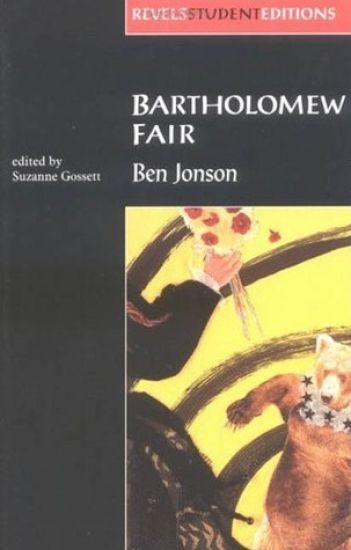
Bartholomew Fair (Revels Student Edition)
Of all of Jonson's plays, Bartholomew Fair with its focus on the conflict between a carnivalesque enjoyment of the flesh and society's desire for order and control, speaks most directly to the modern audience. This edition is the first to use the findings of feminist scholarship in examining the play's concern with forced marriage, pregnancy, sexual commerce and widowhood. Glosses and notes are provided for students and theatre-goers clarifying the language and dialects Jonson uses to individualise the characters in his prose masterpiece and helpfully explicating layers of meaning and topical references.