Kirjahaku
Etsi kirjoja tekijän nimen, kirjan nimen tai ISBN:n perusteella.
1000 tulosta hakusanalla Baruch Inbar

Baruch de Spinoza: Ethik in Geometrischer Ordnung Dargestellt
de Gruyter Akademie Forschung
2006
pokkari
Vor dem Hintergrund fanatischer religi ser Konflikte und in Kenntnis der im 17. Jahrhundert aufbl henden exakten Wissenschaften entwickelte Spinoza einen der anspruchsvollsten Entw rfe der Philosophiegeschichte: seine in geometrischer Ordnung dargestellte Ethik. Sie handelt von der Ontologie, Erkenntnislehre, den menschlichen Gef hlen und der Freiheit und Unfreiheit Einzelner wie auch der sozialer Gemeinschaften in einem einzigen durchgehenden Argumentationsgang. Das Werk verbindet auf diese Weise die h chsten Anspr che begrifflicher und begr ndender Durchsichtigkeit mit von Lebenserfahrung ges ttigter Weisheit. Es versteht sich selbst als eine Anleitung zum Gl ck f r die, die bereit sind, sich nur auf ihre Vernunft und nicht auf Autorit ten zu verlassen. Bis heute ist das Buch Ma stab aufgekl rter theoretischer und praktischer Vernunft geblieben. Seine f nf Teile werden in diesem kollektiven Kommentar durch jeweils drei Aufs tze erl utert. Eine Einleitung schildert die Ambitionen und historischen Folgen der "Ethik". Mit Beitr gen von: Francis Aman, Wolfgang Bartuschat, Thomas Cook, Herman De Djin, Christof Ellsiepen, Stephen Gaukroger, Michael Hampe, Thomas Kisser, Alexandre Matheron, Pierre-Fran ois Moreau, Michael Pauen, Dominik Perler, Ursula Renz, Michael Della Rocca, Robert Schnepf, Manfred Walther und Jean-Claude Wolf.



Baruch Spinoza
Roberto Andres Gonz Lez; Roberto Andres Gonzalez
Eae Editorial Academia Espanola
2012
pokkari
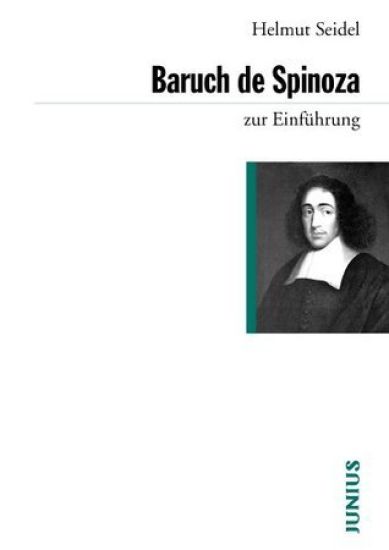
Baruch de Spinoza (1632-1677) gehört zu jenen frühen Philosophender Aufklärung, die durch kritische Befragung für die heutigeZeit wiederentdeckt werden können. Denn die Gedanken seinesHauptwerks, der Ethik, nach der geometrischen Methode dargestellt,führen in ihrer metaphysischen Spekulation über das WesenGottes und der Natur direkt zu gegenwärtigen, z.B. ökologischenFragen. Aktuell ist Spinoza aber auch als Vordenker einerToleranz, die nicht wie ein schönes Ideal über der Wirklichkeitschwebt, sondern sich der Schwierigkeit ihrer Verwirklichung vollbewusst ist. Diese Einführung von Helmut Seidel behandelt SpinozasPhilosophie deshalb nicht als ?kostbare Antiquität?, sondernbefreit sie vom Staub der Jahrhunderte.


Embark on an intellectual odyssey through the entire philosophical corpus of Baruch Spinoza with the 'Complete Works of Baruch Spinoza (Grapevine edition).'This meticulously curated collection assembles Spinoza's entire body of work, allowing readers to explore the depths of his rationalism, ethics, metaphysics, and political philosophy. From the 'Ethics' to 'A Theologico-Political Treatise, ' this edition provides an unfiltered view of Spinoza's enduring intellectual legacy. It's an opportunity to engage with Spinoza's timeless ideas, whether you seek to explore the intricacies of human understanding, his pantheistic worldview, or his thoughts on governance and religion.This Grapevine edition serves as a beacon for those seeking enlightenment in the realms of philosophy and rational inquiry.


Baruch de Spinoza
Liwi Literatur- Und Wissenschaftsverlag
2025
pokkari

Baruch de Spinoza
Liwi Literatur- Und Wissenschaftsverlag
2025
sidottu

Baruch Goldstein
VDM Publishing House
2010
nidottu
Observera att förlaget som ger ut denna produkt baserar innehållet i sina produkter på fria källor som Wikipedia. Boken är med stor sannolikhet endast ett utdrag ur dessa informationskällor, alltså inte en vanlig bok i den bemärkelsen.
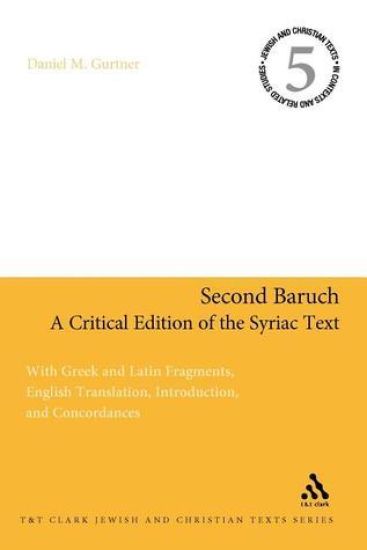
2 Baruch is a Jewish pseudepigraphon from the late first or early second century CE. It is comprised of an apocalypse (2 Baruch 1-77) and an epistle (2 Baruch 78-87). This ancient work addresses the important matter of theodicy in light of the destruction of the temple by the Romans in 70 CE. It depicts vivid and puzzling pictures of apocalyptic images in explaining the nature of the tragedy and exhorting its ancient community of readers. Gurtner provides the first publication of the Syriac of both the apocalypse and epistle with a fresh English translation on the opposite page. Also present in parallel form are the few places where Greek and Latin texts of the book. An introduction orients readers to interpretative and textual issues of the book. Indexes and Concordances of the Syriac, Greek, and Latin will allow users to analyze the language of the text more carefully than ever before.
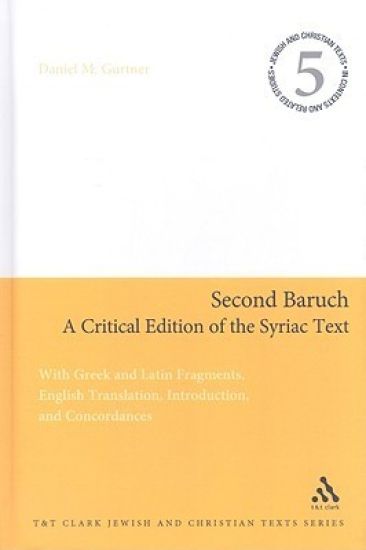
2 Baruch is a Jewish pseudepigraphon from the late first or early second century CE. It is comprised of an apocalypse (2 Baruch 1-77) and an epistle (2 Baruch 78-87). This ancient work addresses the important matter of theodicy in light of the destruction of the temple by the Romans in 70 CE. It depicts vivid and puzzling pictures of apocalyptic images in explaining the nature of the tragedy and exhorting its ancient community of readers. Gurtner provides the first publication of the Syriac of both the apocalypse and epistle with a fresh English translation on the opposite page. Also present in parallel form are the few places where Greek and Latin texts of the book. An introduction orients readers to interpretative and textual issues of the book. Indexes and Concordances of the Syriac, Greek, and Latin will allow users to analyze the language of the text more carefully than ever before.
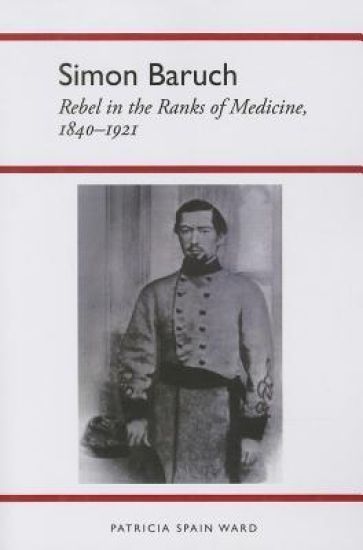
This biography recounts the remarkable life of a Prussian/Polish Jew who immigrated to the United States as a teenager in the 1850s and became one of the nation’s bestknown physicians by the turn of the century.After medical study in South Carolina and Virginia on the eve of the Civil War, Baruch served the Confederacy as a surgeon for three years, twice undergoing capture and internment. Despite economic hardships while practising in South Carolina during Reconstruction, he helped to reactivate the State Medical Association and served as president of the State Board of Health.In 1881 he joined the exodus of southern physicians and scientists of that period, taking up residence in New York City, where he rose to prominence through his advocacy of surgery in one of the early operations for appendicitis and through his role as the protective physician in a widely publicised “child cruelty” case involving the musical prodigy, Josef Hofmann.Baruch became a leader in the nationwide movement to establish free public baths for tenement dwellers and in the development of expert medical journalism. Although his advocacy of such natural remedies as water, fresh air, and diet often made him appear unaccountably iconoclastic to his contemporaries, he has gained posthumous recognition as a pioneer in physical medicine. Bernard N. Baruch, one of his four sons, has memorialised this work through endowments for research and instruction in physical medicine and rehabilitation.Ward reconstructs the life of a medical student in the South at the opening of the Civil War, the adventures of a Confederate surgeon, and the difficulties of a practitioner in Reconstruction South Carolina. Simon Baruch’s physician’s registers and his correspondence with colleagues afford the reader an immediate sense of the therapeutic dilemmas facing physicians and patients of his era.Baruch’s experiences while establishing himself in New York City after 1881 reflect the challenges facing those trying to break into what was then the nation’s medical capital as well as that city’s rich opportunities and heady intellectual atmosphere. His energetic campaign for free public baths illustrates one of the most colourful chapters of American social history, as immigrants flooded the cities at the turn of the century. As medical editor of the New York Sun from 1912 to 1918, Baruch touched on most of the health concerns of that period and a few such as handgun control that persist to this day.

This work has been selected by scholars as being culturally important and is part of the knowledge base of civilization as we know it.This work is in the public domain in the United States of America, and possibly other nations. Within the United States, you may freely copy and distribute this work, as no entity (individual or corporate) has a copyright on the body of the work.Scholars believe, and we concur, that this work is important enough to be preserved, reproduced, and made generally available to the public. To ensure a quality reading experience, this work has been proofread and republished using a format that seamlessly blends the original graphical elements with text in an easy-to-read typeface.We appreciate your support of the preservation process, and thank you for being an important part of keeping this knowledge alive and relevant.