Kirjojen hintavertailu. Mukana 11 244 527 kirjaa ja 12 kauppaa.

Kirjahaku

Etsi kirjoja tekijän nimen, kirjan nimen tai ISBN:n perusteella.

1000 tulosta hakusanalla Beam Alex

Beam Shaping and Control with Nonlinear Optics

Beam Shaping and Control with Nonlinear Optics

Kluwer Academic/Plenum Publishers
1998
sidottu
The field of nonlinear optics, which has undergone a very rapid development since the discovery of lasers in the early sixties, continues to be an active and rapidly developing - search area. The interest is mainly due to the potential applications of nonlinear optics: - rectly in telecommunications for high rate data transmission, image processing and recognition or indirectly from the possibility of obtaining large wavelength range tuneable lasers for applications in industry, medicine, biology, data storage and retrieval, etc. New phenomena and materials continue to appear regularly, renewing the field. This has proven to be especially true over the last five years. New materials such as organics have been developed with very large second- and third-order nonlinear optical responses. Imp- tant developments in the areas of photorefractivity, all optical phenomena, frequency conv- sion and electro-optics have been observed. In parallel, a number of new phenomena have been reported, some of them challenging the previously held concepts. For example, solitons based on second-order nonlinearities have been observed in photorefractive materials and frequency doubling crystals, destroying the perception that third order nonlinearities are - quired for their generation and propagation. New ways of creating and manipulating nonl- ear optical materials have been developed. An example is the creation of highly nonlinear (second-order active) polymers by static electric field, photo-assisted or all-optical poling. Nonlinear optics involves, by definition, the product of electromagnetic fields. As a con- quence, it leads to the beam control.
Beam Technologies for Integrated Processing
Beam technologies play an important role in microelectronic component fabrication and offer opportunities for application in other manufacturing schemes. Emerging beam technologies that incorporate potential for sensors, control, and information processing have created new opportunities for integrated processing of materials and components. This volume identifies various beam technologies and their applications in electronics and other potential manufacturing processes. Recommendations for research and development to enhance the understanding, capabilities, and applications of beam technologies are presented. Table of Contents FRONT MATTER 1 INTRODUCTION 2 SUMMARY AND RECOMMENDATIONS 3 BEAM TECHNOLOGIES 4 BEAM APPLICATIONS IN MICROELECTRONICS 5 BEAM APPLICATIONS IN ENGINEERED MATERIALS 6 INTEGRATED PROCESSING 7 REQUIREMENTS AND PROBLEMS FOR FURTHER INTEGRATION APPENDIX A: ACRONYMS AND ABBREVIATIONS APPENDIX B: BIOGRAPHICAL SKETCHES OF COMMITTEE MEMBERS
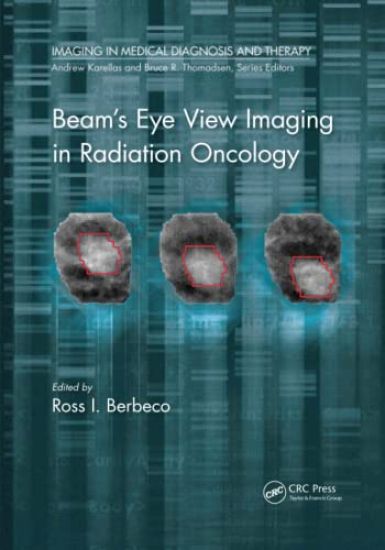
Beam's Eye View Imaging in Radiation Oncology
This first dedicated overview for beam’s eye view (BEV) covers instrumentation, methods, and clinical use of this exciting technology, which enables real-time anatomical imaging. It highlights how the information collected (e.g., the shape and size of the beam aperture and intensity of the beam) is used in the clinic for treatment verification, adaptive radiotherapy, and in-treatment interventions. The chapters cover detector construction and components, common imaging procedures, and state of the art applications. The reader will also be presented with emerging innovations, including target modifications, real-time tracking, reconstructing delivered dose, and in vivo portal dosimetry.Ross I. Berbeco, PhD, is a board-certified medical physicist and Associate Professor of Radiation Oncology at the Dana-Farber Cancer Institute, Brigham and Women’s Hospital and Harvard Medical School.
Beam to Square Steel Tube Endplate Connection Using Thread-Fixed One-Side Bolts

Beam to Square Steel Tube Endplate Connection Using Thread-Fixed One-Side Bolts

Peijun Wang; Yang You; Mei Liu

Elsevier - Health Sciences Division
2024
nidottu
Beam to Square Steel Tube Endplate Connection Using Thread-fixed One-side Bolts: Analysis and Design provides research information on thread-fixed one-side bolt (TOB), which is anchored through screwed threads in the bolt hole. Although beam-column endplate connections have been studied by many researchers and been widely used in engineering applications, the standard high strength bolts are not convenient for the bolted beam to square tube column endplate connection. The one-side bolts, which can be installed and tightened from outside of the tube column, provide a solution for beam to closed section column bolted connections. This book introduces the basic principles and design methods regarding the failure modes, and the design method of load carrying capacity of endplate connection using thread-fixed one-side bolts.
Beam Structures

Beam Structures

Erasmo Carrera; Gaetano Giunta; Marco Petrolo

John Wiley Sons Inc
2011
sidottu
Beam theories are exploited worldwide to analyze civil, mechanical, automotive, and aerospace structures. Many beam approaches have been proposed during the last centuries by eminent scientists such as Euler, Bernoulli, Navier, Timoshenko, Vlasov, etc. Most of these models are problem dependent: they provide reliable results for a given problem, for instance a given section and cannot be applied to a different one. Beam Structures: Classical and Advanced Theories proposes a new original unified approach to beam theory that includes practically all classical and advanced models for beams and which has become established and recognised globally as the most important contribution to the field in the last quarter of a century. The Carrera Unified Formulation (CUF) has hierarchical properties, that is, the error can be reduced by increasing the number of the unknown variables. This formulation is extremely suitable for computer implementations and can deal with most typical engineering challenges. It overcomes the problem of classical formulae that require different formulas for tension, bending, shear and torsion; it can be applied to any beam geometries and loading conditions, reaching a high level of accuracy with low computational cost, and can tackle problems that in most cases are solved by employing plate/shell and 3D formulations. Key features: compares classical and modern approaches to beam theory, including classical well-known results related to Euler-Bernoulli and Timoshenko beam theoriespays particular attention to typical applications related to bridge structures, aircraft wings, helicopters and propeller bladesprovides a number of numerical examples including typical Aerospace and Civil Engineering problemsproposes many benchmark assessments to help the reader implement the CUF if they wish to do soaccompanied by a companion website hosting dedicated software MUL2 that is used to obtain the numerical solutions in the book, allowing the reader to reproduce the examples given in the book as well as to solve other problems of their own www.mul2.com Researchers of continuum mechanics of solids and structures and structural analysts in industry will find this book extremely insightful. It will also be of great interest to graduate and postgraduate students of mechanical, civil and aerospace engineering.
Beam of Light

Beam of Light

Elisa Boxer

Penguin Young Readers
2024
sidottu
The first piece of Judaica in the White House's permanent holiday collection was introduced for Hanukkah in 2022. This lovely picture book tells the history and importance of its creation. The official White House menorah is a symbol of strength and perseverance against seemingly insurmountable odds. It was created from a piece of reclaimed wood salvaged during a Truman-era renovation of the building. That beam of White House wood sat in storage for seventy years, through thirteen different presidents. It might have been destroyed, but instead it waited for its new purpose. And so, in 2022, it was transformed into a menorah that will shine its beams of light every year, celebrating the resilience and permanence of Jewish people in America and abroad.
Beam Engines

Beam Engines

Geoff Hayes

Shire Publications
2002
nidottu
Over three hundred years ago, the first steps were made towards the use of steam power. Most of the steps went beyond the boundary of available technology. The reliable drainage of metal and coal mines was the incentive. Thomas Newcomen using contemporary technology in his beam engine was the first to achieve success, in 1712. Improved by James Watt, the beam engine became the most used form of steam engine in factories, mines and waterworks until well into the second half of the nineteenth century. Examples were still in use into the 1970s. This book outlines the development of the beam engine and gives some explanation of why it was so successful.
Beam and Wave Electronics in Microwave Tubes

Beam and Wave Electronics in Microwave Tubes

Rudolf G. E. Hutter

Hassell Street Press
2021
sidottu
This work has been selected by scholars as being culturally important and is part of the knowledge base of civilization as we know it.This work is in the public domain in the United States of America, and possibly other nations. Within the United States, you may freely copy and distribute this work, as no entity (individual or corporate) has a copyright on the body of the work.Scholars believe, and we concur, that this work is important enough to be preserved, reproduced, and made generally available to the public. To ensure a quality reading experience, this work has been proofread and republished using a format that seamlessly blends the original graphical elements with text in an easy-to-read typeface.We appreciate your support of the preservation process, and thank you for being an important part of keeping this knowledge alive and relevant.
Beam and Wave Electronics in Microwave Tubes

Beam and Wave Electronics in Microwave Tubes

Rudolf G. E. Hutter

Hassell Street Press
2021
nidottu
This work has been selected by scholars as being culturally important and is part of the knowledge base of civilization as we know it.This work is in the public domain in the United States of America, and possibly other nations. Within the United States, you may freely copy and distribute this work, as no entity (individual or corporate) has a copyright on the body of the work.Scholars believe, and we concur, that this work is important enough to be preserved, reproduced, and made generally available to the public. To ensure a quality reading experience, this work has been proofread and republished using a format that seamlessly blends the original graphical elements with text in an easy-to-read typeface.We appreciate your support of the preservation process, and thank you for being an important part of keeping this knowledge alive and relevant.
Beam-profile Indicator for 184-inch Cyclotron.

Beam-profile Indicator for 184-inch Cyclotron.

Robert L. Brown

Hassell Street Press
2021
nidottu
This work has been selected by scholars as being culturally important and is part of the knowledge base of civilization as we know it.This work is in the public domain in the United States of America, and possibly other nations. Within the United States, you may freely copy and distribute this work, as no entity (individual or corporate) has a copyright on the body of the work.Scholars believe, and we concur, that this work is important enough to be preserved, reproduced, and made generally available to the public. To ensure a quality reading experience, this work has been proofread and republished using a format that seamlessly blends the original graphical elements with text in an easy-to-read typeface.We appreciate your support of the preservation process, and thank you for being an important part of keeping this knowledge alive and relevant.
Beam-based Correction and Optimization for Accelerators
This book provides systematic coverage of the beam-based techniques that accelerator physicists use to improve the performance of large particle accelerators, including synchrotrons and linacs. It begins by discussing the basic principles of accelerators, before exploring the various error sources in accelerators and their impact on the machine's performances. The book then demonstrates the latest developments of beam-based correction techniques that can be used to address such errors and covers the new and expanding area of beam-based optimization. This book is an ideal, accessible reference book for physicists working on accelerator design and operation, and for postgraduate studying accelerator physics.Features: Entirely self-contained, exploring the theoretic background, including algorithm descriptions, and providing application guidanceAccompanied by source codes of the main algorithms and sample codes onlineUses real-life accelerator problems to illustrate principles, enabling readers to apply techniques to their own problemsXiaobiao Huang is an accelerator physicist at the SLAC National Accelerator Laboratory at Stanford University, USA. He graduated from Tsinghua University with a Bachelor of Science in Physics and a Bachelor of Engineering in Computer Science in 1999. He earned a PhD in Accelerator Physics from Indiana University, Bloomington, Indiana, USA, in 2005. He spent three years on thesis research work at Fermi National Accelerator Laboratory from 2003-2005. He has worked at SLAC as a staff scientist since 2006. He became Accelerator Physics Group Leader of the SPEAR3 Division, Accelerator Directorate in 2015. His research work in accelerator physics ranges from beam dynamics, accelerator design, and accelerator modelling and simulation to beam based measurements, accelerator control, and accelerator optimization. He has taught several courses at US Particle Accelerator School (USPAS), including Beam Based Diagnostics, Accelerator Physics, Advanced Accelerator Physics, and Special Topics in Accelerator Physics.
Beam Me Down Scotty: NASA's Identifies the Damage Astronauts Suffer from Space Volume 1
The author's work with NASA HQ to increase astronaut safety by using prognostic and health management (PHM) technologies to create a preventive paradigm to replace their current reactive paradigm in which 17 astronauts have died and NASA's largest spacecraft program ever funded terminated as a result. In 2013, the author submitted his research he completed for the Canadian Space Agency's Manned Space program's Predictive Medicine Program to NASA HQ that identified why and how astronauts are damaged permentally from their journey in space with Captain Lisa Nowak's 3 mental illnesses she acquired and was diagnosed with in 2007 after her 4 space missions to the International space station identified as the proverbial "canary in the coal mine". In response the author's research, in 2014, NASA began a series of research projects that would refute the claims of the author's research, but surprisingly, affirmed the author's research and found new dangers and new unknown damage that astronauts suffer from going to space. The author compiled theresearch completed by the agencies and academic institutions and edited them to better reflect their results using terms and conclusions that NASA does not want Congress and the general public to learn that working in space is far more dangerous and harmful to anyone that goes to space and expecting to return as healthy as they they left on their journey.as NASA and the manned space flight industry portrays to the general public for pro-space exploration support and continue to receive the $18B/year budgets that NASA receives from Congress to meet the directions by the President of the United States who decides what and if NASA works on any particular manned or unmanned space exploration mission. each volume includes specific dangers and specific permanebnt damage that occurs from each of the dangers thus illustrating that the space exploration operations model that is used by NASA requires replacement with one that includes providing astronauts artificial gravity via rotating space station to replace the 3-axis stabilized ISS that forces the on-board astronauts to live in micro-gravity and thus suffer unimaginable as identified in the results of the research included and the irreparable damage to an astronaut's brain and body that usually shows up longer after leaving the astronaut program. Appendix 4 is the latest results of the impact on Scott kelly's 10 month space mission from NASA taken from a press conference in April, 2019.
Beam Me Down Scotty: NASA Identifies the Damage Astronauts Suffer from Space Volume 2
Includes the author's work with NASA HQ as a spacecraft designer to increase astronaut safety by using prognostic and health management (PHM) technologies to create a preventive paradigm to replace their current reactive paradigm in which 17 astronauts have died and NASA's largest spacecraft program ever funded terminated as a result. In 2013, the author submitted his research he completed for the Canadian Space Agency's Manned Space program's Predictive Medicine Program to NASA HQ that identified why and how astronauts are damaged permentally from their journey in space with Captain Lisa Nowak's 3 mental illnesses she acquired and was diagnosed with in 2007 after her several 6 month space missions to the International Space Station identified as the proverbial "canary in the coal mine". In response to the author's research, in 2014, NASA began a series of research projects that would refute the claims of the author's research, but surprisingly, affirmed the author's research and found new dangers and new unknown permanent damage that astronauts suffer from going to space. The author compiled the research completed by the agencies and academic institutions NASA funded and edited them to better reflect their results using terms and conclusions that NASA does not want Congress and the general public to learn. The research identifies that working in space is far more dangerous and harmful to anyone expecting to return as healthy as they they left as NASA and the manned space flight industry portrays to the general public to maintain a pro-space exploration support and continue to receive the $18B/year budget that NASA receives from Congress to meet the direction the the President of the United States. Each volume includes specific dangers and specific temporary and permanent damage that occurs from each thus illustrating that the space exploration operations model used by NASA requires replacement with one that includes providing astronauts artificial gravity via rotating space station to replace the existing and antiquated 3-axis stabilized ISS that forces the on-board astronauts to live in micro-gravity and thus suffer unimaginable damage as identified in the results of the research included and the irreparable damage to an astronaut's brain and body that usually shows up long after leaving the astronaut program. The author included as Appendix 1 the outdated 2004 Review of the NASA Astronaut Longitudinal Health Study by the Institute of Medicine that includes the numbers of mental and physical disorders experienced by the astronauts to 2003.
Beam, Straight Up

Beam, Straight Up

Fred Noe; Jim Kokoris

John Wiley Sons Inc
2012
sidottu
An insider's look at the Jim Beam brand, from a 7th generation Master Distiller Written by the 7th generation Beam family member and Master Distiller, Frederick Booker Noe III, Beam, Straight Up is the first book to be written by a Beam, the family behind the 217-year whiskey dynasty and makers of one of the world's best-selling bourbons. This book features family history and the evolution of bourbon, including Fred's storied youth "growing up Beam" in Bardstown, Kentucky; his transition from the bottling line to renowned global bourbon ambassador; and his valuable business insights on how to maintain and grow a revered brand. Includes details of Fred Noe's life on the road, spreading the bourbon gospelDescribes Fred's journey to becoming the face of one of America's most iconic brandsShares a simple primer on how bourbon is madeOffers cocktail and food recipes For anyone wanting a behind the scenes look at Jim Beam, and an understanding of the bourbon industry, Beam, Straight Up will detail the family business, and its role in helping to shape it.
Beam Propagation Method for Design of Optical Waveguide Devices
The basic of the BPM technique in the frequency domain relies on treating the slowly varying envelope of the monochromatic electromagnetic field under paraxial propagation, thus allowing efficient numerical computation in terms of speed and allocated memory. In addition, the BPM based on finite differences is an easy way to implement robust and efficient computer codes. This book presents several approaches for treating the light: wide-angle, scalar approach, semivectorial treatment, and full vectorial treatment of the electromagnetic fields. Also, special topics in BPM cover the simulation of light propagation in anisotropic media, non-linear materials, electro-optic materials, and media with gain/losses, and describe how BPM can deal with strong index discontinuities or waveguide gratings, by introducing the bidirectional-BPM. BPM in the time domain is also described, and the book includes the powerful technique of finite difference time domain method, which fills the gap when the standard BPM is no longer applicable. Once the description of these numerical techniques have been detailed, the last chapter includes examples of passive, active and functional integrated photonic devices, such as waveguide reflectors, demultiplexers, polarization converters, electro-optic modulators, lasers or frequency converters. The book will help readers to understand several BPM approaches, to build their own codes, or to properly use the existing commercial software based on these numerical techniques.
Beam-based Correction and Optimization for Accelerators
This book provides systematic coverage of the beam-based techniques that accelerator physicists use to improve the performance of large particle accelerators, including synchrotrons and linacs. It begins by discussing the basic principles of accelerators, before exploring the various error sources in accelerators and their impact on the machine's performances. The book then demonstrates the latest developments of beam-based correction techniques that can be used to address such errors and covers the new and expanding area of beam-based optimization. This book is an ideal, accessible reference book for physicists working on accelerator design and operation, and for postgraduate studying accelerator physics.Features: Entirely self-contained, exploring the theoretic background, including algorithm descriptions, and providing application guidanceAccompanied by source codes of the main algorithms and sample codes onlineUses real-life accelerator problems to illustrate principles, enabling readers to apply techniques to their own problemsXiaobiao Huang is an accelerator physicist at the SLAC National Accelerator Laboratory at Stanford University, USA. He graduated from Tsinghua University with a Bachelor of Science in Physics and a Bachelor of Engineering in Computer Science in 1999. He earned a PhD in Accelerator Physics from Indiana University, Bloomington, Indiana, USA, in 2005. He spent three years on thesis research work at Fermi National Accelerator Laboratory from 2003-2005. He has worked at SLAC as a staff scientist since 2006. He became Accelerator Physics Group Leader of the SPEAR3 Division, Accelerator Directorate in 2015. His research work in accelerator physics ranges from beam dynamics, accelerator design, and accelerator modelling and simulation to beam based measurements, accelerator control, and accelerator optimization. He has taught several courses at US Particle Accelerator School (USPAS), including Beam Based Diagnostics, Accelerator Physics, Advanced Accelerator Physics, and Special Topics in Accelerator Physics.