Kirjojen hintavertailu. Mukana 11 342 296 kirjaa ja 12 kauppaa.

Kirjahaku

Etsi kirjoja tekijän nimen, kirjan nimen tai ISBN:n perusteella.

1000 tulosta hakusanalla Beate Penner

Beate Söntgen & Julia Voss: Why Art Criticism? A Reader
How is art criticism to be understood within an expanding artistic field? A look at its history and its manifestations within globalized conditions shows the variety of the genre, of the criteria and of the styles of writing. This reader is an attempt to bring a diverse range of art-critical voices and perspectives into conversation with each other, with texts from the 18th century to the present. The editors Beate Söntgen and Julia Voss have invited colleagues from various geographical and intellectual backgrounds to present and discuss the art critics of their choice, choosing one example from their respective bodies of work to comment upon. How have these writers approached art criticism? Which styles do they employ? What makes them extraordinary? What can we learn from their writings today, and why is it important in its contemporary context? Texts by: Ananda Kentish Coomaraswamy, Denis Diderot, Takashi Kashima, Patrick Mudekereza, Annemarie Sauzeau-Boetti, Bertha Zuckerkandl and many more Comments by: Juli Carson, Yuriko Furuhata, Isabelle Graw, Angela Harutyunyan, Monica Juneja, Wolfgang Kemp, Florencia Malbran, Yvette Mutumba, Azu Nwagbogu, Sarah Wilson and many more
Beate Passow: Monkey Business
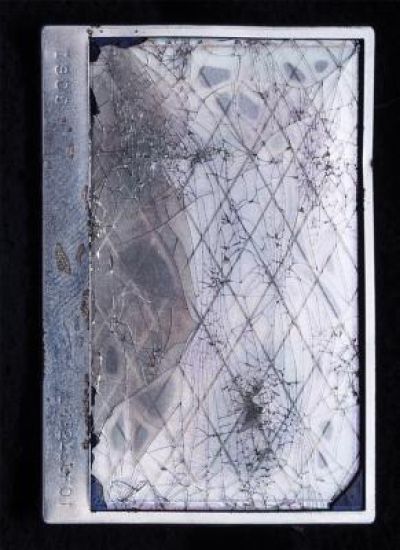
In her series of images “Monkey Business” the artist Beate Passow portrays a mysterious fairy - tale world of political dimensions. The black and white images, which upon closer observation turn out to be sophisticated tapestries, question the ruling syst ems, economic structures, and political movements of contemporary Europe. A Barbary macaque sits on a martial gun barrel in Gibraltar, a powerful bear mounts a bull, a skeleton - like figure strides over destroyed refugee boats on Lampedusa. The strange fi gures that inhabit “Monkey Business” narrate a penetrating mythology of the 21st century. In her narrative approach Passow subverts the established tapestry tradition, not praising rulers and heroes, but directing criticism – at today’s Europe. Once celebr ated as the stronghold of democracy and humanism, it is today marked by a military defensive stance at its borders, by a thoroughly corrupt capitalism, and by increasingly brazen Neo - Nazi movements.
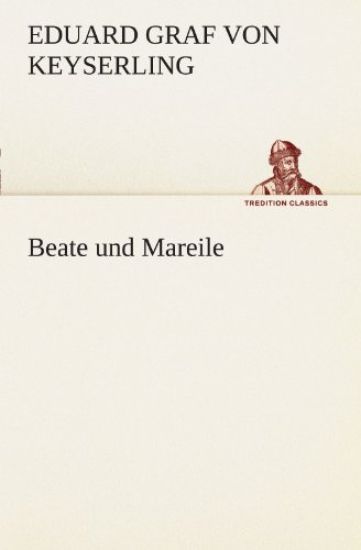
Beate und Mareile / Schwüle Tage (Großdruck)

Beate und Mareile / Schwüle Tage (Großdruck)

Eduard Von Keyserling

Henricus - Edition Deutsche Klassik GmbH, Berlin
2022
pokkari
Eduard von Keyserling: Beate und Mareile / Schw le Tage. Zwei Erz hlungen Lesefreundlicher Gro druck in 16-pt-Schrift Gro format, 210 x 297 mm Berliner Ausgabe, 2022 Durchgesehener Neusatz mit einer Biografie des Autors bearbeitet und eingerichtet von Theodor Borken Beate und Mareile: Erstdruck: Berlin, S. Fischer, 1903. Schw le Tage: Erstdruck: Neue deutsche Rundschau, Nr. 15, 1904. Textgrundlage ist die Ausgabe: Eduard von Keyserling: Gesammelte Erz hlungen in vier B nden, Berlin: S. Fischer, 1922. Umschlaggestaltung von Thomas Schultz-Overhage unter Verwendung des Bildes: Franz Marc, Zwei Frauen auf einem H gel, 1906. Gesetzt aus der Minion Pro, 16 pt. Henricus - Edition Deutsche Klassik GmbH ber den Autor: 1855 im kurl ndischen Tels-Paddern - heute in Lettland - als zehntes von zw lf Kindern in eine baltische Landadelsfamilie hineingeboren, studiert Eduard von Keyserling zun chst Jura in Dorpat (heute Tartu in Estland) und wechselt nach einem nie aufgekl rten Eklat und seinem Ausschluss aus der studentischen Verbindung Curonia nach Wien, wo er sich f r Philosophie und Kunstgeschichte einschreibt und f r die Wiener Allgemeine Zeitung schreibt. Zur ck in Kurland widmet er sich der Verwaltung der m tterlichen G ter. Als Ende 1894 die Mutter stirbt, zieht er mit drei seiner Schwestern nach M nchen. Der an Syphilis Erkrankte erblindet und lebt zur ckgezogen in einem Haushalt mit seinen Schwestern, denen er seine Werke diktiert. Seine einf hlsame Schilderung erotischer Konflikte und die feine Ironie seiner oft adligen Figuren bringen ihm den Beinamen der baltische Fontane ein. Am 28. September 1918 stirbt mit Eduard von Keyserling ein bedeutender Virtuose der impressionistischen Erz hlung.
Beate Kuhn

Beate Kuhn

The Design Museum .

Arnoldsche
2017
sidottu
-With around 190 works by the German ceramicist Beate Kuhn (1927-2015) from over five decades and all periods of creativity, the Freiberger Collection provides an outstanding review of the impressive oeuvre of this internationally renowned artist -Featuring many previously unseen ceramics in new photographs taken for this publication - Beate Kuhn's works are owned by leading museums worldwide, including the GRASSI Museum of Applied Art Leipzig; Hetjens-Museum, Dusseldorf; Musee Ariana, Geneva; Museum Bellerive, Zurich; Museum Boijmans Van Beuningen, Rotterdam; National Museum of Modern Art, Kyoto; Taipeh Fine Arts Museum; and the Victoria and Albert Museum, London With her unmistakable signature and exuberant imagination, Beate Kuhn (1927-2015) is one of the most significant German ceramicists of the post-war era. She turned to the liberal arts as early as the end of the 1950s. In linking sculptural reasoning with the possibilities of the material and inherent pottery techniques, the internationally renowned artist conquered the frontiers of ceramics and created virtuosic works that went on to form their own contribution to the history of modern sculpture. With around 190 works from all her periods of creativity, the Mannheim architect Klaus Freiberger was able to compile a collection unmatched anywhere else in the world. In honour of its foundation at the Neue Sammlung, the impressive oeuvre of Beate Kuhn is now being presented for the first time in this comprehensive publication. This book accompanies an exhibition at Die Neue Sammlung - The Design Museum, Munich (DE), 13th July - 19th November 2017. Text in English and German.