Kirjojen hintavertailu. Mukana 11 576 898 kirjaa ja 12 kauppaa.

Kirjahaku

Etsi kirjoja tekijän nimen, kirjan nimen tai ISBN:n perusteella.

1000 tulosta hakusanalla Benjamin Gorman

Just Language: Walter Benjamin, German-Jewish Exile, and the Critique of Linguistic Violence
Just Language revisits the Weimar period and its representation in the postwar years to explore narratives of linguistic resistance in the works of Walter Benjamin, Theodor W. Adorno, Hannah Arendt, and Paul Celan. How did this generation of exile writers grapple with their experiences of oppression and persecution? How did they create a language of resistance during the decades that prepared the Third Reich and the Shoah? Facing the devastations of World War I, the book explores how Walter Benjamin analyzed language's ability to radically break the cyclical violence of war and examines his opposition to expansionism and imperialism in Weimar education and culture. Based on Benjamin's analysis, Johann en traces the postwar responses of Hannah Arendt and Paul Celan. While Arendt proposed strategies of metaphorical thinking to counteract the formation of totalitarianism, Celan mobilized silence as a poetic counterforce against oppression and erasure. Just Language argues that every linguistic act and practice, no matter how small or marginalized, entails the ethical task of opposing the normalization and institutionalization of political violence. By tracing how Benjamin and his interlocutors struggled against German fascism, Johann en presents a memory-based critique of linguistic violence, opening a dialogue between German-Jewish writers and today's debates on non-discrimination, propaganda, and social justice.
Just Language: Walter Benjamin, German-Jewish Exile, and the Critique of Linguistic Violence
Just Language revisits the Weimar period and its representation in the postwar years to explore narratives of linguistic resistance in the works of Walter Benjamin, Theodor W. Adorno, Hannah Arendt, and Paul Celan. How did this generation of exile writers grapple with their experiences of oppression and persecution? How did they create a language of resistance during the decades that prepared the Third Reich and the Shoah? Facing the devastations of World War I, the book explores how Walter Benjamin analyzed language's ability to radically break the cyclical violence of war and examines his opposition to expansionism and imperialism in Weimar education and culture. Based on Benjamin's analysis, Johann en traces the postwar responses of Hannah Arendt and Paul Celan. While Arendt proposed strategies of metaphorical thinking to counteract the formation of totalitarianism, Celan mobilized silence as a poetic counterforce against oppression and erasure. Just Language argues that every linguistic act and practice, no matter how small or marginalized, entails the ethical task of opposing the normalization and institutionalization of political violence. By tracing how Benjamin and his interlocutors struggled against German fascism, Johann en presents a memory-based critique of linguistic violence, opening a dialogue between German-Jewish writers and today's debates on non-discrimination, propaganda, and social justice.
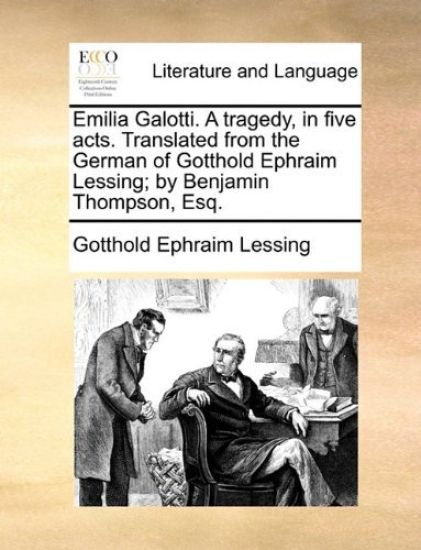
Emilia Galotti. A Tragedy, in Five Acts. Translated From the German of Gotthold Ephraim Lessing; by Benjamin Thompson, Esq
The 18th century was a wealth of knowledge, exploration and rapidly growing technology and expanding record-keeping made possible by advances in the printing press. In its determination to preserve the century of revolution, Gale initiated a revolution of its own: digitization of epic proportions to preserve these invaluable works in the largest archive of its kind. Now for the first time these high-quality digital copies of original 18th century manuscripts are available in print, making them highly accessible to libraries, undergraduate students, and independent scholars.Western literary study flows out of eighteenth-century works by Alexander Pope, Daniel Defoe, Henry Fielding, Frances Burney, Denis Diderot, Johann Gottfried Herder, Johann Wolfgang von Goethe, and others. Experience the birth of the modern novel, or compare the development of language using dictionaries and grammar discourses. ++++The below data was compiled from various identification fields in the bibliographic record of this title. This data is provided as an additional tool in helping to insure edition identification: ++++British LibraryT082757Also issued as part of: 'The German theatre' Vol. 6, London, 1801.London: printed by J. Wright, for Vernor and Hood, 1800. 4],75, 1]p., plate; 8
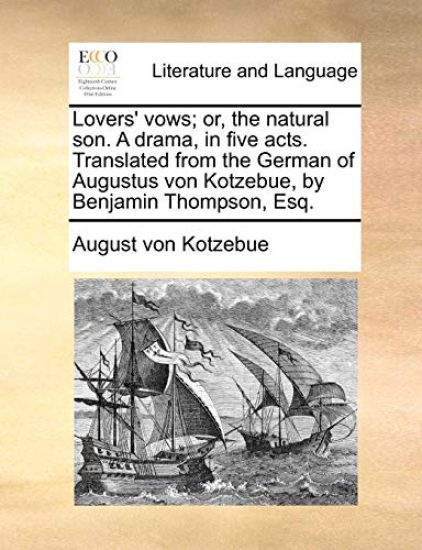
Lovers' Vows; or, the Natural son. A Drama, in Five Acts. Translated From the German of Augustus von Kotzebue, by Benjamin Thompson, Esq
The 18th century was a wealth of knowledge, exploration and rapidly growing technology and expanding record-keeping made possible by advances in the printing press. In its determination to preserve the century of revolution, Gale initiated a revolution of its own: digitization of epic proportions to preserve these invaluable works in the largest archive of its kind. Now for the first time these high-quality digital copies of original 18th century manuscripts are available in print, making them highly accessible to libraries, undergraduate students, and independent scholars.Western literary study flows out of eighteenth-century works by Alexander Pope, Daniel Defoe, Henry Fielding, Frances Burney, Denis Diderot, Johann Gottfried Herder, Johann Wolfgang von Goethe, and others. Experience the birth of the modern novel, or compare the development of language using dictionaries and grammar discourses. ++++The below data was compiled from various identification fields in the bibliographic record of this title. This data is provided as an additional tool in helping to insure edition identification: ++++British LibraryT060701In: 'The German theatre' vol.2, London, 1801. Large paper issue.London: printed by T. Maiden, for Vernor and Hood, 1800. 4],99, 1]p., plate; 8
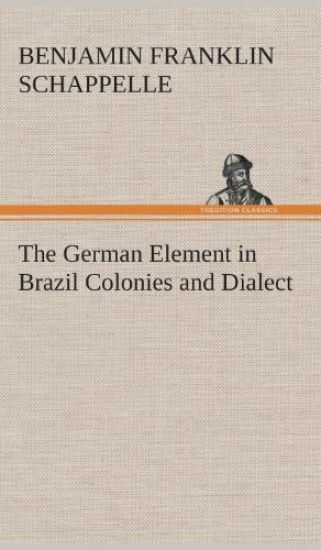
The German Element in Brazil; Colonies and Dialect

The German Element in Brazil; Colonies and Dialect

Benjamin Franklin Schappelle

ALPHA EDITION
2022
pokkari
This book has been considered important throughout the human history, and so that this work is never forgotten we have made efforts in its preservation by republishing this book in a modern format for present and future generations. This whole book has been reformatted, retyped and designed. These books are not made of scanned copies and hence the text is clear and readable.
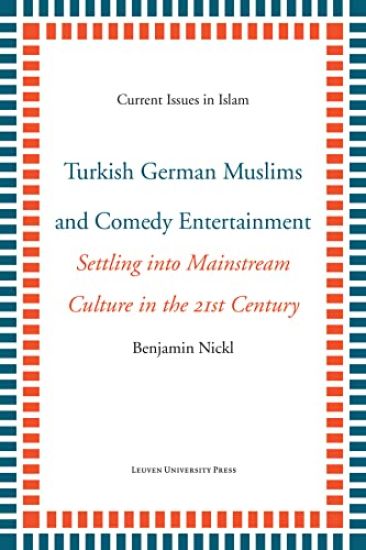
Turkish German Muslims and Comedy Entertainment

Turkish German Muslims and Comedy Entertainment

Benjamin Nickl

Leuven University Press
2020
nidottu
Comedy entertainment is a powerful arena for serious public engagement with questions of German national identity and Turkish German migration. The German majority society and its largest labour migrant community have been asking for decades what it means to be German and what it means for Turkish Germans, Muslims of the second and third generations, to call Germany their home.
German Banking Structure, Pricing and Competition

German Banking Structure, Pricing and Competition

Benjamin H. Dietrich

Peter Lang AG
2009
sidottu
The German banking system is characterized by high fragmentation, low profitability and low foreign ownership. Main reason for this is its particular structure that can best be described as forced segmentation. This structure produces local banking markets. The book argues that local bank competition is not as pronounced as national concentration ratios predict and presents a bank pricing study which indicates that local banks, banks located in less densely populated areas and less productive banks tend to charge higher prices for retail bank services than banks that operate nationally. These results as well as lessons drawn from international reforms suggest that the German banking system could benefit from cross-pillar consolidation which promises to export competition from the national to local banking markets. Last but not least, the book analyzes political economy implications of banking reforms and provides suggestions on status quo resolution by identifying ways to facilitate reform implementation in the German banking system.
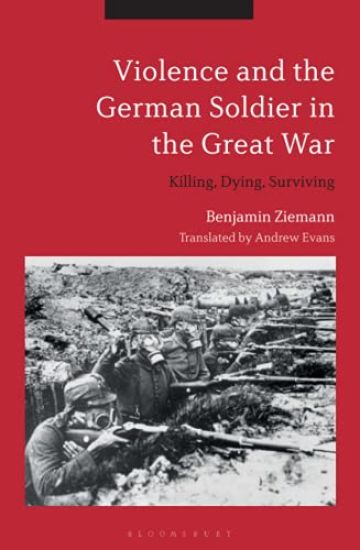
Violence and the German Soldier in the Great War

Violence and the German Soldier in the Great War

Benjamin Ziemann

Bloomsbury Academic
2019
nidottu
Translated into English as the Winner of the Geisteswissenschaften International Translation Prize for Work in the Humanities and Social Sciences 2015.During the Great War, mass killing took place on an unprecedented scale. Violence and the German Soldier in the Great War explores the practice of violence in the German army and demonstrates how he killing of enemy troops, the deaths of German soldiers and their survival were entwined. As the war reached its climax in 1918, German soldiers refused to continue killing in their droves, and thus made an active contribution to the German defeat and ensuing revolution. Examining the postwar period, the chapters of this book also discuss the contested issue of a ‘brutalization’ of German society as a prerequisite of the Nazi mass movement. Biographical case studies on key figures such as Ernst Jünger demonstrate how the killing of enemy troops by German soldiers followed a complex set of rules. Benjamin Ziemann makes a wealth of extensive archival work available to an Anglophone audience for the first time, enhancing our understanding of the German army and its practices of violence during the First World War as well as the implications of this brutalization in post-war Germany. This book provides new insights into a crucial topic for students of twentieth-century German history and the First World War.
Violence and the German Soldier in the Great War

Violence and the German Soldier in the Great War

Benjamin Ziemann

Bloomsbury Academic
2017
sidottu
Translated into English as the Winner of the Geisteswissenschaften International Translation Prize for Work in the Humanities and Social Sciences 2015.During the Great War, mass killing took place on an unprecedented scale. Violence and the German Soldier in the Great War explores the practice of violence in the German army and demonstrates how he killing of enemy troops, the deaths of German soldiers and their survival were entwined. As the war reached its climax in 1918, German soldiers refused to continue killing in their droves, and thus made an active contribution to the German defeat and ensuing revolution. Examining the postwar period, the chapters of this book also discuss the contested issue of a ‘brutalization’ of German society as a prerequisite of the Nazi mass movement. Biographical case studies on key figures such as Ernst Jünger demonstrate how the killing of enemy troops by German soldiers followed a complex set of rules. Benjamin Ziemann makes a wealth of extensive archival work available to an Anglophone audience for the first time, enhancing our understanding of the German army and its practices of violence during the First World War as well as the implications of this brutalization in post-war Germany. This book provides new insights into a crucial topic for students of twentieth-century German history and the First World War.