Kirjojen hintavertailu. Mukana 11 244 527 kirjaa ja 12 kauppaa.

Kirjahaku

Etsi kirjoja tekijän nimen, kirjan nimen tai ISBN:n perusteella.

1000 tulosta hakusanalla Benjamin H. Milligan

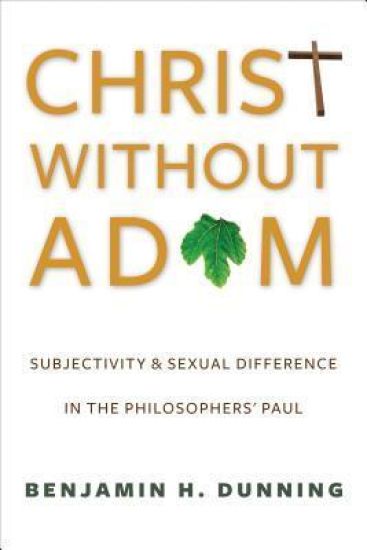
Christ Without Adam

Christ Without Adam

Benjamin H. Dunning

Columbia University Press
2014
pokkari
The apostle Paul deals extensively with gender, embodiment, and desire in his authentic letters, yet many of the contemporary philosophers interested in his work downplay these aspects of his thought. Christ Without Adam is the first book to examine the role of gender and sexuality in the turn to the apostle Paul in recent Continental philosophy. It builds a constructive proposal for embodied Christian theological anthropology in conversation with-and in contrast to-the "Paulinisms" of Stanislas Breton, Alain Badiou, and Slavoj Zizek. Paul's letters bequeathed a crucial anthropological aporia to the history of Christian thought, insofar as the apostle sought to situate embodied human beings typologically with reference to Adam and Christ, but failed to work out the place of sexual difference within this classification. As a result, the space between Adam and Christ has functioned historically as a conceptual and temporal interval in which Christian anthropology poses and re-poses theological dilemmas of embodied difference. This study follows the ways in which the appropriations of Paul by Breton, Badiou, and Zizek have either sidestepped or collapsed this interval, a crucial component in their articulations of a universal Pauline subject. As a result, sexual difference fails to materialize in their readings as a problem with any explicit force. Against these readings, Dunning asserts the importance of the Pauline Adam-Christ typology, not as a straightforward resource but as a witness to a certain necessary failure-the failure of the Christian tradition to resolve embodied difference without remainder. This failure, he argues, is constructive in that it reveals the instability of sexual difference, both masculine and feminine, within an anthropological paradigm that claims to be universal yet is still predicated on male bodies.
Respecting Patient Autonomy

Respecting Patient Autonomy

Benjamin H. Levi

University of Illinois Press
1999
nidottu
Against a backdrop of real clinical situations, Benjamin H. Levi examines the dynamics that shape relations between patient and health care provider, addressing fundamental questions about how medical decisions should be reached and compelling the reader to think about health care issues and decisions in terms of the values and goals they promote. Presenting bioethics as a practical, educational activity rather than an abstract intellectual exercise, this important volume shows how dialogue between patients and health care providers can clarify both medical and ethical issues, promoting patient autonomy and advancing health care.
Formalism and Historicity

Formalism and Historicity

Benjamin H. D. Buchloh

MIT Press
2015
sidottu
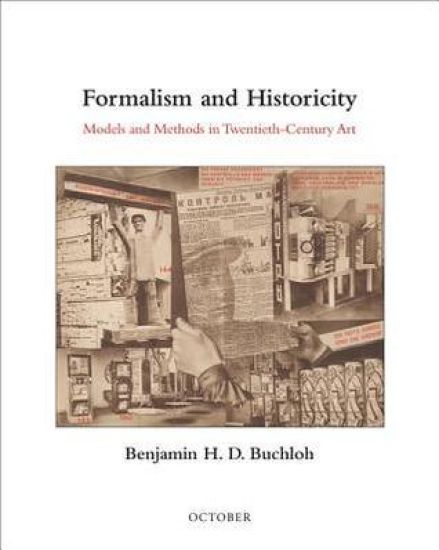
Essays spanning three decades by one of the most rigorous art thinkers of our time grapple with formal and historical paradigms in twentieth century art.These influential essays by the noted critic and art historian Benjamin Buchloh have had a significant impact on the theory and practice of art history. Written over the course of three decades and now collected in one volume, they trace a history of crucial artistic transitions, iterations, and paradigmatic shifts in the twentieth century, considering both the evolution and emergence of artistic forms and the specific historical moment in which they occurred. Buchloh's subject matter ranges through various moments in the history of twentieth-century American and European art, from the moment of the retour a l'ordre of 1915 to developments in the Soviet Union in the 1920s to the beginnings of Conceptual art in the late 1960s to the appropriation artists of the 1980s. He discusses conflicts resulting from historical repetitions (such as the monochrome and collage/montage aesthetics in the 1910s, 1950s, and 1980s), the emergence of crucial neo-avantgarde typologies, and the resuscitation of obsolete genres (including the portrait and landscape, revived by 1980s photography). Although these essays are less monographic than those in Buchloh's earlier collection, Neo-Avantgarde and Culture Industry, two essays in this volume are devoted to Marcel Broodthaers, whose work remains central to Buchloh's theoretical concerns. Engaging with both formal and historical paradigms, Buchloh situates himself productively between the force fields of formal theory and historical narrative, embracing the discrepancies and contradictions between them and within individual artistic trajectories.ContentsFormalism and Historicity (1977) * Marcel Broodthaers: Allegories of the Avant-Garde (1980) * Figures of Authority, Ciphers of Regression: Notes on the Return of Representation in European Painting (1981) * Allegorical Procedures: Appropriations and Montage in Contemporary Art (1982) * The Museum Fictions of Marcel Broodthaers (1983) * From Faktura to Factography (1984) * Readymade, Objet Trouve, Idee Recue (1985) * The Primary Colors for the Second Time: A Paradigm Repetition of the Neo-Avantgarde (1986) * Cold War Constructivism (1986) * Conceptual Art 1962-1969: From the Aesthetics of Administration to the Critique of Institutions (1989) * Residual Resemblance: Three Notes on the Ends of Portraiture (1994) * Sculpture: Publicity and the Poverty of Experience (1996)
The Stack

The Stack

Benjamin H. Bratton

MIT Press
2016
sidottu
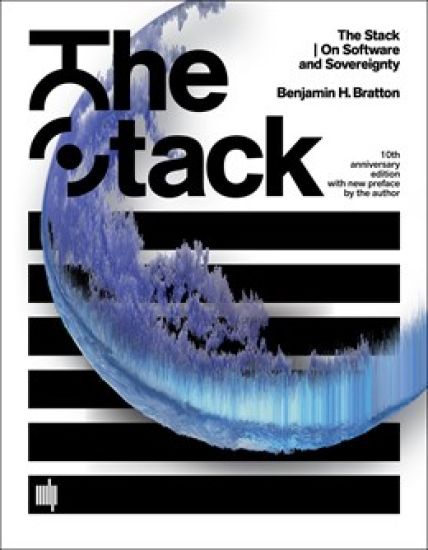
A comprehensive political and design theory of planetary-scale computation proposing that The Stack-an accidental megastructure-is both a technological apparatus and a model for a new geopolitical architecture.What has planetary-scale computation done to our geopolitical realities? It takes different forms at different scales-from energy and mineral sourcing and subterranean cloud infrastructure to urban software and massive universal addressing systems; from interfaces drawn by the augmentation of the hand and eye to users identified by self-quantification and the arrival of legions of sensors, algorithms, and robots. Together, how do these distort and deform modern political geographies and produce new territories in their own image?In The Stack, Benjamin Bratton proposes that these different genres of computation-smart grids, cloud platforms, mobile apps, smart cities, the Internet of Things, automation-can be seen not as so many species evolving on their own, but as forming a coherent whole: an accidental megastructure called The Stack that is both a computational apparatus and a new governing architecture. We are inside The Stack and it is inside of us. In an account that is both theoretical and technical, drawing on political philosophy, architectural theory, and software studies, Bratton explores six layers of The Stack: Earth, Cloud, City, Address, Interface, User. Each is mapped on its own terms and understood as a component within the larger whole built from hard and soft systems intermingling-not only computational forms but also social, human, and physical forces. This model, informed by the logic of the multilayered structure of protocol "stacks," in which network technologies operate within a modular and vertical order, offers a comprehensive image of our emerging infrastructure and a platform for its ongoing reinvention. The Stack is an interdisciplinary design brief for a new geopolitics that works with and for planetary-scale computation. Interweaving the continental, urban, and perceptual scales, it shows how we can better build, dwell within, communicate with, and govern our worlds.thestack.org
From the Mines to the Streets

From the Mines to the Streets

Benjamin H. Kohl; Linda C. Farthing; Félix Muruchi

University of Texas Press
2011
pokkari
From the Mines to the Streets draws on the life of FÉlix Muruchi to depict the greater forces at play in Bolivia and elsewhere in South America during the last half of the twentieth century. It traces FÉlix from his birth in an indigenous family in 1946, just after the abolition of bonded labor, through the next sixty years of Bolivia's turbulent history. As a teenager, FÉlix followed his father into the tin mines before serving a compulsory year in the military, during which he witnessed the 1964 coup d'État that plunged the country into eighteen years of military rule. He returned to work in the mines, where he quickly rose to become a union leader. The reward for his activism was imprisonment, torture, and exile. After he came home, he participated actively in the struggles against neoliberal governments, which led in 2006-the year of his sixtieth birthday-to the inauguration of Evo Morales as Bolivia's first indigenous president.The authors weave Muruchi's compelling recollections with contextual commentary that elucidates Bolivian history. The combination of an unforgettable life story and in-depth text boxes makes this a gripping, effective account, destined to become a classic sourcebook.
Facing and Fighting Fatigue

Facing and Fighting Fatigue

Benjamin H. Natelson

Yale University Press
1998
pokkari
We all know what it is to be exhausted: fatigue seems to be a normal part of human experience when we are overactive, have physical or emotional problems, face stress, or suffer from insomnia. Some of us, in fact, suffer from chronic fatigue syndrome, an illness characterized by pervasive fatigue that produces significant disability and lasts more than six months. In this important book, an eminent specialist in fatigue disorders—a physician who is sensitive and empathic to patients’ complaints—discusses all kinds of fatigue problems, explaining what fatigue is, what causes it, how to combat it, and what patients should know when consulting a doctor about symptoms.The book offers valuable advice on:• how to improve your sleep; • ways to find understanding and sympa thetic doctors; • self-help techniques to manage stress (the role of exercise, relaxation, and coaches); • the best medicines and ancillary techniques used by expert physicians to treat severe fatiguing illness• the efficacy of alternative medicines; • ways for those with severe and chronic fatigue to cope with their own illness; • and more.
The Analyst's Ear and the Critic's Eye

The Analyst's Ear and the Critic's Eye

Benjamin H. Ogden; Thomas H. Ogden

Routledge
2013
sidottu
The Analyst’s Ear and the Critic’s Eye is the first volume of literary criticism to be co-authored by a practicing psychoanalyst and a literary critic. The result of this unique collaboration is a lively conversation that not only demonstrates what is most fundamental to each discipline, but creates a joint perspective on reading literature that neither discipline alone can achieve.This book radically redefines the relationship between psychoanalysis and literary studies in a way that revitalizes the conversation between the two fields. This is achieved, in part, by providing richly textured descriptions of analytic work. These clinical illustrations bring to life the intersubjective dimension of analytic practice, which is integral to the book’s original conception of psychoanalytic literary criticism. In their readings of seminal works of American and European literature, the authors address questions that are fundamental to psychoanalysis, literary studies, and the future of psychoanalytic literary criticism:-What is psychoanalytic literary criticism?-Which concepts are most fundamental to psychoanalytic theory?-What is the role of psychoanalytic theory in reading literature?-How does an analyst’s clinical experience shape the way he reads? -How might literary critics make use of the analyst’s experience with his patients?-What might psychoanalysts learn from the ways professional literary critics read? This volume provides cutting edge work which will breathe new life into psychoanalytic ways of reading, free from technical language, yet drawing upon what is most fundamental to psychoanalytic theory and practice. It will be of great interest to mental health professionals, literary scholars and those studying psychoanalysis and literature.
The Analyst's Ear and the Critic's Eye

The Analyst's Ear and the Critic's Eye

Benjamin H. Ogden; Thomas H. Ogden

Routledge
2013
nidottu
The Analyst’s Ear and the Critic’s Eye is the first volume of literary criticism to be co-authored by a practicing psychoanalyst and a literary critic. The result of this unique collaboration is a lively conversation that not only demonstrates what is most fundamental to each discipline, but creates a joint perspective on reading literature that neither discipline alone can achieve.This book radically redefines the relationship between psychoanalysis and literary studies in a way that revitalizes the conversation between the two fields. This is achieved, in part, by providing richly textured descriptions of analytic work. These clinical illustrations bring to life the intersubjective dimension of analytic practice, which is integral to the book’s original conception of psychoanalytic literary criticism. In their readings of seminal works of American and European literature, the authors address questions that are fundamental to psychoanalysis, literary studies, and the future of psychoanalytic literary criticism:-What is psychoanalytic literary criticism?-Which concepts are most fundamental to psychoanalytic theory?-What is the role of psychoanalytic theory in reading literature?-How does an analyst’s clinical experience shape the way he reads? -How might literary critics make use of the analyst’s experience with his patients?-What might psychoanalysts learn from the ways professional literary critics read? This volume provides cutting edge work which will breathe new life into psychoanalytic ways of reading, free from technical language, yet drawing upon what is most fundamental to psychoanalytic theory and practice. It will be of great interest to mental health professionals, literary scholars and those studying psychoanalysis and literature.
Your Symptoms are Real

Your Symptoms are Real

Benjamin H. Natelson

John Wiley Sons Inc
2007
sidottu
Praise forYour Symptoms Are Real ""Thank God for this book. It provides the help that millions of Americans with 'silent illnesses' like chronic fatigue and fibromyalgia have been waiting for. Dr. Natelson is a brilliant and compassionate clinician who covers the best treatments that medical science has to offer, along with a thorough consideration of complementary approaches. Short of cloning him, this book offers the specific help you need to work in partnership with your own physician.""--Joan Borysenko, Ph.D., author ofMinding the Body, Mending the Mind ""Natelson is the kind of doctor every patient is looking for: smart, thoughtful, empathetic, and supportive. Reading Your Symptoms Are Real is the next best thing to having a world-renowned specialist managing your case.""--Charles W. Lapp, M.D., Director of the Hunter-Hopkins Centerand Assistant Consulting Professor at Duke University Medical Center ""Do not throw up your hands and give up when one doctor after another tells you there is nothing wrong with you--instead, read this book Benjamin Natelson is the person you have been looking for to guide you on your path to recovery.""--Sandra Blakeslee, coauthor of The Body Has a Mind of Its Own ""Natelson superbly incorporates research studies, clinical trials (even on drugs in development), and patient case reports in this book. If you are battling pain and fatigue symptoms but your tests are all normal, you will enjoy reading Natelson's pro-patient approach to explaining the real nature of your illness, his recommended treatment approaches, and how to cope with everything that is going on in your life.""--Kristin Thorson, editor of the Fibromyalgia Network and President of the American Fibromyalgia Syndrome Association
Flexible Work Arrangements

Flexible Work Arrangements

Benjamin H. Gottlieb; E. Kevin Kelloway; Elizabeth J. Barham

John Wiley Sons Inc
1998
nidottu
Dramatic changes in the composition of today’s workforce combined with intense competitive pressures on employers, call for new ways of structuring where, when, and how employees accomplish their job responsibilities. This book makes the business case for flexible working in an organization, and shows how flexitime, job sharing, telecommuting, and compressed work weeks can be used as strategic management tools. Key features:*identifies ways flexible work arrangements can be designed to enhance the personal well-being and job performance of employees, while improving the corporate bottom line.*provides a comprehensive, systematic framework for planning and implementing flexible work arrangements, including handy questionnaire style forms assessing employee needs and evaluating the impacts of flexible job arrangements.*uses case studies and calls on advice from those with experience in diverse organizations in order to show how to position flexible work arrangements and optimize their beneficial effects.Managers and HR managers should read this book if they are contemplating or embarking upon more flexible options for scheduling work and assisting employees to achieve a healthy balance between their jobs and the rest of their lives. It provides practical answers and ‘how-to’ guidelines for designing a more flexible workplace.
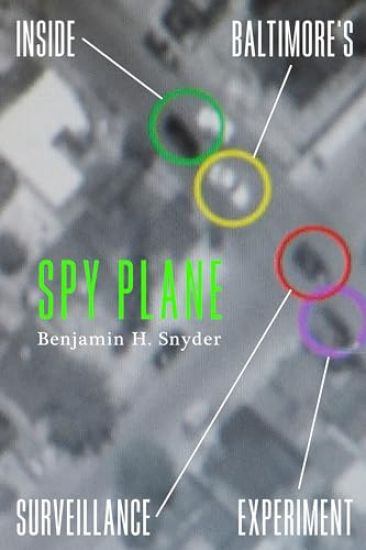
Spy Plane

Spy Plane

Benjamin H. Snyder

University of California Press
2024
sidottu
An exclusive behind-the-scenes look at one of America’s most controversial experiments in police surveillance. In 2020, the Baltimore Police Department had an aerial surveillance plane that could supposedly photograph and track every person in public view. Spy Plane reveals what happened with this controversial policing experiment. Drawing from incredible access and direct observations inside the for-profit tech startup that ran the program for Baltimore detectives, sociologist Benjamin H. Snyder recounts real criminal cases as they were worked by police using this untested tool. Deploying aircraft with powerful cameras built by a small company called Persistent Surveillance Systems, the spy plane program promised to help police “solve otherwise unsolvable crimes” by tracking the whereabouts of suspects in violent crime cases. Created for the battlefields of Iraq, it had never been adapted on so large a scale in a U.S. city. This riveting book gives an unprecedented look inside the shadowy world of for-profit law enforcement technology experiments, explaining why police and community leaders place so much faith in unproven technology to fix the problem of urban violence but continually come up short.
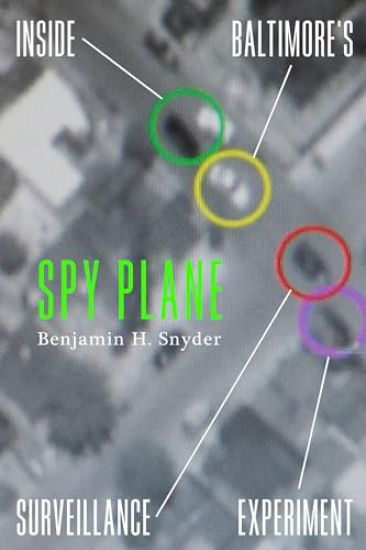
Spy Plane

Spy Plane

Benjamin H. Snyder

University of California Press
2024
pokkari
An exclusive behind-the-scenes look at one of America’s most controversial experiments in police surveillance. In 2020, the Baltimore Police Department had an aerial surveillance plane that could supposedly photograph and track every person in public view. Spy Plane reveals what happened with this controversial policing experiment. Drawing from incredible access and direct observations inside the for-profit tech startup that ran the program for Baltimore detectives, sociologist Benjamin H. Snyder recounts real criminal cases as they were worked by police using this untested tool. Deploying aircraft with powerful cameras built by a small company called Persistent Surveillance Systems, the spy plane program promised to help police “solve otherwise unsolvable crimes” by tracking the whereabouts of suspects in violent crime cases. Created for the battlefields of Iraq, it had never been adapted on so large a scale in a U.S. city. This riveting book gives an unprecedented look inside the shadowy world of for-profit law enforcement technology experiments, explaining why police and community leaders place so much faith in unproven technology to fix the problem of urban violence but continually come up short.
Urban Power

Urban Power

Benjamin H. Bradlow

PRINCETON UNIVERSITY PRESS
2024
sidottu
Why some cities are more effective than others at reducing inequalities in the built environmentFor the first time in history, most people live in cities. One in seven are living in slums, the most excluded parts of cities, in which the basics of urban life—including adequate housing, accessible sanitation, and reliable transportation—are largely unavailable. Why are some cities more successful than others in reducing inequalities in the built environment? In Urban Power, Benjamin Bradlow explores this question, examining the effectiveness of urban governance in two “megacities” in young democracies: São Paulo, Brazil, and Johannesburg, South Africa. Both cities came out of periods of authoritarian rule with similarly high inequalities and similar policy priorities to lower them. And yet São Paulo has been far more successful than Johannesburg in improving access to basic urban goods.Bradlow examines the relationships between local government bureaucracies and urban social movements that have shaped these outcomes. Drawing on sixteen months of fieldwork in both cities, including interviews with informants from government agencies, political leadership, social movements, private developers, bus companies, and water and sanitation companies, Bradlow details the political and professional conflicts between and within movements, governments, private corporations, and political parties. He proposes a bold theoretical approach for a new global urban sociology that focuses on variations in the coordination of local governing power, arguing that the concepts of “embeddedness” and “cohesion” explain processes of change that bridge external social mobilization and the internal coordinating capacity of local government to implement policy changes.
Urban Power

Urban Power

Benjamin H. Bradlow

PRINCETON UNIVERSITY PRESS
2024
pokkari
Why some cities are more effective than others at reducing inequalities in the built environmentFor the first time in history, most people live in cities. One in seven are living in slums, the most excluded parts of cities, in which the basics of urban life—including adequate housing, accessible sanitation, and reliable transportation—are largely unavailable. Why are some cities more successful than others in reducing inequalities in the built environment? In Urban Power, Benjamin Bradlow explores this question, examining the effectiveness of urban governance in two “megacities” in young democracies: São Paulo, Brazil, and Johannesburg, South Africa. Both cities came out of periods of authoritarian rule with similarly high inequalities and similar policy priorities to lower them. And yet São Paulo has been far more successful than Johannesburg in improving access to basic urban goods.Bradlow examines the relationships between local government bureaucracies and urban social movements that have shaped these outcomes. Drawing on sixteen months of fieldwork in both cities, including interviews with informants from government agencies, political leadership, social movements, private developers, bus companies, and water and sanitation companies, Bradlow details the political and professional conflicts between and within movements, governments, private corporations, and political parties. He proposes a bold theoretical approach for a new global urban sociology that focuses on variations in the coordination of local governing power, arguing that the concepts of “embeddedness” and “cohesion” explain processes of change that bridge external social mobilization and the internal coordinating capacity of local government to implement policy changes.
The Universal Language: Poetry of Life, Light, and Love

The Universal Language: Poetry of Life, Light, and Love

Benjamin H. Martin (Spiritman)

Benjamin H. Martin
2018
nidottu
Compelling, engaging, relevant, transformational. The poetry of SpiritMan skillfully, artistically, and intelligently, delivers impassioned truths on matters of life, light, and love. This book of poetry is a compilation of spirituality, philosophy, science, ecology, and daily experiences with messages integrated into the poems that touch the mind, the heart, and the soul of the reader. At various points, the information is quite clear and succinct. There are also points inter-suspended within deliberate spaces that allow readers to individually interpret meaning. Within their personal interpretation, specific passages will reveal intimate life wisdom in the experience of the reader.
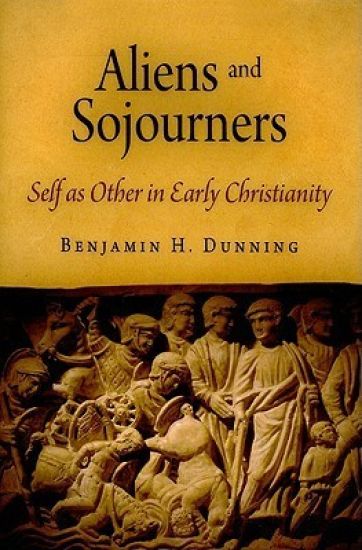
Aliens and Sojourners

Aliens and Sojourners

Benjamin H. Dunning

University of Pennsylvania Press
2009
sidottu
Early Christians spoke about themselves as resident aliens, strangers, and sojourners, asserting that otherness is a fundamental part of being Christian. But why did they do so and to what ends? How did Christians' claims to foreign status situate them with respect to each other and to the larger Roman world as the new movement grew and struggled to make sense of its own boundaries? Aliens and Sojourners argues that the claim to alien status is not a transparent one. Instead, Benjamin Dunning contends, it shaped a rich, pervasive, variegated discourse of identity in early Christianity. Resident aliens and foreigners had long occupied a conflicted space of both repulsion and desire in ancient thinking. Dunning demonstrates how Christians and others in antiquity capitalized on this tension, refiguring the resident alien as being of a compelling doubleness, simultaneously marginal and potent. Early Christians, he argues, used this refiguration to render Christian identity legible, distinct, and even desirable among the vast range of social and religious identities and practices that proliferated in the ancient Mediterranean. Through close readings of ancient Christian texts such as Hebrews, 1 Peter, the Shepherd of Hermas, and the Epistle to Diognetus, Dunning examines the markedly different ways that Christians used the language of their own marginality, articulating a range of options for what it means to be Christian in relation to the Roman social order. His conclusions have implications not only for the study of late antiquity but also for understanding the rhetorics of religious alienation more broadly, both in the ancient world and today.