
Kirjahaku
Etsi kirjoja tekijän nimen, kirjan nimen tai ISBN:n perusteella.
1000 tulosta hakusanalla Bernhard Bernson
Lorenzo Lotto: An Essay In Constructive Art Criticism
Bernhard Berenson
Literary Licensing, LLC
2014
nidottu

The Venetian Painters of the Renaissance With an Index to Their Works
Bernhard Berenson
Createspace Independent Publishing Platform
2014
nidottu


Enkätmetodik
Erik Berntson; Claudia Bernhard-Oettel; Johnny Hellgren; Katharina Näswall; Magnus Sverke
Natur Kultur Läromedel och Akademi
2016
sidottu
Enkätmetodik ger såväl teoretisk som praktisk kunskap om enkätundersökningar – från att identifiera ett problem och formulera lämpliga frågor, till att analysera och tolka resultatet. Boken har ett evidensbaserat perspektiv där läsaren får lära sig olika verktyg som bidrar till undersökningens tillförlitlighet. Fokus ligger på metodiken, som förklaras och sätts in i sitt sammanhang med hjälp av många exempel, faktarutor och tydliga beskrivningar. Läsaren får således god förståelse för centrala områden såsom mätteori, reliabilitet, validitet och faktoranalys.Boken är skriven för studerande på högskolor och universitet, forskare och för alla andra som använder enkäter i kartläggande och åtgärdande syfte.Boken är mycket välskriven, klar och tydlig och den ger läsaren en gedigen kunskap om enkätundersökningar, dess möjligheter och problem.Annette Sjöberg, BTJ-häftet nr 22, 2016

From the prizewinning Jewish Lives series, an illuminating new biography of the connoisseur who changed the art world and the way we see art When Gilded Age millionaires wanted to buy Italian Renaissance paintings, the expert whose opinion they sought was Bernard Berenson, with his vast erudition, incredible eye, and uncanny skill at attributing paintings. They visited Berenson at his beautiful Villa I Tatti, in the hills outside Florence, and walked with him through the immense private library—which he would eventually bequeath to Harvard—without ever suspecting that he had grown up in a poor Lithuanian Jewish immigrant family that had struggled to survive in Boston on the wages of the father’s work as a tin peddler. Berenson’s extraordinary self-transformation, financed by the explosion of the Gilded Age art market and his secret partnership with the great art dealer Joseph Duveen, came with painful costs: he hid his origins and felt that he had betrayed his gifts as an interpreter of paintings. Nevertheless his way of seeing, presented in his books, codified in his attributions, and institutionalized in the many important American collections he helped to build, goes on shaping the American understanding of art today. This finely drawn portrait of Berenson, the first biography devoted to him in a quarter century, draws on new archival materials that bring out the significance of his secret business dealings and the way his family and companions—including his patron Isabella Stewart Gardner, his lover Belle da Costa Greene, and his dear friend Edith Wharton—helped to form his ideas and his legacy. Rachel Cohen explores Berenson’s inner world and exceptional visual capacity while also illuminating the historical forces—new capital, the developing art market, persistent anti-Semitism, and the two world wars—that profoundly affected his life. About Jewish Lives: Jewish Lives is a prizewinning series of interpretative biography designed to explore the many facets of Jewish identity. Individual volumes illuminate the imprint of Jewish figures upon literature, religion, philosophy, politics, cultural and economic life, and the arts and sciences. Subjects are paired with authors to elicit lively, deeply informed books that explore the range and depth of the Jewish experience from antiquity to the present. In 2014, the Jewish Book Council named Jewish Lives the winner of its Jewish Book of the Year Award, the first series ever to receive this award. More praise for Jewish Lives: "Excellent" –New York Times "Exemplary" –Wall Street Journal "Distinguished" –New Yorker "Superb" –The Guardian

Critic, arbiter of taste, renowned authority on Renaissance painting, and oracle to millionaire art collectors, Bernard Berenson was the most formidable presence in the Anglo-American art world for more than thirty years. His Villa I Tatti near Florence was a magnet for European and American intellectuals; he was able to say, late in life, that most of the Italian paintings that had come to the United States had “my visa on their passport.” Twenty years after his death he remains a paradoxical figure—fit challenge for a Pulitzer Prize–winning biographer.The story of the making of the connoisseur spans four decades, from Berenson’s childhood in Lithuania and in an immigrant enclave in Boston to the triumphant tour of the United States that confirmed his international reputation. Ernest Samuels interweaves with great skill the many threads of the narrative. No less fascinating than Berenson’s own development, and the accidents that shaped his career, are his relations with an extraordinary cast of characters whose lives impinged on his—among them George Santayana, William James, Bertrand Russell, Logan Pearsall Smith, Norman and Hutchins Hapgood, Oscar Wilde, Vernon Lee, the Michael Fields, Gertrude Stein, Edith Wharton, Roger Fry, and, most notably, the fabled Mrs. Jack Gardner. His relationship with Mary Smith Costelloe, who left her husband and children for him and eventually became his wife, was so close that the book is almost as much her story as his.Drawing on the thousands of letters B.B. and Mary wrote and the diaries she kept, Samuels is able to convey Berenson’s thoughts and impressions as well as the outward events of these crucial years of his life. He blends sympathy and irony in his many-faceted portrayal of a complex man and a remarkable career. It is a compelling book.
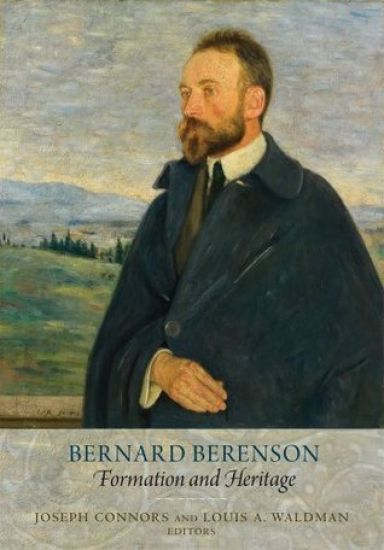
Bernard Berenson
I Tatti
2014
nidottu
Bernard Berenson (1865–1959) put the connoisseurship of Renaissance art on a firm footing in the late nineteenth and early twentieth centuries. His monument is the library and collection of Italian painting, Islamic miniatures, and Asian art at Villa I Tatti in Florence. The authors in this collection of essays explore the intellectual world in which Berenson was formed and to which he contributed. Some essays consider his friendship with William James and the background of perceptual psychology that underlay his concept of “tactile values.” Others examine Berenson’s relationships with a variety of cultural figures, ranging from the German-born connoisseur Jean Paul Richter, the German art historian Aby Warburg, the Boston collector Isabella Stewart Gardner, and the American medievalist Arthur Kingsley Porter to the African-American dance icon Katherine Dunham, as well as with Kenneth Clark, Otto Gutekunst, Archer Huntington, Paul Sachs, and Umberto Morra.Bernard Berenson: Formation and Heritage makes an important contribution to the rising interest in the historiography of the discipline of art history in the United States and Europe during its formative years.

Controversy swirls around Bernard Berenson today as it did in his middle years, before and between two world wars. Who was this man, this supreme connoisseur of Italian Renaissance painting? How did he support his elegant estate near Florence, his Villa I Tatti? What exactly were his relations with the art dealer Joseph Duveen? What part did his wife, Mary, play in his scholarly work and professional career? The answers are to be found in the day-to-day record of his life as he lived it--as reported at first hand in his and Mary's letters and diaries and reflected in the countless personal and business letters they received. His is one of the most fully documented lives of this century. Ernest Samuels, having spent twenty years studying the thousands of letters and other manuscripts, presents his story in absorbing detail. Berenson helped Isabella Stewart Gardner build her great collection and performed similar though lesser services for other wealthy Americans. It was merely an avocation and a useful source of income; his vocation was scholarship. But after 1904, when the book opens, his expertise was in ever-greater demand: a purchaser's only assurance of the authorship of an Italian painting was the opinion of an expert, and in this field Berenson was pre-eminent. Increasingly he was drawn into the lucrative world of the art dealers; inevitably Joseph Duveen found it essential to enlist his services, at first ad hoc, then by contractual agreement. Samuels charts the course of Berenson's long association with Duveen Brothers, detailing the financial arrangements, the humdrum chores and major contested attributions, the periodic clashes between the stubborn scholar and the arrogant entrepreneur. The portrayal of Berenson's relationship with Mary is especially intriguing: a union of opposites in all but brains and wit, bonded--despite love affairs, jealousies, recriminations--no longer by passion but by shared concerns. Impinging on their lives are those of a huge circle of friends and acquaintances in America and the beau monde of Europe. Both as biography and as a chapter of social and cultural history, it is a compelling book.

Berenson's legacy to modern art is revealed through his writings
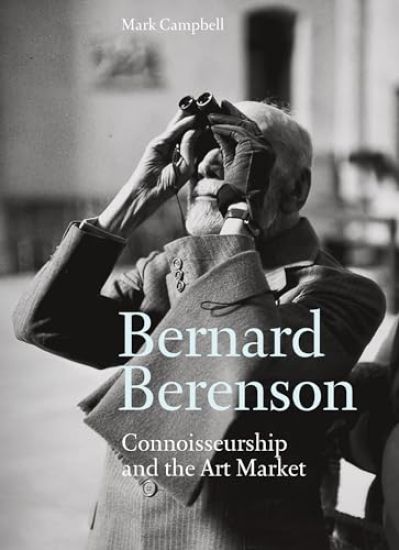
Bernard Berenson, Kenneth Clark and the Art Market
Mark Campbell
LUND HUMPHRIES PUBLISHERS LTD
2026
sidottu
Bernard Berenson (1865-1959) was a Lithuanian American connoisseur who was a hugely significant figure in the evolution of the commercial art world from the late 1880s to the 1940s. This book examines his conception of connoisseurship and its impact through his famous protégés, including Geoffrey Scott, Meyer Shapiro, John Walker and especially, art historian of Civilisation fame, Kenneth Clark. This is framed through a biographical account of his complex and duplicitous character, together with a description of his important methods for determining authorship and assigning value to Renaissance artworks. In terms of the assignation of authorship and the determination of value, Berenson remains a seminal if contradictory figure in the history of the art market, for whom the artwork was subject to a series of negotiations and the act of connoisseurship was both an aesthetic pursuit and a ‘scientific process’. Berenson’s commercial dealings ran counter to his own assertion that the connoisseur needed to be ‘disinterested’ in their consideration of art and engaged in an other-worldly ‘art in life’. The book examines Berenson’s complex and lucrative dealings with the industrialists of the American Gilded Age, including Isabella Stewart Gardiner. These transactions were enmeshed in issues of authenticity and forgery, as well as inflated estimates and unscrupulous skimming from both clients and business partners, including the notorious Duveen Brothers. These negotiations afforded him such celebrity and financial gain that 'everyone', as Marcel Proust once quipped, 'wanted to know about Berenson'. In this way, Berenson is not only an historic figure, but also a precursor to those sometimes slippery intermediaries who appear throughout the history of contemporary art.

Henry Walters and Bernard Berenson
Stanley Mazaroff; William R. Johnston
Johns Hopkins University Press
2010
sidottu
Collecting Italian Renaissance paintings during America's Gilded Age was fraught with risk because of the uncertain identities of the artists and the conflicting interests of the dealers. Stanley Mazaroff's fascinating account of the close relationship between Henry Walters, founder of the legendary Walters Art Museum in Baltimore, and Bernard Berenson, the era's preeminent connoisseur of Italian paintings, richly illustrates this important chapter of America's cultural history. When Walters opened his Italianate museum in 1909, it was labeled as America's "Great Temple of Art." With more than 500 Italian paintings, including self-portraits purportedly by Raphael and Michelangelo, Walters's collection was compared favorably with the great collections in London, Paris, and Berlin. In the midst of this fanfare, Berenson contacted Walters and offered to analyze his collection, sell him additional paintings, and write a scholarly catalogue that would trumpet the collection on both sides of the Atlantic. What Berenson offered was what Walters desperately needed-a badge of scholarship that Berenson's invaluable imprimatur would undoubtedly bring. By 1912, Walters had become Berenson's most active client, their business alliance wrapped in a warm and personal friendship. But this relationship soon became strained and was finally severed by a confluence of broken promises, inattention, deceit, and ethical conflict. To Walters's chagrin, Berenson swept away the self-portraits allegedly by Raphael and Michelangelo and publicly scorned paintings that he was supposed to praise. Though painful to Walters, Berenson's guidance ultimately led to a panoramic collection that beautifully told the great history of Italian Renaissance painting. Based primarily on correspondence and other archival documents recently discovered at the Walters Art Museum and the Villa I Tatti in Florence, the intriguing story of Walters and Berenson offers unusual insight into the pleasures and perils of collecting Italian Renaissance paintings, the ethics in the marketplace, and the founding of American art museums.

Explore the vibrant world of Italian Renaissance art with Bernhard Berenson's seminal work, "The Venetian Painters of the Renaissance," Third Edition. This classic text delves into the heart of Venetian painting, offering insightful analysis and historical context for understanding the masterpieces of the era. Berenson, a renowned art historian, guides readers through the techniques, styles, and movements that defined Renaissance art in Venice. Discover the key figures and artistic innovations that emerged from this influential period. From discussions of general painting techniques to specific explorations of the Renaissance movement, this book provides a comprehensive overview. Perfect for art enthusiasts and scholars alike, this enduring volume illuminates the rich artistic heritage of Venice and its lasting impact on the world of art. A timeless exploration of painters in Venice, Italy, during the Renaissance.This work has been selected by scholars as being culturally important, and is part of the knowledge base of civilization as we know it.This work is in the public domain in the United States of America, and possibly other nations. Within the United States, you may freely copy and distribute this work, as no entity (individual or corporate) has a copyright on the body of the work.Scholars believe, and we concur, that this work is important enough to be preserved, reproduced, and made generally available to the public. We appreciate your support of the preservation process, and thank you for being an important part of keeping this knowledge alive and relevant.
Explore the vibrant world of Renaissance art with Bernhard Berenson's "The Florentine Painters of the Renaissance, With An Index To Their Works." This seminal work delves into the heart of Florentine painting, offering insightful art criticism and historical context for the Italian Renaissance. Berenson examines the key figures and artistic movements that defined this transformative era, providing a detailed overview of their masterpieces. This meticulously prepared print edition presents a clear and accessible exploration of Renaissance art history. Featuring an index to the painters' works, this book serves as an invaluable resource for students, art enthusiasts, and anyone captivated by the beauty and innovation of the Renaissance. Discover the genius of Florentine artists and their enduring influence on the world of art.This work has been selected by scholars as being culturally important, and is part of the knowledge base of civilization as we know it.This work is in the public domain in the United States of America, and possibly other nations. Within the United States, you may freely copy and distribute this work, as no entity (individual or corporate) has a copyright on the body of the work.Scholars believe, and we concur, that this work is important enough to be preserved, reproduced, and made generally available to the public. We appreciate your support of the preservation process, and thank you for being an important part of keeping this knowledge alive and relevant.