Kirjojen hintavertailu. Mukana 11 627 373 kirjaa ja 12 kauppaa.

Kirjahaku

Etsi kirjoja tekijän nimen, kirjan nimen tai ISBN:n perusteella.

1000 tulosta hakusanalla Bernhard Kainz

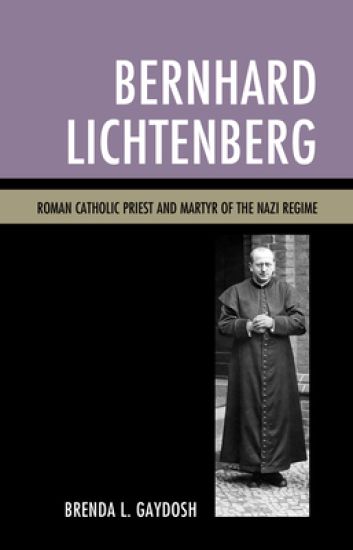
Bernhard Lichtenberg

Bernhard Lichtenberg

Brenda L. Gaydosh

Lexington Books
2017
sidottu
Bernhard Lichtenberg: Roman Catholic Priest and Martyr of the Nazi Regime is the definitive English biography of the martyred Nazi-era Berlin provost, Bernhard Lichtenberg. This work presents a broad overview of Bernhard Lichtenberg’s life (1875–1943) in the context of history. It discusses the areas of his life that had the greatest impact on how he dealt with situations during the Second Empire, the Weimar Republic, and the Third Reich, and it gives a detailed account of his resistance to the Nazis and his imprisonment and death. Appendices present a wealth of primary sources on Lichtenberg’s life, including a collection of his letters from prison which have not previously been made available in English.
Bernhard Lichtenberg

Bernhard Lichtenberg

Brenda L. Gaydosh

Lexington Books
2020
nidottu
Bernhard Lichtenberg: Roman Catholic Priest and Martyr of the Nazi Regime is the definitive English biography of the martyred Nazi-era Berlin provost, Bernhard Lichtenberg. This work presents a broad overview of Bernhard Lichtenberg’s life (1875–1943) in the context of history. It discusses the areas of his life that had the greatest impact on how he dealt with situations during the Second Empire, the Weimar Republic, and the Third Reich, and it gives a detailed account of his resistance to the Nazis and his imprisonment and death. Appendices present a wealth of primary sources on Lichtenberg’s life, including a collection of his letters from prison which have not previously been made available in English.
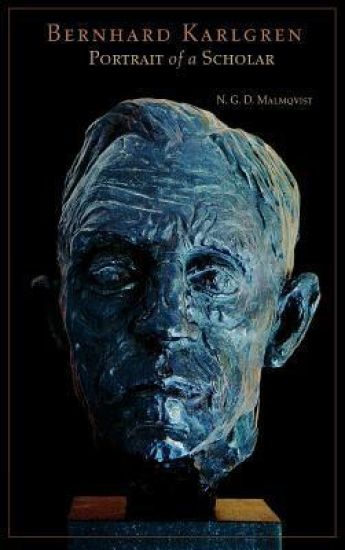
Bernhard Karlgren

Bernhard Karlgren

N. G. D. Malmqvist

Lehigh University Press
2010
sidottu
This book deals with the life and career of Bernhard Karlgren (1889?1978), whose research in a great variety of fields, particularly the historical phonology of the Chinese language, laid the foundations for modern western sinology. The definition of the term "sinology" has undergone great changes since Bernhard Karlgren entered the stage a century ago. At that time the term covered research related to the language, literature, history, thought, and intellectual aspects of early China. Since the mid-twentieth century the definition has been considerably broadened to include more modern aspects, with special emphasis on sociopolitical and economic topics. In many Chinese language departments in both China and the West, studies of early China have been put at a disadvantage. This book may serve as a reminder that the time may have come to redress the imbalance. The book begins by sketching the intellectual milieu that characterized Karlgren's school years and ends with a mention of his last publication, "Moot words in some Chuang Tse chapters," published in 1976. The intervening seventy years were filled with intense scholarly activities-including his disputatio for the PhD in Uppsala in 1915; his subsequent career as professor of East Asian languages at Gothenburg University, 1918-39; and his directorship of the Museum of Far Eastern Antiquities in Stockholm, 1939-59. For many years he served as vice-chancellor of Gothenburg University and as president of the Royal Swedish Academy of Letters, History, and Antiquities. He also played a leading role in various endeavors to strengthen the standing of Swedish humanities.
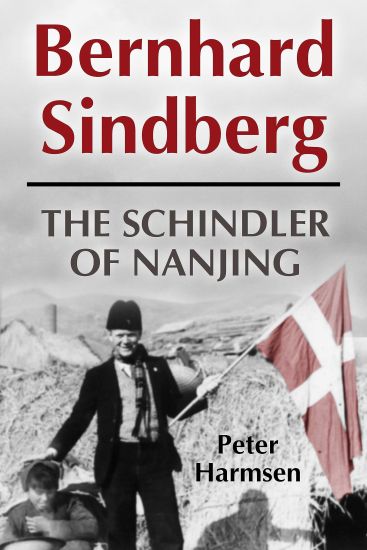
Bernhard Sindberg

Bernhard Sindberg

Peter Harmsen

Casemate Publishers
2024
sidottu
In December 1937, the Chinese capital, Nanjing, falls and the Japanese army unleash an orgy of torture, murder, and rape. Over the course of six weeks, hundreds of thousands of civilians and prisoners of war are killed. At the very onset of the atrocities, the Danish supervisor at a cement plant just outside the city, 26-year-old Bernhard Arp Sindberg, opens the factory gates and welcomes in 10,000 Chinese civilians to safety, beyond the reach of the blood-thirsty Japanese. He becomes an Asian equivalent of Oskar Schindler, the savior of Jews in the European Holocaust.This biography follows Sindberg from his childhood in the old Viking city of Aarhus and on his first adventures as a sailor and a Foreign Legionnaire to the dramatic 104 days as a rescuer of thousands of helpless men, women, and children in the darkest hour of the Sino-Japanese War. It describes how after his remarkable achievement, he receded back into obscurity, spending decades more at sea and becoming a naturalized American citizen, before dying of old age in Los Angeles in 1983, completely unrecognized. In this respect, too, there is an obvious parallel with Schindler, who only attained posthumous fame.The book sets the record straight by providing the first complete account of Sindberg’s life in English, based on archival sources hitherto unutilized by any historian as well as interviews with surviving relatives. What emerges is the surprising tale of a person who was average in every respect but rose to the occasion when faced with unimaginable brutality, discovering an inner strength and courage that transformed him into one of the great humanitarian figures of the 20th century and an inspiration for our modern age, demonstrating that the determined actions of one person—any person—can make a huge difference.
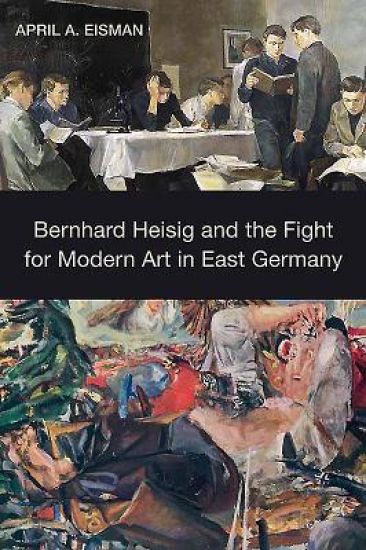
Bernhard Heisig and the Fight for Modern Art in East Germany
One of the first books to extend the currently burgeoning scholarship on East Germany to the visual arts, revealing that painting, like literature and film, was a space of contestation. East German studies today is thriving. Scholars have shown East Germany to be a complex society where culture played an important, if contested, role in the making of the socialist person. In English-language scholarship, however,the visual arts-and especially painting-have been largely ignored, the result of the misperception that East German art was little more than kitsch or propaganda. This book focuses on one of East Germany's most successful artistsas a point of entry into the vibrant art world of the "other" Germany. In the 1980s, Bernhard Heisig (1925-2011) was praised on both sides of the Berlin Wall for his neo-expressionist style and his commitment to German history and art. Chancellor Helmut Schmidt chose him to paint his official portrait, major museums collected his work, and in 1989 he had a major solo exhibition in West Germany. After unification, Heisig was a focal point in the Bilderstreit, a virulent debate over what role East German art should play in the new Germany. Challenging current understandings of Heisig and East German art, this book focuses on Heisig's little-known fight for modern art in EastGermany. Examining major debates of the 1960s, it shows the key role he played in expanding the country's art from the limits of Soviet-style socialist realism to a socialist modernism that later gained recognition in the West. April A. Eisman is Associate Professor of Art History at Iowa State University.
Bernhard Lang

Bernhard Lang

Christine Dysers

INTELLECT
2023
sidottu
Bernhard Lang: Critical Guides to Contemporary Composers offers a critical guide and introduction to the work of Austrian composer Bernhard Lang (b. 1957). It identifies the phenomenon of repetition as a central concern in Lang’s thinking and making. The composer’s artistic practice is identified as one of ‘loop aesthetics’: a creative poetics in which repetition serves not only as methodology, but also as material, language, and subject matter. The book is structured around the four central thematic nodes of philosophy, music, theatre, and politics. After introducing Lang as a composer whose work is thoroughly influenced by philosophical thought, the book develops a typology of musical repetition as it is explored and activated in Lang’s oeuvre. Pointing towards the several repetitions within the performance of Lang’s works, the book explores the heavily trans-medial nature of the repeat across domains such as literature, dance, and theatre. Finally, the book investigates Lang’s use of textual quotation and musical borrowing. Christine Dysers is a musicologist specialising in contemporary music aesthetics. Her research centres around repetition, politics, absence, the liminal, and the uncanny. This is the first full-length study of the works of Bernhard Lang and is a new volume in the Critical Guides to Contemporary Composers series from Intellect.
Bernhard Riemann — On the Hypotheses Which Lie at the Bases of Geometry
This book presents William Clifford’s English translation of Bernhard Riemann’s seminal text, accompanied by detailed mathematical, historical, and philosophical commentary. It explores Riemann’s revolutionary ideas on space, placing them within the broader framework developed by later thinkers such as Helmholtz, Ricci, Weyl, and Einstein. A historical introduction situates Riemann’s work in its 19th-century context, while subsequent chapters trace the evolution of the concept of space across philosophy, physics, and mathematics, and examine its enduring influence up to modern research. The second edition includes expanded mathematical commentary, a new section on metric geometry and machine learning, a systematic bibliography, and numerous updates throughout. Appealing to mathematicians, historians, and readers with an interest in physics or philosophy, this book provides a comprehensive perspective on Riemann’s groundbreaking contributions and their lasting impact.
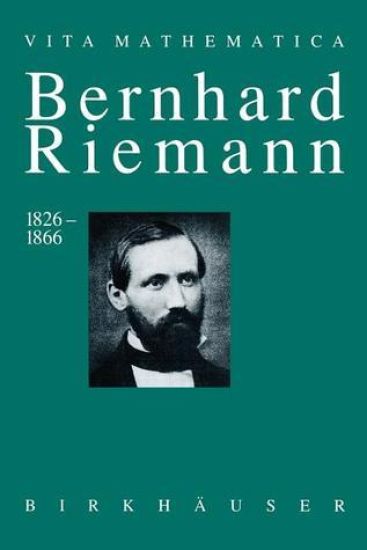
Bernhard Riemann 1826–1866

Bernhard Riemann 1826–1866

Detlef Laugwitz

Springer Basel
2011
nidottu
Das Riemannsche Integral lernen schon die Schüler kennen, die Theorien der reellen und der komplexen Funktionen bauen auf wichtigen Begriffsbildungen und Sätzen Riemanns auf, die Riemannsche Geometrie ist für Einsteins Gravitationstheorie und ihre Erweiterungen unentbehrlich, und in der Zahlentheorie ist die berühmte Riemannsche Vermutung noch immer offen. Riemann und sein um fünf Jahre jüngerer Freund Richard Dedekind sahen sich als Schüler von Gauss und Dirichlet. Um die Mitte des 19. Jahrhunderts leiteten sie den Übergang zur "modernen Mathematik" ein, der eine in Analysis und Geometrie, der andere in der Algebra mit der Hinwendung zu Mengen und Strukturen. Dieses Buch ist der erste Versuch, Riemanns wissenschaftliches Werk unter einem einheitlichen Gesichtspunkt zusammenzufassend darzustellen. Riemann gilt als einer der Philosophen unter den Mathematikern. Er stellte das Denken in Begriffen neben die zuvor vorherrschende algorithmische Auffassung von der Mathematik, welche die Gegenstände der Untersuchung, in Formeln und Figuren, in Termumformungen und regelhaften Konstruktionen als die allein legitimen Methoden sah. David Hilbert hat als Riemanns Grundsatz herausgestellt, die Beweise nicht durch Rechnung, sondern lediglich durch Gedanken zu zwingen. Hermann Weyl sah als das Prinzip Riemanns in Mathematik und Physik, "die Welt als das erkenntnistheoretische Motiv..., die Welt aus ihrem Verhalten im un- endlich kleinen zu verstehen."
Bernhard Kleber

Bernhard Kleber

Bernhard Kleber

De Gruyter
2018
sidottu
This art book, Bernhard Kleber—Passion, for the first time presents the comprehensive oeuvre of Bernhard Kleber, Professor of Stage Design, in particular his photographic work: it supports and also inspires the making of his theatrical work. Photographic notes compiled in the form of travel diaries are included in addition to (self-)portraits, still lifes, and pictures of his stage sets. At times, his own photographs were partially painted over and modified, and then again photographed, going beyond pure documentation. This creates a manic world of images full of passion for the photographically captured image that penetrates life with new viewing angles and picture stories, touching rudely on the private sphere without however deciphering it or taking away its magic.
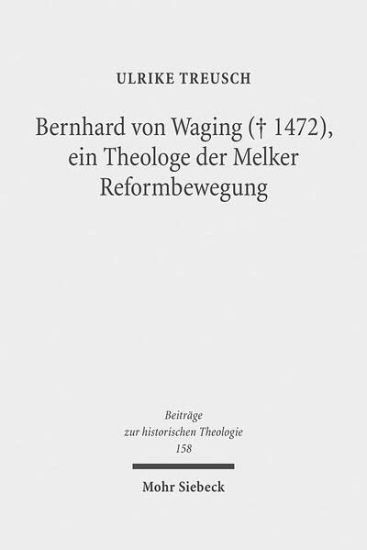
Bernhard von Waging (+ 1472), ein Theologe der Melker Reformbewegung
Ulrike Treusch fragt anhand von Person und Werk Bernhards von Waging († 1472) nach der monastischen Theologie im 15. Jahrhundert. Bernhard von Waging aus dem Kloster Tegernsee war einer der bekanntesten Vertreter der benediktinischen Reformbewegung von Melk. Er wirkte nicht nur als praktischer Reformer, sondern vor allem als Autor theologischer Reformschriften. Auch seine Korrespondenz mit Nikolaus von Kues und Nikolaus von Dinkelsbühl zeigt sein Anliegen einer Kloster- und Kirchenreform. Die Autorin untersucht Bernhards theologische Schriften in ihrem zeitgenössischen Kontext und in der Rezeption scholastischer wie monastischer Theologie. Sie legt mit dieser Arbeit die erste Monographie zu Bernhard von Waging vor und bietet aus der Untersuchung auch unedierter lateinischer Schriften eine neue Perspektive auf die Reformdiskussion des 15. Jahrhunderts und die spätmittelalterliche monastische Theologie.