Kirjahaku
Etsi kirjoja tekijän nimen, kirjan nimen tai ISBN:n perusteella.
1000 tulosta hakusanalla Bette Howland
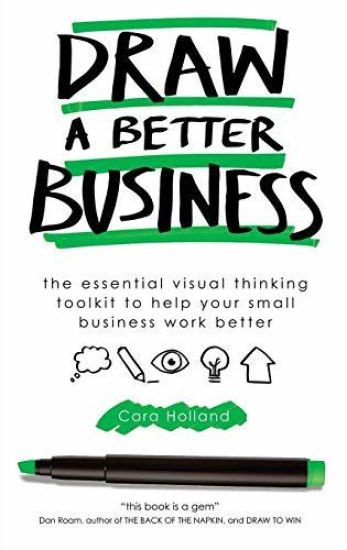
Draw a Better Business is an illustrated practical guide for freelancers and business people who want to tap into their innate creativity, learn to use visual skills and techniques and gain the business benefits. This book will help you plan, pitch, deliver and engage with real impact. Filled with practical exercises, examples and insights across four key areas of your business - planning and problem solving, communicating, delivering workshops and meetings, and creating engaging content - this book will equip you with practical tools to help you strengthen your business, and stand out in a crowd. It gives you all the knowledge and the know how you need (even if you think you can’t draw) to start getting the benefits of working visually. After 10 years of running her own business Graphic Change, working visually with companies such as TimeWarner, Google and the NHS, Cara Holland has a lot to say about the benefits of working visually. In this book she shares tips, tools and insights that will bring the power of working visually to your business.
In this book, Lou L. Holland shows us some simple tools we can all use, to feel better now With tips on positive thinking and how to chase away those scary thoughts, you can trust that the information in this book can help anyone suffering from anxiety or depression, to move forward in a positive direction..and feel good along the way For ages 1-100.
Throughout the 20th century, grade-school teachers were trained in schools of education where progressive theories largely held sway and were licensed by state bureaucracies philosophically compatible with the education schools. Vested education interests now seek to make the monopoly even more controlling by requiring that all teachers be products of education schools accredited by a single national agency dedicated to progressive ideals.Holland proposes an alternative vision compatible with the emerging 21st-century paradigm of a competitive education industry: Lower unnecessary barriers to teaching so that bright persons of diverse background and disposition can become teachers. Set up an alternative track—as in New Jersey—so that bright liberal arts graduates or persons with valuable real-world experience can be hired as teachers and put under the supervision of experienced mentors. Apply value-added assessment—as in Tennessee—to these new teachers, and to veteran teachers as well, so that principals can see how much each teacher has helped each child progress academically—or not—from school year to school year. Holland's plan to break up the teacher-prep monopoly is bound to be controversial, and, as such, should be of great interest to all—from parents and administrators to teachers and policy makers—concerned with improving the state of American education.
Holland proposes breaking up the teacher-preparation monopoly and replacing it with a market-based approach that would allow school principals to hire knowledgeable candidates who have not necessarily been through the education-school mill. Mentoring and value-added assessment would ensure children benefit from the highest quality teaching.Throughout the 20th century, grade-school teachers were trained in schools of education where progressive theories largely held sway and were licensed by state bureaucracies philosophically compatible with the education schools. Vested education interests now seek to make the monopoly even more controlling by requiring that all teachers be products of education schools accredited by a single national agency dedicated to progressive ideals.Holland proposes an alternative vision compatible with the emerging 21st-century paradigm of a competitive education industry: Lower unnecessary barriers to teaching so that bright persons of diverse background and disposition can become teachers. Set up an alternative track—as in New Jersey—so that bright liberal arts graduates or persons with valuable real-world experience can be hired as teachers and put under the supervision of experienced mentors. Apply value-added assessment—as in Tennessee—to these new teachers, and to veteran teachers as well, so that principals can see how much each teacher has helped each child progress academically—or not—from school year to school year. Holland's plan to break up the teacher-prep monopoly is bound to be controversal, and, as such, should be of great interest to all—from parents and administrators to teachers and policy makers—concerned with improving the state of American education.
Conflict Resolution: Building Better Relationships in Spite of Our Conflicts
Jody N. Holland
My Judo Life
2017
nidottu
Den beste låta
Pedro Carmona-Alvarez; Agnes Ravatn; Sturmgeist; Frode Grytten; Gunnhild Øyehaug; Harald Rosenløw Eeg; Ingeborg Arvola; Jan Omdahl; Jo Nesbø; Lars Saabye Christensen; Nils-Øivind Haagensen; Ragnar Hovland; Ronnie M.A.G. Larsen; Selma Lønning Aarø; Stig Sæterbakken; Tommy Olsson; Vigdis Hjorth; Torgrim Eggen
Cappelen Damm
2009
sidottu
I denne boken har 19 forfattere/skribenter fått i oppgave å skrive om sin beste låt. De fikk ingen genrebegrensninger på låtvalg eller på skrivemåte. Tanken bak var at om man er begeistret for noe, og skriver om det, så blir det god litteratur. Lars Saabye Christensen, Gunnhild Øyehaug, Stig Sæterbakken, Vigdis Hjorth, Harald Rosenløw Eeg, Ingeborg Arvola, Jan Omdahl, Ragnar Hovland, Pedro Carmona-Alvarez, Torgrim Eggen, Ronnie M.A.G. Larsen, Selma Lønning Aarø, Frode Grytten, Nils-Øivind Haagensen, Tommy Olsson, Zofies verden, Agnes Ravatn, Sturmgeist, Jo Nesbø. Noen skriver om låter de alltid har elsket, andre skriver seg bort fra en opplagt forelskelse og til en annen låt da låtvalgets kvaler er umulige, noen skriver om den låten som liksom aldri slapp taket da den satte ett eller annet i sving i barn- eller ungdommen - om det så var en stor kjærlighet, en sorg eller en traumatisk opplevelse, bare en har valgt en låt fra 2000-tallet, og noen skriver om den beste låten rent musikkfaglig. Noen skriver langt, andre kort. For, gir man gode forfattere i oppgave å skrive om noe som gjør dem begeistret, ja da blir det bra!
Bette Davis was not only one of Hollywood’s brightest stars, but also one of its most outspoken advocates on matters of race. In Bette Davis Black and White, Julia A. Stern explores this largely untold facet of Davis’s brilliant career. Bette Davis Black and White analyzes four of Davis’s best-known pictures—Jezebel (1938), The Little Foxes (1941), In This Our Life (1942), and What Ever Happened to Baby Jane? (1962)—against the history of American race relations. Stern also weaves in memories of her own experiences as a young viewer, coming into racial consciousness watching Davis’s films on television in an all-white suburb of Chicago. Davis’s egalitarian politics and unique collaborations with her Black costars offer Stern a window into midcentury American racial fantasy and the efforts of Black performers to disrupt it. This book incorporates testimony from Davis’s Black contemporaries, including James Baldwin and C. L. R. James, as well as the African American fans who penned letters to Warner Brothers praising Davis’s work. A unique combination of history, star study, and memoir, Bette Davis Black and White allows us to contemplate cross-racial spectatorship in new ways.
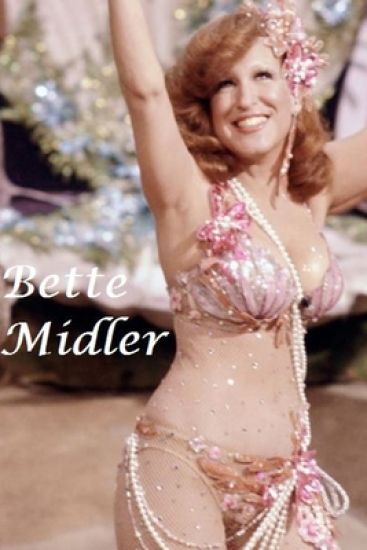
Bette Midler, born on December 1st, 1945, Honolulu, Territory of Hawaii, US, is a singer, songwriter, actress, comedienne, and film producer. Bette began her professional career in several Off-Broadway plays, before her engagements in Fiddler on the Roof and Salvation on Broadway during the late '60s. Midler came to fame in 1970 when she began singing in the Continental Baths, a local gay bathhouse where she built up a core following, having since released 14 studio albums as a solo artist. Many of her songs became hit singles, including The Rose, Wind Beneath My Wings, Do You Want to Dance, Boogie Woogie Bugle Boy, and From a Distance.
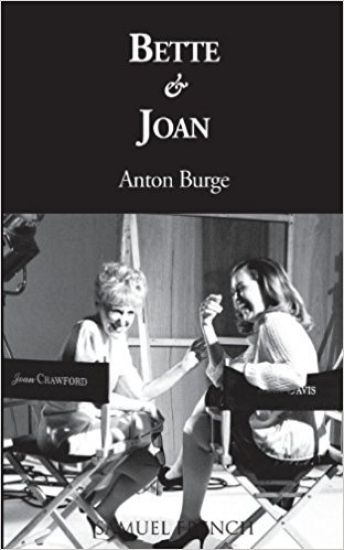
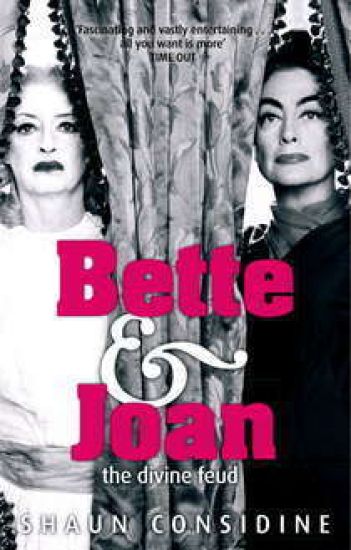
Once grande dames of Hollywood, by 1962 arch-rivals Bette Davis and Joan Crawford were in danger of becoming has-beens. Then an opportunity came along: to appear together in a new movie called Whatever Happened To Baby Jane?-2 women
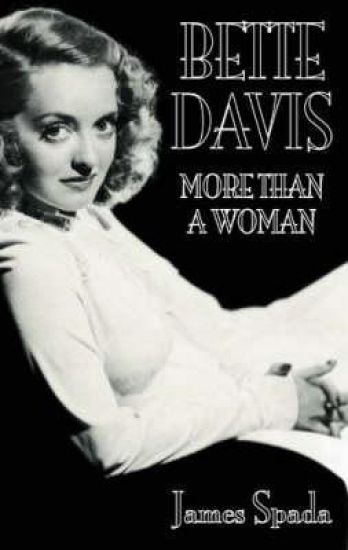
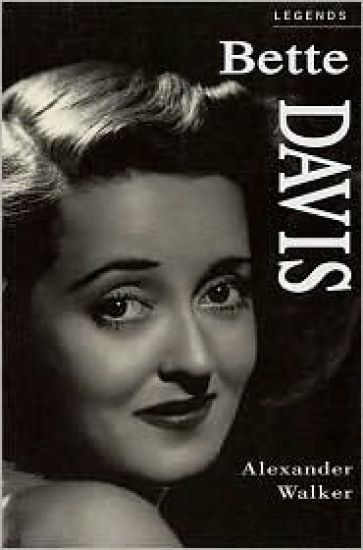
Balanced and hugely readable, Bette David tells the complete story of one of the most enduringly popular movie stars.
The story of these duelling divas is by turns hilarious, monstrous and tragic. This account is exhaustive, explosive and unsparing, and our reissue includes a special update from the author.
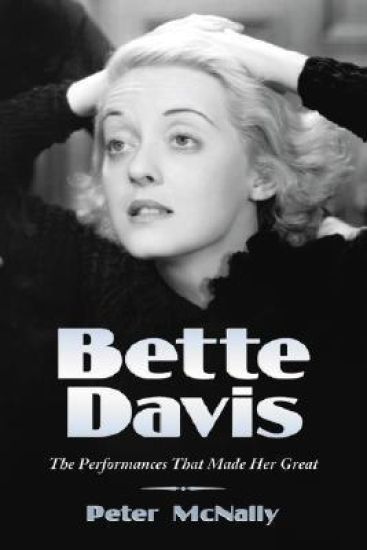
Bette Davis, whose career spanned almost 50 years and covered theatre, radio, TV and motion pictures, was at one time the first lady of the big screen. Working with such storied performers as Henry Fonda, Humphrey Bogart, and Joan Crawford, and directors Edmund Goulding, William Wyler and Robert Aldrich, Bette Davis provided some of the most memorable performances in movie history. This volume contains detailed analyses of Bette Davis' top twelve films spanning 1938 to 1987 and including The Letter, All About Eve, The Little Foxes, Jezebel, What Ever Happened to Baby Jane? and The Whales of August. Each film is discussed in depth, with an examination of its script, direction, camerawork and performances, particularly as they relate to Davis's work. A second group of films, memorable largely for Davis's performance rather than the overall success of the work, are also examined. Special emphasis is placed on the way Davis viewed her own work as well as the detrimental effect her devotion to her career had on her personal life. Appendices contain a list of her marriages and children; her Oscar nominations; a discussion of Davis's missed opportunities; and a partial chronology of her films.
Help, Bette!: Answers to Health Questions from Hurting People
Bette Dowdell
CONFIDENT FAITH INSTITUTE LLC
2014
nidottu
Help, Bette Answers to Health Questions from Hurting People What do you do when you're sick, but doctors say you're fine? Well, if you're Bette Dowdell, you crank up your "Oh, Yeah " attitude and start researching your way out of the ditch. It's fortunate she likes research, because it took her years to get to the root causes. Along the way, she learned many things, such as: -Most of what we "know" about diet and health is wrong-a huge cause of disease. -If we want to be healthy, we have to take responsibility for our health. There's no way doctors can know what's going on in our bodies every day, all day. Even frequent trips to doctors don't get the results "live in" management does. -Everything affects everything else in health. The problem is never just, say, the thyroid-or the heart, or some other body part. It's about supporting the entire body with the nutrition it needs-which is different from what we're taught. Nowadays, Dowdell shares her learning so others can recover their health, too. In Help, Bette Answers to Health Questions from Hurting People, she talks to everyday people whose health is dragging them down. The questions include: -Thyroid problems -Cholesterol -Acid Reflux -Prostate problems -IBS: Irritable bowel syndrome -Dry eye -Etc.
A damaged former child star"Thank God, it hasn't affected my looks," she said as she lined her eyes. Bette Poole, once the biggest child star in the world, is struggling at twenty five. She's got the talent for adult roles, but none of the drive. She can't function without cocaine, booze, and opiates and it's affecting her performance on set. Layers of secrets and psychological damageJerry, her agent, makes one last attempt to help her by getting her on a reality TV show. Bette's studio executive father doesn't want to help, but pulls the plug on the first day of shooting. Jerry inserts himself into her life, moving into her apartment to get her sober and working. It's worse than Jerry thought. Bette has secrets upon secrets. Secrets that could bring down half of Hollywood and involve Jerry directly. He just needs her to trust him and talk, unscripted, so he can bring down everyone who has hurt her
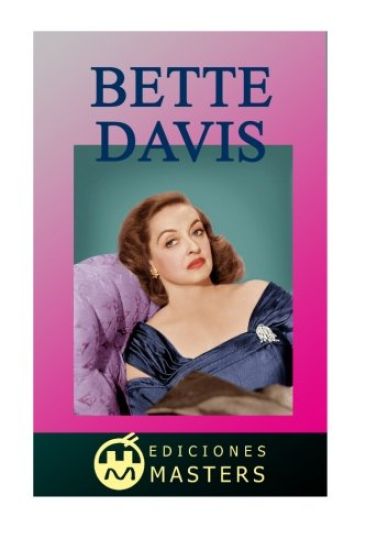
Bette Davis con su fuerte personalidad independiente y nica, lleg a ser conocida como la poderosa estrella de ojos grandes. Realiz unas 100 pel culas por las que recibi 10 nominaciones al Oscar y gan dos de ellos a la mejor actriz. Los padres de Davis se divorciaron cuando ella ten a 7 a os, y fue su madre quien la anim a realizar sus estudios de interpretaci n. Davis se uni a una compa a de teatro en Rochester, Nueva York, donde despu s de unos meses fue despedida por el director George Cukor. Posteriormente debut como suplente en el Teatro de Provincetown, con "The Earth Between" de Virgil Geddes, en 1929. Sus excelentes interpretaciones la llevaron a otros xitos, consiguiendo su primer xito en Broadway a la edad de 21 a os. Firm su primer contrato con la Universal Pictures en 1930, y en su primera pel cula "Bad Sister" (1931), trabaj al lado de Humphrey Bogart. El poco xito de las cinco pel culas siguientes descorazonaron a la joven actriz, la cual tuvo que ser persuadida para ser contratada por la Warner Bros. En 1932 realiz "La Oculta Providencia" que demostr ser la pel cula de su descubrimiento. Bette Davis ten a un fuerte car cter, una personalidad independiente y parec a marcada por el destino para destacar como estrella. De ojos grandes, con una estupenda dicci n inglesa, sol a cautivar inmediatamente cuando manten a entre sus dedos su cigarrillo enfundado en una larga boquilla.
After fifty-five years in the film industry, during which she made over ninety films, Bette Davis was considered the indisputable grand dame of Hollywood. Alexander Walker, who knew Bette Davis for twenty years, has pieced together her early life through to her promising career on the New York stage. The subsequent film career was by no means an instant success. The turbulent relationship between Bette Davis and Warner Brothers is legendary but gradually she managed to seize the opportunities to show her astonishing range. In this book, Alexander Walker identifies the extraordinary qualities that enabled Bette Davis to survive the Hollywood system and become one of its most durable actresses.