Kirjojen hintavertailu. Mukana 11 699 587 kirjaa ja 12 kauppaa.

Kirjahaku

Etsi kirjoja tekijän nimen, kirjan nimen tai ISBN:n perusteella.

1000 tulosta hakusanalla Bill Reed

Crooks

Crooks

Bill Reed

Reed Independent
2015
nidottu
You would have to wonder why a Rhodes Scholar, a VC winner and a Commissioner of Police named his son Frank E. R. Stein by way of a ha-ha 'monstrous joke'... or why he cackled derision every time his eyes lit upon the boy; or why he showered more affection on his adopted son, Costas, the otherwise offspring of a Mr Bigs of organized crime.And as the well is so poisoned such is the quest Frank Stein must make to seek revenge for the gangland killing of his crusading crime-fighting half-brother. At least it is a way to presuppose the kingpins presumably coming for him too; after all, even as a joke, it's not how you bow out, but how you get stuck in.Rape, assassination, shocking intrusions of a vicious crime world... it's all there for a tragic and hilarious story to unfold before Frank Stein, assisted(?) by his own side comprising of a woman in search of an international bestseller and an indigenous brother who survives writing sports reports without going to any games when all he needs is a deaf, dumb and blind rich white sort to tide him over. And, yes, haunting over all is a shadowy guardian Chinese toughie, as well as his ubiquitous father from his wheelchair. One has to ask: what have the famous father's shocking WW1 experiences to do with the resulting mayhem? What has be done to his sons? What did the Nip bullet the old boy finally coughed up after forty years look like, even as a metaphor?Underlying the rich gallery of these and other grotesques, there are the wit and the pace and the bawdry of Crooks. In the real-life crime parlance of 'a pushover to put down', this book won't disappoint crime buffs.--------------------about the authorOriginally a well-known playwright, Bill Reed began writing longform fiction in his late thirties. To date he has written thirteen novels, including the so-called noteworthy '1001 Lankan Nights, books 1 and 2'. He has had eight plays professionally staged. He has worked as an editor and journalist in Australia and overseas before finally putting his feet up in Sri Lanka.
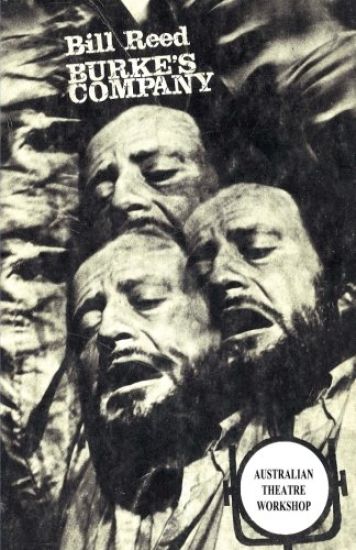
Burke's Company

Burke's Company

Bill Reed

Reed Independent
2015
nidottu
'... the Theatre of the Absurd and the Theatre of Cruelty are even more pervasively embodied in the plays of Alexander Buzo, Thomas Keneally and Bill Reed. In Buzo's case it is Absurdism which is especially apparent; in Keneally and Reed, Artaudian 'myth' and language-in-space...'It was Reed in Burke's Company who pioneered Artaudian techniques in a play of stature. If the play is given imaginative production, it powerfully exemplifies one of Artaud's most famous metaphors. The figures on stage will suggest universal human victims burning at the stake, signaling through the flames.'Professor Dennis CarrollContemporary Australian Theatre, Currency Press-----------------This is a reprint of one of the most successful award-winning plays of Bill Reed. Over the years it has been performed both on the professional and amateur stages around Australia and overseas, and published by Heinemann Educational and also in Currency Press's 'Plays of the 60s'. Bill Reed has been involved in drama and publishing most of his existence in Australia, Britain, Canada and the Subcontinent. He has written nine professionally-produced plays and thirteen novels, including '1001 Lankan Nights, book 1 and 2'. He has won national awards for drama, short stories and novels. He now lives mostly in Sri Lanka.
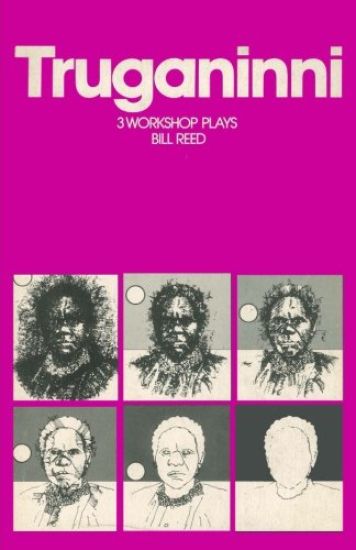
Truganinni

Truganinni

Bill Reed

Reed Independent
2015
nidottu
'Don't let them cut me up Bury me behind the mountains 'Fear, violence and race prejudice are themes with which we are all sadly familiar. Bill Reed's three plays-on-a-theme, based on the life and times of Truganinni -- the supposed last Tasmanian Aborigine and, at the end, so socially visible -- develop these themes based on the dispossession and final degradation of the Tasmanian original people. In her own lifetime, Truganinni lived through the devastating years of her people's decimation and virtually sealed off her own bat the last chapter of the massacre of a unique race of people. She witnessed horrific personal and family-clan tragedy and the raw-boned racial society of the time... the killing diseases, the outright butcheries, the set-squares of despise that literally made her people prefer dying to living under the White colony. Yet Truganinni survived to become one of Hobart's most recognisable and colourful characters. She came to enjoy her 'Queen-Victorian' walks through the town's streets as much as her daily pot of ale. She was thought to be the last of her race after the reputed last male William Lanne, or King Billy, died an alcoholic and had his body mutilated in the name of science. It was little wonder she had such dread of dying and pleaded not to be carved up as he had been. For a time her well-wishers kept the promise to keep her remains safe, but within a few decades her body was officially removed from a secret grave and displayed in the Hobart Museum as a specimen alongside the skeletons of 'scientifically-interesting' animals. It was more than 125 years after her death in 1876 that her ashes were scattered on the waters of her beloved Derwent. These three plays offer very different theatrical possibilities: the first is a mime against a background of rhythmic verse; the second is a farce-melodrama; and the third is a tragedy. Either presented singularly or as a whole, they provide, among other things, an excellent vehicle for a varied and dynamic course in drama.
Cass Butcher Bunting

Cass Butcher Bunting

Bill Reed

Reed Independent
2015
nidottu
'Cass Butcher Bunting' begins with an explosion and a cave in down a mine shaft. Three miners are trapped there; Cass, the local golden boy, Butcher, the mentally-heavy, stay-at-home product of a small mining community, and Bunting, the old-timer, the 'humpy'.The setting of the action deep in the bowels of the earth places so-called civilised man back in a primordial situation, in a closed-off cave, his only mental and moral buffer lying in having to fall back on his ownself, his own primitiveness -- and where he can only play out his own tragedy as death becomes increasingly inevitable. Man's fundamental inhumanity to man is a major theme explored in this play. The exchanges between Cass and Butcher and their varying reactions to each other can be seen as subtle revelations of aspects of this inhumanity in a situation as extreme as imaginable. Bunting's ravings are reminders that in the modern world this selfsame inhumanity is most often expressed in cruelty. Unarguably it is in the face of this impending end that man, with nothing more to lose, can step out from behind his everyday mask and reveal his needs and his weaknesses, acknowledge and accept his failures. Between the simple social comment suggested by one reviewer as a 'powerful expos of a small community' and the consideration of death ('it's simply about dying') put forward by the playwright lie a number of layers of meaning which the individual member of the audience or reader will find for himself.(Mary Lord, convener, Alexander Playwriting Competition, Monash University)--------------Bill Reed is an award-winning novelist, playwright and short-story writer who lived within the Australian literary and publishing worlds. He now lives outside its gates, mainly in Sri Lanka
MR Siggie Morrison with His Comb and Paper
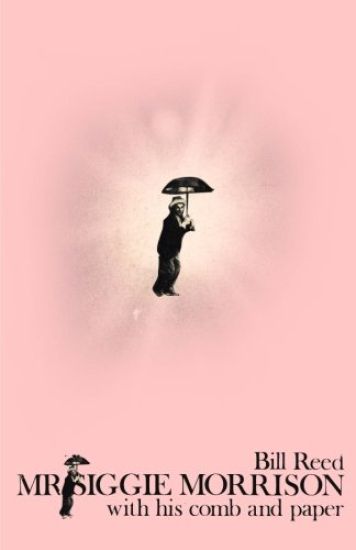
Blurb (Act I) PARSONS: I'm beginning to feel what his friends must have gone through when they were really seeing him off. The longer they wait, the more improbably it is that the bloody plane will ever leave. They mouth platitudes to each other about every man having the unimpeachable right to die at home. They don't look into each other's eyes knowing that not one of them has even bothered to tell the old boy about pipe dreams, tobacco smoke delusions. What they mean, really, is that they can't wait any longer to get him off their hands. Blurb (Act 2)SURROUND MONOLOGUE: I didn't care. I had my ticket in my hand in the plane. I would have had my ticket in my hand if they hadn't taken it off me before I got on. That's not the point. It's as good as having your ticket in your hand when you're sitting in the plane and they haven't turfed you off because if they haven't turfed you off then that means you must have had a ticket in your hand to be able to be there on the plane. And what I've got a right to expect is a bit of help from someone coming up and saying Siggie. Someone to come up and say my name. It's a tremendous bit of help when someone remembers your name when they come up and say, Siggie. It's terrible when someone comes up and opens his mouth to speak but says nothing.Blurb (Act 3)As a director, I was immediately impressed by the inherent theatricality of the play... of what constitutes a theatrical event. In this work that gives us not just a play but an experience of the struggle for creation. (Peter Batey, Artistic Director, SATC)---------------Bill Reed is an Australian playwright, novelist and short-story writer.
Living on Mars: Six Other Plays

Living on Mars: Six Other Plays

Bill Reed

Reed Indepedent
2016
nidottu
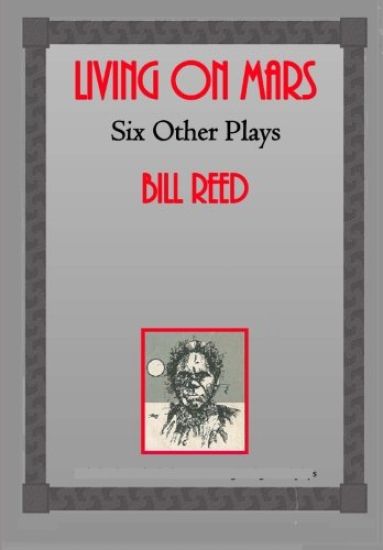
A harvesting of six full-length plays by Bill Reed. Unlike most of his other plays, none of these works here have been published in print by leading Australian book publishers or subsequently re-issued in print or ebook formats by Reed Independent. The plays have been extensively rewritten and so comprise revised versions to the versions seen on stage. Each has been involved in various seasons of the Melbourne Theatre Company, the old Nimrod Theatre and the Malthouse Theatre when it was the Playbox.The '6 Other Plays' are: Living in Mars (ex Familiar Parts)Daddy the 8th (ex A Real Riot)You Want It, Don't You, Billy?Truganinni Inside OutAuntie and the GirlMirror, Mirror (ex Talking to a Mirror)
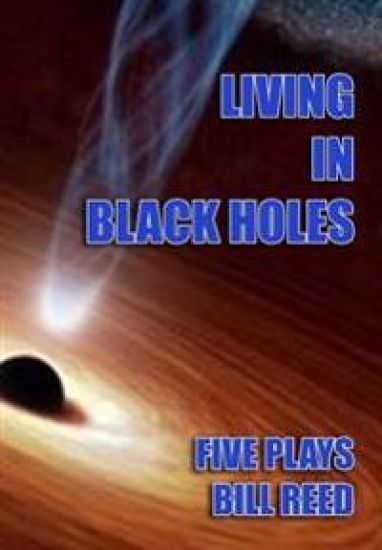
Living in Black Holes: Five Plays

Living in Black Holes: Five Plays

Bill Reed

Reed Independent
2016
nidottu
LIVING IN BLACK HOLES is a first-time collection of five of Bill Reed's most popular and/or performed plays. The works collected here are: Mr Siggie Morrison with his Comb and PaperBurke's CompanyTruganinniBullsh (including More Bullsh)Cass Butcher BuntingEach play has been 'modernised', in that the playwright has changed the plots as necessary to bring them up-to-date and brought the colloquialisms to be more familiar to the modern ear. Here and there, staging, too, has been altered to reflect modern-theatre's economies of scale. Settings and characterisations, though, have not been changed.
Daddy the 8th

Daddy the 8th

Bill Reed

Reed Independent
2016
nidottu
An ensemble of actors who are about to start rehearsing a play about the Moree race riots visit Endeavour Lane in Moree to get a feel of the lie of the land. This is where the young Aboriginal 'Cheeky' McIntosh was shot and killed during the infamous 1982 rumble between local whites and blacks. The leader/director/writer of the ensemble has a more intimate knowledge of the site. Back in 1982 he remembers playing cricket with his school chums using, as a lark, a wicket made up of a piece of the makeshift 'stockade' Cheeky and his mates tried to hole up behind.Now, while the actors mill around Endeavour Lane, an old man appears in their midst, sits down and declares he is waiting for a bus (Endeavour Lane is a dead end) to take him to the murder trial of the three Whites charged with Cheeky's death. The old man is Daddy, a local Moree elder.Is he out of his time? Is he trying to interfere with the ensemble's thinking about putting on a play about that night back in 1982? Is he really waiting for a bus to take him to some trial about the riot? They might be the wiser if they could concentrate on what Daddy is saying rather than arguing amongst themselves. They do understand, though, that dabbling with the theatre is dabbling with an illusion that can be more real than reality, and just as killing.Still, they cannot understand why that full-scale riot at Myall Creek Massacre - even further back in 1838 -- should keep cropping up in what should have otherwise been their lazy'n'hazy Sunday morning, especially since not a line of script has been written yet.It begs the question about which Daddy down the millennia are they dealing with here?---------------------------Bill Reed is a novelist, playwright and short-story writer. He has worked as editor and journalist both in Australia and overseas, and has won national competitions for drama and for long and short fiction.
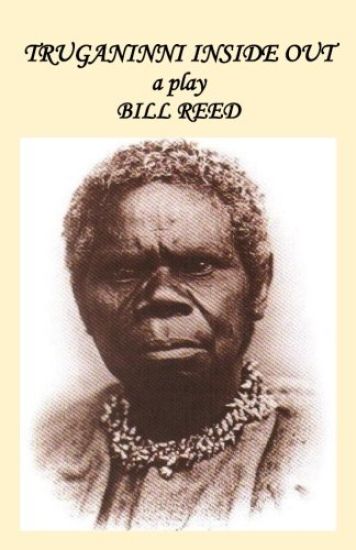
Truganinni Inside Out

Truganinni Inside Out

Bill Reed

Reed Independent
2016
nidottu
Seven years after King Billy's death, Truganinni stood alone, arguably the most important living relic of her Tasmanian race. She would walk the streets of Hobart Town, resembling Queen Victoria in her voluminous skirts and headdress. She quite enjoyed the curiosity and finger pointing wherever she went. And she could go anywhere.Towards the end, she appeared to bear no malice towards her race's persecutors. Growing stoutish, she smoked a pipe and enjoyed a daily jug of beer. But she began to grow ill and as her death loomed, so did the memories of what happened to King Billy's body.On 8 May 1876, at the approximate age of 73, Truganinni died. She is said to have cried out, 'Don't let them cut me up. Bury me behind the mountains.'Only hours after the news, body-snatchers in the Royal Society of Tasmania started to bark for her body, as they had successfully done regarding King Billy. The government fought toe and nail politically to fight them off. Did it matter to the old girl?No, she was off regally floating across the Dreamtime skies of Australia, raising hell with her beloved Nanna, on their Shag Magnet anyway. By then the mission on Flinders Island of Act 1, and McKay's house in Hobart Town in Act 3, were the least she wanted to put a bomb under...-------------------------Bill Reed is a novelist, playwright and short-story writer. He has worked as editor and journalist both in Australia and overseas, and has won national competitions for drama and for long and short fiction.
Auntie and the Girl

Auntie and the Girl

Bill Reed

Reed Independent
2016
nidottu
Dorothy is married to a south Indian surgeon who has been shot in a gang-related murder in Melbourne. She knows nothing about what's behind this but she feels obliged to travel to her mother-in-law in Chennai to relate what little she does know. This, she dreads doing, not just because this once-Australian, everyone's 'auntie' has always turned a blithe deaf ear to her, but more because the old girl is a scrawn, a whack job, a dizzy, shouting commands and bouncing around doing power-praying in her so-called God's Kip-out. Auntie's alarming behaviour is exasperated by the current domestic help - a girl who has the old shrew's measure. In God's Kip-out, surliness and plain old dumb disobedience palpably beats screaming fits every time.If trying to muster up Auntie's comprehension wasn't enough, Dorothy is soon reminded of her fury towards Auntie's other son, Navin, who is a doctor specialising in local fertility clinics and, of course, offering legal terminations to those who would prefer to try again for a son, rather than waste a pregnancy on a girl. As screechingly obtuse as Auntie is, Navin remains stubbornly obtuse to any moral problem with what he does; he has the comfort of the broader picture of his beloved ultra-sound machine's screen.Nor does Dorothy bank on the physical manifestations of her husband's killing coming to literally try to beat Auntie's door down to get at her. It is as well Inspector Charles Ekanayake is in refuge there with his beloved auntie for his secondment to the Indian CID from Sri Lanka. He doesn't mind broken legs on the front lawn.--------------------Bill Reed is a novelist, playwright and short-story writer. He has worked as editor and journalist both in Australia and overseas, and has won national competitions for drama and for long and short fiction. He divides his time between his Australia and his wife's Sri Lanka.
Mirror, Mirror

Mirror, Mirror

Bill Reed

Reed Independent
2016
nidottu
Stranded in his Sydney flat, the journalist John Rinner tries to explain his Dad-dud existence to his daughter by telephone. This is not easy since he hasn't seen her in 18 years and she is on the other side of the world working in an Amsterdam hotel with little time to listen to an excuse for a Dad.Just as his working life in the field with the UN Childrens Fund now seems only smoke-and-mirrors, so does Rinner's own life seem as it flashes past him in delusion and illusion, and with more bottoms than tops. This seems especially relevant to his real-or-imagined North Queensland aboriginal roots... almost as much as the witnessing the world's abuse of its children has scarred him. But, more and more, the cross connections of telephone torment continue, escalating in him into looking down into a sump rather than getting any sort of expiation from reconnecting with his beloved daughter.At least it is a mirror on the wall there, and not the sad sack that is himself.At least, too, the mirror gives back to him a more intelligent conversation than he can get from other human beings these end of days. He is still, though barely, intuitive enough to be able to appreciate being able to tell it: 'You heard the one about the guy going up to a mirror on the wall and spouting, "Mirror, mirror, on the wall, who is the....?"'--------------Bill Reed is a novelist, playwright and short-story writer. He has worked as editor and journalist both in Australia and overseas, and has won national competitions for drama and for long and short fiction. He now divides his time between his native Australia and his wife's Sri Lanka.
Living on Mars: The Play

Living on Mars: The Play

Bill Reed

Reed Independent
2016
nidottu
Henry had one good eye until the surgeon lost even that one's lens down some drain. He had a wife he could call his own until she started to shack up very noisily with some young turk Australian postgraduate in his (Henry's) own home. He had a housekeeper until she left in built-up disgust claiming Henry continuously confessed to some vague past unspeakable crime. Henry also had this itch which his new housekeeper - his wife's cousin - could keep in check with her very personal fingernails. Then there was his house-full of irreplaceable objects until his new housekeeper's husband came along and proceeded to methodically clean him out.Try as he might, though, Henry couldn't get rid of was his famous father's specimen jars of Australian Aboriginal parts... an internationally acclaimed collection which no one, not even the housekeeper's husband, wanted to rid him off. All this was obviously conspiring to rob him of his morning banana.The thing is he didn't even have his Australia anymore since fate's blindness had him stranded there in Port Moresby, where even people he didn't know were outside gathering into an angry mob just because (he thinks) he is he. Unfair is unfair no matter how incapable you are of looking at it.Still, Henry always had the driven-self of living on Mars, if only he could have gotten around to it.--------------Bill Reed is a novelist, playwright and short-story writer. He has worked as editor and journalist both in Australia and overseas, and has won national competitions for drama and for long and short fiction.
Little She

Little She

Bill Reed

Reed Independent
2016
nidottu
He hadn't told his son he was adopted, nor that his son had a twin sister who hadn't been handed over with him when they travelled from Melbourne to India all that time ago to pick up both infants. Part of his silence was the guilt of being on the end of what was then undoubtedly a child-racketeering scam. Charged by his estranged wife to go back to India to find out more about the recent brutal murder of their son - and, consequentially, what had happened to the infant girl child, Smith found himself having to fight his way through the bland face of locals' attitudes to death, religious extreme rituals and behaviour, and especially towards female infanticide. In order to get relatable explanations, he has to confront the fiercest of Tantric rites through the most grotesque, whack-job so-called wise man, Nandi Baba, through police dismissal, through the ignominy of caste prejudice, and through the motiveless violence of local crime.Smith was never going to succeed in learning much. But, for all the little grace he has left in him, he does find his Little She.And to explain it all to his wife, he could only illuminate it all through himself as third-party - and only a sort of son et lumiere projection could illuminate what is going in even his own mind.But whether he succeeds or not, nothing can stop their damnable karmic wheel from a'turning, a'turning.---------------------Bill Reed is a novelist, playwright and short-story writer. He has worked as editor and journalist both in Australia and overseas, and has won national competitions for drama and for long and short fiction. He now divides his time between his native Australia and his wife's Sri Lanka.
You Want It, Don't You, Billy?

You Want It, Don't You, Billy?

Bill Reed

Reed Independent
2016
nidottu
Bill and Billy are having marital problems but these pall when compared to the problems they have to face from their next door neighbour. If that wasn't enough, there is the general alarm put out to be on the alert for a serial murderer thought to be in the district. In the heavy night of the Mornington countryside, their weekender cottage offers scant protection from what is determined to befall them from the outside and what is determined to torment them from the inside. It is not as if they find themselves living in some scripted fiction where the fear comes driving at them intermittently but can be pulled back from with a flick of a light switch. No, this night they find themselves within the clutches of an evil that is constant, unharboured and unanchored. This night the pretend-fear becomes the real fear... the production gallops towards reality. It is difficult to tell who is who, or what is what. The only thing Bill and Billy - and anyone else - know is that all becomes very real dead mad. --------------------Bill Reed is a novelist, playwright and short-story writer. He has worked as editor and journalist both in Australia and overseas, and has won national competitions for drama and for long and short fiction. He now spends his time between Australia and Sri Lanka.
Just Out of Your Ground: Or, the Floundering of W.A.
This is a rollicking play about one of the founding and/or foundling fathers of Western Australia... Thomas Peel, first cousin of the then British Prime Minister. He was the leader of the first organized group of settlers, but from the moment he arrived on western shores, he became, as it were, rooted to the spot, utterly unable to marshal himself to provide the leadership and employment to his hundreds of artisans, labourers and families. Indeed, for one whole paralyzing year, he couldn't even move himself from the beach he landed on, even while the others were suffering from starvation, scurvy, dysentery and exposure. Finally, his people had to desert him as quite mad, and this included his own wife and daughter who saddled him with his dreaded mother-in-law and his wife's love child. Still, even these two weren't terrifying enough to push him off his beach and towards the dark heart of the then Australian interior... that physical opponent in which lineage allows for no special treatment and all better take the zinc cream with them. In that desolation, there weren't even cricket practise pitches awaiting you.For thirty-six years, old Peel stood a lonely, haughty and solitary figure blinded to his failings. If that wasn't enough, in old age, he was hauled before the magistrate for some decrepit and unspecified sexual misconduct against his haggard housekeeper. But, even regarding her, the rumour mill had as against his mother-in-law. Even today, his commemorative headstone has him buried on top of her in the same grave. Hopefully jokingly, or else this play should be a tragedy.
Hotel of Strangers: Three Novellas

Hotel of Strangers: Three Novellas

Bill Reed

Independently Published
2019
nidottu
"You've missed the point... Men like me have to do what we do, which is to poke and prod at the lazy amongst us. It is in our nature to be compelled to take our shots. If what has been is somehow correct and inescapable because it is actual history, then you and I have never had control of our own destiny, let alone that of the planet of men. And nothing was ever wrong - merely because it happened. That is weak substance for mankind's hope."-- From: The Assassin
The Fool's Cage: Four Novellas

The Fool's Cage: Four Novellas

Bill Reed

Independently Published
2019
nidottu
"Locked deep into the snows of anguish, every searing pain that sends screams from the depths of your bowels up through the startling doubts and stark surprise, like a flash and bolt of horrible thunder, erupting in a brutal birth, fighting its way into bright freedom, and in its passing, settling down upon a page, in order, in lines, is the fruit of being, the clear and settled end of creation."-From: Between the Candle and the Flame