You know him as the founder of Microsoft; the philanthropic, kind-hearted billionaire who has donated endless funds to good causes around the world. But there's another side to Bill Gates.We might like to think of the Gates Foundation as an innocent charity giving away money, collaborating with stakeholders, and listening to the desires of the populations it hopes to help, but is that how it works in practice?Combining rich storytelling and ground-breaking reporting, The Bill Gates Problem offers readers a provocative and timely counter-narrative about one of the world's most widely recognized individuals - a true global celebrity with international reach. But more than that, this book speaks to a vital political question around economic inequality and the erosion of democratic institutions - why should the super-rich be able to transform their wealth into political power, and just how far can they go?
The most atypical of bluegrass artists, Bill Clifton has enjoyed a long career as a recording artist, performer, and champion of old-time music. Bill C. Malone pens the story of Clifton's eclectic life and influential career. Born into a prominent Maryland family, Clifton connected with old-time music as a boy. Clifton made records around earning a Master's degree, fifteen years in the British folk scene, and stints in the Peace Corps and Marines. Yet that was just the beginning. Closely allied with the Carter Family, Woody Guthrie, Mike Seeger, and others, Clifton altered our very perceptions of the music--organizing one of the first outdoor bluegrass festivals, publishing a book of folk and gospel standards that became a cornerstone of the folk revival, and introducing both traditional and progressive bluegrass around the world. As Malone shows, Clifton clothed the music of working-class people in the vestments of romance, celebrating the log cabin as a refuge from modernism that rang with the timeless music of Appalachia.An entertaining account by an eminent music historian, Bill Clifton clarifies the myths and illuminates the paradoxes of an amazing musical life.
From cradle to great, the comprehensive real story of Bill Monroe The Father of Bluegrass Music, Bill Monroe was a major star of the Grand Ole Opry for over fifty years; a member of the Country Music, Songwriters, and Rock and Roll Halls of Fame; and a legendary figure in American music. This authoritative biography sets out to examine his life in careful detail--to move beyond hearsay and sensationalism to explain how and why he accomplished so much. Former Blue Grass Boy and longtime music journalist Tom Ewing draws on hundreds of interviews, his personal relationship with Monroe, and an immense personal archive of materials to separate the truth from longstanding myth. Ewing tells the story of the Monroe family's musical household and Bill's early career in the Monroe Brothers duo. He brings to life Monroe's 1940s heyday with the Classic Bluegrass Band, the renewed fervor for his music sparked by the folk revival of the 1960s, and his declining fortunes in the years that followed. Throughout, Ewing deftly captures Monroe's relationships and the personalities of an ever-shifting roster of band members while shedding light on his business dealings and his pioneering work with Bean Blossom and other music festivals. Filled with a wealth of previously unknown details, Bill Monroe offers even the most devoted fan a deeper understanding of Monroe's towering achievements and timeless music.
The most atypical of bluegrass artists, Bill Clifton has enjoyed a long career as a recording artist, performer, and champion of old-time music. Bill C. Malone pens the story of Clifton's eclectic life and influential career. Born into a prominent Maryland family, Clifton connected with old-time music as a boy. Clifton made records around earning a Master's degree, fifteen years in the British folk scene, and stints in the Peace Corps and Marines. Yet that was just the beginning. Closely allied with the Carter Family, Woody Guthrie, Mike Seeger, and others, Clifton altered our very perceptions of the music--organizing one of the first outdoor bluegrass festivals, publishing a book of folk and gospel standards that became a cornerstone of the folk revival, and introducing both traditional and progressive bluegrass around the world. As Malone shows, Clifton clothed the music of working-class people in the vestments of romance, celebrating the log cabin as a refuge from modernism that rang with the timeless music of Appalachia.An entertaining account by an eminent music historian, Bill Clifton clarifies the myths and illuminates the paradoxes of an amazing musical life.
From cradle to great, the comprehensive real story of Bill Monroe The Father of Bluegrass Music, Bill Monroe was a major star of the Grand Ole Opry for over fifty years; a member of the Country Music, Songwriters, and Rock and Roll Halls of Fame; and a legendary figure in American music. This authoritative biography sets out to examine his life in careful detail--to move beyond hearsay and sensationalism to explain how and why he accomplished so much. Former Blue Grass Boy and longtime music journalist Tom Ewing draws on hundreds of interviews, his personal relationship with Monroe, and an immense personal archive of materials to separate the truth from longstanding myth. Ewing tells the story of the Monroe family's musical household and Bill's early career in the Monroe Brothers duo. He brings to life Monroe's 1940s heyday with the Classic Bluegrass Band, the renewed fervor for his music sparked by the folk revival of the 1960s, and his declining fortunes in the years that followed. Throughout, Ewing deftly captures Monroe's relationships and the personalities of an ever-shifting roster of band members while shedding light on his business dealings and his pioneering work with Bean Blossom and other music festivals. Filled with a wealth of previously unknown details, Bill Monroe offers even the most devoted fan a deeper understanding of Monroe's towering achievements and timeless music.
"Countless small and large outdoor joys are to be found in Bill's book, a capsuled lifetime of discovering delightful living and lore . . . " —Midwest Outdoors " . . . what a truly marvelous story teller he is and how he seems to have covered every facet of the out-of-doors during more than a half century." —The Daily Clintonian " . . . a book any Hoosier can sit by the fire and enjoy this winter." —Osgood Journal "Bill Scifres, unlike a lot of us, never forgot how to have fun. . . . His niche in life is obviously to write about the outdoors, and we are the better for it." —Indianapolis Star "Outlandish characters and a lifetime of misadventures touch on the timeless tradition of humorous tales and anecdotes. Scifres is one of many regional raconteurs widely enjoyed, who sustains the storytelling tradition." —Come-All-Ye Readers of the Indianapolis Star have enjoyed Bill Scifres's column "Lines and Shots" for over 37 years. The premier outdoor writer in Indiana, Bill is also a born storyteller. This collection gathers some of his best accounts of a lifetime of adventure in the out-of-doors. From The Great Turtle Adventure to the discovery that Santa Claus was really a mink, Bill's message is the same: Nature is full of wonderment and pleasure and there is always something enjoyable to do outdoors, no matter the season. The good old days are alive and well in Indiana.
Bill Reid's work has long been acknowledged for its astute and eloquent analysis of Haida tradition, and for the paradox of making modern art from the old Haida stories. It helped to make the so-called renaissance of Northwest Coast Native art visible to all. Bill Reid and Beyond pays Reid the compliment of expanding on his own clear-eyed self-scrutiny as he came to stand for Native art and artists, more perhaps than he would have wished.The book's nineteen contributors write from many perspectives, breaking down boundaries between art history and anthropology, between academic and artist, between colleague and politician.Alert to the political, economic, and social events of Bill Reid's lifetime, which have radically changed the way in which Native art is produced and received, this book participates in the important ongoing debates about Native art, demonstrating vividly that the exchange of ideas can, like works of art, change people's minds.
A comprehensive biography of the brilliant jazz composer and pianist Bill Evans This enthralling book is the first biography in English of Bill Evans (1929–1980), one of the most influential of all jazz pianists. Peter Pettinger, himself a concert pianist, describes Evans’s life (the personal tragedies and commercial successes), his musicmaking (technique, compositional methods, and approach to group playing), and his legacy. The book also includes a full discography and dozens of photographs.
A close look at the work, relationship, and shared influences of two masterful 20th-century artists “The camera,” said Orson Welles, “is a medium via which messages reach us from another world.” It was the camera and the circumstances of the Second World War that first brought together Henry Moore (1898–1986) and Bill Brandt (1904–1983). During the Blitz, both artists produced images depicting civilians sheltering in the London Underground. These “shelter pictures” were circulated to millions via popular magazines and today rank as iconic works of their time. This book begins with these wartime works and examines the artists’ intersecting paths in the postwar period. Key themes include war, industry, and the coal mine; landscape and Britain’s great megalithic sites; found objects; and the human body. Special photographic reproduction captures the materiality of the print as a three-dimensional object rather than a flat, disembodied image on the page.Published by the Yale Center for British Art/Distributed by Yale University PressExhibition Schedule:The Hepworth Wakefield (February 7–November 1, 2020)Sainsbury Centre for Visual Arts, Norwich (November 21, 2020–February 28, 2021)Yale Center for British Art (November 17, 2022–February 26, 2023)
In 2004, the opera scene was taken by storm by the ground-breaking production of Richard Wagner’s opera Tristan und Isolde in Los Angeles. This book offers a behind-the-scenes look at how the visionary American artist Bill Viola created four hours of video as a visual complement to this profound psychological drama. It also tells the story of its commissioning by the then Paris Opera director Gerard Mortier, who pushed the boundaries of what opera could be by inviting a trinity of California-based creatives to re-imagine a Tristan und Isolde for our times. Having just opened the now iconic Frank Gehry-designed Walt Disney Concert Hall, this was a bold project for the Los Angeles Philharmonic to take on, but it was one which catapulted them into the world of music and breath-taking visuals. The fully staged opera that resulted has been seen in Paris, Toronto, Madrid, Tokyo, Kobe, and concert versions in LA, New York, Rotterdam, London, Helsinki, Stockholm, and St Petersburg, and the revolutionary four-hour video and visuals created by Bill Viola to accompany this opera lives on through this beautifully illustrated book. Distributed for Mercatorfonds
As a child, Bill Graham fled Europe to escape Hitler's armies. He grew up on the streets of New York and in the dining rooms of the hotels in the Catskills. After failing as an actor, he headed for San Francisco right before the Summer of Love where he founded the Fillmore and launched the rock icons of a generation- Janis Joplin, Otis Redding, Jefferson Airplane, Cream, the Grateful Dead, and more. He was a complex, caring, compassionate whirlwind of energy who rock stars either loved- or hated.In his own voice and those of the people who knew him- Jerry Garcia, Keith Richards, Grace Slick, Ken Kesey, Eric Clapton, Pete Townshend, and Carlos Santana- we hear Bill's story as well as the scoop on the major events in rock for more than three decades, ending with his tragic death in a 1991 helicopter crash. Gritty, moving, funny, and always fascinating, Bill Graham Presents is the inside story of the explosive and unforgettable man who created the business of rock.
When Bill Wilson, with his friend Dr. Bob Smith, founded Alcoholics Anonymous in 1935, his hope was that AA would become a safe haven for those who suffered from this disease. Thirty years after his death, AA continues to help millions of alcoholics recover from what had been commonly regarded as a hopeless addiction. Still, while Wilson was a visionary for millions, he was no saint. After cofounding Alcoholics Anonymous, he stayed sober for over thirty-five years, helping countless thousands rebuild their lives. But at the same time, Wilson suffered form debilitating bouts of clinical depression, was a womanizer, and experimented with LSD. Francis Hartigan, the former secretary and confidant to Wilson's wife, Lois, has exhaustively researched his subject, writing with a complete insider's knowledge. Drawing on extensive interviews with Lois Wilson and scores of early members of AA, he fully explores Wilson's organizational genius, his devotion to the cause, and almost martyr-like selflessness. That Wilson, like all of us, had to struggle with his own personal demons makes this biography all the more moving and inspirational. Hartigan reveals the story of Wilson's life to be as humorous, horrific, and powerful as any of the AA vignettes told daily around the world.
Bill Clinton's own writings and speeches, as well as journal and newspaper articles about him, reflect his consistent long-term interest in key policy issues, such as job growth, economic development, worker training, health care, international trade, and education. This unique volume, providing sources of information on Clinton's earlier career, will facilitate background research on our current president. Covering the period from his first bid for public office in 1974 to the eve of his inauguration, this volume will also facilitate research on his Arkansas political career, his presidential campaign, and the transition period.The work is divided into three major parts. Part one opens with Clinton's own writings and speeches. It then covers his Arkansas political career from 1974 to October 3, 1991, when he announced his candidacy for president. The presidential campaign from October 4, 1991, to November 3, 1992, is covered in Part two, and Part three provides sources on the transition period from November 4, 1992 to the inauguration. Sources are arranged chronologically within sections, and access is enhanced by full author and subject indexes.
Bill Clinton's administration was filled with new policies and achievements for the nation's future, but those achievements were easily overshadowed by personal flaws and scandal. Despite his personal problems, Clinton captured the American public and served two terms as one of our more memorable presidents. This comprehensive bibliography on Clinton will provide students with information from his childhood, his pre-presidential career, presidency (including assessments of it) and the beginning of his post-presidential life. Key access points to this information are provided in the Table of Contents and detailed author and subject indexes. Also included, is an invited essay providing an overview of the Clinton presidency and an extensive chronology of significant events.
As a student of life and basketball, as a basketball player and coach, as an African-American, a businessman, a lecturer, and a man, Bill Russell projects the same single image of a man committed to understanding, improvement, and teamwork in the constant pursuit of new and ever-greater heights. And as his 2 NCAA titles, his Olympic gold medal, and his 11 NBA championships clearly show, the heights towards which Bill Russell most often strove were athletic, and in these athletic contests he was rarely to be denied. As a coach—the first black coach in NBA history—and general manager in his later days, Russell still maintained this same ability to utilize all of the resources available in order to construct a winning entity, and it is because of this very ability that he was later able to captivate lecture audiences from behind a podium. Bill Russell remains a compelling subject for anyone interested in the constitution and development of a champion. This book also includes a thorough bibliography of print and electronic sources to aid further research. A timeline plots the key events in Russell's life and career.
**Selected for Doody’s Core Titles® 2024 in Veterinary Nursing & Technology** Build the skills you need to use drugs safely and avoid potential problems! Trusted by vet techs for 30 years, Bill's Clinical Pharmacology and Therapeutics for Veterinary Technicians helps you understand the principles and practice of pharmacology in treating different animal species. The text explains how drugs work, how they are administered, and how to calculate drug dosages. Covering drugs by body system, the book also explains possible abuses, mistakes, and how things can go wrong when therapeutic protocols are not properly implemented. From veterinary pharmacist and educator Melinda "Mindy" Anderson, this fifth edition helps you provide better care for your patients and better education for their owners. Content on basic pharmacology includes topics such as safety, terminology, pharmacy procedures, drug handling (including the latest OSHA requirements), dosage calculations, and pharmacokinetics. Chapter outlines, learning objectives, and key terms are provided at the beginning of each chapter, introducing you to the complex principles of pharmacology and guiding your study. Clear explanations of drugs help you understand the "how" and "why" behind drugs, their actions, their mechanisms, and adverse effects. Myths and Misconceptions, Ask Dr. Bill, and You Need to Know boxes spotlight key issues, concepts, and skills. Clinical applications link pharmacologic concepts to real-life situations. Review questions and critical thinking questions are included at the end of every chapter to help readers test their comprehension. Test questions and online quizzes enable self-assessment and help you prepare for classroom and certification exams. NEW Veterinary Feed Directives section reflects the newest FDA guidelines on medicated feed for animals. NEW! Updated drug information includes all drug categories as well as new information on several drugs. NEW! Additional full-color images make it easier to understand pharmacology concepts. NEW! Updated test questions and drug calculation exercises on the Evolve website make study and review easier and reinforce your understanding of difficult subject matter.
At 16 and a quarter years old BILL MAGELLAN is feeling more like an adult than a youth and with that freedom should come the ability to sleep in on Saturdays, but that won't happen as long as Robert MacManus, the strangest little kid he's ever met, keeps bypassing the locks on his bedroom to wake him up because Robert needs someone older to book the Combat Flight Simulator for him.So begins the sequel to the Young Space Oddity novel "DEATH IN SPACE - Or What I Did on My Summer Vacation".And this time they go to Earth before almost dying!
He is Thomas Edison and Henry Ford rolled into one -- except that William Henry Gates III maybe smarter and more successful than either. He is America's richest man, and on the corporate landscape, he may well be the most feared. In less than a generation, Bill Gates has done nothing less than change the way we live and work.Here is Bill Gate's story, taking you inside the mind of this brilliant visionary and inside the rise of Microsoft, the world's most succesful corporation. What unique combination of historical factors and personal qualities made Gates the right man at the right time? How did he invent an industry from scratch, and what choices -- from people to products -- made Microsoft the resounding success it has become? How has the company faces Apple, Netscape, and its other competitors and partners? From Microsoft's Redmond, Washington, campus to Gates' relationships with women and with other business people, like fellow billionaire Warren Buffett, here is a compelling portrait of a unique American citizen at the dawn of the twenty-first century: a man whose career, and his effect on our world, has only begun.
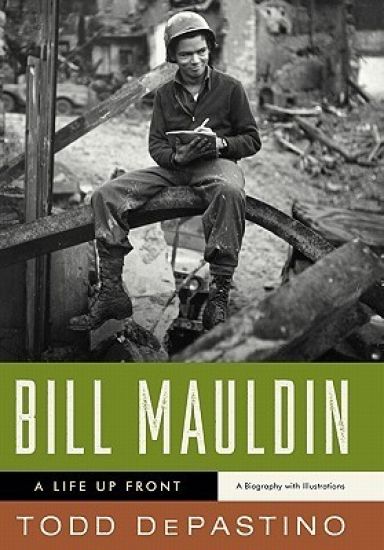
The real war, said Walt Whitman, will never get in the books. During World War II, the truest glimpse most Americans got of the real war came through the flashing black lines of twenty-two-year-old infantry sergeant Bill Mauldin. Week after week, Mauldin defied army censors, German artillery, and Patton s pledge to throw his ass in jail to deliver his wildly popular cartoon, Up Front, to the pages of Stars and Stripes. Up Front featured the wise-cracking Willie and Joe, whose stooped shoulders, mud-soaked uniforms, and pidgin of army slang and slum dialect bore eloquent witness to the world of combat and the men who lived and died in it. This taut, lushly illustrated biography the first of two-time Pulitzer Prize winner Bill Mauldin is illustrated with more than ninety classic Mauldin cartoons and rare photographs. It traces the improbable career and tumultuous private life of a charismatic genius who rose to fame on his motto: If it s big, hit it. "
A self-described desert rat who rocketed to fame at the age of twenty-two, Bill Mauldin used flashing black brush lines and sardonic captions to capture the world of the American combat soldier in World War II. His cartoon dogfaces, Willie and Joe, appeared in Stars and Stripes and hundreds of newspapers back home, bearing grim witness to life in the foxhole. We ve never viewed war in the same way since. This lushly illustrated biography draws on private papers, correspondence, and thousands of original drawings to render a full portrait of a complex and quintessentially American genius."