

Kirjahaku
Etsi kirjoja tekijän nimen, kirjan nimen tai ISBN:n perusteella.
1000 tulosta hakusanalla Boris Levin



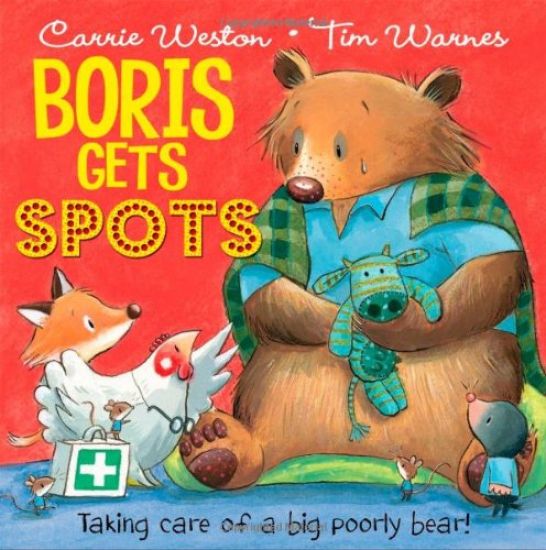
Boris is back in a fourth story - this time he and his classmates succumb to a bout of chicken pox. Miss Cluck has to enlist the help of local farmer Mr Gander and Buttercup the cow to take the poorly animals home and her day in an empty classroom is rather a sad affair. At least she gets the chance to make some honey-oat cookies as a welcome-back treat to give to Boris and his friends when they come back to school, fully recovered.
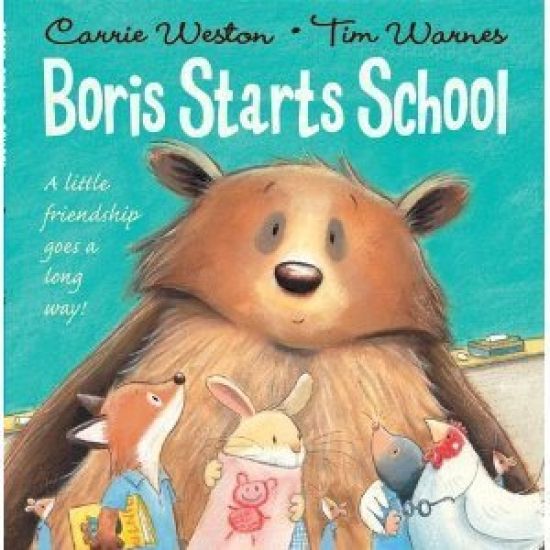
When Miss Cluck tells her little pupils that there is going to be a new animal in their class, they are all very excited. In fact, there are squeals of delight. Nobody expects the new animal to be a grizzly bear! So, when a rather bashful Boris enters the room, Leticia the rabbit, Fergus the fox cub, Maxwell the mole, and the little mice . . . scream! Boris is upset. He doesn't mean to be scary. He just wants to make friends. But he spends a lonely, miserable first day at school, he's just too big to fit in. When it's home time, Boris trudges through the woods, far behind the others. After all, it seems to him that none of them wants to be his friend. Then he sees some rats up ahead as they jump out from behind the trees. Boris hurries along to introduce himself (ever hopeful of making new friends) but, once again, his big bear grin terrifies the rats. However, to his astonishment, in scaring off the bullies Boris has truly endeared himself to Maxwell, Leticia, Fergus and the mice. A beautifully-observed story with a positive message about friendship and acceptance.
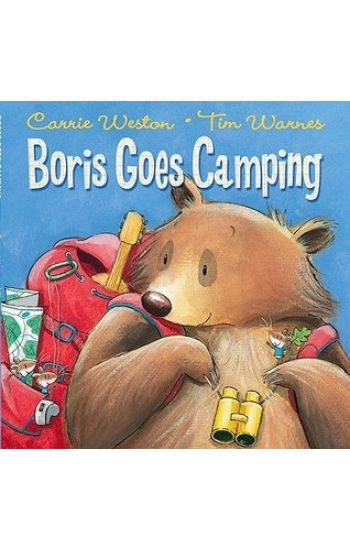
Miss Cluck is taking her class camping. There are various mishaps along the way - the little mice find it difficult to keep up, then Maxwell drops his Teddy in the stream while they play pooh-sticks. Each time, Boris comes to the rescue - earning him praise from Miss Cluck and his classmates. Eventually the animals find a lovely spot for their tepee and they spend the afternoon decorating it before setting off to gather berries for supper. But . . . when they get back to their lovely tepee, they discover that . . . 'Someone had scribbled on the sides. Someone had drawn a moustache on Miss Cluck's face. Someone had pulled down the sticks . . . And someone was going to be in BIG trouble!' The culprits are two naughty wolf cubs and they laugh in the face of Miss Cluck's reprimands (after all, since when have wolves been scared of chickens?) but they soon lose their bravado when Boris steps in with his big bear grin. So Miss Cluck and her pupils reclaim their tent and, after an evening of songs and stories, they're ready for bed. There isn't much room in the tepee once Boris has settled down, but no one minds a bit, after all, they all have a soft, cosy place to sleep!
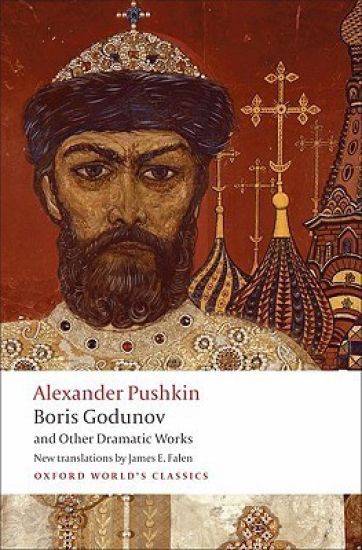
'The people are silent' So ends Pushkin's great historical drama Boris Godunov, in which Boris's reign as Tsar witnesses civil strife and intrigue, brutality and misery. Its legacy is an uncertain future for the new Tsar whose inauguration is met with devastating silence by the people. Pushkin's dramatic work displays a scintillating variety of forms, from the historical to the metaphysical and folkloric. After Boris Godunov, they evolved into Pushkin's own unique, condensed transformations of Western European themes and traditions. The fearful amorality of A Scene from Faust is followed by the four Little Tragedies which confront greed, envy, lust, and blasphemy , while Rusalka is a tragedy of a different kind - a lyric fairytale of despair and transformation. James E. Falen's verse translations of Pushkin's dramas are here accompanied by an Introduction by Caryl Emerson on Russia's most cosmopolitan playwright. ABOUT THE SERIES: For over 100 years Oxford World's Classics has made available the widest range of literature from around the globe. Each affordable volume reflects Oxford's commitment to scholarship, providing the most accurate text plus a wealth of other valuable features, including expert introductions by leading authorities, helpful notes to clarify the text, up-to-date bibliographies for further study, and much more.
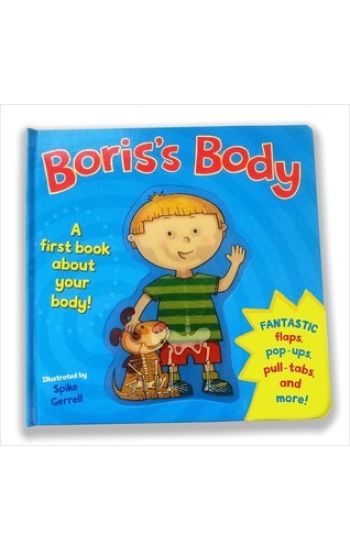
Boris's Body
Macmillan
2012
sidottu
A body book with a difference! Boris and his little sister Clara are having a busy day. But what needs to go on inside their bodies to help them run, play and eat? This is a unique book with a narrative and basic information side-by-side. It is specially aimed at toddlers and preschoolers who are not quite old enough for fact-packed non-fiction body books, but still curious about why their hearts beat and what happens to the food in their tummies. They can watch the amazing cover lenticular change to reveal the bones inside Boris's body, make a heart beat with the innovative magic-motion mechanism, and even pull a tab to make a poo disappear down the toilet! With a giant pull-down skeleton to finish, it is the perfect interactive and informative experience.

The tale of Boris Godunov—tsar, usurper, tsarecide—dating from the early seventeenth-century Time of Troubles, inspired three major nineteenth-century Russian cultural expressions: in history by Nikolai Karamzin, in drama by Alexander Pushkin, and in opera by Modest Musorgsky. Each of these famous creations was a vehicle for generic innovation, in which a specifically Russian concept of genre was asserted in opposition to the reigning European models: German historiography, French melodrama, and Italian opera. Within a Bakhtinian framework, Caryl Emerson explores these three versions of the Boris Tale, the context of their genesis, and their complex interrelationships.

Boris Yeltsin and Russia's Democratic Transformation
Herbert J. Ellison
University of Washington Press
2006
sidottu
Boris Yeltsin is one of modern history's most dynamic and underappreciated figures. In this vivid, analytical masterwork, Herbert J. Ellison establishes Yeltsin as the principal leader and defender of Russia's democratic revolution - the very embodiment of Russia's fragile new liberties, including the evolving respect for the rule of law and private property as well as core freedoms of speech, religion, press, and political association.In 1987 President Mikhail Gorbachev expelled Boris Yeltsin from his team of reform politicians, but Yeltsin rebounded from this potentially devastating setback to become the leader of the Russian democratic movement. He created a new office of Russian president, to which he was elected; designed a democratic constitution for the Soviet Union that precipitated a coup attempt by traditionalist communist leaders; granted independence to the nations of the Soviet Union; and replaced Communist Party rule with democracy and the socialist economy with a market economy. In a short period, he had succeeded in becoming the first popularly elected leader in a thousand years of Russian history. He had blocked violent attempts at counter-revolution and overcome powerful resistance to his reform program. His achievements rank among the most extraordinary feats of political leadership in the twentieth century.
This reference work on Boris Karloff presents a comprehensive record of the life and career of this famous performer. The volume begins with a biography, which succinctly presents the facts of Karloff's life. A chronology of his significant achievements follows. The remaining chapters overview Karloff's broad career. Chapters document and comment upon his film, stage, radio, and television performances. A discography is included as well. The book concludes with an annotated bibliography of books and articles about Karloff, along with a comprehensive index.

This authoritative new biography of the Russian poet and prose writer Boris Pasternak is the first part of a two-volume set, covering the period 1890-1928. Drawing on archives and many eyewitness accounts, Barnes' study sheds light on currently unexplored aspects of Pasternak's character and family background, and his artistic, social and historical environment. He combines biographical investigation with detailed textual analysis of translated quotations in verse and prose to reveal the source of Pasternak's extraordinary writings. The book examines a wide range of topics that include his musical enthusiasm and relations with Scriabin, his philosophical studies, his activities in World War I and his response to the 1917 revolutions, and his stance as a liberal artistic intellectual in the 1920s.
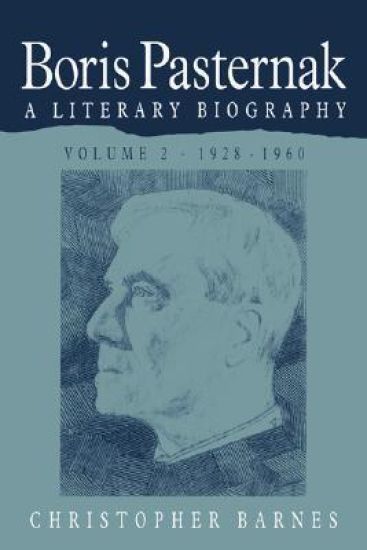
This concluding volume of Christopher Barnes’s acclaimed biography of the Russian poet and prose-writer Boris Pasternak covers the period from 1928 to his death, during which he wrote the famous Dr Zhivago and was awarded the Nobel Prize for Literature. Drawing on archive material (including the Pasternak family archive), eyewitness accounts and a huge range of biographical and background information, Barnes brings to light many aspects of Pasternak’s personality and private life, while illuminating his relations with the Communist régime and the literary establishment. There is a detailed discussion of Pasternak’s original writing (with ample quotation in English translation), and his translations of Goethe, Shakespeare and others. The growth story of Dr Zhivago is traced, and the personal and political implications of the novel’s controversial publication explored. The biography concludes with a discussion of Pasternak’s Nobel Prize award, final years and death, with a brief account of his posthumous and artistic legacy.
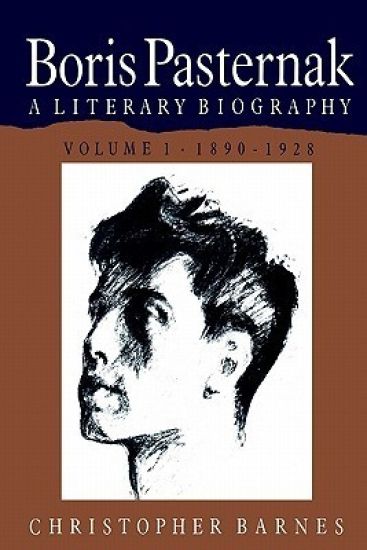
This authoritative new biography of the Russian poet and prose writer Boris Pasternak is the first part of a two-volume set, covering the period 1890-1928. Drawing on archives and many eyewitness accounts, Barnes' study sheds light on currently unexplored aspects of Pasternak's character and family background, and his artistic, social and historical environment. He combines biographical investigation with detailed textual analysis of translated quotations in verse and prose to reveal the source of Pasternak's extraordinary writings. The book examines a wide range of topics that include his musical enthusiasm and relations with Scriabin, his philosophical studies, his activities in World War I and his response to the 1917 revolutions, and his stance as a liberal artistic intellectual in the 1920s.
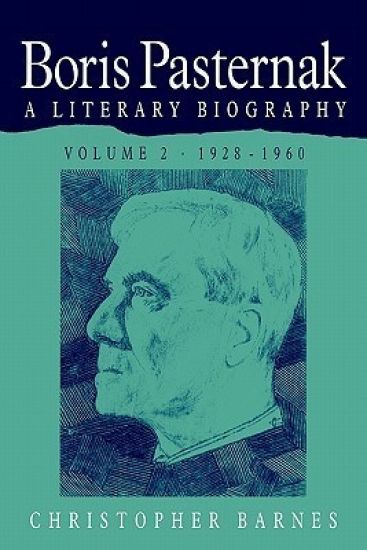
This concluding volume of Christopher Barnes’s acclaimed biography of the Russian poet and prose-writer Boris Pasternak covers the period from 1928 to his death, during which he wrote the famous Dr Zhivago and was awarded the Nobel Prize for Literature. Drawing on archive material (including the Pasternak family archive), eyewitness accounts and a huge range of biographical and background information, Barnes brings to light many aspects of Pasternak’s personality and private life, while illuminating his relations with the Communist régime and the literary establishment. There is a detailed discussion of Pasternak’s original writing (with ample quotation in English translation), and his translations of Goethe, Shakespeare and others. The growth story of Dr Zhivago is traced, and the personal and political implications of the novel’s controversial publication explored. The biography concludes with a discussion of Pasternak’s Nobel Prize award, final years and death, with a brief account of his posthumous and artistic legacy.

Boris on the Move: A Branches Book (Boris #1): Volume 1
Andrew Joyner
Scholastic Paperbacks
2013
nidottu
A new early chapter book series where adventure is always just around the corner.This series is part of Scholastic's early chapter book line called Branches, which is aimed at newly independent readers. With easy-to-read text, high-interest content, fast-paced plots, and illustrations on every page, these books will boost reading confidence and stamina. Branches books help readers grow Meet Boris He lives with his mom and dad in Hogg Bay. Their home is a van that once traveled all over the world. Then one morning, Boris feels a jolt. Could it be? Is the van really moving? Is Boris on an adventure at last?But when Boris ends up on a trip to a wildlife refuge instead of the jungle safari he'd imagined, he ends up having an adventure he'll never forget. Because for this little warthog, life never quite turns out as he plans.

Boris Gets a Lizard: A Branches Book (Boris #2): Volume 2
Andrew Joyner
Scholastic Paperbacks
2013
nidottu
For a curious warthog like Boris, adventure is always just around the corner This series is part of Scholastic's early chapter book line called Branches, which is aimed at newly independent readers. With easy-to-read text, high-interest content, fast-paced plots, and illustrations on every page, these books will boost reading confidence and stamina. Branches books help readers grow Boris loves pets And he already has lots of them. All he's missing is his favorite animal, a Komodo dragon--the biggest lizard in the world When Boris brags to the kids in his class that he's getting one, everyone wants to see it. Boris needs to come up with a plan...fast. Luckily, he's got his friends by his side and a lizard up his sleeve
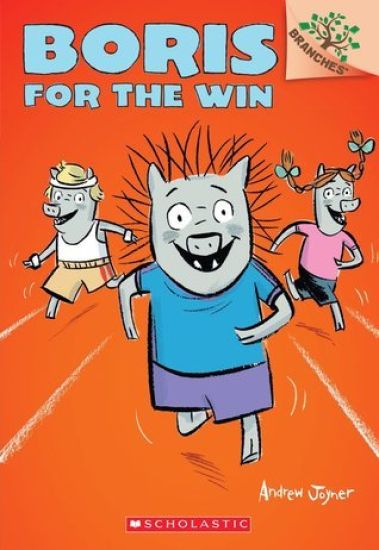
Boris for the Win: A Branches Book (Boris #3): Volume 3
Andrew Joyner
Scholastic Paperbacks
2013
nidottu
For a determined warthog like Boris, adventure is always just around the corner This series is part of Scholastic's early chapter book line called Branches, which is aimed at newly independent readers. With easy-to-read text, high-interest content, fast-paced plots, and illustrations on every page, these books will boost reading confidence and stamina. Branches books help readers grow Go Boris It's Field Day, and Boris is ready to run like he's never run before. All he wants is to beat Eddie, who always wins everything. And all his friend Frederick wants is not to come in last...again. Who will make it across the finish line first? And when Boris is faced with a big decision, will he go for the gold or help a friend in need? Ready, set, go