Kirjojen hintavertailu. Mukana 11 244 527 kirjaa ja 12 kauppaa.

Kirjahaku

Etsi kirjoja tekijän nimen, kirjan nimen tai ISBN:n perusteella.

1000 tulosta hakusanalla Bowen Stilon Mends

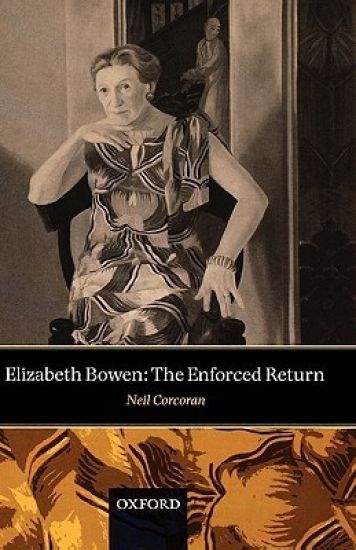
Elizabeth Bowen

Elizabeth Bowen

Neil Corcoran

Oxford University Press
2004
sidottu
Elizabeth Bowen is a writer who is still too little appreciated. Neil Corcoran presents here a critical study of her novels, short stories, family history, and essays, and shows that her work both inherits from the Modernist movement and transforms its experimental traditions. Elizabeth Bowen: The Enforced Return explores how she adapts Irish Protestant Gothic as a means of interpreting Irish experience during the Troubles of the 1920s and the Second World War, and also as a way of defining the defencelessness of those enduring the Blitz in wartime London. She employs versions of the Jamesian child as a way of offering a critique of the treatment of children in the European novel of adultery, and indeed, implicitly, of the Jamesian child itself. Corcoran relates the various kinds of return and reflex in her work-notably the presence of the supernatural, but also the sense of being haunted by reading-to both the Freudian concept of the 'return of the repressed' and to T. S. Eliot's conception of the auditory imagination as a 'return to the origin'. Making greater interpretative use of extra-fictional materials than previous Bowen critics (notably her wartime reports from neutral Ireland to Churchill's government and the diaries of her wartime lover, the Canadian diplomat Charles Ritchie), Corcoran reveals how her fiction merges personal story with public history. Employing a wealth of original research, his radical new readings propose that Bowen is as important as Samuel Beckett to twentieth-century literary studies--a writer who returns us anew to the histories of both her time and ours.
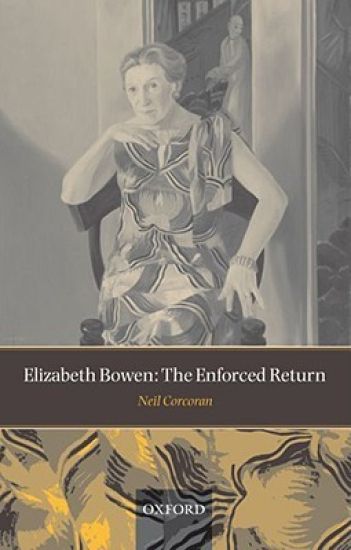
Elizabeth Bowen

Elizabeth Bowen

Neil Corcoran

Oxford University Press
2008
nidottu
Elizabeth Bowen is a writer who is still too little appreciated. Neil Corcoran presents here a critical study of her novels, short stories, family history, and essays, and shows that her work both inherits from the Modernist movement and transforms its experimental traditions. Elizabeth Bowen: The Enforced Return explores how she adapts Irish Protestant Gothic as a means of interpreting Irish experience during the Troubles of the 1920s and the Second World War, and also as a way of defining the defencelessness of those enduring the Blitz in wartime London. She employs versions of the Jamesian child as a way of offering a critique of the treatment of children in the European novel of adultery, and indeed, implicitly, of the Jamesian child itself. Corcoran relates the various kinds of return and reflex in her work-notably the presence of the supernatural, but also the sense of being haunted by reading-to both the Freudian concept of the 'return of the repressed' and to T. S. Eliot's conception of the auditory imagination as a 'return to the origin'. Making greater interpretative use of extra-fictional materials than previous Bowen critics (notably her wartime reports from neutral Ireland to Churchill's government and the diaries of her wartime lover, the Canadian diplomat Charles Ritchie), Corcoran reveals how her fiction merges personal story with public history. Employing a wealth of original research, his radical new readings propose that Bowen is as important as Samuel Beckett to twentieth-century literary studies--a writer who returns us anew to the histories of both her time and ours.
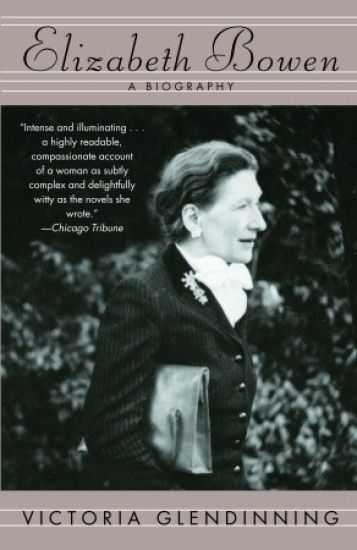
Elizabeth Bowen: A Biography

Elizabeth Bowen: A Biography

Victoria Glendinning

ANCHOR BOOKS
2006
nidottu
A biography of the acclaimed Anglo-Irish novelist follows the formation of her character and the growth of her art from her childhood in a great ancestral manor in Ireland to her discovery of America and international fame. Reprint.
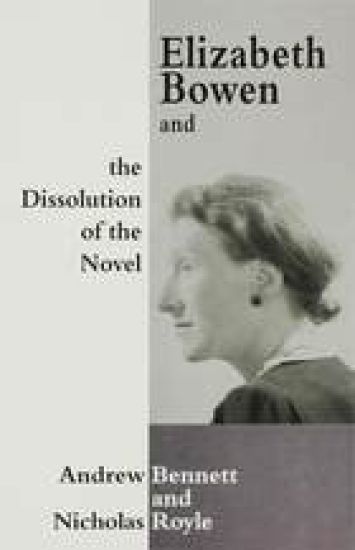
Elizabeth Bowen and the Dissolution of the Novel

Elizabeth Bowen and the Dissolution of the Novel

A. Bennett; N. Royle

Palgrave Macmillan
1994
sidottu
Elizabeth Bowen and the Dissolution of the Novel argues that the Anglo- Irish writer Elizabeth Bowen (1899-1973) is one of the most important, though undervalued, practitioner of the twentieth-century novel in English. This is an innovative study with significant implications for contemporary critical and theoretical writing. The authors contend that Bowen's work calls for a radically new conception of criticism and theory - and of the novel itself.
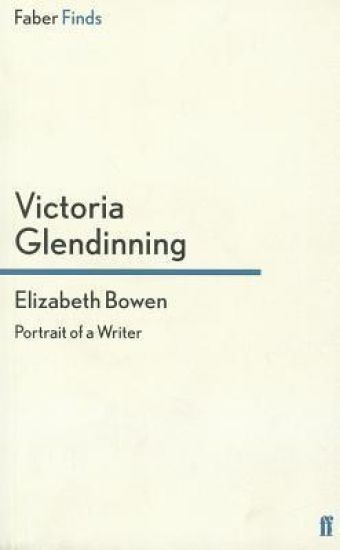
Elizabeth Bowen

Elizabeth Bowen

Victoria Glendinning

Faber Faber
2012
nidottu
In this richly detailed biography Victoria Glendinning brings alive the great Anglo-Irish novelist (The Death of the Heart, The Heat of the Day) whose literary achievements were matched by her tremendous talent for living. Taking us from Elizabeth Bowen's ancestral home in Ireland to Oxford (where she met Yeats and Eliot), through her service as an air-raid warden in London during World War II, to her friendships with such luminaries as Virginia Woolf, Evelyn Waugh and Graham Greene, Glendinning lifts the veil between Bowen's imaginative world and the complex emotional life that fired her novels. 'One of the best critical biographies to have come my way for some time... A beautifully composed portrait.' Sunday Telegraph'It reads like a good novel.' Irish Times
Ben Bowen

Ben Bowen

T. Robin Chapman

University of Wales Press
2003
nidottu
When Ben Bowen died, aged twenty-five, in 1903, the Welsh literary establishment predicted his immortality. This book looks at the Bowen phenomenon as a product both of his own view of himself as a great poet and a Wales that fed that assumption. It traces his escape from a miner's life in the Rhondda, his stay in South Africa during the Boer War, his talent for controversy and his growing awareness of his early death. This is the first extended, dispassionate account of the life, work and death of the Treorci-born poet Ben Bowen (1878-1903). Published on the centenary of his death, the work seeks to explain Bowen's short-lived fame and subsequent obscurity. It considers his precocious sense of himself as a poet, the literary, social and religious milieu in which he operated, his desire to use poetry as an escape from humble beginnings, and his awareness from his late teens of his impending death. Through a consideration of the life of this compelling character, Robin Chapman also enhances our understanding of Welsh culture in late-Victorian and early-Edwardian Wales.
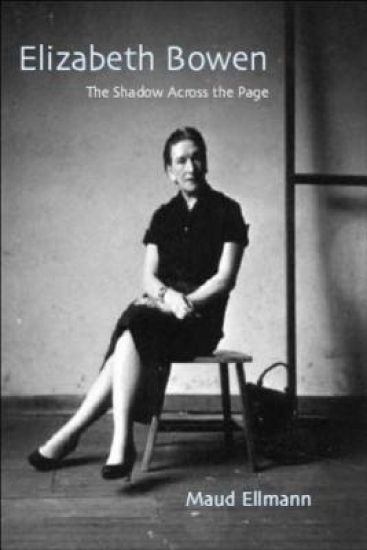
Elizabeth Bowen

Elizabeth Bowen

Maud Ellmann

Edinburgh University Press
2003
sidottu
WINNER of the British Academy's Rose Mary Crawshay Literary Prize This study offers an authoritative introduction to Elizabeth Bowen's works, revealing both their pleasures for the fiction-addict and their fascinations for the literary critic, theorist, and historian. It also provides a lucid introduction - by demonstration - to psychoanalytic modes of reading, and shows how such readings are enriched by an understanding of the writer's life and times. Elizabeth Bowen is one of the finest writers of fiction in English in the twentieth century. She is also one of the strangest. Born in 1899 into the Anglo-Irish Protestant ascendancy, she saw herself as the same age as her war-torn century. Her historical vision extends from the Irish Troubles of the 1920s to the London Blitz and the technological revolution of the post-war years. Her fiction is always entertaining - funny, moving, and suspenseful - but it is also profoundly disconcerting. Maud Ellmann teases out Bowen's strangeness through close readings informed by historical, psychoanalytic, and deconstructive methods of interpretation. She contextualises Bowen's work in the Irish and modernist traditions to investigate connections between her life and writing; her conflicts and complicities with other Irish, British, and European writers; her negotiations with contemporary history, and with the long decline of the Anglo-Irish Protestant ascendancy; her peculiar take on gender and sexuality; her hallucinatory treatment of objects, particularly furniture and telephones; and the surprising ways in which her writing pre-empts and in some cases confounds the literary theories brought to bear upon it. Bowen's writing is demonstrated to reach from a Dickensian comprehensiveness to an uncanny premonition of postmodernism.
Elizabeth Bowen

Elizabeth Bowen

Maud Ellmann

Edinburgh University Press
2004
nidottu
Winner of the Rose Mary Crawshay Award for 2004 Shortlisted for the 2004 British Academy Book Prize Elizabeth Bowen is one of the finest writers of the twentieth century. She is also one of the strangest. In this authoritative introduction to her life and work, Maud Ellmann teases out Bowen's strangeness through close readings informed by historical, psychoanalytic, and deconstructive methods of interpretation. She contextualises Bowen's work in the Irish and modernist traditions to investigate connections between her life and writing; her conflicts and complicities with other Irish, British, and European writers; her negotiations with contemporary history, and with the long decline of the Anglo-Irish Protestant ascendancy; her peculiar take on gender and sexuality; her hallucinatory treatment of objects, particularly furniture and telephones; and the surprising ways in which her writing pre-empts and in some cases confounds the literary theories brought to bear upon it. Features: *Maud Ellmann is a distinguished critic who writes with great elegance and critical insight. *Provides a lucid demonstration of psychoanalytic modes of reading and an enriched understanding of Bowen's life and times. *Provides original readings of all the main novels and short stories. *Identifies the key motifs associated with Bowen's strange fiction, for example, her preoccupation with houses and furniture. *Suitable background reading not only for those interested in twentieth-century fiction and women's writing, but for the literary critic, theorist and historian.
People, Places, Things  Essays by Elizabeth Bowen

People, Places, Things Essays by Elizabeth Bowen

Elizabeth Bowen

Edinburgh University Press
2008
sidottu
Throughout her career, Elizabeth Bowen, the Anglo-Irish novelist and short story writer, also wrote literary essays that display a shrewd, generous intelligence. Always sensitive to underlying tensions, she evokes the particular climate of countries and places in "Hungary," "Prague and the Crisis," and "Bowen's Court." In "Britain in Autumn," she records the strained atmosphere of the blitz as no other writer does. Immediately after the war, she reported on the International Peace Conference in Paris in a series of essays that are startling in their evocation of tense diplomacy among international delegates scrabbling to define the boundaries of Europe and the stakes of the Cold War. The aftershock of war registers poignantly in "Opening Up the House": owners evacuated during the war return to their houses empty since 1939. Other essays in this volume, especially those on James Joyce, Jane Austen, and the technique of writing, offer indispensable mid-century evaluations of the state of literature. The essays assembled in this volume were published in British, Irish, and American periodicals during Bowen's lifetime. She herself did not gather them into any collection. Some of these essays exist only as typescript drafts and are published here for the first time. Bowen's observations on age, toys, disappointment, charm, and manners place her among the very best literary essayists of the modernist period.
People, Places, Things  Essays by Elizabeth Bowen

People, Places, Things Essays by Elizabeth Bowen

Elizabeth Bowen

Edinburgh University Press
2008
nidottu
Throughout her career, Elizabeth Bowen, the Anglo-Irish novelist and short story writer, also wrote literary essays that display a shrewd, generous intelligence. Always sensitive to underlying tensions, she evokes the particular climate of countries and places in "Hungary," "Prague and the Crisis," and "Bowen's Court." In "Britain in Autumn," she records the strained atmosphere of the blitz as no other writer does. Immediately after the war, she reported on the International Peace Conference in Paris in a series of essays that are startling in their evocation of tense diplomacy among international delegates scrabbling to define the boundaries of Europe and the stakes of the Cold War. The aftershock of war registers poignantly in "Opening Up the House": owners evacuated during the war return to their houses empty since 1939. Other essays in this volume, especially those on James Joyce, Jane Austen, and the technique of writing, offer indispensable mid-century evaluations of the state of literature. The essays assembled in this volume were published in British, Irish, and American periodicals during Bowen's lifetime. She herself did not gather them into any collection. Some of these essays exist only as typescript drafts and are published here for the first time. Bowen's observations on age, toys, disappointment, charm, and manners place her among the very best literary essayists of the modernist period.