Kirjojen hintavertailu. Mukana 11 244 527 kirjaa ja 12 kauppaa.

Kirjahaku

Etsi kirjoja tekijän nimen, kirjan nimen tai ISBN:n perusteella.

1000 tulosta hakusanalla Brian E. Butler

Inside Secrets to Venture Capital

Inside Secrets to Venture Capital

Brian E. Hill; Dee Power

John Wiley Sons Inc
2001
sidottu
The inside story on finding the capital your business needs to grow When it comes to finding capital—and the right investors for your business—entrepreneurs need all the help they can get. Brian Hill and Dee Power spent three years surveying 250 venture capital firms to find out what venture capitalists look for when putting their money in young businesses. Their results will give you all the tools you need to make smart decisions and avoid pitfalls and unnecessary risks, including: • How to create and present a business plan to investors • Profiles of venture capitalists in action • Enlightening true tales in venture capital • How to organize a quality management team to attract investors • The truth about referrals • Tips on valuing your company realistically • Doing due diligence: scams, vultures, and bottom feeders • Negotiating the best terms for you and your business Inside Secrets to Venture Capital will show you what it takes to attract the investors and the money you need to grow. It’s everything you need to know to play the venture capital game—and win . . .
Fundamentals of Psychopharmacology

Fundamentals of Psychopharmacology

Brian E. Leonard

John Wiley Sons Inc
2003
nidottu
Treatment with drugs is fundamental to modern therapy of psychiatric disorders. The number of disorders responsive to drug treatment is increasing, reflecting the extensive synthesis of novel compounds and the greater understanding of the aetiology of the disorders. This third edition provides new and updated material, including an additional chapter on clinical trials and their importance in assessing the efficacy and safety of psychotropic drugs. As molecular biology and imaging techniques are of increasing importance to basic and clinical neuroscience, these areas have also been extended to illustrate their relevance to our understanding of psychopharmacology. This book is essential reading for undergraduates in pharmacology and the neurosciences, postgraduate neuropharmacologists, psychiatrists in training and in practice and medical researchers. Reviews of the Second Edition "…this text is eminently readable, well researched, and probably the best of its kind. The book is well worth buying and anyone who claims to know anything about psychopharmacology will be expected to have a heavily annotated copy." Irish Journal of Psychological Medicine "…[this is] a very good book, especially suited to those interested in psychopharmacologic research and psychiatric residency in training." Journal of Chemical Neuroanatomy Reviews of the First Edition "This an excellent little primer in psychopharmacology." British Journal of Psychiatry "This book is full of useful information and should be required reading for every psychiatrist, and anyone remotely interested in the biochemical basis of mental illness." Stress Medicine
Law and Order in Sung China

Law and Order in Sung China

Brian E. McKnight

Cambridge University Press
2007
pokkari
This study examines law enforcement within the context of Sung society. Professor McKnight shows that the group of criminals who were the core of the habitual criminal group in Sung China were young unattached males with few lifeskills. What became of the criminal after capture and conviction is also an important aspect of this study, which addresses basic questions in Chinese punishment. This work is the first comprehensive study of law enforcement in traditional China. The depth and rigour to which the subject is treated would make it most appropriate for scholars in legal history and East Asian studies.
Law and Order in Sung China

Law and Order in Sung China

Brian E. McKnight

Cambridge University Press
1992
sidottu
This study examines law enforcement within the context of Sung society. Professor McKnight shows that the group of criminals who were the core of the habitual criminal group in Sung China were young unattached males with few lifeskills. What became of the criminal after capture and conviction is also an important aspect of this study, which addresses basic questions in Chinese punishment. This work is the first comprehensive study of law enforcement in traditional China. The depth and rigor to which the subject is treated would make it most appropriate for scholars in legal history and East Asian studies.
Retribution and Eschatology in Chronicles

Retribution and Eschatology in Chronicles

Brian E. Kelly

Continuum International Publishing Group Ltd.
2009
nidottu
The Jews who returned from exile in Babylonia to Jerusalem and Judah faced difficult and straitened times, in which the bright hopes of the Restoration had faded. The Chronicler wrote his history partly to encourage his community to have faith in God's ancient promises to David, that better things would come to a penitent people. Although not often recognized as such, the books of Chronicles belong to the mainstream of biblical teaching on divine grace and hope, as the present study shows by analysing its themes of reward and punishment, and its teaching on the future. It differs significantly from the interpretation given by Sara Japhet in her monograph on Chronicles of 1989 and her major new commentary of 1993.
Defining Germany

Defining Germany

Brian E. Vick

Harvard University Press
2002
sidottu
In a unique blend of political, intellectual, and cultural history, Brian Vick explores the world of German nationalism during the first half of the nineteenth century. Vick first presents an original investigation of German conceptions of nationhood in these decades before moving on to analyze the efforts of deputies at the Frankfurt Constituent National Assembly to construct a German national state based on the ethnically diverse German Confederation. He examines debates over fundamental issues that included citizenship qualifications, minority linguistic rights, Jewish emancipation, and territorial disputes, and offers valuable insights into nineteenth-century liberal opinion on the Jewish Question, language policy, and ideas of race.Contrary to the often invoked dichotomy between cultural and political types of nationalism, in which the German case is usually seen as prototypical of the xenophobic, exclusionary cultural form, this study reveals how German nationalists at Frankfurt interwove cultural and political strands of the national ideal so finely as to sanction equal citizenship status in the proposed state for both the German-Jewish minority and the non-German-speaking nationalities within its boundaries. Yet deputies also contentiously defined Germany's borders so as to incorporate the latter, often unwilling groups, thereby hoping to dominate them both culturally and politically. Conflict was thus as much a part of this "culture of nationhood" as inclusion.
The Congress of Vienna

The Congress of Vienna

Brian E. Vick

Harvard University Press
2021
sidottu
Convened following Napoleon’s defeat in 1814, the Congress of Vienna is remembered as much for the pageantry of the royals and elites who gathered there as for the landmark diplomatic agreements they brokered. Historians have nevertheless generally dismissed these spectacular festivities as window dressing when compared with the serious, behind-the-scenes maneuverings of sovereigns and statesmen. Brian Vick finds this conventional view shortsighted, seeing these instead as two interconnected dimensions of politics. Examining them together yields a more complete picture of how one of the most important diplomatic summits in history managed to redraw the map of Europe and the international system of the nineteenth and twentieth centuries.The Congress of Vienna investigates the Vienna Congress within a broad framework of influence networks that included unofficial opinion-shapers of all kinds, both men and women: artists and composers, entrepreneurs and writers, hosts and attendees of fashionable salons. In addition to high-profile negotiation and diplomatic wrangling over the post-Napoleonic fates of Germany, Italy, and Poland, Vick brings into focus other understudied yet significant issues: the African slave trade, Jewish rights, and relations with Islamic powers such as the Ottoman Empire and Barbary Corsairs. Challenging the usual portrayal of a reactionary Congress obsessed with rolling back Napoleon’s liberal reforms, Vick demonstrates that the Congress’s promotion of limited constitutionalism, respect for religious and nationality rights, and humanitarian interventions was influenced as much by liberal currents as by conservative ones.
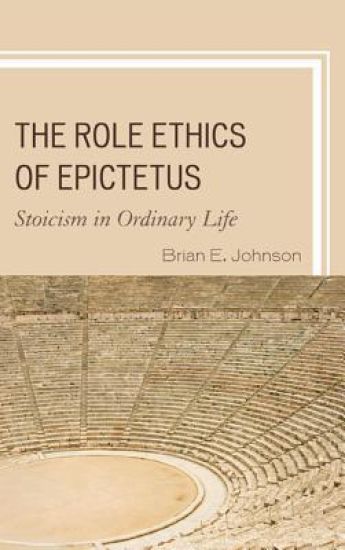
The Role Ethics of Epictetus

The Role Ethics of Epictetus

Brian E. Johnson

Lexington Books
2013
sidottu
The Role Ethics of Epictetus: Stoicism in Ordinary Life offers an original interpretation of Epictetus’s ethics and how he bases his ethics on an appeal to our roles in life. Epictetus believes that every individual is the bearer of many roles from sibling to citizen and that individuals are morally good if they fulfill the obligations associated with these roles. To understand Epictetus’s account of roles, scholars have often mistakenly looked backwards to Cicero’s earlier and more schematic account of roles. However, for Cicero, roles are merely a tool in the service of the virtue of decorum where decorum is one of the four canonical virtues—prudence, justice, greatness of spirit, and decorum. In contrast, Epictetus sets those virtues aside and offers roles as a complete ethical theory that does the work of those canonical virtues. This book elucidates the unique features of Epictetus’s role based ethics. First, individuals have many roles and these roles are substantial enough that they may conflict. Second, although Epictetus is often taken to have only a sparse theory of appropriate action (or “duty” in older translations), Brian E. Johnson examines the criteria by which appropriate action is measured in order to demonstrate that Epictetus does have an account of appropriate action and that it is grounded in his account of roles. Finally, Epictetus downplays the Stoic ideal of the sage and replaces that figure with role-bound individuals who are supposed to inspire each of us to meet the challenges of our own roles. Instead of looking to sages, who have a perfect knowledge and action that we must imitate, Epictetus’s new ethical heroes are those we do not imitate in terms of knowledge or action, but simply in the way they approach the challenges of their roles. The analysis found in The Role Ethics of Epictetus will be of great value both to students and scholars of ancient philosophy, ethics and moral philosophy, history, classics, and theology, and to the educated reader who admires Epictetus.
Antisemitism in the German Military Community and the Jewish Response, 1914–1938
Antisemitism in the German Military Community and the Jewish Response, 1914–1938 explores how German World War I veterans from different social and political backgrounds contributed to antisemitic politics during the Weimar Republic. The book compares how the military, right-wing veterans, and Jewish veterans chose to remember their war experiences and translate these memories into a political reality in the postwar world. Antisemitism addresses several neglected issues. First, there is relatively little scholarship discussing antisemitism in the imperial German army and the impact former imperial officers had on the antisemitic predilections of veteran associations. This subject deserves attention given that veteran politics during the Weimar Republic were of tremendous significance to the collapse of democracy and the rise of National Socialism, and that the primary architects of the Third Reich and the “Final Solution” were either World War I veterans or had been members of paramilitary organizations in the interwar period. The second issue addressed is how veterans influenced the definition of “Aryan” identity, or how race came to be perceived through the prism of war and political violence. Since German Jews had to fight both accusations of shirking military service and the perception of the “Jew” as effeminate, the manner in which these veterans tried to reforge Jewish identity and their relationship with their former comrades is an extraordinarily important issue. The third issue concerns situational antisemitism, or the process by which an organization expressed an opinion or policy concerning Jews in response to internal dissension and external influences.
Antisemitism in the German Military Community and the Jewish Response, 1914–1938
Antisemitism in the German Military Community and the Jewish Response, 1914–1938 explores how German World War I veterans from different social and political backgrounds contributed to antisemitic politics during the Weimar Republic. The book compares how the military, right-wing veterans, and Jewish veterans chose to remember their war experiences and translate these memories into a political reality in the postwar world. Antisemitism addresses several neglected issues. First, there is relatively little scholarship discussing antisemitism in the imperial German army and the impact former imperial officers had on the antisemitic predilections of veteran associations. This subject deserves attention given that veteran politics during the Weimar Republic were of tremendous significance to the collapse of democracy and the rise of National Socialism, and that the primary architects of the Third Reich and the “Final Solution” were either World War I veterans or had been members of paramilitary organizations in the interwar period. The second issue addressed is how veterans influenced the definition of “Aryan” identity, or how race came to be perceived through the prism of war and political violence. Since German Jews had to fight both accusations of shirking military service and the perception of the “Jew” as effeminate, the manner in which these veterans tried to reforge Jewish identity and their relationship with their former comrades is an extraordinarily important issue. The third issue concerns situational antisemitism, or the process by which an organization expressed an opinion or policy concerning Jews in response to internal dissension and external influences.
Mumbles and Gower Pubs

Mumbles and Gower Pubs

Brian E Davies

The History Press Ltd
2006
nidottu
Features the pubs and inns of the Gower Peninsula. This book, featuring a collection of photographs, prints, and postcards, is for all those who want to know more about the history of the area's pubs, their clientele, landlords and ladies, and takes the reader on a journey into the past of their favourite local.
Getting the Most Out of the Research Experience

Getting the Most Out of the Research Experience

Brian E. Roberts

SAGE Publications Inc
2007
sidottu
'The book gives a comprehensive overview of what research and the research experience encompass....This book makes an interesting read for everyone who has carried out qualitative research or is planning to do so in the future. It is well-written, and very clearly structured' - Social Research Association While each research situation is different and no book can fully prepare the researcher for what they experience - this book provides a guide to what may be expected. Brian Roberts takes the researcher through the research process, answering the practical and subjective questions anyone will face: - entering the field and finding the right research topic - emotional and identity issues of research - overcoming writing and research 'blocks' - getting your research into reports, articles and books - reactions to research and how to handle experiences of rejection - and the questions every researcher should ask: What do I get from research, and what next? Loaded with advice on everything from organizing interpretations to coping with stress, this book is a must-read for students of all levels across the social sciences who are about to enter the research field.
Getting the Most Out of the Research Experience

Getting the Most Out of the Research Experience

Brian E. Roberts

SAGE Publications Inc
2007
nidottu
'The book gives a comprehensive overview of what research and the research experience encompass....This book makes an interesting read for everyone who has carried out qualitative research or is planning to do so in the future. It is well-written, and very clearly structured' - Social Research Association While each research situation is different and no book can fully prepare the researcher for what they experience - this book provides a guide to what may be expected. Brian Roberts takes the researcher through the research process, answering the practical and subjective questions anyone will face: - entering the field and finding the right research topic - emotional and identity issues of research - overcoming writing and research 'blocks' - getting your research into reports, articles and books - reactions to research and how to handle experiences of rejection - and the questions every researcher should ask: What do I get from research, and what next? Loaded with advice on everything from organizing interpretations to coping with stress, this book is a must-read for students of all levels across the social sciences who are about to enter the research field.