Kirjojen hintavertailu. Mukana 11 607 619 kirjaa ja 12 kauppaa.

Kirjahaku

Etsi kirjoja tekijän nimen, kirjan nimen tai ISBN:n perusteella.

1000 tulosta hakusanalla Brian Greene

Do kontsa vremen: Soznanie, materija i poiski smysla v menjajuschejsja Vselennoj
Brajan Grin - krupnyj fizik-teoretik i znamenityj populjarizator nauki. Ego knigi pomogli mnogim poznakomitsja s teoriej strun i drugimi vazhnejshimi idejami sovremennoj fiziki. "Do kontsa vremen" - popytka poiska mesta dlja cheloveka v kartine mira, kotoruju opisyvaet sovremennaja nauka. Grin pokazyvaet, kak v protivoborstve dvukh velikikh sil - entropii i evoljutsii - razvertyvaetsja kosmos s ego galaktikami, zvezdami, planetami i, nakonets, zhiznju. Pochemu est chto-to, a ne nichego? Kak miriady dvizhuschikhsja chastits obretajut sposobnost chuvstvovat i myslit? Kak nam postich smysl zhizni v ledenjaschej perspektive trillionov let buduschego, gde ljubaja mysl v itoge obrechena na ugasanie? Gotovye otvety u Grina est ne vsegda, no nauchnyj kontekst delaet ikh poisk nesravnenno bolee interesnym zanjatiem.
Religious Paradigms in the Novels of Graham Greene and Brian Moore
This is a sumptuous buffet of modern life presented by the British novelist Graham Greene and his Irish counterpart Brian Moore. Though the book follows a comparative framework, it is flavored by the critical tools of Reader Response as well as The Gestalt literary criticism to sift out the Genuine humanity it argues for, from the comic appearances of life that are founded on sand and are floundered at the mere waves of life.
Graham Greene's Thrillers and the 1930s

Graham Greene's Thrillers and the 1930s

Brian Diemert

McGill-Queen's University Press
1996
nidottu
Examines the first and most prolific phase of Graham Greene's career, demonstrating the relationship between his fiction and the political, economic, social and literary contexts of the period. This volume examines some of Greene's best-known works including "Brighton Rock".
The Grass is Always Greener

The Grass is Always Greener

Brian Gushue

CG Sports Management LLC
2021
pokkari
On November 6, 2017, Brian Gushue attended his 500th NFL football game. He achieved this unlikely feat despite his lifelong battle with cerebral palsy. His devotion to football, especially its highest level, was borne out of his enjoyment of playing the sport as a child and his lifelong admiration for Miami Dolphins quarterback Bob Griese, who he got to see play in person only once. Eventually, Brian made it his mission to see a game in every NFL stadium with a grass field -- because he prefers the look, feel and smell of grass compared to artificial playing surfaces. Brian soon came up with a new goal. Sometime in the late 1990s, when he had witnessed fewer than 100 NFL games on grass, he set his sights on attending 500 of them. Late in the chase, he added a caveat to the quest: to see every NFL team play at least 10 times. Now he hopes to see every team play at least 25 times.The Grass Is Always Greener -- One Football Fan's Improbable Quest to Attend 500 NFL Games is full of football facts, commentary, and history intertwined with memories from Brian's incredible journey, which will awe and inspire not only fans of the game but anyone who has a dream and the determination to make it come true.
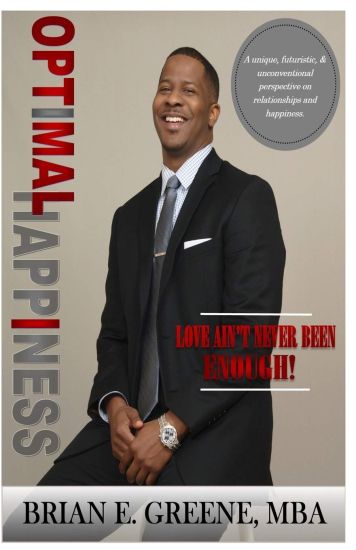
Optimal Happiness- Love Ain't Never Been Enough!

Optimal Happiness- Love Ain't Never Been Enough!

Brian E. Greene

Independently Published
2019
nidottu
Self help book regarding relationship and happiness improvement techniques. A first hand discussion on how the techniques have impacted, improved and changed my relationships. I tell very vivid and detailed accounts about relationships, sexual encounters, friendship issues and problem solving that convey philosophical and psychological notions and components.
The Jury Under Fire

The Jury Under Fire

Brian H. Bornstein; Edie Greene

Oxford University Press Inc
2017
nidottu
Although the jury is often referred to as one of the bulwarks of the American justice system, it regularly comes under attack. Recent changes to trial procedures, such as reducing jury size, allowing non-unanimous verdicts, and rewriting jury instructions in plain English, were designed to promote greater efficiency and adherence to the law. Other changes, such as capping damages and replacing jurors with judges as arbiters in complex trials, seem designed to restrict the role of laypeople in trial outcomes. Whether these innovations are implemented to facilitate the administration of justice or due to the belief that juries have excessive power and make irrational decisions, they raise a host of questions about their effects on juries' judgments and about justice. Policymakers sometimes make incorrect assumptions about jury behavior, with the result that some reform efforts have had surprising and unintended consequences. The Jury Under Fire reviews a number of controversial beliefs about juries as well as the implications of these views for jury reform. It reviews up-to-date research on both criminal and civil juries that uses a variety of research methodologies: simulations, archival analyses, field studies, and juror interviews. Each chapter focuses on a mistaken assumption or myth about jurors or juries, critiques these myths, and then uses social science research findings to suggest appropriate reforms. Chapters discuss the experience of serving as a juror; jury selection and jury size; and the impact of evidence from eyewitnesses, experts, confessions, and juvenile offenders. The book also covers the process of deciding damages and punishment and the role of emotions in jurors' decision making, and it compares jurors' and judges' decisions. Finally, it reviews a broad range of efforts to reform the jury, including the most promising reforms that have a solid backing in research. Featuring highly visible trials to illustrate key points, The Jury Under Fire will interest researchers in psychology and the law, practicing attorneys, and policymakers, as well as students and trainees in these areas.
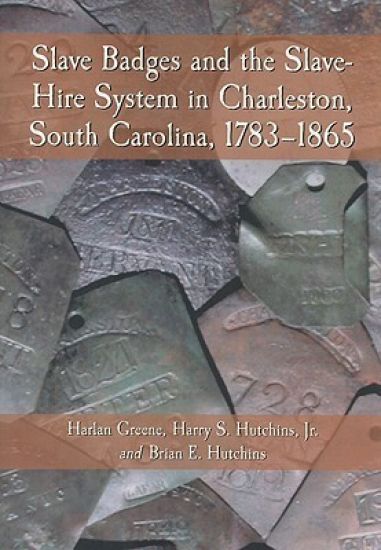
Slave Badges and the Slave-Hire System in Charleston, South Carolina, 1783-1865

Slave Badges and the Slave-Hire System in Charleston, South Carolina, 1783-1865

Harlan Greene; Jr. Hutchins; Brian E. Hutchins

McFarland Co Inc
2008
pokkari
The slave-hire system of Charleston, South Carolina, in the 1700s and the 1800s produced a curious object--the slave badge. The badges were intended to legislate the practice of hiring a slave from one master to another, and slaves were required by law to wear them. Slave badges have become quite collectible and have excited both scholarly and popular interest in recent years. This work documents how the slave-hire system in Charleston came about, how it worked, who was in charge of it, and who enforced the laws regarding slave badges. Numerous badge makers are identified, and photographs of badges, with commentary on what the data stamped on them mean, are included. The authors located income and expense statements for Charleston from 1783 to 1865, and deduced how many slaves were hired out in the city every year from 1800 on. The work also discusses forgeries of slave badges, now quite common. There is a section of 20 color plates.
Transforming Global Education Through Evidence

Transforming Global Education Through Evidence

Benjamin K Master; Shelly Culbertson; Brian Phillips; Elaine Lin Wang; Harold D Greene; Joe Francombe; Hamish Evans; Susan Guthrie

RAND
2021
nidottu
In 2017, the BHP Foundation launched its Education Equity Global Signature Program to enhance opportunities for disadvantaged young people to access a quality education. The Program invests in efforts to increase the use of evidence to improve education. In this report, researchers develop a framework to evaluate the program, explain methods for assessing progress over five years, and present preliminary results after a year of evaluation.
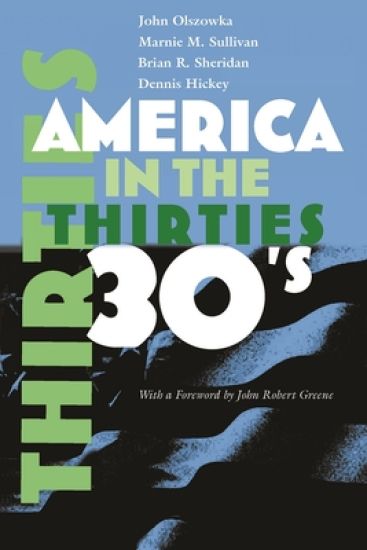
America in the Thirties

America in the Thirties

John Olszowka; Marnie M. Sullivan; Brian R. Sheridan; Dennis Hickey; John Robert Greene

Syracuse University Press
2014
nidottu
As the newest addition to the America in the Twentieth Century series, this book explores the complexity of America in what is considered its darkest era of thecentury. The decade stood in stark contrast to the carefree, happy-go-lucky days of the Roaring Twenties when prosperity appeared endless. The Stock Market Crash in October 1929 and the economic collapse it unleashed threatened the very foundations of America’s economic, political, and social institutions. The ecological disaster produced by the Dust Bowl ravaging the Great Plains only added to the suffering and misery. Yet the decade was not just one mired in complete disorder. The 1930s were also a vibrant period of innovation, transformation, and in some cases, even optimism. Politics, beginning with Herbert Hoover and continuing with Franklin Roosevelt, underwent a fundamental transformation, ushering in an activist state and firmly establishing the idea that through prudent federal policies, it was possible not only to orchestrate an economic recovery but also to prevent future economic downturns.Workers, African Americans, ethnic Americans, and women responded tothe era’s challenges through their newfound political voice in Roosevelt’s New Deal and through the institutions and communities they created to alleviate their suffering. Culturally, the 1930s also proved to be a boon to America, ushering in the Golden Age of Hollywood as millions of Americans looked to movies as a momentary refuge from their daily plight. For all the hardship and despair of the 1930s, there was also a vitality that defined the decade.
America in the Thirties

America in the Thirties

John Olszowka; Marnie M. Sullivan; Brian R. Sheridan; Dennis Hickey; John Robert Greene

Syracuse University Press
2014
sidottu
As the newest addition to the America in the Twentieth Century series, this book explores the complexity of America in what is considered its darkest era of thecentury. The decade stood in stark contrast to the carefree, happy-go-lucky days of the Roaring Twenties when prosperity appeared endless. The Stock Market Crash in October 1929 and the economic collapse it unleashed threatened the very foundations of America’s economic, political, and social institutions. The ecological disaster produced by the Dust Bowl ravaging the Great Plains only added to the suffering and misery. Yet the decade was not just one mired in complete disorder. The 1930s were also a vibrant period of innovation, transformation, and in some cases, even optimism. Politics, beginning with Herbert Hoover and continuing with Franklin Roosevelt, underwent a fundamental transformation, ushering in an activist state and firmly establishing the idea that through prudent federal policies, it was possible not only to orchestrate an economic recovery but also to prevent future economic downturns.Workers, African Americans, ethnic Americans, and women responded tothe era’s challenges through their newfound political voice in Roosevelt’s New Deal and through the institutions and communities they created to alleviate their suffering. Culturally, the 1930s also proved to be a boon to America, ushering in the Golden Age of Hollywood as millions of Americans looked to movies as a momentary refuge from their daily plight. For all the hardship and despair of the 1930s, there was also a vitality that defined the decade.
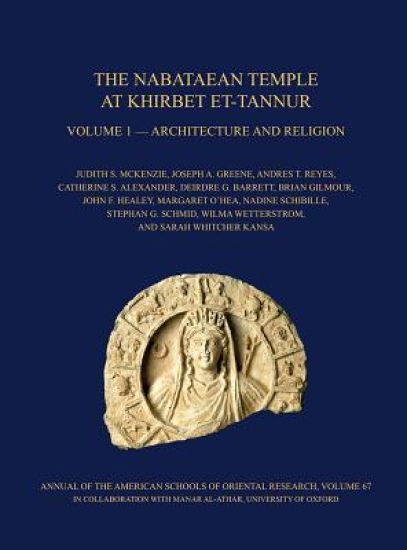
The Nabataean Temple at Khirbet et-Tannur, Jordan, Volume 1

The Nabataean Temple at Khirbet et-Tannur, Jordan, Volume 1

Judith S. McKenzie; Joseph A. Greene; Andres T. Reyes; Catherine S. Alexander; Deirdre G. Barrett; Brian Gilmour; John F. Healey; Margaret O’Hea; Nadine Schibille; Stephan G. Schmid; Wilma Wetterstrom; Sara Whitcher Kansa

American Schools of Oriental Research
2014
sidottu
Khirbet et-Tannur is a Nabataean site dating from the second century B.C. to the fourth to sixth centuries A.D. located on a hilltop above the Wadi el-Hasa near Khirbet edh-Dharih, 70 km north of Petra along the King’s Highway. In 1937, Nelson Glueck excavated Khirbet et-Tannur on behalf of the American Schools of Oriental Research and the Department of Antiquities of Transjordan, but died before completing a final report. Now, in two extensively illustrated volumes, the results of Glueck’s excavations are finally published, based on previously unstudied excavation records and archaeological materials in the ASOR Nelson Glueck Archive at the Semitic Museum, Harvard University. Volume 1 is devoted to the architecture of the temple, the dating of its successive phases, its sculptural decoration and iconography,and to a discussion of Nabataean religion, including the evidence for its connections with the religion of Iron Age Edom and its continuation at the temple of Khirbet et-Tannur well into the Christian era, before the A.D. 363 earthquake brought an end to the site. The volume closes with observations about iconoclasm at Khirbet et-Tannur, Khirbet edh-Dharih and Petra. Annual of ASOR 67
The Nabataean Temple at Khirbet et-Tannur, Jordan, Volume 2

The Nabataean Temple at Khirbet et-Tannur, Jordan, Volume 2

Judith S. McKenzie; Joseph A. Greene; Andres T. Reyes; Catherine S. Alexander; Deirdre G. Barrett; Brian Gilmour; John F. Healey; Margaret O’Hea; Nadine Schibille; Stephan G. Schmid; Wilma Wetterstrom; Sara Whitcher Kansa

American Schools of Oriental Research
2014
sidottu
Khirbet et-Tannur is a Nabataean site dating from the second century B.C. to the fourth to sixth centuries A.D. located on a hilltop above the Wadi el-Hasa near Khirbet edh-Dharih, 70 km north of Petra along the King’s Highway. In 1937, Nelson Glueck excavated Khirbet et-Tannur on behalf of the American Schools of Oriental Research and the Department of Antiquities of Transjordan, but died before completing a final report. Now, in two extensively illustrated volumes, the results of Glueck’s excavations are finally published, based on previously unstudied excavation records and archaeological materials in the ASOR Nelson Glueck Archive at the Semitic Museum, Harvard University. Volume 2 offers a systematic reorganization of Glueck’s original excavation records and presents detailed specialist analyses of the Khirbet et-Tannur faunal and botanical remains, metal, glass, lamps and pottery collected by Glueck in 1937 and now preserved in Semitic Museum’s ASOR Nelson Glueck Archive, along with fresh examinations of the Nabataean inscriptions and altars from the site. Annual of ASOR 68
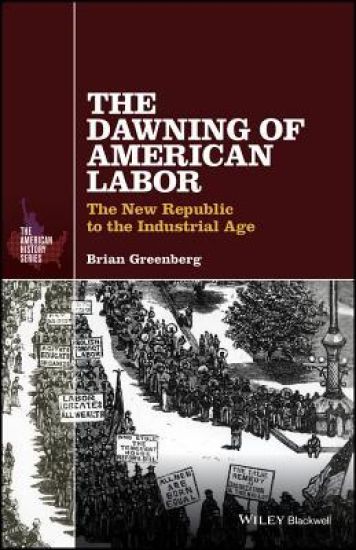
The Dawning of American Labor

The Dawning of American Labor

Brian Greenberg

John Wiley Sons Inc
2017
sidottu
A concise history of labor and work in America from the birth of the Republic to the Industrial Age and beyond From the days of Thomas Jefferson, Americans believed that they could sustain a capitalist industrial economy without the class conflict or negative socioeconomic consequences experienced in Europe. This dream came crashing down in 1877 when the Great Strike, one of the most militant labor disputes in US history, convulsed the nation’s railroads. In The Dawning of American Labor a leading scholar of American labor history draws upon first-hand accounts and the latest scholarship to offer a fascinating look at how Americans perceived and adapted to the shift from a largely agrarian economy to one dominated by manufacturing. For the generations following the Great Strike, “the Labor Problem” and the idea of class relations became a critical issue facing the nation. As Professor Greenberg makes clear in this lively, highly accessible historical exploration, the 1877 strike forever cast a shadow across one of the most deeply rooted articles of national faith—the belief in American exceptionalism. What conditions produced the faith in a classless society? What went wrong? These questions lie at the heart of The Dawning of American Labor. Provides a concise, comprehensive, and completely up-to-date synthesis of the latest scholarship on the early development of industrialization in the United StatesConsiders how working people reacted, both in the workplace and in their communities, as the nation’s economy made its shift from an agrarian to an industrial baseIncludes a formal Bibliographical Essay—a handy tool for student researchWorks as a stand-alone text or an ideal supplement to core curricula in US History, US Labor, and 19th-Century America Accessible introductory text for students in American history classes and beyond, The Dawning of American Labor is an excellent introduction to the history of labor in the United States for students and general readers of history alike.
The Dawning of American Labor

The Dawning of American Labor

Brian Greenberg

John Wiley Sons Inc
2017
nidottu
A concise history of labor and work in America from the birth of the Republic to the Industrial Age and beyond From the days of Thomas Jefferson, Americans believed that they could sustain a capitalist industrial economy without the class conflict or negative socioeconomic consequences experienced in Europe. This dream came crashing down in 1877 when the Great Strike, one of the most militant labor disputes in US history, convulsed the nation’s railroads. In The Dawning of American Labor a leading scholar of American labor history draws upon first-hand accounts and the latest scholarship to offer a fascinating look at how Americans perceived and adapted to the shift from a largely agrarian economy to one dominated by manufacturing. For the generations following the Great Strike, “the Labor Problem” and the idea of class relations became a critical issue facing the nation. As Professor Greenberg makes clear in this lively, highly accessible historical exploration, the 1877 strike forever cast a shadow across one of the most deeply rooted articles of national faith—the belief in American exceptionalism. What conditions produced the faith in a classless society? What went wrong? These questions lie at the heart of The Dawning of American Labor. Provides a concise, comprehensive, and completely up-to-date synthesis of the latest scholarship on the early development of industrialization in the United StatesConsiders how working people reacted, both in the workplace and in their communities, as the nation’s economy made its shift from an agrarian to an industrial baseIncludes a formal Bibliographical Essay—a handy tool for student researchWorks as a stand-alone text or an ideal supplement to core curricula in US History, US Labor, and 19th-Century America Accessible introductory text for students in American history classes and beyond, The Dawning of American Labor is an excellent introduction to the history of labor in the United States for students and general readers of history alike.
Vegan: Get Rid of The Toxins That Make You Sick with Vegan Diet: Eat Healthier, Lose Fat, And Be Happy
Discover How Eating Green Can Change Your Health and Life For the Better Find Out What the Meat Industry Don't Want You To Know Statistic shows that people living in Asian countries has much lower rate of cancer. Why is that? Why do people call America the country of obesity? When a study shows why Americans eat meat, everyone says it is for the protein. But what has the meat industry been hiding all this time? What don't they want you to know? Purchase this book and find out the Secrets now
Long Term Care

Long Term Care

Brian Green

Beyond Publishing
2024
sidottu
The overwhelming majority of people will be affected Learn the competitive strategies from the nation's leading Long Term Care Insurance team.In this short, fun read you will discover how to preserve your wealth, protect your assets, and most importantly, help secure your family legacy with dignity.Avoid being a burden to your loved ones - create financial leverage today with the most competitive Long Term Care/Extended Care insurance solutions.LONG TERM CARE PLANS CAN INCLUDE: - 100% liquidity- Return of all Premiums ] Interest- Guaranteed Rates and Benefits - Income tax free payouts AND Death Benefits- Ability to use the money how you choose, not just in certified care facilitiesThis marks Brian's inaugural book writing venture; after beginning his career in education, he pivoted to a career in financial services in 1998. In addition to being an agent and Registered Investment Advisor, he is the owner of 3 Point Financial Solutions. He is also the president of the Big 30 Athletic Corporation: an organization that promotes post-high school education to forty school districts via a scholarship program.In 2022 he founded the I.M.A.G.E. (I'm Making A Graceful Exit) program. This program is designed to help senior citizens prepare for life's "Final Graduation". In conjunction with IMAGE, he and his brother, Kevin, started the Phyllis J Green Memorial Scholarship fund. The fund provides scholarships to the children of single mothers.Brian and his wife Kelly have been married for 32 years. They have 2 grown children, Taylor and Jared.
Long Term Care

Long Term Care

Brian Green

Beyond Publishing
2024
pokkari
The overwhelming majority of people will be affected Learn the competitive strategies from the nation's leading Long Term Care Insurance team.In this short, fun read you will discover how to preserve your wealth, protect your assets, and most importantly, help secure your family legacy with dignity.Avoid being a burden to your loved ones - create financial leverage today with the most competitive Long Term Care/Extended Care insurance solutions.LONG TERM CARE PLANS CAN INCLUDE: - 100% liquidity- Return of all Premiums + Interest- Guaranteed Rates and Benefits - Income tax free payouts AND Death Benefits- Ability to use the money how you choose, not just in certified care facilitiesThis marks Brian's inaugural book writing venture; after beginning his career in education, he pivoted to a career in financial services in 1998. In addition to being an agent and Registered Investment Advisor, he is the owner of 3 Point Financial Solutions. He is also the president of the Big 30 Athletic Corporation: an organization that promotes post-high school education to forty school districts via a scholarship program.In 2022 he founded the I.M.A.G.E. (I'm Making A Graceful Exit) program. This program is designed to help senior citizens prepare for life's "Final Graduation". In conjunction with IMAGE, he and his brother, Kevin, started the Phyllis J Green Memorial Scholarship fund. The fund provides scholarships to the children of single mothers.Brian and his wife Kelly have been married for 32 years. They have 2 grown children, Taylor and Jared.