Featuring 73 sharp, new images obtained with state-of-the-art scanning technology, the Second Edition of this popular pocket atlas is a quick, handy guide to interpreting computed tomography images of the brain and calvarium, temporal bone, orbit, nasal cavity, and paranasal sinuses. The book helps readers recognize normal anatomic structures on CT scans and distinguish these structures from artifacts.Each page presents a high-resolution CT scan, with anatomic landmarks clearly labeled. Directly above the scan are a key to the labels and a thumbnail illustration that orients the reader to the plane of view (sagittal, axial, or coronal). This format enables readers to identify features rapidly and accurately. Praise for the previous edition: "[A] splendid, very pocket-sized atlas....[A] very useful basic booklet which will enlighten all clinical trainees and not a few of their mentors."-- Journal of Neurology, Neurosurgery, and Psychiatry "A very useful and uncomplicated pocket-sized reference....This little atlas will be popular among residents in neurology, neurosurgery, ENT, ophthalmology, and internal medicine, and all clinicians who are required to inspect CTs of the head."-- Neurology "The book is most useful for medical students and neophyte radiology, neurology, or neurosurgical residents....Recommended!-- American Journal of Neuroradiology
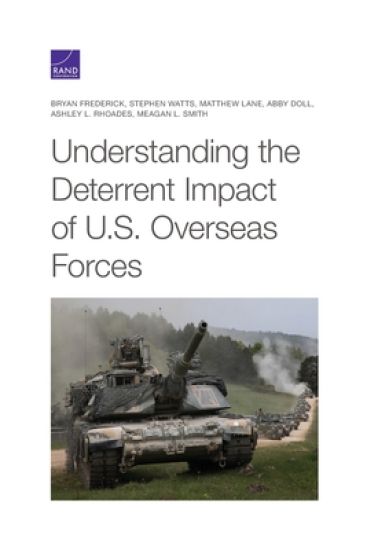
This report provides empirical evidence on the deterrent effects of U.S. overseas military forces. It investigates how these effects might vary by the type, size, and location of these forces, as well as the effects of U.S. forces deployed in the midst of crises. The analyses provide the clearest evidence in support of the deterrent effect of heavy ground forces, particularly when deployed near but not directly bordering potential adversaries.
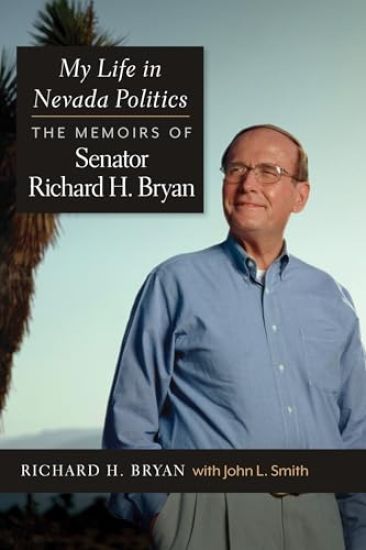
My Life in Nevada Politics tells the entertaining, informative, and at times poignant story of the rise of Richard Bryan from humble beginnings in Las Vegas to the pinnacle of Nevada politics during a time of great change across the state and nation. Through his memoir, Bryan provides keen insight into the mechanics of politics, and the book serves as a must-read for anyone interested in the history of the Silver State.Born in Washington, D.C. in 1937, Bryan grew up in Las Vegas. His interest in politics started early, winning school-class elections and expressing a personal goal of one day becoming Governor of Nevada. He was elected student body president at the University of Nevada.His career in public service began as a deputy district attorney in Clark County. In 1966, he became the first county public defender in state history. Bryan served in the Nevada Legislature in both the Assembly and Senate before winning the statewide office of Attorney General in 1978. He was elected Nevada Governor in 1982, winning re-election in 1986. Bryan was elected to the U.S. Senate in 1988, reelected in 1994, and served on the committees on Commerce, Banking, Taxation, and Intelligence, and chaired the Ethics Committee. He retired from the Senate in 2001 and returned to Nevada.Bryan's list of accomplishments is extensive. He was largely responsible for the early call-to-arms in the fight against the Department of Energy's attempt to create a nuclear waste repository at Yucca Mountain. As governor, he reorganized state economic development programs, improved environmental protections for Lake Tahoe and other threatened areas, and made unprecedented appointments of women. In the Senate, Bryan authored the Southern Nevada Public Lands Management Act and the National Conservation Area for the High Rock Desert country. He had a front-row seat to the historic buildup to the Iraq War and the impeachment of President Bill Clinton. In retirement, Bryan continues to serve the state through his participation on a wide range of committees. Throughout his political career, Bryan, with wife Bonnie at his side, traversed Nevada from its tiniest hamlets to the metro areas of Reno and Las Vegas with unrivaled zeal in his efforts to represent the state's citizens. He is famous for knowing thousands of his constituents not only by their first names, but also recalling details of their lives. The simple fact is, while in service to Nevada, Bryan was in his element in the place he loves best.
An essential study resource for those studying and reading biblical Hebrew and GreekThis updated reader's Bible combines A Reader's Hebrew Bible and A Reader's Greek New Testament, Third Edition into one convenient and beautiful volume. It offers the following features:Complete text of the Hebrew and Aramaic Bible, using the Westminster Leningrad CodexGreek text underlying the New International Version (2011)--with footnotes comparing wherever this text is different from the UBS5/NA28 textFootnoted definitions of all Hebrew words occurring 100 times or less--twenty-five or less for Aramaic words--with context-specific glossesFootnoted definitions of all Greek words occurring thirty times or lessLexicons of all Hebrew words occurring more than 100 times and Greek words occurring more than thirty times. Ideal for students, pastors, and instructors, A Reader's Hebrew and Greek Bible saves time and effort in studying the Hebrew Old Testament and Greek New Testament. By eliminating the need to look up definitions, the footnotes allow you to more quickly read the Hebrew, Aramaic, and Greek text.Featuring a new lay-flat hardcover in beautiful cloth overboards and a new cream paper for ease of reading and reduced eye strain, A Reader's Hebrew and Greek Bible is a practical, attractive, and surprisingly affordable resource.
A Reader's Hebrew and Greek Bible: Third Edition is a classic and essential tool for students of biblical Hebrew and Greek. The Reader presents the Hebrew and Aramaic text of the Westminster Leningrad Codex (minus the critical apparatus) and the Greek text underlying the New International Version alongside the English translation.Hebrew words that occur one-hundred times or less (twenty-five or less for Aramaic words) are given definitions in footnotes, allowing students to focus on reading, comprehension, parsing, and grammatical issues. Shaded Hebrew names that occur less than one-hundred times help ease reading, and parsing information in footnotes aid students in understanding meaning and English renderings. Ketiv/Qere readings are noted in the text throughout. The Italian Duo-Tone binding, ribbon marker, and easy-to-read Hebrew font make this Reader an attractive Bible for reading and study.Words that appear in the New Testament fewer than thirty times are given definitions in footnotes for ease of reading, allowing students to focus on reading, comprehension, parsing, and grammatical issues. Footnotes comparing the Greek text with the critical text of USB5/NA28 are included throughout. A mini lexicon of all words occurring more than thirty times and full-color maps are included in the backmatter. The Italian Duo-Tone binding, ribbon marker, and easy-to-read Greek font make this Reader an attractive Bible for reading and study.The new feature of this updated edition of A Reader's Hebrew and Greek Bible include an "Index of the Bible's Use of the Bible" by award-winning author Gary Edward Schnittjer. The index is based on Schnittjer's careful work of Scripture's use of Scripture and lists all allusions tied directly to the Hebrew and Greek languages. Sigla inform the reader of the type of relationship between texts. This important addition sets A Reader's Hebrew and Greek Bible apart from other Hebrew and Greek resources, promoting careful and fruitful study of the Scripture.
Stephen Watts; Patrick B Johnston; Jennifer Kavanagh; Sean M Zeigler; Bryan Frederick; Trevor Johnston; Karl P Mueller; Astrid Stuth Cevallos; Nathan Chandler; Meagan L Smith; Alexander Stephenson; Julia A Thompson
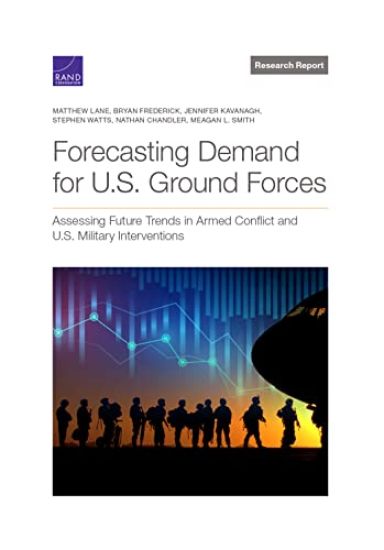
The foreign policy and defense communities have intensively debated the efficacy of low-cost and small-footprint military options for crises such as those in Afghanistan, Iraq, Libya, Somalia, Syria, and Yemen. This report provides a statistical analysis of hundreds of cases, supplemented by case studies, to evaluate the strategic effects of each option across a range of irregular warfare operations and in a range of operational environments.
In his revolutionary book Miracles Happen, Brian Weiss M.D., the New York Times bestselling author of Many Lives, Many Masters, examines the physical, emotional, and spiritual healing that is possible when you freely accept and embrace the reality of reincarnation. Trained as a traditional psychotherapist, Dr. Weiss began to explore how reincarnation and past life regression can lead us to our higher selves after a startling encounter with a patient. Now a leading proponent of past-life therapy, Dr. Weiss shows us that, indeed, Miracles Happen, with seemingly incredible but true stories that demonstrate how, by getting in touch with and understanding our past lives, we can dramatically improve the present.
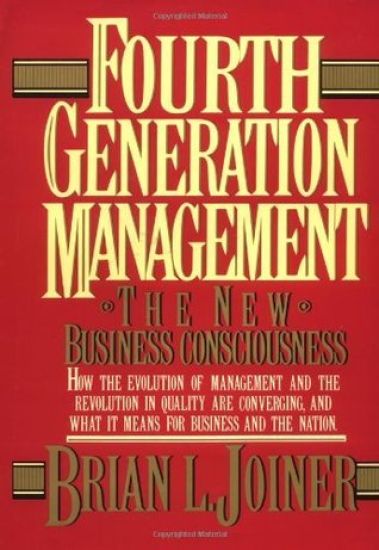
Written by the first of a new breed of "quality gurus", "Fourth Generation Management" is a clear, concise synthesis of the best of current management practice and a host of dynamic prescriptions for the future. The centerpiece of the book is the "Joiner Triangle", which provides readers with a conceptual framework upon which to build a new corporate culture - one that positions companies for growing productivity and profit in the years ahead. Focusing on quality as defined by the customer...a scientific, databased approach to management...and the creation of long-term, team-spirited relationships both internally and externally - the Joiner Triangle is already gaining credence as the management philosophy of tomorrow. And that's only the beginning. Readers will learn why process is more important than short-term results, how to foster a working environment in which all employees feel like winners, a new way of looking at data, processes, and variation, and much more. In short, this major release by a widely respected quality improvement leader is the business person's blueprint for the next phase of the "Quality Revolution".
This study examines the question of which type of desegregation plan most effectively reduces segregation in American public schools. It departs from previous research in that the author does not categorize desegregation plans simply as mandatory or voluntary; rather, he creates a choice-coercion continuum to account for more of the variation between diverse desegregation orders that have been implemented in urban America. The issue of measuring segregation is also addressed in a new way by Fife, who concludes that mandated desegregation techniques reduce the level of segregation to a greater degree than less coercive plans.This work is interdisciplinary and will be useful to scholars in political science, public policy, public administration, sociology, and education. It will also be of interest to education policymakers and administrators as it illustrates how applied public policy analysis can address issues and enhance decision-making processes.
As the 2000 presidential election suggests, the particular type of voting system employed in a given venue can impact the outcome of elections, not only within an individual state, but, as Fyfe and Miller explore, across the states as well. Yet the scholarly community has paid little attention to the nature and impact of voting systems on electoral outcomes to date.Using Elazar's model of political culture in the American states as a logistical framework on which to build analysis of these voting systems, they indicate that culture is a fundamental variable to consider when attempting to ascertain variances between and among the states. This study will be of particular interest to scholars, students, and other researchers involved with American elections and contemporary politics and voting policy.
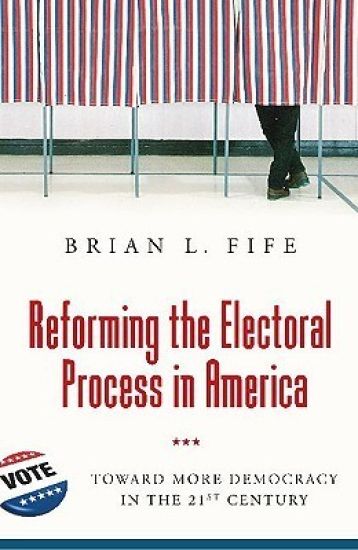
Calling for increased civic engagement, this book makes a compelling case for reforms that will democratize American elections and provide more power to the people. Quick-fix plans to "restore democracy" are a dime a dozen. Happily, Reforming the Electoral Process in America: Toward More Democracy in the 21st Century offers a more nuanced approach, emphasizing the value of civic engagement in a democratic society. Author Brian L. Fife situates our current plight in the context of the growth of democracy, from the Founding Fathers through the Jackson era, the enfranchisement of blacks after the Civil War, women's suffrage, and the Voting Rights Act of the 1960s. He reflects on the work of the Framers as it pertains to voting and elections, compares voting laws and voter turnout in the various states, and offers an analysis of the impact of money in American elections. Ultimately, Fife proposes a blueprint for reform that includes national same-day voter registration, elimination of punch card and mechanical voting machines, reconsideration of felons' voting rights, regional primaries, and the abolition of the Electoral College.
Can public schools in America be saved? This book considers theory, current practice, and the common school ideal through a historical lens to arrive at practical suggestions for reforming contemporary public education.Despite dramatic, sweeping changes in recent decades, a strong case can be made for guiding the reformation of contemporary public education in the United States on common school ideology of the nineteenth century. The author argues that the common school remains a public institution capable of preparing America's youth to contribute to the community in a positive manner, and that education must be treated at a public good where all children—regardless of social class—have a right to a quality education. The work includes a thorough overview of Horace Mann's writings on K–12 public education that support the common school ideal—concepts that are over 150 years old, yet still highly relevant today.
The Twitter Presidency explores the rhetorical style of President Donald J. Trump, attending to both his general manner of speaking as well as to his preferred modality. Trump’s manner, the authors argue, reflects an aesthetics of white rage, and it is rooted in authoritarianism, narcissism, and demagoguery. His preferred modality of speaking, namely through Twitter, effectively channels and transmits the affective dimensions of white rage by taking advantage of the platform’s defining characteristics, which include simplicity, impulsivity, and incivility. There is, then, a structural homology between Trump’s general communication practices and the specific platform (Twitter) he uses to communicate with his base. This commonality between communication practices and communication platform (manner and modality) struck a powerful emotive chord with his followers, who feel aggrieved at the decentering of white masculinity. In addition to charting the defining characteristics of Trump’s discourse, The Twitter Presidency exposes how Trump’s rhetorical style threatens democratic norms, principles, and institutions.
Interaction for Designers shows you how to connect a product with its users, whether it’s a simple toaster, a complex ecosystem of intelligent devices, or a single app on your smartphone. This book covers the entire design process so you can start with an idea and carry it through to an engaging final design. It carefully leads you step by step and richly illustrates each stage with examples drawn from business communication, social media and the social economy, consumer electronics, architecture and environments, health care, psychology, art and culture, education, athletics, automotive design, entertainment, fashion, the family home, and a wealth of others. You’ll learn how to brainstorm ideas, research them, explore them, evolve them into finished designs, pitch them, all with the goal of helping you make things that people love. Includes over 200 color images, a glossary, and links to web resources highlighting design concepts and designer interviews.http://interactionfordesigners.com/
The Constitution has governed the United States since 1789, but many Americans are not aware of the structural rules that govern the oldest democracy in the world. Important public policy challenges require a knowledgeable, interested citizenry able to address the issues that represent the rich pageantry of American society. Issues such as climate change, national debt, poverty, pandemics, income inequality, and more can be addressed sufficiently if citizens play an active role in their own republic. Collectively, citizens are vulnerable to exploitation and manipulation if we place limits on our individual political knowledge. A more informed, engaged citizenry can best rise to the great policy challenges of contemporary society and beyond. Brian L. Fife provides readers with essential information on all aspects of American politics, showing them how to use political knowledge to shape the future of the republic. Activist citizens are the key to making the United States a more vibrant democracy. Fife equips citizens and would-be citizens with the tools and understanding they need to engage fully in the political process. At the end of each chapter, he analyzes why citizenship matters and how citizens can use that chapter’s material in their own lives. Fife also provides readers with a citizen homework section that presents web links to further explore issues raised in each chapter.