Kirjojen hintavertailu. Mukana 11 244 527 kirjaa ja 12 kauppaa.

Kirjahaku

Etsi kirjoja tekijän nimen, kirjan nimen tai ISBN:n perusteella.

1000 tulosta hakusanalla Brian M. Dillon

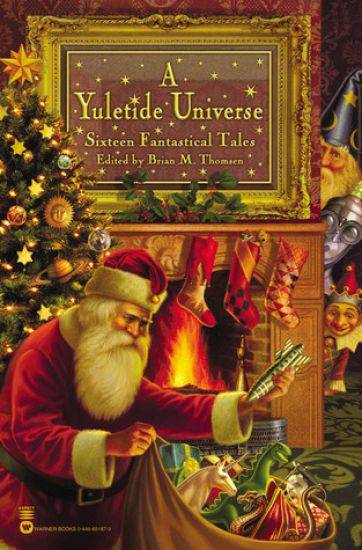
A Yuletide Universe

A Yuletide Universe

Brian M Thomsen

Grand Central Publishing
2003
pokkari
Get yourself into the Christmas spirit with this powerhouse collection of Christmas stories from some of the world's greatest writers.The contributors to this Christmas anthology include well-known writers with strong fan followings such as Bram Stoker; Hugo Award-winning author of American Gods, Neil Gaiman; Hugo Award winner, Connie Willis; Anne McCaffrey; Harlan Ellison; Clive Barker; and many others. Curl up in front of a fireplace with this memorable anthology of 16 short stories. Hot cocoa is also recommended.
Fame, Money, and Power

Fame, Money, and Power

Brian M. Lavelle

The University of Michigan Press
2005
sidottu
"The sixth century is a very contentious time; Fame, Money, and Power unambiguously advances our understanding of Peisistratos and archaic Athens. No one else has tackled so many of the difficult issues that Lavelle has taken on."--David Tandy, University of Tennessee"Well researched and engaging, [Fame, Money, and Power] painstakingly builds [its] case for how the various phases of Peisistratos's career developed."--Tony Podlecki, University of British ColumbiaThe Athenian "golden age" occurred in the fifth century B.C.E. and was attributed to their great achievements in art, literature, science, and philosophy. However, the most important achievement of the time was the political movement from tyranny to democracy. Though tyranny is thought to be democracy's opposite and deadly enemy, that is not always the case. In Fame, Money, and Power, Brian Lavelle states that the perceived polarity between tyranny and democracy does not reflect the truth in this instance.The career of the tyrant Peisistratos resembles the careers and successes of early democratic soldier-politicians. As with any democratic political system, Peisistratos' governance depended upon the willingness of the Athenians who conceded governance to him. This book attempts to show how the rise of Peisistratos fits into an essentially democratic system already entrenched at Athens in the earlier sixth century B.C.E. Emerging from the apparent backwater of eastern Attika, Peisistratos led the Athenians to victory over their neighbors, the Megarians, in a long, drawn out war. That victory earned him great popularity from the Athenians and propelled him along the road to monarchy. Yet, political success at Athens, even as Solon implies in his poems, depended upon the enrichment of the Athenian d?mos, not just fame and popularity. Peisistratos tried and failed two times to "root" his tyranny, his failures owing to a lack of sufficient money with which to appease the demos. Exiled from Athens, he spent the next ten years amassing money to enrich the Athenians and power to overcome his enemies. He then sustained his rule by grasping the realities of Athenian politics. Peisistratos' tyrannies were partnerships with the d?mos, the first two of which failed. His final formula for success, securing more money than his opponents possessed and then more resources for enriching the d?mos, provided the model for future democratic politicians of Athens who wanted to obtain and keep power in fifth-century Athens.
The Rise of Gridiron University

The Rise of Gridiron University

Brian M. Ingrassia

University Press of Kansas
2012
sidottu
The quarterback sends his wide receiver deep. The crowd gasps as he launches the ball. And when he hits his man, the team’s fans roar with approval—especially those with the deep pockets. Make no mistake; college football is big business, played with one eye on the score, the other on the bottom line. But was this always the case? Brian M. Ingrassia here offers the most incisive account to date of the origins of college football, tracing the sport’s evolution from a gentlemen’s pastime to a multi-million dollar enterprise that made athletics a permanent fixture on our nation’s campuses and cemented college football’s place in American culture. He takes readers back to the late 1800s to tell how schools embraced the sport as a way to get the public interested in higher learning—and then how football’s immediate popularity overwhelmed campuses and helped create the beast we know today. Contrary to conventional wisdom, Ingrassia proves that the academy did not initially resist the inclusion of athletics; rather, progressive reformers and professors embraced football as a way to make the ivory tower less elitist. With its emphasis on disciplined teamwork and spectatorship, football was seen as a “middlebrow” way to make the university more accessible to the general public. What it really did was make athletics a permanent fixture on campus with its own set of professional experts, bureaucracies, and ostentatious cathedrals. Ingrassia examines the early football programs at universities like Michigan, Stanford, Ohio State, and others, then puts those histories in the context of Progressive Era culture, including insights from coaches like Georgia Tech’s John Heisman and Notre Dame’s Knute Rockne. He describes how reforms emerged out of incidents such as a section of grandstands collapsing at the University of Chicago. He also touches on some of the problems facing current day college football. The Rise of Gridiron University shows us where and how it all began, highlighting college football’s essential role in shaping the modern university—and by extension American intellectual culture. It should have wide appeal among students of American studies and sports history, as well as fans of college football curious to learn how their game became a cultural force in a matter of a few decades. This book is part of the CultureAmerica series.
The Rise of Gridiron University

The Rise of Gridiron University

Brian M. Ingrassia

University Press of Kansas
2015
nidottu
The quarterback sends his wide receiver deep. The crowd gasps as he launches the ball. And when he hits his man, the team's fans roar with approval--especially those with the deep pockets. Make no mistake; college football is big business, played with one eye on the score, the other on the bottom line. But was this always the case?Brian M. Ingrassia here offers the most incisive account to date of the origins of college football, tracing the sport's evolution from a gentlemen's pastime to a multi-million dollar enterprise that made athletics a permanent fixture on our nation's campuses and cemented college football's place in American culture. He takes readers back to the late 1800s to tell how schools embraced the sport as a way to get the public interested in higher learning-and then how football's immediate popularity overwhelmed campuses and helped create the beast we know today. Contrary to conventional wisdom, Ingrassia proves that the academy did not initially resist the inclusion of athletics; rather, progressive reformers and professors embraced football as a way to make the ivory tower less elitist. With its emphasis on disciplined teamwork and spectatorship, football was seen as a ""middlebrow"" way to make the university more accessible to the general public. What it really did was make athletics a permanent fixture on campus with its own set of professional experts, bureaucracies, and ostentatious cathedrals. Ingrassia examines the early football programs at universities like Michigan, Stanford, Ohio State, and others, then puts those histories in the context of Progressive Era culture, including insights from coaches like Georgia Tech's John Heisman and Notre Dame's Knute Rockne. He describes how reforms emerged out of incidents such as Teddy Roosevelt's son being injured on the field and a section of grandstands collapsing at the University of Chicago. He also touches on some of the problems facing current day college football and shows us that we haven't come far from those initial arguments more than a century ago. The Rise of Gridiron University shows us where and how it all began, highlighting college football's essential role in shaping the modern university-and by extension American intellectual culture. It should have wide appeal among students of American studies and sports history, as well as fans of college football curious to learn how their game became a cultural force in a matter of a few decades.
Lost Galveston

Lost Galveston

Brian M. Davis

Arcadia Publishing (SC)
2010
nidottu
For nearly 200 years, a permanent settlement at the mouth of Galveston Bay has welcomed pirates, sailors, immigrants, and visitors from around the world. As Galveston grew, its buildings were visible signs of the city's prosperity and the talent of its craftsmen. For many, this city was a gateway to America and an inspiration of what other communities in Texas and the Southwest would become. Although Galveston has thousands of historic buildings remaining, many have been lost to the elements and development over the years. Buildings such as the ones found within these pages define the character of our city and its culture.
Emerging Moral Vocabularies

Emerging Moral Vocabularies

Brian M. Lowe

Lexington Books
2006
sidottu
One of the central observations of the social sciences has been that the modern age is an age of constant change. This change has resulted in the emergence of new moral and ethical claims and understanding, which author Brian Lowe refers to as "moral vocabularies." Lowe skillfully seeks to explain under what conditions certain moral vocabularies are more likely to gain acceptance in the wider host society. By focusing on the animal rights and tobacco control movements, this absorbing work explores the process of moralization and the fragmentary nature of the emergence of new forms of moral and ethical meanings within the wider host society. Emerging Moral Vocabularies challenges the broad assertion that Western post-industrial societies are inevitably becoming more individualistic and self-centered, and instead encourages scholars to examine emerging forms for moral and ethical meaning, which form new moral boundaries.
Irish History Matters

Irish History Matters

Brian M. Walker

The History Press Ltd
2019
sidottu
While knowledge of history can explain our contemporary situation, an awareness of the myths and misuses of our history can bring a broader and more conciliatory approach to current political and social challenges. History or, more correctly, ‘views of the past’ or ‘historical myths’ have shaped politics in both Northern Ireland and the Republic of Ireland. These views served in part to cause and sustain the ‘Troubles’. Eventually, many historical perceptions were challenged, which helped to promote the peace process. New ideas of revised and shared history were important. These changes are explored here. The public expression of history in Ireland through commemoration of important historical events and persons is investigated in a number of chapters. The impact of historical developments on identity is studied not just in Ireland, north and south, but also among the Irish diaspora, especially in America. In Irish History Matters, Brian M. Walker uses three decades of research to explore the effects historical events have had on Irish politics and society, and why they still have an important influence today.
Snapshots of the Past

Snapshots of the Past

Brian M. Fagan

AltaMira Press,U.S.
1995
nidottu
Archaeology has been a subject of endless fascination to scholars, students and the general public. For the past three decades, Prof. Brian Fagan has been the key narrator of the story of the past for many, through his textbooks, trade books and numerous magazine and journal articles. In recent years, Fagan has reported on the latest news, theories, and controversies in archaeology through his regular Timelines column in Archaeology Magazine. In Snapshots of the Past, Fagan collects many of these vignettes into a single work, leading the reader on a tour through time and space that ranges from the ascent of the human species to the public controversies that concern today's archaeologist. In these 30 brief chapters, the author offers readers a series of "snapshots" of the issues of greatest contemporary interest: the Eve hypothesis, the peopling of the New World, site looting, the translation of Mayan hieroglyphs, the domestication of animals, the impact of feminism on archaeology, the archaeology of slavery, and evidence of human cannibalism, among many others. Included among the articles are several pieces written specifically for this volume, including a description of the recent, spectacular cave art finds at Chauvet Grotto in France. For instructors of archaeology, the book is a handy compilation of brief, interesting cases to engage your students. For serious archaeologists, the book represents a collection of works of one of the important synthesizers of the field. For the avocational archaeologist, the book provides a fascinating, readable update on issues of current concern.
Clash of Cultures

Clash of Cultures

Brian M. Fagan

AltaMira Press,U.S.
1998
nidottu
In Europe it was called the Age of Discovery. To the rest of the world, it often meant slavery, epidemic disease, cultural genocide, and wholesale social and economic changes. What happened in the period when Europe first came in contact with the rest of the world? In this new edition of Brian Fagan's Clash of Cultures, the best-selling author offers a series of fascinating cases on the impact of cultural contact, including cultures such as those of the Huron fur traders, South African Khoi Khoi, Tahitians, Japanese, and Aztecs. Each case provides a description of the pre-European culture, the short-term impacts of European contact, and long-term changes caused by the clash of two cultures. Fagan also explores the many advances in the general literature on this period such as the "people without history," world systems analysis, and the debate over Captain Cook. Ideal for courses in cultural anthropology, world history, historical archaeology, ethnic studies, or area studies, as well as for the general reader.
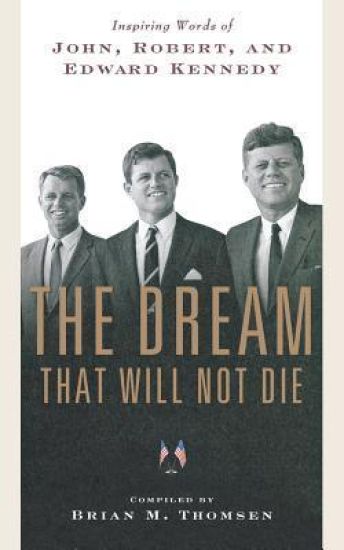
The Dream That Will Not Die

The Dream That Will Not Die

Brian M Thomsen

Forge
2010
pokkari
"And so, my fellow Americans: ask not what your country can do for you-ask what you can do for your country."-John Fitzgerald Kennedy, Inauguration Address, January 20, 1961 "Some men see things as they were and say 'why' I see things that never were, and ask 'why not?"-Robert Francis Kennedy, Campaign Speech, University of Kansas, March 18, 1968"The work goes on, the cause endures, the hope still lives and the dream shall never die."--Senator Edward Kennedy, Democratic National Convention, New York City, August, 1980The words of three powerful brothers-men united not just by family ties but by a tradition of inspiring service that continues today with their children and grandchildren. Words which have united a nation, inspired generations to take up the very best and most honorable of causes, and pushed individuals to do and be and give their best. So often, these Kennedys-John, Robert, and Edward-found the right words to say, to the United States and to the world. John F. Kennedy, the charismatic President with a strong commitment to justice and human rights. Robert F. Kennedy, Senator, Attorney General, and presidential candidate, who carried the family standard after Jack's assassination and broke new ground in civil rights prior to his own tragic murder. Edward M. Kennedy, the Lion of the Senate, whose passion created some of the most far-reaching legislation of the last five decades. "The Dream That Will Not Die" collects some of the most striking speeches and quotes by the Kennedys, showing that even when the going was tough, these brothers found the right way to make their thoughts and feelings clear, showing their charm, humor, and determination. Here you will find your own inspiration, in the words of three men who believed that all Americans deserved the same privileges the Kennedys were born to, privileges they never took for granted.
Bums No More

Bums No More

Brian M. Endsley

McFarland Co Inc
2009
pokkari
This is the story of the 1959 Dodgers, a team that rose above its disastrous first season on the West Coast for an out-of-nowhere World Series title. One of baseball's greatest underdog champions, the '59 Dodgers were a rag-tag team made of long shots salvaged from the minor leagues and over-the-hill ballplayers who reached back for one final triumph. After surviving a thrilling three team pennant race, they met fellow long shots the Chicago White Sox in an underdog World Series. Here, the team's story is recounted in detail, with game-by-game highlights, and set against the cultural backdrop of the civil rights movement, the Cold War, and the rock and roll cultural revolution.
Finding the Left Arm of God

Finding the Left Arm of God

Brian M. Endsley

McFarland Co Inc
2015
pokkari
This is the story of the L.A. Dodgers' volatile fortunes during Sandy Koufax's transformation from a wild left-hander with a losing record on the verge of quitting the game, to an artist with exquisite control of the baseball--a veritable Mozart on the mound. From the Dodgers' sudden plunge into the baseball wilderness in 1960, to their return to pennant contention in Koufax's breakout year of 1961, through their catastrophic 1962 season--precipitated by Koufax's freak midseason finger injury--to their redemption in 1963 with their second World Championship on the West Coast, the narrative is set against the backdrop of John F. Kennedy's fleeting New Frontier presidency.
Nobody's Business

Nobody's Business

Brian M. Reed

Cornell University Press
2013
sidottu
Since the turn of the new millennium English-language verse has entered a new historical phase, but explanations vary as to what has actually happened and why. What might constitute a viable avant-garde poetics in the aftermath of such momentous developments as 9/11, globalization, and the financial crisis? Much of this discussion has taken place in ephemeral venues such as blogs, e-zines, public lectures, and conferences. Nobody's Business is the first book to treat the emergence of Flarf and Conceptual Poetry in a serious way. In his engaging account, Brian M. Reed argues that these movements must be understood in relation to the proliferation of digital communications technologies and their integration into the corporate workplace. Writers such as Andrea Brady, Craig Dworkin, Kenneth Goldsmith, Danny Snelson, and Rachel Zolf specifically target for criticism the institutions, skill sets, and values that make possible the smooth functioning of a postindustrial, globalized economy. Authorship comes in for particular scrutiny: how does writing a poem differ in any meaningful way from other forms of "content providing"? While often adept at using new technologies, these writers nonetheless choose to explore anachronism, ineptitude, and error as aesthetic and political strategies. The results can appear derivative, tedious, or vulgar; they can also be stirring, compelling, and even sublime. As Reed sees it, this new generation of writers is carrying on the Duchampian practice of generating antiart that both challenges prevalent definitions or art and calls into question the legitimacy of the institutions that define it.