This book has been considered important throughout the human history, and so that this work is never forgotten we have made efforts in its preservation by republishing this book in a modern format for present and future generations. This whole book has been reformatted, retyped and designed. These books are not made of scanned copies and hence the text is clear and readable.
Since 1941, O’Rourke’s Diner has been a beloved eatery and a second home to generations of Middletown families, Wesleyan students, and diners from all over the Connecticut River Valley. Capturing the magic of the diner itself—classic, hip, eclectic, and full of positive energy—Breakfast at O’Rourke’s is a trove of hearty gourmet recipes from one of Connecticut’s most beloved diners. The book features menus for twenty-three complete O’Rourke’s breakfasts and over eighty recipes, including Irish Soda Bread, Eggs Galway, Bread Pudding French Toast with Caramel Sauce, Firecracker Omelet, Breakfast Cheesecake, Pumpkin Brie Quiche, and Red Flannel Hash. Each main dish is paired with a side, baked good, and sauce—so that cooks at home can recreate their favorite O’Rourke’s brunch. The book is lavishly illustrated with over fifty photographs from food photographer Tom Hopkins, and includes many vegetarian options. This is a must-have cookbook for diner aficionados and food lovers everywhere.
The Personals reveals how classified ads are not just a few commercial lines of text in print or online – they can be a treasure trove of fascinating human stories; stories of love, loss, loneliness, redemption and hope. Some people do Sudoku, others watch Netflix. Brian O’Connell loves the classified ads. In an era of spin doctors and press releases, celebrities and social influencers, the classified ads can open a door into the lives of ordinary people with extraordinary stories. What draws Brian to the classified ads are the intriguing human stories he finds there, the unexpected twists and turns, the personalities, the curious objects and the range of human experience waiting to be discovered. The Personals is a diverse collection of compelling stories about the people and the lives behind the small ads.
Publisher's Note: Products purchased from Third Party sellers are not guaranteed by the publisher for quality, authenticity, or access to any online entitlements included with the product. A well-researched, highly readable account of a B-17 combat crew's experienceIn 1943, when the outcome of World War II hung in the balance, B-17 crews of the Eighth Air Force flew harrowing, unescorted daylight bombing missions deep into Occupied Europe and Germany. These devastating raids have long been storied in film and fiction, but here is a firsthand, blow-by-blow account of these perilous missions as they really happened. In these pages, you'll see the events unfold as they were recorded and recalled by one crew's officers and enlisted men (pilot, copilot, navigator, radioman, and gunners), corroborated by other crews they flew with, and painstakingly correlated with the official records of the men's 303rd "Hell's Angels" Bomb Group.The publication of Half a Wing, Three Engines, and a Prayer in 1989 prompted a flood of fresh recollections, correspondence, and personal records from other veterans of the 303rd. This Special Revised Edition incorporates that wealth of new material into a vivid, thorough recreation -- complete with actual combat photographs -- of one of the most dramatic chapters in military aviation history.New in this Special Revised Edition:* New veteran interviews* Expanded coverage * Revised data * 90 photographs & illustrations* Epilogue: crewmen's post-war careers"A well-researched, highly readable account of a B-17 combat crew's experience...excellent." -- Roger A. Freeman, author of The Mighty Eighth"The best collection of stories about a B-17 Bomb Group that has ever been published." -- Harry D. Gobrecht, President, 303rd Bomb Group Association and author of Might in Flight: Daily Diary of the Eighth Air Force's 'Hell's Angels' Bomb Group
This career guide lays a blueprint for career success in the often frustrating corporate workplace climate. It seeks to show readers how to leverage the corporate infrastructure and culture to their advantage and presents strategies for surviving in the workforce to be successful. Topics include the value of a mentor (and what to do if he/she is fired), the advantages of studying your company and its history, and the downside of lying, scheming and backstabbing to keep your job. The author also identifies seven types of "corporate survivors" who have mastered corporate culture, so that readers can discover which model best suits their own personalities.
Brian O'Shaughnessy puts forward a bold and original theory of consciousness, one of the most fascinating but puzzling aspects of human existence. Whatever mystery there may be about the origins of consciousness, O'Shaughnessy suggests that there is no mystery about what it is. He proceeds to give a philosophical elucidation of its nature, analysing it into purely psychological constituents. It is his contention that consciousness consists in a closely knit complex of occurrent mental phenomena and powers with thinking and self-knowledge at the centre--and nothing else. O'Shaughnessy's analysis accords a position of pre-eminence to the epistemological properties of consciousness. With this in mind he investigates the closely linked concepts of attention and perception alongside that of consciousness. He sets out an integrated theory of these three fundamental phenomena, demonstrating how close to the heart of consciousness is perception, envisaged already in the very concept. In effect he advances en passant a variant of empiricism which is based upon the nature of consciousness. A considerable part of the book is devoted to providing a theoretical account in these terms of those important senses through which the mind constitutes physical objects in space: above all, the highly developed sense of sight, but also the primordial body-senses, proprioception and touch, which underpin all else in the mind. In such ways concrete interaction between consciousness and the world is realized, and the epistemological basis of mind established. Consciousness and the World is a rich and exciting book, a major contribution to our understanding of the mind.
Brian O'Shaughnessy presents a bold original theory of consciousness, one of the most fascinating but puzzling aspects of human existence. He investigates what consciousness is and how it engages, through perception, with the world. Whatever mystery there may be about origins of consciousness, O'Shaughnessy suggests that there is no mystery about what it is. It is his contention that consciousness consists in a closely knit complex of occurrent mental phenomena and powers with thinking and self-knowledge at the centre - and nothing else. He proceeds to give a philosophical elucidation of its nature, analysing it into its constituent psychological parts. He argues that consciousness has a determinate character as an internal but world-oriented phenomenon, and that there exist logically necessary and sufficient conditions for its presence. Though consciousness is an internal state, perception is its very foundation, being the source of the material with which the mind develops, and essential to the processes whereby it does so. O'Shaughnessy continues with an extended summary of the phenomena of perception and attention, examining their their component elements and their relations with consciousness and with the world. He demonstrates how close to the heart of consciousness is perception, envisaged already in the very concept. Perception is portrayed as a journey of the attention from the raw date of the senses outwards into physical reality, The different modes of sensory perception are analysed in turn, to give a full picture of how the mind opens out onto its environment and assembles for itself a representation of outer reality. So it is that the gap is closed between the mental and physical domains, and the epistemological basis of mind is established. Consciousness and the World is a rich and exciting book, a major contribution to our understanding of the mind.
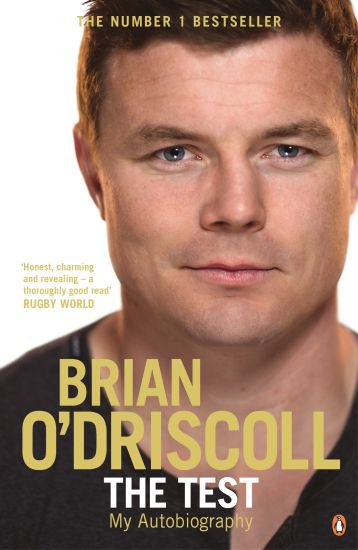
The bestselling autobiography of the greatest rugby player of our time: Brian O'Driscoll.Since 1999, when he made his international debut, there has been no greater player in world rugby than Brian O'Driscoll. In 2010 Rugby World magazine named him its world player of the decade - and since then the legend has only grown.Now, at the end of his amazing career - which culminated in fairy-tale fashion with Ireland's victory in the 2014 Six Nations championship - he tells his own story. Honest, gritty and thoughtful, Brian O'Driscoll's Autobiography is not just an essential sports book. It is an essential book about family, friends, hard work, courage and imagination.'Honest, charming and revealing - a thoroughly good read' Rugby World'A thoroughly enjoyable read ... After reading The Test I warmed even more to O'Driscoll as a player and a man. He stood for a new ethos in Irish sport that refused to accept mediocrity or glorious failure' Fergal Keane, Irish Times'O'Driscoll's honesty ... takes the reader to a place they simply have not been before' Vincent Hogan, Irish Independent'A must-read insight into the life and mind of Ireland's greatest rugby player' Irish Mail on Sunday'There are fascinating insights into the lengths he was willing to go to perform at the highest level' Sunday Business PostBestseller, April 2015
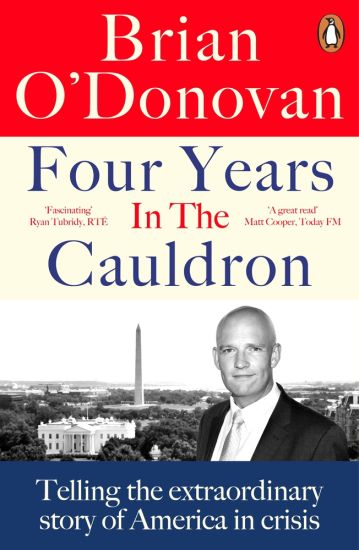
SHORTLISTED FOR THE IRISH BOOK AWARDS 2021The riveting story of a nation at a crucial crossroadsFrom the start of his stint as RTÉ's Washington Correspondent Brian O'Donovan's lively and authoritative reporting of a tumultuous period in American life has been must-watch TV.Four Years in the Cauldron is his account of four busy years working in the US. He draws a compelling picture, full of telling colour and detail, of covering its fractured politics, particularly the extraordinary presidency of Donald Trump and the knife-edge election of Joe Biden. And he gives his unique perspective on big stories such as the Covid emergency, the Capitol riot, the murder of George Floyd and trial and conviction of his police killer.He also provides a visceral sense of what it's like living in a country shaped by guns, God, far-fetched conspiracy theories and the running sore of racism. Yet, drawing on his network of contacts, neighbours, friends and family connections outside the white-hot heat of Washington politics, he writes about the lives of ordinary American people with nuance and understanding.Four Years in the Cauldron is a must-read for getting to grips with the US at a moment of profound reckoning.______'[O'Donovan] captures well both the frenetic life of a reporter . . . and the Punch and Judy period in American politics that was the Trump presidency' Irish Times'An intriguing look at an extraordinary time . . . the book brings us to some fascinating places' Ryan Tubridy'A great read' The Last Word With Matt Cooper
Looking at all the Major World Problems, finding their cause and providing APT SOLUTIONS.An Example: Almost 50% of marriages now end in separation or divorce. It is the children that suffer most from this situation. This needs to be changed.There is an original way to put marriage on a more firm and secure foundation base on Earlier Japanese Culture. This allows for the fact that human beings are not perfect and so need Help before any marriage takes place at all.
The purely philosophical concerns of Theodor W. Adorno's negative dialectic would seem to be far removed from the concreteness of critical theory; Adorno's philosophy considers perhaps the most traditional subject of "pure" philosophy, the structure of experience, whereas critical theory examines specific aspects of society. But, as Brian O'Connor demonstrates in this highly original interpretation of Adorno's philosophy, the negative dialectic can be seen as the theoretical foundation of the reflexivity or critical rationality required by critical theory. Adorno, O'Connor argues, is committed to the "concretion" of philosophy: his thesis of nonidentity attempts to show that reality is not reducible to appearances. This lays the foundation for the applied "concrete" critique of appearances that is essential to the possibility of critical theory. To explicate the context in which Adorno's philosophy operates-the tradition of modern German philosophy, from Kant to Heidegger-O'Connor examines in detail the ideas of these philosophers as well as Adorno's self-defining differences with them. O'Connor discusses Georg LucA cs and the influence of his "protocritical theory" on Adorno's thought; the elements of Kant's and Hegel's German idealism appropriated by Adorno for his theory of subject-object mediation; the priority of the object and the agency of the subject in Adorno's epistemology; and Adorno's important critiques of Kant and the phenomenology of Heidegger and Husserl, critiques that both illuminate Adorno's key concepts and reveal his construction of critical theory through an engagement with the problems of philosophy.
The University of Notre Dame's connection with Ireland has been entrenched in Notre Dame's heritage and identity since the founding of the university in 1842. The university is also closely associated with Ireland through its renowned football team, the Fighting Irish. When some thirty-five thousand Americans descended on Dublin, Ireland, for the Emerald Isle Classic football game between Notre Dame and Navy (played on September 1, 2012) at Aviva Stadium, the relationship between Notre Dame and the land and its people was celebrated throughout Dublin and the rest of Ireland. Now the allure of both Ireland and the Emerald Isle Classic football game are brought together in Notre Dame's Happy Returns: Dublin, the Experience, the Game. Senior University Photographer Matt Cashore took thousands of photographs for this book, and has selected nearly two hundred of his favorite shots for this large-format collection, capturing the sights, historic places, and cultural riches that make Ireland special for fans of the Fighting Irish. Woven together with brief cultural and historical captions by Brian Ó Conchubhair and Susan Mullen Guibert, Notre Dame's Happy Returns contains dozens of full-page photographs of Ireland's capital city. Ranging from art and architecture to spectacular views of Dublin Castle, Saint Patrick's Cathedral, Trinity College, Casino Marino, Saint Stephen's Green, shops, pubs, and other notable landmarks, the photographs capture the mythical attraction of one of Europe's most vibrant cities and offer readers a glimpse of its rich history. The photographs and text also highlight the university's commitment to scholarship through the Keough-Naughton Institute for Irish Studies, Notre Dame's Catholic tradition of service in Ireland, and the extraordinary beauty of the countryside beyond Dublin. In addition, the book explores the introduction of American football in Ireland and Notre Dame's role in elevating the sport there, and contains a special section on the 2012 Notre Dame–Navy game in Dublin. As travel guide, sports book, and lush photographic essay all in one, Notre Dame's Happy Returns is a must have for those who attended the Notre Dame–Navy game in Aviva Stadium as well as for all Notre Dame football fans. It will also be of interest to graduates, subway alumni, members of the Notre Dame family, and university supporters for whom Ireland is a spiritual and ancestral home.
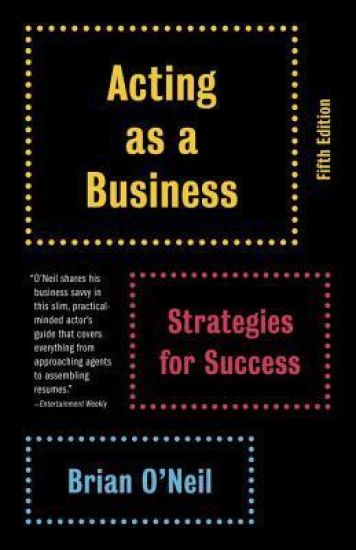
The essential handbook for actors--a modern classic--in a newly updated edition. Since its original publication, "Acting as a Business "has earned a reputation as an indispensable tool for working and aspiring actors. Avoiding the usual advice about persistence and luck, Brian O'Neil provides clear-cut guidelines that will give actors a solid knowledge of the business behind their art. It's packed with practical information--on everything from what to say in a cover letter to where to stand when performing in an agent's office--including: -- Tactics for getting an agent, including preparing for the interview-- How to research who will be casting what--and whether there is a role for you--well in advance-- Examples of correspondence to agents and casting directors for both beginning and advanced professionals-- A detailed analysis of the current trend of paying to meet industry personnel-- How to communicate effectively with an agent or personal manager-- Creative ways to use the internet and social media O'Neil has updated "Acting as a Business "to keep up with the latest show-business trends, making this fifth edition a reference no actor should be without
Artistic and Political Patronage in Early Stuart England explores the remarkable life and career of William Herbert, Third Earl of Pembroke. Pembroke was one of the most influential aristocrats during the reigns of Elizabeth I, James I and Charles I. He was a great patron, a prominent politician and electoral manager, an entrepreneur, and a gifted poet. Yet despite his influence and many talents, Pembroke’s life has been little studied by historians. Drawing on archival material, this book throws new light on Pembroke, and demonstrates just how significant he was during his lifetime. This book will appeal to scholars and students of early modern British history, as well as those interested in politics and patronage during the sixteenth and seventeenth centuries.
Artistic and Political Patronage in Early Stuart England explores the remarkable life and career of William Herbert, Third Earl of Pembroke. Pembroke was one of the most influential aristocrats during the reigns of Elizabeth I, James I and Charles I. He was a great patron, a prominent politician and electoral manager, an entrepreneur, and a gifted poet. Yet despite his influence and many talents, Pembroke’s life has been little studied by historians. Drawing on archival material, this book throws new light on Pembroke, and demonstrates just how significant he was during his lifetime. This book will appeal to scholars and students of early modern British history, as well as those interested in politics and patronage during the sixteenth and seventeenth centuries.
Theodor W. Adorno (1903-69) was one of the foremost philosophers and social theorists of the post-war period. Crucial to the development of Critical Theory, his highly original and distinctive but often difficult writings not only advance questions of fundamental philosophical significance, but provide deep-reaching analyses of literature, art, music sociology and political theory. In this comprehensive introduction, Brian O’Connor explains Adorno’s philosophy for those coming to his work for the first time, through original new lines of interpretation. Beginning with an overview of Adorno’s life and key philosophical views and influences, which contextualizes the intellectual environment in which he worked, O’Connor assesses the central elements of Adorno’s philosophy.He carefully examines Adorno’s distinctive style of analysis and shows how much of his work is a critical response to the various forms of identity thinking that have underpinned the destructive forces of modernity. He goes on to discuss the main areas of Adorno’s philosophy: social theory, the philosophy of experience, metaphysics, morality and aesthetics; setting out detailed accounts of Adorno’s notions of the dialectic of Enlightenment, reification, totality, mediation, identity, nonidentity, experience, negative dialectics, immanence, freedom, autonomy, imitation and autonomy in art. The final chapter considers Adorno’s philosophical legacy and importance today.Including a chronology, glossary, chapter summaries, and suggestions for further reading, Adorno is an ideal introduction to this demanding but important thinker, and essential reading for students of philosophy, literature, sociology and cultural studies.
Theodor W. Adorno (1903-69) was one of the foremost philosophers and social theorists of the post-war period. Crucial to the development of Critical Theory, his highly original and distinctive but often difficult writings not only advance questions of fundamental philosophical significance, but provide deep-reaching analyses of literature, art, music sociology and political theory. In this comprehensive introduction, Brian O’Connor explains Adorno’s philosophy for those coming to his work for the first time, through original new lines of interpretation. Beginning with an overview of Adorno’s life and key philosophical views and influences, which contextualizes the intellectual environment in which he worked, O’Connor assesses the central elements of Adorno’s philosophy.He carefully examines Adorno’s distinctive style of analysis and shows how much of his work is a critical response to the various forms of identity thinking that have underpinned the destructive forces of modernity. He goes on to discuss the main areas of Adorno’s philosophy: social theory, the philosophy of experience, metaphysics, morality and aesthetics; setting out detailed accounts of Adorno’s notions of the dialectic of Enlightenment, reification, totality, mediation, identity, nonidentity, experience, negative dialectics, immanence, freedom, autonomy, imitation and autonomy in art. The final chapter considers Adorno’s philosophical legacy and importance today.Including a chronology, glossary, chapter summaries, and suggestions for further reading, Adorno is an ideal introduction to this demanding but important thinker, and essential reading for students of philosophy, literature, sociology and cultural studies.
Praise for CNBC CREATING WEALTH The rapidly growing influence of the individual investor and the stunning evolution of technology are two of the most remarkable developments in the history of the financial world. In CNBC Creating Wealth, we help you take advantage of these fundamental changes to Wall Street and take charge of your own investing. "Learning how the market works requires some discipline and homework on everyones part. This book is an indispensable guide that explains how to profit by choosing the right investments and avoiding the riskier ones." Terry Savage author of The Savage Truth on Money "CNBC Creating Wealth is an excellent resource for investors of all ageswith or without market experience." Bambi Holzer Senior Vice PresidentInvestments and Retirement Plan Consultant with PaineWebber From the Foreword "Successful investors understand what makes stock prices go up and down. Thats where information comes in. . . . This book is designed to figure out what is important so you can separate useful information from useless noise." Bill Griffeth CNBC Anchor and host of Power Lunch
The phenomenon of action in which the mind moves the body has puzzled philosophers over the centuries. In this new edition of a classic work of analytical philosophy, Brian O'Shaughnessy investigates bodily action and attempts to resolve some of the main problems. His expanded and updated discussion examines the scope of the will and the conditions in which it makes contact with the body, and investigates the epistemology of the body. He sheds light upon the strangely intimate relation of awareness in which we stand to our own bodies, doing so partly through appeal to the concept of the body-image. The result is a new and strengthened emphasis on the vitally important function of the bodily will as a transparently intelligible bridge between mind and body, and the proposal of a dual aspect theory of the will.