Kirjojen hintavertailu. Mukana 11 244 527 kirjaa ja 12 kauppaa.

Kirjahaku

Etsi kirjoja tekijän nimen, kirjan nimen tai ISBN:n perusteella.

1000 tulosta hakusanalla Brian Patrick Edwards

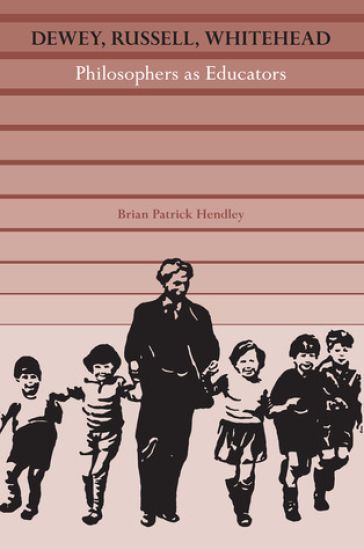
Dewey, Russell, Whitehead

Dewey, Russell, Whitehead

Brian Patrick Hendley; George Kim Plochmann

Southern Illinois University Press
2010
nidottu
In Philosophers as Educators Brian Patrick Hendley argues that philosophers of edu­cation should reject their preoccupation with defining terms and analyzing concepts and embrace the philosophical task of con­structing general theories of education. Hendley discusses in detail the educational philosophies of John Dewey, Bertrand Rus­sell, and Alfred North Whitehead. He sees in these men excellent role models that contem­porary philosophers might well follow. Hendley believes that, like these men­tors, philosophers should take a more ac­tive, practical role in education. Dewey and Russell ran their own schools, and Whitehead served as a university admin­istrator and as a member of many com­mittees created to study education.
Friendship and Faith: Cistercian Men, Women, and Their Stories, 1100-1250
In these articles Professor McGuire explores the riches of the Cistercian exemplum tradition. These texts are made up of brief stories, often with a miraculous content, which provided moral support for novices and monks in Cistercian abbeys all over Europe in the High Middle Ages. The Cistercians have been seen mainly in terms of their great writers like Bernard of Clairvaux and the impressive buildings they left behind. But Cistercian literature also provides us with more humble insights from daily life, shedding light on questions of sexuality, anger, depression, and bonds of friendship, also between monks and nuns. They bring a freshness of insight and immediate experience, and their seeming naivety lets us be aware of monks' commitment to each other in individual and community bonds. In Cistercian storytelling, the Gospel's message meets an historical context and bears witness to a transformation of Christian life and idealism, while at the same time allowing us precious insights into how ordinary men and women, not just monks and nuns, lived and thought.
Honest Dogs

Honest Dogs

Brian Patrick O'Donoghue; Patrick Brian O'Donoghue

Epicenter Press (WA)
1999
pokkari
At forty-one, husband and father Brian Patrick O'Donoghue feels his youth slipping away... It had been since six years since the newspaper reporter mushed to a last-place finish in the Iditarod Trail Sled Dog Race. Yearning to challenge himself anew, he enters the Yukon Quest--a far more brutal, 1,000-mile run through mountainous wilds along the Yukon River between Whitehorse, Yukon Territory, and Fairbanks, Alaska. With wry humor and diminishing expectations, O'Donoghue shares the trail with Khan, Hobbes, Scrimshaw, Cyclone, and ten other excitable Alaska huskies, plus a diverse collection of rival racers and an assortment of "Bush rats" met on his way to the finish line. The mushers' strategies, dreams, and disappointments; the antics of their furry athletes; the drama of the race; and the unworldly winter wilderness venue add texture to this amazing personal story of a man and his dogs.
A Crown of Life: A Novel of the Great Persecution

A Crown of Life: A Novel of the Great Persecution

Brian Patrick Mitchell

Pontic Press
2014
nidottu
A Crown of Life is an epic romance spanning ten pivotal years in the history of the world, beginning in 303, when churches were closed, books were burned, and Christians were forbidden to assemble and later forced to prove their loyalty to the empire by offering a sacrifice to the government's gods. Thousands chose death instead, in what has been known since as the Great Persecution. Vividly written, with surprising twists, heart-pounding drama, a colorful cast of endearing characters good and bad, and profound insight into life's deepest mysteries, A Crown of Life is an inspiring tale of Christian faith in the face of death. You will cheer. You will weep. You will fall in love. You will learn why they believed and why they died.
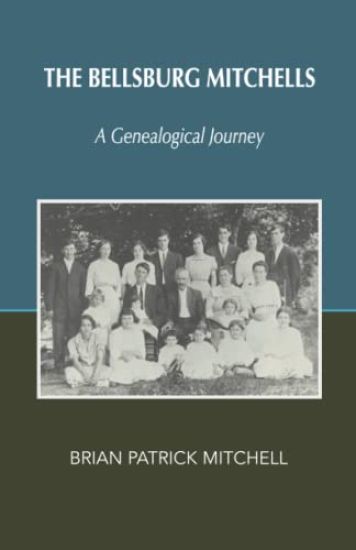
The Bellsburg Mitchells

The Bellsburg Mitchells

Brian Patrick Mitchell

Pontic Press
2021
pokkari
The Bellsburg Mitchells tells the story of a search for ancestors among the settlers of Tennessee's Dickson, Robertson, and Cheatham Counties and also among their predecessors in the American colonies and Western Europe. The search was begun by the author's father in 1986 and has been furthered by the author in this century with the aid of the Internet and the latest DNA technology, with surprising results. While focusing on the author's Mitchell forebears, the story includes names, dates, details, and trees for nearly ninety of the author's father's ancestors, both paternal and maternal. These ancestors connect the author to the Pilgrims who sailed with the Mayflower in 1620; to five of the original thirteen colonies-Massachusetts, Pennsylvania, Virginia, North Carolina, and South Carolina; to England, Scotland, Wales, Ireland, France, Germany, and Switzerland; and to one U.S. President, Richard Nixon. Thoroughly researched and expertly written, The Bellsburg Mitchells makes a complicated investigation comprehensible and enjoyable, entertaining readers on every page with interesting details of life long ago. Readers will learn a lot about American and European history and culture as well as about the methods and pitfalls of genealogical research. Family names: Absten, Baxter, Bell, Binckele, Binggeli, Binkley, Bonney, Burri, Compton, Dauge, Deane, Doane, Dozier, Durrant, Etheridge, Frey, Fry, Gibbs, Gregory, Haile, Harris, Hogan, Hon, Keuhlin, Meyer, Mitchell, Morris, Munden, Oberdorfer, Page, Penquite, Petree, Ralston, Rawlston, Ring, Rolestone, Rollestone, Rolston, Rolstone, Roulston, Schall, Schaub, Schmidt, Sharpe, Simmons, Simpkins, Smith, Speight, Spring, Stewart, Twenynge, Twining, Weissenbach, Zbindon, Zimmerman.
The Disappearing Deaconess

The Disappearing Deaconess

Brian Patrick Mitchell

Eremia
2021
sidottu
For all the recent research on deaconesses in the early Church, we still know very little about them, for two reasons: First, their duties were very limited, so there isn't much said about them in ancient texts. Second, their presence was also very limited: There weren't many of them anywhere outside Constantinople. In many places, there weren't any at all, and for a long time, there weren't any anywhere in the Orthodox Church. Why? The Disappearing Deaconess examines not just the evidence of their existence but also patristic teaching on male and female and the evolution of various ministries in the early Church to conclude that the office of deaconess was inherently problematic for early Christians because it appeared to elevate women over men in the hierarchy of the Church, contrary to Christian beliefs about both the natural order and the divine economy. The book first summarizes what is known about deaconesses in the early Church, weighing various explanations for their decline and disappearance, then it surveys early Christian teaching on gender to provide a broader context for understanding the female diaconate before tracing the hierarchical evolution of Church organization-from the many more or less informal offices mentioned in the New Testament to the emergence of the clerical orders we know today, with increasing emphasis on the distinction of clergy and laity leading to the concept of "hierarchy" as understood by the sixth-century writer known as Pseudo-Dionysius. The Disappearing Deaconess also includes two important appendices addressing proposals to reinstitute the order of deaconess and the larger issue of male and female as understood by the Orthodox Church. The first appendix is "A Public Statement on Orthodox Deaconesses by Concerned Clergy and Laity," signed by fifty-seven Orthodox clergymen and lay leaders and released January 15, 2018. The second appendix is the author's remarks at a conference on "Renewing the Male and Female Diaconate" organized by the St. Phoebe Center for the Deaconess, held in Irvine, California, on October 7, 2017. These remarks set forth a theological basis for the distinction of male and female as the key to understanding many gender issues, including the exclusion of women from clerical orders.
The Fairbanks Four

The Fairbanks Four

Brian Patrick O'Donoghue

SOURCEBOOKS, INC
2025
sidottu
One murder, four guilty convictions, and a community determined to find justice.October, 1997. Late one night in Fairbanks, Alaska, a passerby finds a teenager unconscious, collapsed on the edge of the road, beaten nearly beyond recognition. Two days later, he dies in the hospital. His name is John Gilbert Hartman and he’s just turned 15 years old. The police quickly arrest four suspects, all under the age of 21 and of Alaska Native and American Indian descent. Police lineup witnesses, trials follow, and all four men receive lengthy prison terms. Case closed.But journalist Brian Patrick O’Donoghue can’t put the story out of his mind. When the opportunity arises to teach a class on investigative reporting, he finally digs into what happened to the “Fairbanks Four.” A relentless search for the truth ensues as O’Donoghue and his students uncover the lies, deceit, and prejudice that put four innocent young men in jail.The Fairbanks Four is the gripping story of a brutal crime and its sprawling aftermath in the frigid Alaska landscape. It’s a story of collective action as one journalist, his students, and the Fairbanks indigenous community challenge the verdicts. It’s the story of a broken justice system, and the effort required to keep hope alive. This is the story of the Fairbanks Four.
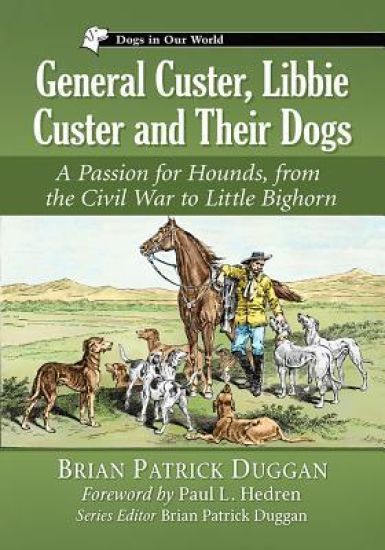
General Custer, Libbie Custer and Their Dogs

General Custer, Libbie Custer and Their Dogs

Brian Patrick Duggan

McFarland Co Inc
2019
pokkari
General George Armstrong Custer and his wife, Libbie Custer, were wholehearted dog lovers. At the time of his death at Little Bighorn, they owned a rollicking pack of 40 hunting dogs, including Scottish Deerhounds, Russian Wolfhounds, Greyhounds and Foxhounds. Told from a dog owner's perspective, this biography covers their first dogs during the Civil War and in Texas; hunting on the Kansas and Dakota frontiers; entertaining tourist buffalo hunters, including a Russian Archduke, English aristocrats and P. T. Barnum (all of whom presented the general with hounds); Custer's attack on the Washita village (when he was accused of strangling his own dogs); and the 7th Cavalry's march to Little Bighorn with an analysis of rumors about a Last Stand dog. The Custers' pack was re-homed after his death in the first national dog rescue effort. Well illustrated, the book includes an appendix giving depictions of the Custers' dogs in art, literature and film.
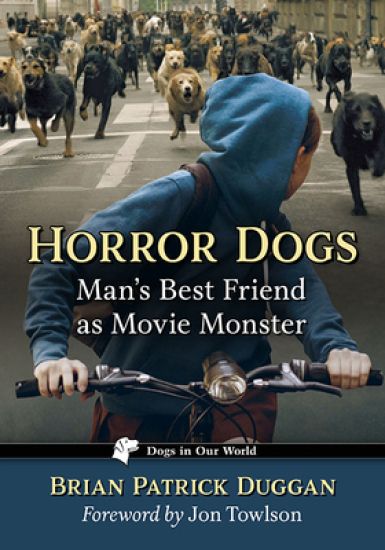
Horror Dogs

Horror Dogs

Brian Patrick Duggan

MCFARLAND CO INC
2023
pokkari
How did beloved movie dogs become man-killers like Cujo and his cinematic pack-mates? For the first time, here is the fascinating history of canines in horror movies and why our best friends were (and are still) painted as malevolent. Stretching back into Classical mythology, treacherous hounds are found only sporadically in art and literature until the appearance of cinema's first horror dog, Sherlock Holmes' Hound of the Baskervilles. The story intensifies through World War II's K-9 Corps to the 1970s animal horror films, which broke social taboos about the "good dog" on screen and deliberately vilified certain breeds--sometimes even fluffy lapdogs. With behind-the-scenes insights from writers, directors, actors, and dog trainers, here are the flickering hounds of silent films through talkies and Technicolor, to the latest computer-generated brutes--the supernatural, rabid, laboratory-made, alien, feral, and trained killers. "Cave Canem (Beware the Dog)"--or as one seminal film warned, "They're not pets anymore."
Bernard of Clairvaux

Bernard of Clairvaux

Brian Patrick McGuire

Cornell University Press
2020
sidottu
In this intimate portrait of one of the Middle Ages' most consequential men, Brian Patrick McGuire delves into the life of Saint Bernard of Clairvaux to offer a refreshing interpretation that finds within this grand historical figure a deeply spiritual human being who longed for the reflective quietude of the monastery even as he helped shape the destiny of a church and a continent. Heresy and crusade, politics and papacies, theology and disputation shaped this astonishing man's life, and McGuire presents it all in a deeply informed and clear-eyed biography. Following Bernard from his birth in 1090 to his death in 1153 at the abbey he had founded four decades earlier, Bernard of Clairvaux reveals a life teeming with momentous events and spiritual contemplation, from Bernard's central roles in the first great medieval reformation of the Church and the Second Crusade, which he came to regret, to the crafting of his books, sermons, and letters. We see what brought Bernard to monastic life and how he founded Clairvaux Abbey, established a network of Cistercian monasteries across Europe, and helped his brethren monks and abbots in heresy trials, affairs of state, and the papal schism of the 1130s. By reevaluating Bernard's life and legacy through his own words and those of the people closest to him, McGuire reveals how this often-challenging saint saw himself and conveyed his convictions to others. Above all, this fascinating biography depicts Saint Bernard of Clairvaux as a man guided by Christian revelation and open to the achievements of the human spirit.
We Live In Prophecy Every Day: Iron Sharpens Iron

We Live In Prophecy Every Day: Iron Sharpens Iron

Brian Patrick Richards

Createspace Independent Publishing Platform
2016
nidottu
This is dedicated for the fund raising for WORD OF FAITH CHARITY (Aust) part of the "WORD OF FAITH MINISTRIES INTERNATIONAL"and at the time of writing this we are developing, and cultivating, the gifts of the Holy Spirit by some inspirational teaching that is coming to us by the "Divine Appointment "that we believe the God of our Lord Jesus Christ is correcting the foundational teachings that was originally given by the Apostles & Prophets of old. There is no need for God to raise again the Apostles and Prophets to lay again the doctrines of acts 2:42-46 However the body of Christ has lost the original understandings, and meanings, of the Apostles doctrines, so there is a Prophetic anointing, and a special remnant of people God is using to correct the foundations to take us to the higher levels, for the perfecting of the Saints in the body of Christ. I believe that every true Prophet of God around the world would endorse this description and say yes, exactly what God is doingWe live in Prophecy every day but very few will know and act upon their new incoming informationSadly, people today make the same mistakes. They think they are the exception to Scriptures, but they are not. People are told they will destroy their lives if they make a certain decision, and their stubbornness blinds them to the fact that they are living in prophecy as they head down a destructive path. People oftentimes know that immorality destroys lives, but they think they are the exception and head down the road of prophecy and never see their eminent destruction. There are some things you can do to avoid this.
White Nights and Dark Days: A Conversation with St. Petersburg, Russia
Russia is a hot topic these days. Did they or didn't interfere in our elections in 2016? I won't answer that in my book, but, what I will do is give the reader the tools, even the skills, to make that decision for themselves. I have been living and working in Russia since 1994. This book is like a crash course on Russia and what makes Russia do what Russia does. The story does not unfold in a strict flow of time--it is my life and my thoughts and they appear here as they were needed to help me to better understand my "Russian journey," to answer the questions--what is Russia and why am I here?After graduating from high school in 1985, I learned Russian at the Defense Language Institute in Monterey, California and became a Russian linguist. In 1990. as a 22-year old student at Rutgers University, I was rambunctious and determined to change the world. Instead, I ended up in Leningrad--the Northern Capital of the Soviet Union. It was love at first site. Shortly after the failed coup in Moscow in August 1991, I returned and began my "life" in a Soviet-Russian context. I left again for graduate school at The School of International and Public Affairs at Columbia University. With a Master's in my hands, I was filled with the best intentions returning to help the struggling country survive the very difficult period of transition. Grants from the World Bank, Echoing Green and other funds fueled my vision and sure, my "two-cents" might have helped a bit; often it seems, though, that Russia was more helpful in my own survival. Having learned to think, feel, live and express myself in a post-Soviet world that was at times harsh and unforgiving, my 29 years in Russia have never been ones void of adventure.Despite having built major companies and leading brands in the post-Soviet space, I never set out to make lots of money like so many before and after me. My journey has been a love affair with a city that lured me to it since I was as young as ten. Those whispers of history called and called. Today, I am 53 years old and each day surviving Russia has been as unique as that first overcast evening at the Finnish border on June 15, 1990. There always seems to be a backdrop for everything in the country that just somehow makes you stop, take notice and say--Whoa, cool. I have survived three divorces, the death of both parents, grandmothers, the death of a brother and even the loss of a prematurely born child. I had a caf called "The Brooklyn Bridge" practically stolen from me by the mafia and my own employees; and yet, here I am still trying to make the city a bit better, a bit more livable. My story is not a political one, however, but one about normal Russians who have crossed my path over the past 29 years. This story also does not delve into my professional accomplishments of the past 15 years (since 2005) despite the "amazing" level some of them have risen to. One thing that was of particular significance for me professionally, however, was the creation of Russia House in Davos during the World Economic Forum's Annual Meeting (2016-2018). Russia was officially avoiding Davos and I kept the country present on this world stage by launching "my" version of Russia. "White Nights and Dark Days" has helped me answer the question so many Americans have asked since I first set out for Russia in 1994--"what the hell are you doing in Russia?" I have asked myself this same question countless times --it seems that I might have actually stumbled an answer. If you like to explore other cultures then this book is for you. If you want to learn how to succeed professionally in a foreign culture, give this a read. If you want to take a peak into a journey through a place and a time that few have written about, then "White Nights and Dark Days: A Conversation with St. Petersburg, Russia" is for you.This is a book about survival, about never giving up. It is a book about love.