Caitlin Ross is on track to be the action star she's always wanted to be. She's got the lead in a new play at a downtown theater, she's got a handsome, successful boyfriend, and she's picked up some killer new martial arts skills. But after a missing teen reappears outside her theater, disfigured and violent, Caitlin finds that there's more to being a hero than just throwing punches. When mysterious portals start hurling her friends around New York City and into danger, Caitlin will have to make the ultimate sacrifice to keep her loved ones safe. If she survives long enough to discover the truth behind their teleporting tormentors, can Caitlin avoid the monstrous fate awaiting her in the theater's basement? Caitlin Ross and the Commute from Hell is the first book of The Future Next Door, a contemporary urban science fiction comedic thriller series in four parts. Book One: Alan Lennox and the Temp Job of DoomBook Two: Caitlin Ross and the Commute from HellBook Three: Mark Park and the Flume of DestinyBook Four: Dakota Bell and the Wastes of Time
A revolutionary figure throughout his career, Dante Gabriel Rossetti’s work provides a distinctly revolutionary lens through which the Victorian period can be viewed. Suggesting that Rossetti’s work should be approached through his poetry, Brian Donnelly argues that it is both inscribed by and inscribes the development of verbal as well as visual culture in the Victorian era. In his discussions of modernity, aestheticism, and material culture, he identifies Rossetti as a central figure who helped define the terms through which we approach the cultural productions of this period. Donnelly begins by articulating a method for reading Rossetti’s poetry that highlights the intertextual relations within and between the poetry and paintings. His interpretations of such poems as the 'Mary’s Girlhood' sonnets, the sonnet sequence The House of Life, and 'The Orchard-Pit' in relationship to paintings such as The Girlhood of Mary Virgin and Ecce Ancilla Domini! shed light on Victorian ideals of femininity, on consumer culture, and on the role of gender hierarchies in Victorian culture. Situating Rossetti’s poetry as the key to all of his work, Donnelly also makes a case for its centrality in its representation of the dominant discourses of the late Victorian period: faith, sex, consumption, death, and the nature of representation itself.
A revolutionary figure throughout his career, Dante Gabriel Rossetti’s work provides a distinctly revolutionary lens through which the Victorian period can be viewed. Suggesting that Rossetti’s work should be approached through his poetry, Brian Donnelly argues that it is both inscribed by and inscribes the development of verbal as well as visual culture in the Victorian era. In his discussions of modernity, aestheticism, and material culture, he identifies Rossetti as a central figure who helped define the terms through which we approach the cultural productions of this period. Donnelly begins by articulating a method for reading Rossetti’s poetry that highlights the intertextual relations within and between the poetry and paintings. His interpretations of such poems as the 'Mary’s Girlhood' sonnets, the sonnet sequence The House of Life, and 'The Orchard-Pit' in relationship to paintings such as The Girlhood of Mary Virgin and Ecce Ancilla Domini! shed light on Victorian ideals of femininity, on consumer culture, and on the role of gender hierarchies in Victorian culture. Situating Rossetti’s poetry as the key to all of his work, Donnelly also makes a case for its centrality in its representation of the dominant discourses of the late Victorian period: faith, sex, consumption, death, and the nature of representation itself.
While Steve Ditko and Stan Lee may have created Spider-Man, it was John Romita Sr. who defined him... Romita came to the book as a replacement for Steve Ditko, bringing his clean, romantic style of illustration to the book. Romita once expected Ditko to return to the book within a few months and when he didn't, history was truly made. A history that is now fully explored by writer Tom Spurgeon and this presentation of the definitive book - lavishly illustrated with classic and unseen art -- starring Jazzy John Romita! From his days before Marvel, through the Sliver Age, and his days designing and creating the characters we know and love still today (including Wolverine, the Punisher and many, many more), Romita: Generations covers it all. Spurgeon's exhaustive interview includes not only Romita Sr., but the second beloved artist in the family, John Romita Jr.! About Tom SpurgeonTom Spurgeon is one of North America's best-known experts on the comic strip and comic book art forms and the industries that service them. The son of a newspaperman in East Central Indiana, Tom and his brothers helped their father select new strips for the paper's comic-book page, making the Muncie Star-Press one of the first publications to carry "Calvin and Hobbes" and "The Far Side," as well as sone of the few to carry "Rudy."After receiving a broad education at Washington and Lee University and a focused one at Garrett seminary on the campus of Northwestern University, Tom worked briefly for QVC, Inc. Drawing on experience in his nepotism-fueled career as a beat writer, editor and entertainment reporter, Tom in 1994 took the position of managing editor at The Comics Journal in Seattle, Washington. Tom edited the Journal for five years, first as managing editor and then as executive editor. During that time, the magazine won multiple industry awards, increased its focus on world comics and encouraged the comics community to see small press and mini-comics as legitimate artistic outlets rather than a training ground for traditionally published works. In forcing the magazine to build on the breadth and depth of its coverage, Tom helped improve the magazine's general mainstream profile as one of American Arts' most unique and valuable publications. When literary comics began to make a major impact in the late 1990s, the Journal was the gateway publication for many editors and writers to understand the phenomenon. Tom also edited the magazine's infamous "Stan Lee issue" (October 1995) and helped launch its popular companion Web site. In 1999, Tom left the magazine to become a freelancer. He remains a columnist, reviewer and occasional newsman for the publication he previously edited. He has written about comics and a variety of arts-related subjects for Suck.com, Feed, The Stranger, and more than a dozen newspapers and regional magazines. From 1999 to 2002, he wrote the critically lauded newspaper comic strip "Wildwood," which enjoyed a daily presence in more than 18 million homes. He currently lives in Silver City, New Mexico.
As a competent Flash designer, you're probably comfortable with all of the basics that Flash has to offer. However, you've probably looked at some of the amazing Flash sites on the web and thought, "How'd they do that?" Well, you'll find out in this book. Flash allows users to create some amazing interactive interfaces to interact with rich Internet applications, e-learning systems, and simple web sites. In this book, two of the most talented Flash designers in the world will show you how to use them effectively to create breathtaking visuals for your Flash web sites. You'll also learn how to take advantage of Flash's powerful built-in vector-based drawing tools. The authors discuss general background theory, such as site planning, color theory, and information architecture. They reveal techniques using gradients, layers, lighting and shadowing, 3D objects, animation, and photo editing. Techniques are illustrated and the book concludes with a discussion of usability and final tweaks. There is also a tutorial on testing your work, and exporting and finally publishing it.
There is a hidden world around us.Some think of this world as a different realm, or perhaps as another plane or dimension. Most simply call this place "heaven" and, while we cannot always see it, we can certainly experience it. In Spiritual Things, Brian M. Rossiter reveals the incredible ways that heaven and earth intersect. This includes topics like: What it really means to be made in the image of God.How we experience angels, and what role they have in our lives.The true nature of spiritual beings.What the Bible says about the afterlife.Beyond these fascinating realities, Rossiter concludes by pointing us towards our future: a new existence where heaven and earth merge, and we walk together with God and the angels.Get your copy and start understanding this hidden world now
For thousands of years, human civilizations have been clamoring about extraterrestrial visitors. The ancient peoples shared countless stories about them, recorded their personal encounters, depicted them in their artwork, and even claimed that their advanced architectural and astronomical understandings could be attributed to these beings. While this is often known to us, many have failed to understand that modern scientific research has actually verified a lot of these ancient claims. The need for an intelligent cause for life on Earth, the existence of both a massive flood and races of giant people, our documentation of UFOs, and so much more, all point to the existence of extraterrestrial entities. Though every line of evidence seems to coalesce on this reality, those who should already believe in otherworldly beings are often the ones who have the hardest time doing so. While the Bible clearly discusses the existence of non-human entities, people of faith have seldom known what to make of them. In this book, Brian M. Rossiter reveals the incredible parallels that exist among the heavenly beings of the Bible, the visitors described in other ancient traditions, and the aliens of ancient astronaut theory. Along the way, he uncovers myriad ways that extraterrestrial entities have shown themselves to the world. More than that, he answers some of the most pivotal questions of all. Who are these "extraterrestrial" beings? Are they really visitors from outer space, or might they be something else altogether?Can people of faith believe in extraterrestrials without compromising their belief in the Bible?The answers to these questions can change your entire worldview, and even challenge your most cherished beliefs about our place in existence.
This discography documents all recordings made by this pioneering and influential record label which was active in many areas - popular, jazz, blues, country, and ethnic music during a formative and dynamic period in America's cultural history just before and during the 1920s on into the early 1930s. All known 78rpm record releases in the United States, Britain, Canada, Australia, and Japan are detailed. Also included is an essay on the history of the various corporate entities that produced the OKeh label during its initial period of operation with special emphasis on the activities of the record company in making many field recordings in locations throughout the United States and Hawaii.Laird and Rust's book is primarily comprised of an extensive bibliography and a comprehensive artist index. This publication is the definitive volume on a legendary and influential record company which played a vital part in recording many great artists including some who are still recognized as some of the finest exponents of their particular musical styles.
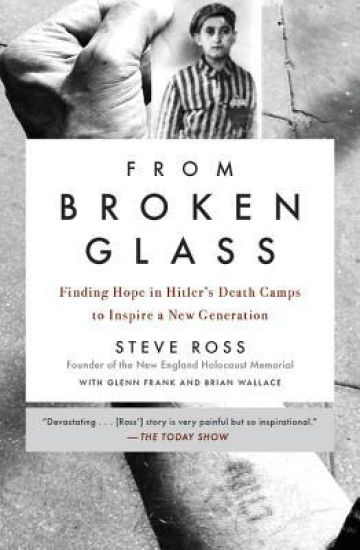
From the survivor of ten Nazi concentration camps who went on to create the New England Holocaust Memorial, a "devastating...inspirational" memoir (The Today Show) about finding strength in the face of despair.On August 14, 2017, two days after a white-supremacist activist rammed his car into a group of anti-Fascist protestors, killing one and injuring nineteen, the New England Holocaust Memorial was vandalized for the second time in as many months. At the base of one of its fifty-four-foot glass towers lay a pile of shards. For Steve Ross, the image called to mind Kristallnacht, the Night of Broken Glass in which German authorities ransacked Jewish-owned buildings with sledgehammers.Ross was eight years old when the Nazis invaded his Polish village, forcing his family to flee. He spent his next six years in a day-to-day struggle to survive the notorious camps in which he was imprisoned, Auschwitz-Birkenau and Dachau among them. When he was finally liberated, he no longer knew how old he was, he was literally starving to death, and everyone in his family except for his brother had been killed.Ross learned in his darkest experiences--by observing and enduring inconceivable cruelty as well as by receiving compassion from caring fellow prisoners--the human capacity to rise above even the bleakest circumstances. He decided to devote himself to underprivileged youth, aiming to ensure that despite the obstacles in their lives they would never experience suffering like he had. Over the course of a nearly forty-year career as a psychologist working in the Boston city schools, that was exactly what he did. At the end of his career, he spearheaded the creation of the New England Holocaust Memorial, a site millions of people including young students visit every year.Equal parts heartrending, brutal, and inspiring, From Broken Glass is the story of how one man survived the unimaginable and helped lead a new generation to forge a more compassionate world.
SQL Server 2008 represents a sizable jump forward in scalability, performance, and usability for the DBA, developer, and business intelligence (BI) developer. It is no longer unheard of to have 20-terabyte databases running on a SQL Server. SQL Server administration used to just be the job of a database administrator (DBA), but as SQL Server proliferates throughout smaller companies, many developers have begun to act as administrators as well. Additionally, some of the new features in SQL Server are more developer-centric, and poor configuration of these features can result in poor performance. SQL Server now enables you to manage the policies on hundreds of SQL Servers in your environment as if you were managing a single instance. We've provided a comprehensive, tutorial-based book to get you over the learning curve of how to configure and administer SQL Server 2008. Whether you're an administrator or developer using SQL Server, you can't avoid wearing a DBA hat at some point. Developers often have SQL Server on their own workstations and must provide guidance to the administrator about how they'd like the production configured. Oftentimes, they're responsible for creating the database tables and indexes. Administrators or DBAs support the production servers and often inherit the database from the developer. This book is intended for developers, DBAs, and casual users who hope to administer or may already be administering a SQL Server 2008 system and its business intelligence features, such as Integration Services. This book is a professional book, meaning the authors assume that you know the basics about how to query a SQL Server and have some rudimentary concepts of SQL Server already. For example, this book does not show you how to create a database or walk you through the installation of SQL Server using the wizard. Instead, the author of the installation chapter may provide insight into how to use some of the more advanced concepts of the installation. Although this book does not cover how to query a SQL Server database, it does cover how to tune the queries you've already written.
This book focuses on the processes involved in the development and revision of curriculums and course syllabuses. It provides background to key issues related to course design and implementation, including needs analysis and assessment, and is designed to assist institutions to revise and enhance course programmes taking advantage of tools found in Common European Framework of Reference and the Core Inventory of General English.
While previously available methodologies for software – like those published in the early days of object technology – claimed to be appropriate for every conceivable project, situational method engineering (SME) acknowledges that most projects typically have individual characteristics and situations. Thus, finding the most effective methodology for a particular project needs specific tailoring to that situation. Such a tailored software development methodology needs to take into account all the bits and pieces needed for an organization to develop software, including the software process, the input and output work products, the people involved, the languages used to describe requirements, design, code, and eventually also measures of success or failure.The authors have structured the book into three parts. Part I deals with all the basic concepts, terminology and overall ideas underpinning situational method engineering. As a summary of this part, they present a formal meta-model that enables readers to create their own quality methods and supporting tools. In Part II, they explain how to implement SME in practice, i.e., how to find method components and put them together and how to evaluate the resulting method. For illustration, they also include several industry case studies of customized or constructed processes, highlighting the impact that high-quality engineered methods can have on the success of an industrial software development. Finally, Part III summarizes some of the more recent and forward-looking ideas.This book presents the first summary of the state of the art for SME. For academics, it provides a comprehensive conceptual framework and discusses new research areas. For lecturers, thanks to its step-by-step explanations from basics to the customization and quality assessment of constructed methods, it serves as a solid basis for comprehensive courses on the topic. For industry methodologists, it offers a reference guide onfeatures and technologies to consider when developing in-house software development methods or customising and adopting off-the-shelf ones.
While previously available methodologies for software – like those published in the early days of object technology – claimed to be appropriate for every conceivable project, situational method engineering (SME) acknowledges that most projects typically have individual characteristics and situations. Thus, finding the most effective methodology for a particular project needs specific tailoring to that situation. Such a tailored software development methodology needs to take into account all the bits and pieces needed for an organization to develop software, including the software process, the input and output work products, the people involved, the languages used to describe requirements, design, code, and eventually also measures of success or failure.The authors have structured the book into three parts. Part I deals with all the basic concepts, terminology and overall ideas underpinning situational method engineering. As a summary of this part, they present a formal meta-model that enables readers to create their own quality methods and supporting tools. In Part II, they explain how to implement SME in practice, i.e., how to find method components and put them together and how to evaluate the resulting method. For illustration, they also include several industry case studies of customized or constructed processes, highlighting the impact that high-quality engineered methods can have on the success of an industrial software development. Finally, Part III summarizes some of the more recent and forward-looking ideas.This book presents the first summary of the state of the art for SME. For academics, it provides a comprehensive conceptual framework and discusses new research areas. For lecturers, thanks to its step-by-step explanations from basics to the customization and quality assessment of constructed methods, it serves as a solid basis for comprehensive courses on the topic. For industry methodologists, it offers a reference guide onfeatures and technologies to consider when developing in-house software development methods or customising and adopting off-the-shelf ones.
This book is open access under a CC BY 4.0 license.This volume presents an Empirical Model of Global Climate developed by the authors and uses that model to show that global warming will likely remain below 2ºC, relative to preindustrial, throughout this century provided: a) both the unconditional and conditional Paris INDC commitments are followed; b) the emission reductions needed to achieve the Paris INDCs are carried forward to 2060 and beyond.The first section of the book provides a short overview of Earth’s climate system, describing and contrasting climatic changes throughout the planet’s history and anthropogenic changes post-Industrial Revolution. The second section describes the climate model developed by the authors (Canty et al., Atmospheric Chemistry and Physics, 2013) and contrasts the model with climate models used in the Intergovernmental Panel on Climate Change (IPCC) 2013 Report. Chapter 3 examines both the unconditional (i.e., firm commitments) andconditional Paris INDCs (commitments contingent on financial flow and/or technology transfer) through the lens of their climate model and concludes that if all of the Paris INDCs are followed, then they are indeed a beacon of hope for Earth’s climate. The fourth part of the book offers a perspective of energy needs and subsequent emissions reductions required to meet the Paris temperature goals, illuminating challenges faced both in the developing world and the developed world.Throughout the book, easy-to-understand charts and graphics illustrate concepts. The scientific basis of Chapters 2 and 3 was first presented in a keynote session of the 96th Annual Meeting of the American Meteorological Society in January, 2016.
This book is open access under a CC BY 4.0 license.This volume presents an Empirical Model of Global Climate developed by the authors and uses that model to show that global warming will likely remain below 2ºC, relative to preindustrial, throughout this century provided: a) both the unconditional and conditional Paris INDC commitments are followed; b) the emission reductions needed to achieve the Paris INDCs are carried forward to 2060 and beyond.The first section of the book provides a short overview of Earth’s climate system, describing and contrasting climatic changes throughout the planet’s history and anthropogenic changes post-Industrial Revolution. The second section describes the climate model developed by the authors (Canty et al., Atmospheric Chemistry and Physics, 2013) and contrasts the model with climate models used in the Intergovernmental Panel on Climate Change (IPCC) 2013 Report. Chapter 3 examines both the unconditional (i.e., firm commitments) andconditional Paris INDCs (commitments contingent on financial flow and/or technology transfer) through the lens of their climate model and concludes that if all of the Paris INDCs are followed, then they are indeed a beacon of hope for Earth’s climate. The fourth part of the book offers a perspective of energy needs and subsequent emissions reductions required to meet the Paris temperature goals, illuminating challenges faced both in the developing world and the developed world.Throughout the book, easy-to-understand charts and graphics illustrate concepts. The scientific basis of Chapters 2 and 3 was first presented in a keynote session of the 96th Annual Meeting of the American Meteorological Society in January, 2016.
Management Research Methods, first published in 2007, is a comprehensive guide to the design and conduct of research in management-related disciplines such as organisational behaviour, human resource management, industrial relations, and the general field of management. Specifically, the text begins by providing an overview of the research process and in subsequent chapters explains the major types of design used in management research (correlational field studies, experimental and quasi-experimental designs, case studies, historical analysis, and action research). There are also chapters that describe the methods of data collection (interviews, questionnaires, documentation and observation) commonly employed by management researchers. In addition, the text examines the issues of reliability and validity, the construction of multi-item scales, and the methods of quantitative and qualitative analysis. The text concludes with a practical guide explaining how to report research findings and a discussion of the ethical issues in the conduct and practice of research.
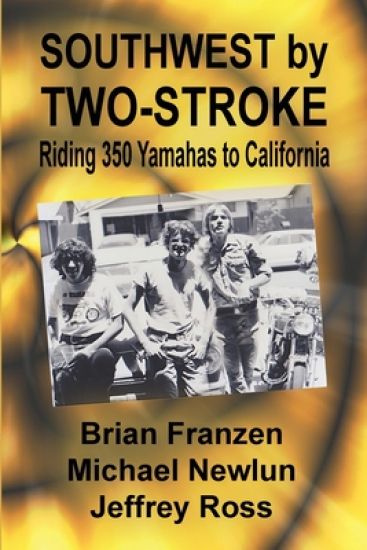
Three Teenagers ride their Yamaha 350's from Nebraska to California and back in 1973. Relive the sights and culture of the early seventies during their fun adventure on those two-lane highways.