Chris Bruce was born in England and educated in South Africa. After a long career in the construction industry in South Africa, Namibia, Hong Kong, the Philippines, Oman and the United Arab Emirates and a spell setting up and operating a fresh and processed sausage factory in Bangkok, Chris finally retired to Hua Hin in Thailand. Not being Thai, unable to speak the language, no longer a part of the construction "EXPAT NETWORK", it was not long before he became somewhat bored with life. One way to alleviate the boredom was to write. Chris decided to use his knowledge of the sausage industry to write a book of sausage making methods and recipes. This was followed by a book of liqueur making methods and recipes. Chris realizing that people do not have much time to read a little humor encouraged friends from around the world to send him jokes and anecdotes by email. This led to eight humorous books with jokes and anecdotes under the banner of the TAKE ME TO THE TOILET series. These were followed by Sausage: 91 Ideas for Making a Meal of It and Meat Loaves and Hamburger Patties. His latest book, Autobiography of an Unknown Man, is the story of his life from his birth in war torn England, his emigration to Namibia and his childhood there, school and university in South Africa, his successes and failures in the construction industry including building throughout the South African/Angolan Border War, his broken marriages and his moves to the Far East and Middle East before retiring.
In clinical trials, monitoring accumulating data at regular intervals is essential for balancing ethical and financial considerations against scientific rigor. This comprehensive second edition reflects the remarkable evolution in adaptive clinical trial methodology over the past two decades. Since publication of the first edition, these approaches have transformed from theoretical concepts to widely accepted practices, now endorsed by regulatory authorities, including formal FDA guidance.Features:Eleven entirely new chapters, including optimal design construction, delayed "pipeline" data accommodation, and multiple comparison proceduresEight dedicated chapters on adaptive methods including sample size re-assessment, seamless Phase II/III trials, multi-arm multi-stage trials, and enrichment designsExact methods for binary and Poisson data with applications to vaccine trialsExpanded discussion of binding versus non-binding futility boundaries for enhanced decision-makingA chapter with a thoroughly updated review of Bayesian approaches to sequential trial design and analysisIncorporates response-adaptive treatment assignment in group sequential designsPractical computational methods and software guidance for implementing the techniquesThis definitive resource serves statisticians, clinical researchers, pharmaceutical scientists, and regulatory professionals involved in clinical trial design and analysis. The text balances theoretical foundations with practical implementation guidance, making it invaluable for both experienced practitioners and those new to adaptive trial methodology. With twice the content of the first edition, this volume provides the comprehensive understanding needed to design more efficient, ethical, and scientifically rigorous clinical trials, ultimately accelerating the delivery of effective treatments to patients.
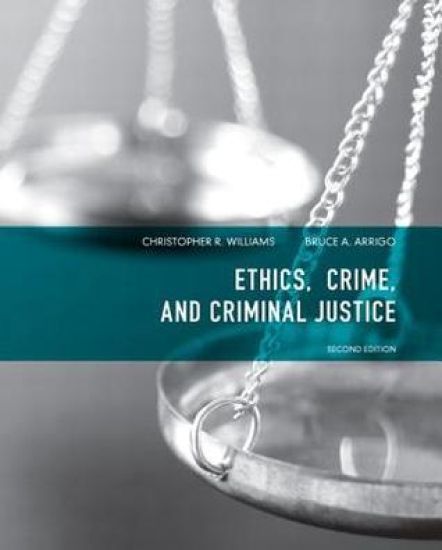
This comprehensive, provocative text meaningfully examines ethical theories and their application to current issues, controversies, and professional scenarios in law, crime, and justice. It introduces students to the foundations of the study of ethics and morality; examines prominent moral and ethical themes, conflicts, and struggles in criminology and criminal justice; and explores the conceptual and practical value of key ethical concepts, principles, and arguments. This edition is extensively updated and revised for greater clarity, cohesiveness, and accessibility. An all-new chapter demonstrates practical application of normative frameworks to ethical dilemmas, and another largely new chapter introduces game theory, evolutionary psychology, and related concepts. Readers will find expanded discussions of social contract, cognitive neuroscience, Carol Gilligan’s ethic of care, and much more.
Designed as a guide for pre-service education students and in-service teachers, Professional Ethics and Law in Education: A Canadian Guidebook provides an accessible and accurate source of information on the ethical and legal frameworks of the teaching profession while encouraging the examination of fundamental issues that underpin key debates in Canadian schooling and education.Divided into four sections, this guidebook is grounded in the idea that teacher professionalism requires a solid understanding of the ethical and legal expectations that society has of teachers. Written for both the student and the professional, this text is an essential companion to both aspiring and active teachers. It provides clear guidance on how to navigate the complex regulatory framework of contemporary teaching while highlighting the indispensable contribution that individual judgment and shared values make to thoughtful, informed, and well-reasoned decision making in teaching, making it necessary reading for educators in Canada.
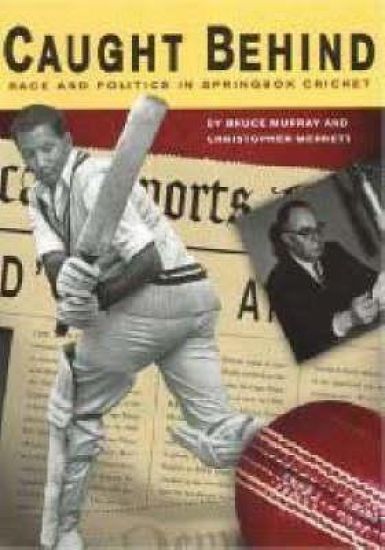
South Africa's participation in international cricket has been bedevilled by racism and the political intervention of governments virtually from the beginning. In 1894 the formidable coloured fast bowler, H. 'Krom' Hendricks, was nominated for the first South African team to tour England but was finally omitted, at the behest of Cecil Rhodes, the Cape Prime Minister, on grounds of race. In 1968 B. J. Vorster, the South African Prime Minister, refused to allow Basil D'Oliveira, the South African-born coloured cricketer who played for England, to tour South Africa with the English or MCC team. This not only resulted in the cancellation of the MCC tour but led directly to the cancellation of the South African tours of England and Australia, and the beginning of South Africa's exclusion from Test match cricket. This book is a compulsively readable account of the events and political machinations that led to South Africa's cricket isolation in the apartheid era, and its ultimate readmission. New light is thrown on the role of black cricket and black cricketers in South Africa, until recently airbrushed out of the country's sporting history, and provide the social, historical and political context of the racially exclusive teams - the Springboks - that represented South Africa in international Test match cricket between 1888 and 1970.
Throughout history, social and intellectual crises have given rise to compelling suggestions for reform steeped in various progressive sensibilities. For example, within the discipline of criminology -- particularly during the 1980’s and 1990’s -- a number of unconventional theoretical perspectives emerged that sought to challenge many of the assumptions embedded within its own mainstream discourse, and to propose alternative solutions for meaningful, sustainable change. Conceived of as "critical" in overarching orientation, these efforts to rethink the foundations of criminological verstehen can be traced to several specific theoretical and methodological strands of inquiry (e.g., anarchism, peacemaking, chaos theory, postmodernism). Though distinct in some respects, these emerging models are linked paradigmatically by their shared discontent with conventional criminological thought and by their radicalized posture toward existing and previously unexamined epistemic crises. Collectively, this is an agenda for reform that seeks to establish a more humane and just social order, particularly as citizens and society confront the institutional and communal problems posed by crime, delinquency, and deviance. Theory, Justice, and Social Change: Theoretical Integrations and Critical Applications represents a provocative series of essays that systematically reviews or extends the role of critical social theory in fostering justice and change in several relevant, though problematic, social contexts. Mindful of the need to address both conceptual exegeses and pragmatic concerns, the articles contained in this volume grapple with the ongoing "double crisis" that confronts theory and practice in the construction of knowledge. By appropriating and integrating various insights from several heterodox and critically animated lines of inquiry, each chapter deftly exposes where and how conventional sociological and criminological thought has failed toeffectively address such human social issues as homelessness, mental illness, minority rights, juvenile justice, global violence, and criminal punishment. In doing so, Theory, Justice, and Social Change provides new and much needed direction regarding theory development in the social sciences, and indicates why charting such a course of theory/action yields more enlightened prospects for justice and change in society and in our lives.
Throughout history, social and intellectual crises have given rise to compelling suggestions for reform steeped in various progressive sensibilities. For example, within the discipline of criminology -- particularly during the 1980’s and 1990’s -- a number of unconventional theoretical perspectives emerged that sought to challenge many of the assumptions embedded within its own mainstream discourse, and to propose alternative solutions for meaningful, sustainable change. Conceived of as "critical" in overarching orientation, these efforts to rethink the foundations of criminological verstehen can be traced to several specific theoretical and methodological strands of inquiry (e.g., anarchism, peacemaking, chaos theory, postmodernism). Though distinct in some respects, these emerging models are linked paradigmatically by their shared discontent with conventional criminological thought and by their radicalized posture toward existing and previously unexamined epistemic crises. Collectively, this is an agenda for reform that seeks to establish a more humane and just social order, particularly as citizens and society confront the institutional and communal problems posed by crime, delinquency, and deviance. Theory, Justice, and Social Change: Theoretical Integrations and Critical Applications represents a provocative series of essays that systematically reviews or extends the role of critical social theory in fostering justice and change in several relevant, though problematic, social contexts. Mindful of the need to address both conceptual exegeses and pragmatic concerns, the articles contained in this volume grapple with the ongoing "double crisis" that confronts theory and practice in the construction of knowledge. By appropriating and integrating various insights from several heterodox and critically animated lines of inquiry, each chapter deftly exposes where and how conventional sociological and criminological thought has failed toeffectively address such human social issues as homelessness, mental illness, minority rights, juvenile justice, global violence, and criminal punishment. In doing so, Theory, Justice, and Social Change provides new and much needed direction regarding theory development in the social sciences, and indicates why charting such a course of theory/action yields more enlightened prospects for justice and change in society and in our lives.
Leading scholars from across Canada examine a new era of "life under the knife" in the context of the Harper agenda after five years in power, the partisan calculus of a minority Parliament, and a deep global recession still in crisis mode. Given the budget-related pressure for an election, the book poses questions about the degree to which the budget agenda involves the political arts of "trimming fat" versus "slicing the pork" of partisan spending. Several closely linked political, policy, and spending realms are examined, including economic stimulus, environmental assessment, energy and climate change, health care, science and technology, immigration, and northern strategy (including affordable housing). Related governance issues such as the use of new media, regulatory budget cuts, Industry Canada as an economic regulator, and federal compensation costs are also discussed in detail. Contributors include Frances Abele (Carleton University), Caroline Andrew (University of Ottawa), Vandna Bhatia (Carleton University), Neil Bradford (University of Western Ontario), Francois Bregha (Statos), David Castle (University of Edinburgh), G. Bruce Doern (Carleton University and University of Exeter), Nick Falvo (Carleton University), Mary Francoli (Carleton University), Ruth Hubbard (University of Ottawa), Derek Ireland (Carleton University), James Lahey (University of Ottawa), Douglas Macdonald (University of Toronto), Eric Milligan (Regulatory Consulting Group Inc, Ottawa), Leslie A. Pal (Carleton University), Gilles Paquet (University of Ottawa), Peter W.B. Phillips (University of Saskatchewan), Richard Schultz (McGill University), Christopher Stoney (Carleton University), Kernaghan Webb (Ryerson University), and Wei Xie (doctoral student, Carleton University).
The 2013-14 edition of How Ottawa Spends critically examines national politics, priorities, and policies with a close lens on Stephen Harper's Conservative party during the middle of their first term as a majority. Contributors from across Canada examine the federal government and its not uncommon mid-term problems but also its considerable agenda of long term plans, both set in the midst of national economic fragility and a global fiscal and debt crisis. Individual chapters examine several related political, policy, and spending realms including the Budget Action Plan, the ten year Canada Health Transfer Plan, the Canada Pension Plan, and Old Age Security reforms. The contributors also consider austerity related public sector downsizing and strategic spending reviews, national energy, and related environmental strategies, and the growing Harper practice of "one-off" federalism.
An examination of three candidate concepts for collaboration and partnership between the Army and industry. The Army has a growing need to collaborate and partner with Industry. This document describes three nontraditional approaches to that goal, namely (1) forming real-estate public-private partnerships (PPPs), (2) using Army venture capital mechanisms as a research and development funding and collaborating tool, and (3) spinning off Army activities into federal government corporations (FGCs). The research shows that while the three concepts appear promising, each requires resolution of key issues before it can be seriously considered for implementation. In the case of PPPs issues include whether Army installations can propose financially sound concepts. In the case of venture capital, the potential merits of such a concept to meet the Army's technology needs must be addressed in further detail. In the case of FGCs, the value of establishing the Army laboratories and depots as FGCs will depend on how many external commercial opportunities exist and further analysis of how best to structure continuing relationships with other Army organizations.Once these key issues are satisfactorily addressed, the Army should create pilot programs to test the concepts.
Completely revised and updated, this virtual encyclopedia of vascular procedures offers details on traditional and alternative approaches with step-by-step illustrations that show the best routes to underlying anatomy. It addresses indications, preoperative diagnostic testing, and complications, and offers new coverage of endovascular procedures. "Succeeds admirably...Reference to this atlas will be made time and again by the surgeon." (Journal of Vascular Surgery, review of 1st Edition) · A completely new section on endovascular surgery describes how to perform today's full range of minimally invasive procedures.· New section introductions present information on diagnosis, indications, and complications-particularly useful to surgeons who are practicing in a managed care environment.· Updated discussions of traditional procedures reflect the results of the newest research in the field. 375 outstanding illustrations-including intraoperative photos as well as crisp drawings by a skilled medical illustrator-make the most important steps of every technique easy to understand and reproduce.
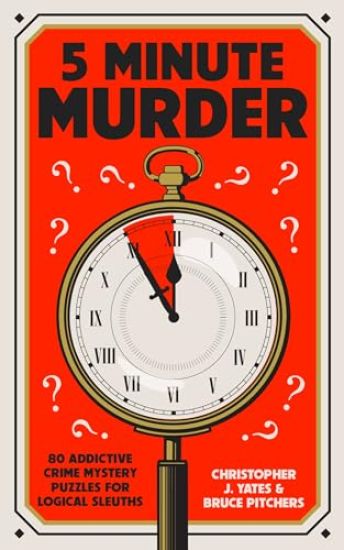
A SLEUTHING EXPERIENCE THAT'S PERFECT FOR ALL PUZZLE AND WHODUNNIT LOVERS... The murderers have committed the crimes, now it's up to you to solve them. Using your powers of deduction, can you play detective and help put the killers behind bars? 5 Minute Murder features 100 logic and code-based murder-mystery puzzles, skillfully compiled by acclaimed psychological thriller writer Christopher J. Yates and puzzle expert Bruce Pitchers. From the dreaming spires of Oxford to the gritty streets of New York, this puzzle-meets-fiction book is split into 10 short stories, each with their own scintillating plotline to accompany the murder-based puzzles. If you're an armchair detective with a 5-minute coffee break to spare, can you crack the case? Praise for the work of Christopher J. Yates: "A new Stephen King, albeit with a British accent." - New York PostPraise from readers: This puzzle book is clever, fun, and just the right amount of challenge. A satisfying brain workout. ?????Love this mystery puzzle book! Highly recommend it for a fun, creative, entertaining holiday gift. You won't be disappointed! It'll definitely keep your mind sharp too. ?????
Drawing from many parts of the broad Christian tradition, this commentary on First and Second Timothy and Titus helps readers gain a stronger understanding of early Christian ministry in the first two centuries. Paideia commentaries show how New Testament texts use ancient narrative and rhetorical strategies to form and shape the reader and provide a fresh reading of the biblical texts in light of ancient culture and modern issues. Students, pastors, and other readers will appreciate the historical, literary, and theological insight offered in this commentary.
Christopher G. Pernin; Elliot Axelband; Jeffrey A. Drezner; Brian B. Dille; John Gordon; Bruce J. Held; K. Scott McMahon; Walter L. Perry; Christopher Rizzi; Akhil R. Shah; Peter A. Wilson; Jerry M. Sollinger
The federal government's promises to "build back better" and "build back green" highlight opportunities to reimagine Canadian infrastructure. In this groundbreaking study, authors Bruce Doern, Christopher Stoney, and Robert Hilton provide the first comprehensive overview of Canadian infrastructure policy, examining the impact and implications of the COVID-19 pandemic and rapid technological change as Canada looks to recover and rebuild.Covering more than fifty years across many sectors, the authors identify numerous challenges that have contributed to Canada's growing infrastructure deficit and suboptimal outcomes including political interference in the choice of infrastructure projects; challenges for multilevel governance such as distortion of local priorities, blurred accountability, and unsustainable maintenance costs for municipalities; the growing reliance on public-private partnerships that limit transparency and public scrutiny; and increased corruption associated with infrastructure projects.Transforming infrastructure is notoriously difficult yet vital at a time of rapid technological change. It is estimated that 75 percent of the infrastructure that will exist in 2050 does not exist today. This makes it crucial that Canada invest in future-proof infrastructure with the capacity to facilitate economic growth and the expansion of urban centres, mitigate and adapt to the impacts of climate change, and ensure resilience in response to crises and disasters. Keeping Canada Running offers a timely assessment of these issues, Canada's COVID-19 response, and the potential contribution of the newly launched Canadian Infrastructure Bank.
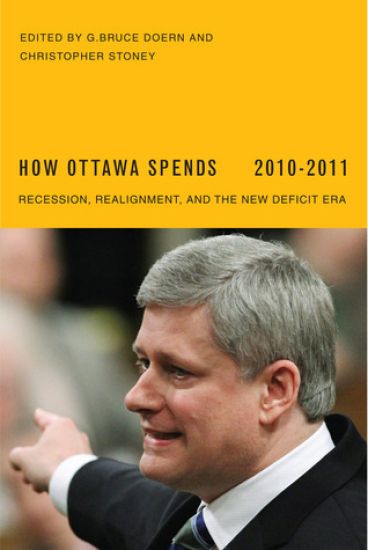
Continuing the excellent standards and traditions of timely scholarship, the 2010-2011 edition of "How Ottawa Spends" critically examines national politics, priorities, and policies with emphasis on federal economic and social spending. Given the political and budgetary challenges posed by the recession, this year's instalment pays close attention to the growing fiscal deficit. Informed authors from across Canada examine recession-related policy fields, including the Canadian Banking system, new industrial policy pressures such as the automotive industry bailout, policies in science, technology, and innovation, and suggestions about how to resist the United States' 'buy America' trade policies. The essays in this volume also consider Canada's national, regional, and political divisiveness, the impact of the dynamic Obama Administration on Canadian domestic affairs, and governance during a time of minority government.