Kirjojen hintavertailu. Mukana 12 434 532 kirjaa ja 12 kauppaa.

Kirjahaku

Etsi kirjoja tekijän nimen, kirjan nimen tai ISBN:n perusteella.

1000 tulosta hakusanalla Bruce D. Tate

The Boy Who Was Raised as a Dog, 3rd Edition

The Boy Who Was Raised as a Dog, 3rd Edition

Bruce D. Perry; Maia Szalavitz

Basic Books
2017
pokkari
In this classic work of developmental psychology, renowned psychiatrist and the co-author of the #1 New York Times bestseller What Happened to You? reveals how trauma affects children-and outlines the path to recovery."Fascinating and upbeat.... Dr. Perry is both a world-class creative scientist and a compassionate therapist." -Mary Pipher, PhD, author of Reviving OpheliaHow does trauma affect a child's mind-and how can that mind recover?Child psychiatrist Dr. Bruce D. Perry has helped children faced with unimaginable horror: genocide survivors, murder witnesses, kidnapped teenagers, and victims of family violence. In the classic The Boy Who Was Raised as a Dog, Dr. Perry tells their stories of trauma and transformation and shares their lessons of courage, humanity, and hope. Deftly combining unforgettable case histories with his own compassionate, insightful strategies for rehabilitation, Perry explains what happens to children's brain when they are exposed to extreme stress-and reveals the unexpected measures that can be taken to ease such pain and help them grow into healthy adults. Only when we understand the science of the mind and the power of love and nurturing can we hope to heal the spirit of even the most wounded child.

The USSR in Third World Conflicts

The USSR in Third World Conflicts

Bruce D. Porter

Cambridge University Press
1986
pokkari
This is a thorough and sophisticated study of one of the most critical current issues in world politics. Bruce Porter examines Soviet policy and behaviour in Third World conflicts in the postwar period, focusing particularly on five examples: the Yemeni civil war, the Nigerian civil war, the Yom Kippur war, the Angolan civil war, and the Ogaden war. Aiming to illuminate various complex tactical and operational aspects of the USSR’s policy in local conflicts, the author draws on a wide and eclectic range of sources. He pays close attention to the Soviet role as arms supplier and diplomatic actor in relation to both US policy and the dynamics of the local conflict, and he concludes with a careful consideration of the effectiveness of Soviet policy and of the implications for the United States.
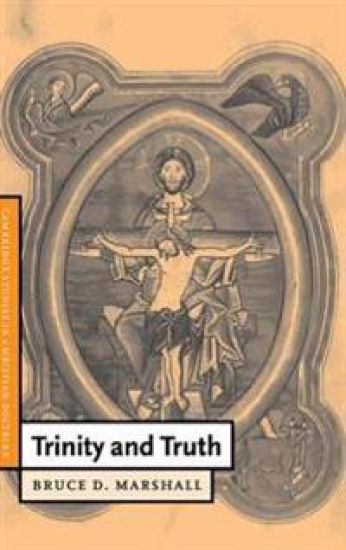
Trinity and Truth

Trinity and Truth

Bruce D. Marshall

Cambridge University Press
1999
sidottu
Two closely related questions receive distinctively theological answers in this study: What is truth? and How can we tell whether what we have said is true? Bruce Marshall proposes that the Christian community’s identification of God as the Trinity serves as the key to a theologically adequate treatment of these questions. Professor Marshall argues on trinitarian grounds that the Christian way of identifying God ought to have unrestricted primacy when it comes to the justification of belief, and he proposes a trinitarian way of reshaping the concept of truth. Direct engagement with the current philosophical debate about truth, meaning and belief (in Quine and others) suggests that a trinitarian account of epistemic justification and truth is also more philosophically compelling than the approaches generally favoured in modern theology, as exemplified by Schleiermacher, Ritschl, Rahner and others. Marshall offers a contemporary way of conceiving of the Christian God as ‘the truth’.
Trinity and Truth

Trinity and Truth

Bruce D. Marshall

Cambridge University Press
1999
pokkari
Two closely related questions receive distinctively theological answers in this study: What is truth? and How can we tell whether what we have said is true? Bruce Marshall proposes that the Christian community's identification of God as the Trinity serves as the key to a theologically adequate treatment of these questions. Professor Marshall argues on trinitarian grounds that the Christian way of identifying God ought to have unrestricted primacy when it comes to the justification of belief, and he proposes a trinitarian way of reshaping the concept of truth. Direct engagement with the current philosophical debate about truth, meaning and belief (in Quine and others) suggests that a trinitarian account of epistemic justification and truth is also more philosophically compelling than the approaches generally favoured in modern theology, as exemplified by Schleiermacher, Ritschl, Rahner and others. Marshall offers a contemporary way of conceiving of the Christian God as 'the truth'.
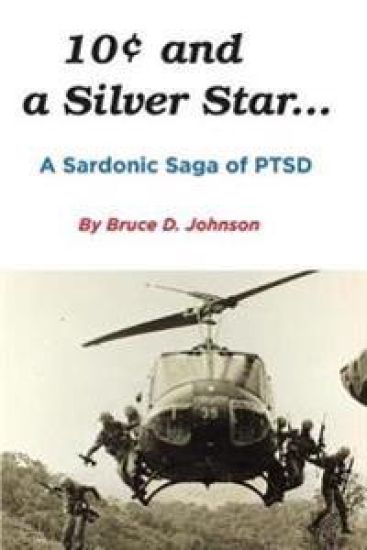
10 Cents and a Silver Star . . . A Sardonic Saga of PTSD

10 Cents and a Silver Star . . . A Sardonic Saga of PTSD

Bruce D Johnson

Itsyourairplane.Com, LLC
2019
pokkari
Just as WWII gave us Catch 22 and Korea produced M*A*S*H, Vietnam delivers 10 cents and a Silver Star. No one can laugh off the incredibly cruel Vietnam War, but Bruce Johnson's sardonic antidote to the plague of PTSD helps recover the truth - if you don't laugh, you'll cry. Humor as an antidote to PTSD. A haunted life laughed at.
What I Believe- Truth: Spiritual Awakening- Laws of Nature
Universal Intelligence is the meaning of the phrase Universal Mind, one mind, the mind of the Creator of all. If we understand this intelligence we can tap into this Universal Intelligence, this Universal Mind, and receive all that we require to live a better life. We create the life we desire for ourselves, our loved ones and those around us. This book contains many of the answers we require, for that better life, in the writings of fifty plus authors and professional speakers like Norman Hill, Dr. Wayne Dyer, Jack Canfield, Rhonda Byrne, Deepak Chopra, Sylvia Browne, Ken Carey and Ruth Montgomery. Read the words of wisdom in this book and continue your quest for intelligence by reading the books in the Appendix.
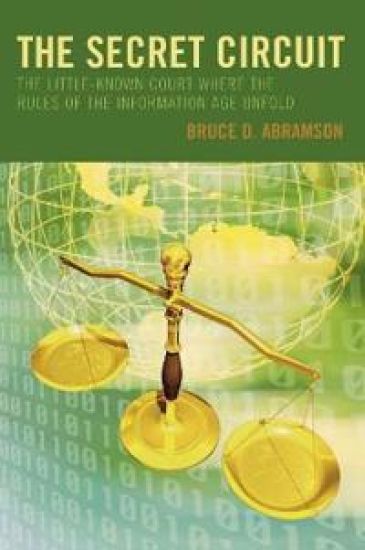
The Secret Circuit

The Secret Circuit

Bruce D. Abramson

Rowman Littlefield Publishers
2007
nidottu
Imagine a high impact, low profile, nonpartisan government institution located across the street from the White House. Imagine that it plays a central role in shaping our technology industries, in overseeing globalization, and in holding the federal government responsible for its commercial activities. Imagine that only Congress and the Supreme Court can correct its mistakes. Such an institution exists. The United States Court of Appeals for the Federal Circuit was born in the early 1980s as part of the drive to liberalize and reinvigorate the American economy. Over the past twenty-five years, it has earned its nickname as the 'patent court' by revolutionizing American patent law, but it also oversees international trade law and government business law. Taken together, its docket covers the rules guiding innovation, globalization, and much of government. Are these rules impelling the economy forward or holding it back? Are the policies we have the policies we want? How are we faring, as the economy transitions from the industrial age to the information age? What responsibility does the Federal Circuit bear in shaping America's current economic policies in these three critical areas? The Secret Circuit demystifies this Court's work and answers these questions.
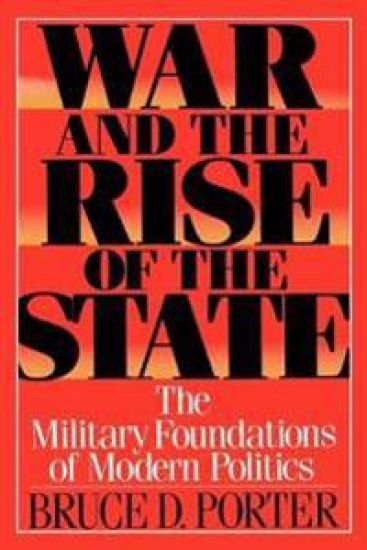
War and the Rise of the State

War and the Rise of the State

Bruce D. Porter

The Free Press
2002
pokkari
As Publishers Weekly notes, “Porter, a political scientist at Brigham Young University, demonstrates that wars have been catalysts for increasing the size and power of Western governments since the Renaissance. The state’s monopoly of effective violence has diminished not only individual rights and liberties, but also the ability of local communities and private associates to challenge the centralization of authority. Porter’s originality lies in his thesis that war, breaking down barriers of class, gender, ethnicity, and ideology, also contributes to meritocracy, mobility, and, above all, democratization. Porter also posits the emergence of the “Scientific Warfare State,” a political system in which advanced technology would render obsolete mass participation in war. This provocative study merits wide circulation and serious discussion.”
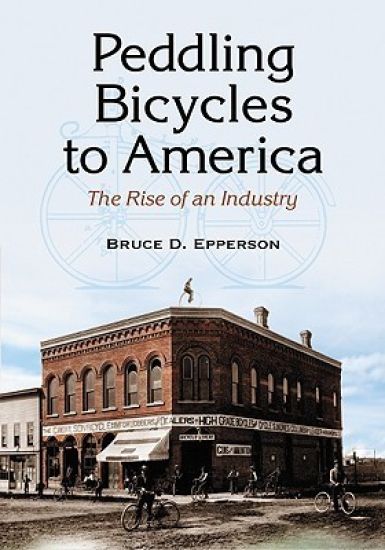
Peddling Bicycles to America

Peddling Bicycles to America

Bruce D. Epperson

McFarland Co Inc
2010
pokkari
This economic and technical history of the early American bicycle industry focuses on the crucial period from 1876 to the beginning of World War I. It looks particularly at the life and career of the industry's most significant personality during this era, Albert Augustus Pope. After becoming enamored with English high-wheeled bicycles during a visit to the Philadelphia World's Fair in 1876, Pope soon started paying Hartford, Connecticut's Weed Sewing Machine Company to make his own brand of high-wheeler, the "Columbia," the first to be manufactured in America in significant numbers. A decade later, Pope bought out that company, and ten years after that, Hartford's Park River was lined with five of Pope's factories. This book tells the story of the Pope Manufacturing Company's meteoric rise and fall and the growth of an industry around it.
Bicycles in American Highway Planning

Bicycles in American Highway Planning

Bruce D. Epperson

McFarland Co Inc
2014
pokkari
The United States differs from other developed nations in the extent to which its national bicycle transportation policy relies on the use of unmodified roadways, with cyclists obeying the same traffic regulations as motor vehicles. This policy--known as "vehicular cycling"--evolved between 1969, when the "10-speed boom" saw a sharp increase in adult bicycling, and 1991, when the American Association of State Highway and Transportation Officials adopted an official policy that on-road bikeways were not desirable. This policy resulted from a growing realization by highway engineers and experienced club cyclists that they had parallel interests: the cyclists preferred to ride on highways, because most bikeways were not designed for high speeds and pack riding; and the highway engineers did not want to divert funding from roadways to construct bikeways. Using contemporary magazine articles, government reports, and archival material from industry lobbying groups and national cycling organizations, this book tells the story of how America became a nation of bicyclists without bikeways.
Peaceful Peoples

Peaceful Peoples

Bruce D. Bonta

Scarecrow Press
1993
sidottu
Peaceful peoples are societies that have developed harmonious social structures which allow them to get along with each other, and with outsiders, without violence. Most of these peoples foster a spirit of cooperation rather than competition, promote sharing rather than glorifying greed, and live in harmony with the earth as well as with other people. Perhaps most importantly, they believe that peacefulness is the defining characteristic of their humanity. Some of the peoples included in the book are from the Western tradition such as the Amish, Hutterites, Mennonites, Quakers, and Tristan Islanders; from South America, the Piaroa; from Africa, the Fipa; from South Asia, the Paliyan, Malapandaram, and Nayaka; from Southeast Asia, the Semai, Chewong, and Buid; and from Micronesia, the Ifaluk. This selected bibliography includes annotated references to books, articles, and other English-language publications that provide significant information about a peaceful society. The author has combed the literature of fields such as anthropology, psychology, sociology, history, and religious studies for appropriate works, with a cutoff date of 1992. Scholars and peace activists who are interested in societies that foster peacefulness have difficulty finding references to the literature. Numerous indexes and abstracts do not include subject headings such as "peaceful peoples." Furthermore, indexing services often do not cover chapters in edited volumes, an important part of this literature. The book includes a very detailed name and subject index that provides access to the intriguing social psychological, and cultural similarities—and difference—existing among the peoples.
Power and Responsibility

Power and Responsibility

Bruce D. Jones; Carlos Pascual; Stephen John Stedman

Brookings Institution
2010
nidottu
"""The aim of the Managing Global Insecurity project is to launch a reform effort of the global security system in 2009. That task is both ambitious and urgent.... The time to act is now.""—from the Foreword by Javier SolanaThe twenty-first century will be defined by security threats unconstrained by borders—from economic instability, climate change, and nuclear proliferation to conflict, poverty, terrorism, and disease. The greatest test of global leadership will be building partnerships and institutions for cooperation that can meet the challenge. Power and Responsibility describes how American leadership can rebuild international order to promote global security and prosperity for today's transnational world. Power & Responsibility establishes a new foundation for international security: ""responsible sovereignty,"" or the notion that sovereignty entails obligations and duties toward other states as well as one's own citizens. Governments must cooperate across borders to safeguard common resources and tackle common threats. Power & Responsibility argues that in order to advance its own interests, the United States must learn to govern in an interdependent world, exercise leadership through cooperation, and create new institutions with today's traditional and emerging powers. The result of a collaborative project on Managing Global Insecurity, the book also reflects the MGI project's global dialogue—extensive consultations in the United States and in regions around the world as well as discussions with the MGI project's Advisory Group, composed of prominent U.S. and international figures. ""The 2008 financial crisis has brought our global interconnectedness close to home. But economic insecurity is just one concern. Power and Responsibility provides a road map for building effective policies and legitimate global institutions to tackle today's suite of transnational challenges.""—Kemal Dervis, administrator, UN Development Program"
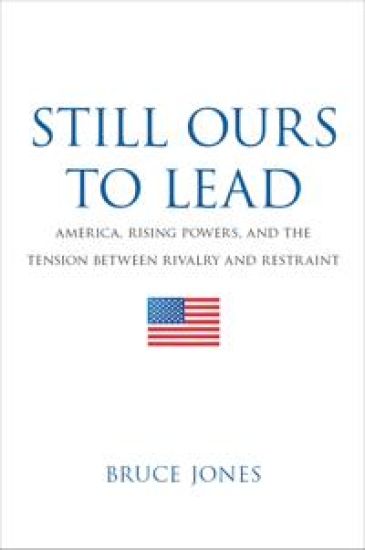
Still Ours to Lead

Still Ours to Lead

Bruce D. Jones

Brookings Institution
2014
nidottu
"Is the United States still a ""superpower""? How are the rising powers establishing themselves in international politics and security? What is the future of global stability?For over a decade, Bruce Jones has had a front-row seat as the emerging powers—principally China, India, and Brazil, but also Turkey, Indonesia, Korea, and others—thrust themselves onto the global stage. From Delhi to Doha to Beijing to Brasilia, he's met with the politicians, diplomats, business leaders, and scholars of those powers as they craft their strategies for rising influence—and with senior American officials as they forge their response.In Still Ours to Lead, Jones tells a nuanced story of American leadership. He artfully examines the tension between the impulse to rival the United States and the incentives for restraint and cooperation among the rising powers. That balance of rivalry and restraint provides the United States with a continued ability to solve problems and to manage crises at roughly the same rate as when American dominance was unquestioned. Maintaining the balance is central to the question of whether we will live in a stable or unstable system in the period to come. But it just so happens that this challenge plays to America's unique strength—its unparalleled ability to pull together broad and disparate coalitions for action. To succeed, America must adapt its leadership to new realities."