Kirjojen hintavertailu. Mukana 11 699 587 kirjaa ja 12 kauppaa.

Kirjahaku

Etsi kirjoja tekijän nimen, kirjan nimen tai ISBN:n perusteella.

1000 tulosta hakusanalla Bruno Bouchet

Bruno

Bruno

Catharina Valckx

Gecko Press
2017
nidottu
Six linked stories full of friendship, silliness, and the little moments that make life good Bruno, the cat in the checkered cap, takes life as it comes. When it's too rainy to go outside, his friends come around for breakfast. When a fish invites him into the river, he follows it. Why not! When the canary forgets how to talk, Bruno helps out. Days come and go, and for Bruno they always bring something interesting. And once in a while, a day comes along that is just about perfect!
Bruno

Bruno

Rod Mortenson

Xlibris Us
2019
pokkari
In the heat of the summer, when Blueberries are at their finest, you should wander down the path that crosses the Big Meadow. If you are careful and quiet, you will see the strangest party you can imagine. Animals of all types now gather at the far end, near the creek bank. They bring food of all kinds. But everyone agrees that their favorite snack is the Blueberries For a day or two they forget the cares and troubles of the world. They enjoy each other's company and get to know each other. And I think that with each passing year, the Big Meadow becomes a better place to live. The Big Meadow: Home of Heroes and Friends
Bruno

Bruno

Ümit Elveren

Books on Demand
2023
pokkari
Bruno Mit lautem Gebelle bekam der kleine Bruno jeden Morgen seine Leckereien von Herrchen Otto. Als er aber eines Tages pl tzlich und unerwartet verschwindet, kommen dem kleinen K ter viele Menschen zur Hilfe. mit Elveren
Bruno

Bruno

Byrd Spilman Dewey

Lector House
2022
pokkari
NEW PRINT WITH PROFESSIONAL TYPE-SET IN CONTRAST TO SCANNED PRINTS OFFERED BY OTHERS Bruno This book is a result of an effort made by us towards making a contribution to the preservation and repair of original classic literature. In an attempt to preserve, improve and recreate the original content, we have worked towards: 1. Type-setting & Reformatting: The complete work has been re-designed via professional layout, formatting and type-setting tools to re-create the same edition with rich typography, graphics, high quality images, and table elements, giving our readers the feel of holding a 'fresh and newly' reprinted and/or revised edition, as opposed to other scanned & printed (Optical Character Recognition - OCR) reproductions. 2. Correction of imperfections: As the work was re-created from the scratch, therefore, it was vetted to rectify certain conventional norms with regard to typographical mistakes, hyphenations, punctuations, blurred images, missing content/pages, and/or other related subject matters, upon our consideration. Every attempt was made to rectify the imperfections related to omitted constructs in the original edition via other references. However, a few of such imperfections which could not be rectified due to intentional\unintentional omission of content in the original edition, were inherited and preserved from the original work to maintain the authenticity and construct, relevant to the work. We believe that this work holds historical, cultural and/or intellectual importance in the literary works community, therefore despite the oddities, we accounted the work for print as a part of our continuing effort towards preservation of literary work and our contribution towards the development of the society as a whole, driven by our beliefs. We are grateful to our readers for putting their faith in us and accepting our imperfections with regard to preservation of the historical content. HAPPY READING
Bruno

Bruno

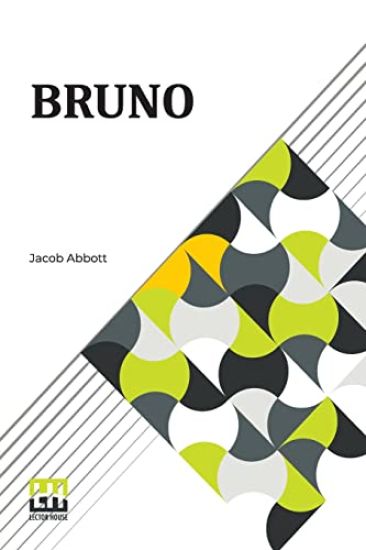
Jacob Abbott

Lector House
2022
pokkari
NEW PRINT WITH PROFESSIONAL TYPE-SET IN CONTRAST TO SCANNED PRINTS OFFERED BY OTHERS Bruno: Or, Lessons Of Fidelity, Patience, And Self-Denial Taught By A Dog. This book is a result of an effort made by us towards making a contribution to the preservation and repair of original classic literature. In an attempt to preserve, improve and recreate the original content, we have worked towards: 1. Type-setting & Reformatting: The complete work has been re-designed via professional layout, formatting and type-setting tools to re-create the same edition with rich typography, graphics, high quality images, and table elements, giving our readers the feel of holding a 'fresh and newly' reprinted and/or revised edition, as opposed to other scanned & printed (Optical Character Recognition - OCR) reproductions. 2. Correction of imperfections: As the work was re-created from the scratch, therefore, it was vetted to rectify certain conventional norms with regard to typographical mistakes, hyphenations, punctuations, blurred images, missing content/pages, and/or other related subject matters, upon our consideration. Every attempt was made to rectify the imperfections related to omitted constructs in the original edition via other references. However, a few of such imperfections which could not be rectified due to intentional\unintentional omission of content in the original edition, were inherited and preserved from the original work to maintain the authenticity and construct, relevant to the work. We believe that this work holds historical, cultural and/or intellectual importance in the literary works community, therefore despite the oddities, we accounted the work for print as a part of our continuing effort towards preservation of literary work and our contribution towards the development of the society as a whole, driven by our beliefs. We are grateful to our readers for putting their faith in us and accepting our imperfections with regard to preservation of the historical content. HAPPY READING
Bruno's Dream

Bruno's Dream

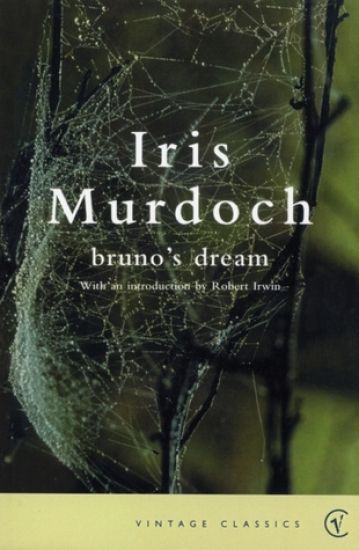
Iris Murdoch

Vintage Publishing
2001
pokkari
Bruno, dying, obsessed with spiders and preoccupied with death and reconciliation, lies at the center of an intricate spider's web of relationships and passions: Bruno's estranged and grieving son Miles; Danby, Bruno's widowed son-in-law, consoling himself with the Adelaide the maid, one of Murdoch's finest comic creations;
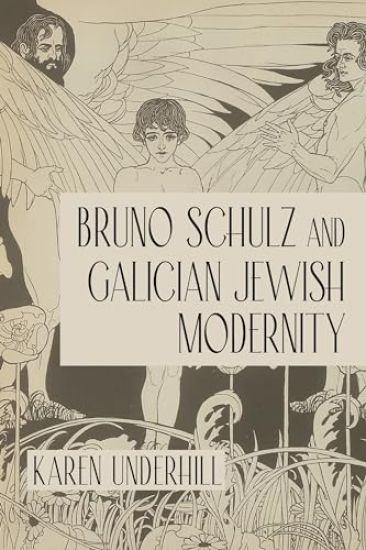
Bruno Schulz and Galician Jewish Modernity

Bruno Schulz and Galician Jewish Modernity

Karen Underhill

Indiana University Press
2024
sidottu
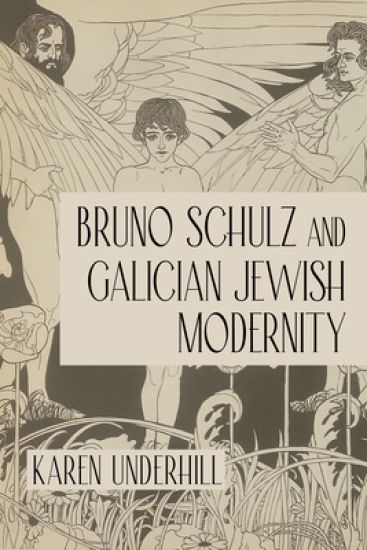
In the 1930s, through the prose of Bruno Schulz (1892–1942), the Polish language became the linguistic raw material for a profound exploration of the modern Jewish experience. Rather than turning away from the language like many of his Galician Jewish colleagues who would choose to write in Yiddish, Schulz used the Polish language to explore his own and his generation's relationship to East European Jewish exegetical tradition, and to deepen his reflection on golus or exile as a condition not only of the individual and of the Jewish community, but of language itself, and of matter. Drawing on new archival discoveries, this study explores Schulz's diasporic Jewish modernism as an example of the creative and also transient poetic forms that emerged on formerly Habsburg territory, at the historical juncture between empire and nation-state.
Bruno Schulz and Galician Jewish Modernity

Bruno Schulz and Galician Jewish Modernity

Karen Underhill

INDIANA UNIVERSITY PRESS
2024
pokkari
In the 1930s, through the prose of Bruno Schulz (1892–1942), the Polish language became the linguistic raw material for a profound exploration of the modern Jewish experience. Rather than turning away from the language like many of his Galician Jewish colleagues who would choose to write in Yiddish, Schulz used the Polish language to explore his own and his generation's relationship to East European Jewish exegetical tradition, and to deepen his reflection on golus or exile as a condition not only of the individual and of the Jewish community, but of language itself, and of matter. Drawing on new archival discoveries, this study explores Schulz's diasporic Jewish modernism as an example of the creative and also transient poetic forms that emerged on formerly Habsburg territory, at the historical juncture between empire and nation-state.
Bruno, Chief of Police: A Mystery of the French Countryside
The first installment in the delightful, internationally acclaimed series featuring Chief of Police Bruno. Meet Beno t Courr ges, aka Bruno, a policeman in a small village in the South of France. He's a former soldier who has embraced the pleasures and slow rhythms of country life. He has a gun but never wears it; he has the power to arrest but never uses it. But then the murder of an elderly North African who fought in the French army changes all that. Now Bruno must balance his beloved routines--living in his restored shepherd's cottage, shopping at the local market, drinking wine, strolling the countryside--with a politically delicate investigation. He's paired with a young policewoman from Paris and the two suspect anti-immigrant militants. As they learn more about the dead man's past, Bruno's suspicions turn toward a more complex motive. "Enjoyable.... Martin Walker plots with the same finesse with which Bruno can whip up a truffle omelette, and both have a clear appreciation for a life tied to the land." --The Christian Science Monitor "A nice literary pairing with the slow-food movement.... It is] lovely...to linger at the table." --Entertainment Weekly "A wonderfully crafted novel as satisfying as a French pastry but with none of the guilt or calories." --Tuscon Citizen's Journal
Bruno Schulz

Bruno Schulz

Benjamin Balint

WW NORTON CO
2023
sidottu
The twentieth-century artist Bruno Schulz was born an Austrian, lived as a Pole and died a Jew. First a citizen of the Habsburg monarchy, he would, without moving, become the subject of the West Ukrainian People’s Republic, the Second Polish Republic, the USSR and, finally, the Third Reich. Yet to use his own metaphor, Schulz remained throughout a citizen of the Republic of Dreams. He was a master of twentieth-century imaginative fiction who mapped the anxious perplexities of his time; Isaac Bashevis Singer called him “one of the most remarkable writers who ever lived.” Schulz was also a talented illustrator and graphic artist whose masochistic drawings would catch the eye of a sadistic Nazi officer. Schulz’s art became the currency in which he bought life. Drawing on extensive new reporting and archival research, Benjamin Balint chases the inventive murals Schulz painted on the walls of an SS villa—the last traces of his vanished world—into multiple dimensions of the artist’s life and afterlife. Sixty years after Schulz was murdered, those murals were miraculously rediscovered, only to be secretly smuggled by Israeli agents to Jerusalem. The ensuing international furore summoned broader perplexities, not just about who has the right to curate orphaned artworks and to construe their meanings, but about who can claim to stand guard over the legacy of Jews killed in the Nazi slaughter. By re-creating the artist’s milieu at a crossroads not just of Jewish and Polish culture but of art, sex and violence, Bruno Schulz itself stands as an act of belated restitution, offering a kaleidoscopic portrait of a life with all its paradoxes and curtailed possibilities.
Bruno Latour

Bruno Latour

Anders Blok; Torben Elgaard Jensen

Routledge
2011
sidottu
French sociologist and philosopher, Bruno Latour, is one of the most significant and creative thinkers of the last decades. Bruno Latour: Hybrid Thoughts in a Hybrid World is the first comprehensive and accessible English-language introduction to this multi-faceted work. The book focuses on core Latourian themes:• contribution to science studies (STS – Science, Technology & Society)• philosophical approach to the rise and fall of modernity• innovative thoughts on politics, nature, and ecology• contribution to the branch of sociology known as ANT – Actor-Network Theory.With ANT, Latour has pioneered an approach to socio-cultural analysis built on the notion that social life arises in complex networks of actants – people, things, ideas, norms, technologies, and so on – influencing each other in dynamic ways. This book explores how Latour helps us make sense of the changing interrelations of science, technology, society, nature, and politics beyond modernity.
Bruno Latour

Bruno Latour

Anders Blok; Torben Elgaard Jensen

Routledge
2012
nidottu
French sociologist and philosopher, Bruno Latour, is one of the most significant and creative thinkers of the last decades. Bruno Latour: Hybrid Thoughts in a Hybrid World is the first comprehensive and accessible English-language introduction to this multi-faceted work. The book focuses on core Latourian themes:• contribution to science studies (STS – Science, Technology & Society)• philosophical approach to the rise and fall of modernity• innovative thoughts on politics, nature, and ecology• contribution to the branch of sociology known as ANT – Actor-Network Theory.With ANT, Latour has pioneered an approach to socio-cultural analysis built on the notion that social life arises in complex networks of actants – people, things, ideas, norms, technologies, and so on – influencing each other in dynamic ways. This book explores how Latour helps us make sense of the changing interrelations of science, technology, society, nature, and politics beyond modernity.
Bruno Latour

Bruno Latour

Kyle McGee

Routledge
2013
sidottu
The first extended study of Bruno Latour’s legal theory, this book presents a critical reconstruction of the whole of Latour’s oeuvre to date, from Laboratory Life to An Inquiry into the Modes of Existence. Based on the powerful insights into normative effects that actor-network theory makes possible, the book advances a new theory of legal normativity and the force of law, rethinking Latour’s work on technology, the image, and referential scientific inscriptions, among others, and placing them within the ambit of legality. The book also captures and deepens the contrast between the modern legal institution and the value of law as a mode of existence, and provides a fulsome theoretical account of legal veridiction. Throughout, Latour’s thought is put into dialogue with important progenitors and adversaries as well as historical and contemporary strands of legal and political philosophy. But the thread of legality is not confined to Latour's reflections on the making of law; rather, it cuts through the whole of his highly diverse body of work. The empire of mononaturalism augured by modern philosophies of science is thoroughly juridical; as such, the actor-network theory that promises to undo that empire by freeing the value of the sciences from its epistemological clutches is unthinkable without the device of the trial and the descriptive semiotics of normativity that sustain ANT. The democratization of the sciences and the vibrancy of ecologized politics that become possible once the bifurcation of nature into essential primary and disposable secondary qualities is disabled, and once the ‘modern Constitution’ is called into doubt, also have important legal dimensions that have gone largely unexamined. Bruno Latour: The Normativity of Networks remedies this and other omissions, evaluating Latour’s thought about law while carrying it in striking new directions. This book introduces legal scholars and students to the thought of the philosopher and sociologist Bruno Latour, whilst also presenting a critical analysis of his work in and around law. This interdisciplinary study will be of interest to those researching in Law, Philosophy, and Sociology.