

Kirjahaku
Etsi kirjoja tekijän nimen, kirjan nimen tai ISBN:n perusteella.
1000 tulosta hakusanalla Bryan D. Booker

In this revised update, the authors have extended and refined their analysis of Detroit-area automakers and political leaders negotiating the selection of new factory sites and the consequent addition of thousands of jobs to the local economy. This analysis utilises the concept of ""solution sets"".
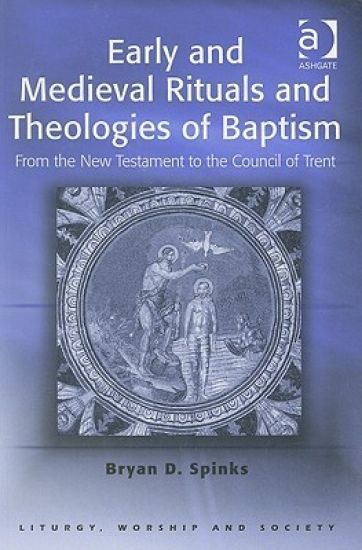
Early and Medieval Rituals and Theologies of Baptism
Bryan D. Spinks
Ashgate Publishing Limited
2006
nidottu
Presenting a comprehensive survey of the historical underpinnings of baptismal liturgies and theologies, Bryan Spinks presents an ecumenically and geographically wide-ranging survey and discussion of contemporary baptismal rites, practice and reflection, and sacramental theology. Writing within a clear chronological framework, Bryan Spinks presents two simultaneous volumes on Baptismal Liturgy and Theology. In the first volume, Early and Medieval Rituals and Theologies of Baptism, Bryan Spinks summarizes the understandings of baptism in the New Testament and the development of baptismal reflection and liturgical rites throughout Syrian, Egyptian, Roman and African regions. He focuses particularly on the Homilies of Chrysostom, Cyril of Jerusalem, Theodore and Ambrose, the post-nicene rites and commentaries, and the impact of medieval theologies of baptism and Augustinian theology with reference to Western understanding. In the second volume, Reformation and Modern Rituals and Theologies of Baptism, Spinks traces developments through the Reformation, liturgies in the eighteenth and nineteenth centuries, and explores important new ecumenical perspectives on developments of twentiethth-century sacramental discussion.
Sacraments, Ceremonies and the Stuart Divines
Bryan D. Spinks
Ashgate Publishing Limited
2002
sidottu
This book surveys developments in sacramental and liturgical discourse and discord, exploring the writings of English and Scottish divines, and focusing on baptism and the Lord's Supper. The reigns of James I and Charles I coincided with divergence and development in teaching on the sacraments in England and Scotland and with growing discord on liturgical texts and the ceremonial. Uniquely focusing on both nations in a single study, Bryan Spinks draws on theological treatises, sermons, catechisms, liturgical texts and writings by Scottish theologians hitherto neglected. Exploring the European roots of the churches of England and Scotland and how they became entwined in developments culminating in the Solemn League and Covenant and Westminster Directory, this book presents an authoritative study of sacramental and liturgical debate, developments, and experiments during the Stuart period.

Reformation and Modern Rituals and Theologies of Baptism
Bryan D. Spinks
Ashgate Publishing Limited
2006
nidottu
Presenting a comprehensive survey of the historical underpinnings of baptismal liturgies and theologies, Bryan Spinks presents an ecumenically and geographically wide-ranging survey and discussion of contemporary baptismal rites, practice and reflection, and sacramental theology. Writing within a clear chronological framework, Bryan Spinks presents two simultaneous volumes on Baptismal Liturgy and Theology. Early and Medieval Rituals and Theologies of Baptism summarizes the understandings of baptism in the New Testament and the development of baptismal reflection and liturgical rites throughout Syrian, Egyptian, Roman and African regions. In this second volume, Reformation and Modern Rituals and Theologies of Baptism, Spinks traces developments through the Reformation, liturgies in the eighteenth and nineteenth centuries, and explores important new ecumenical perspectives on developments of twentieth-century sacramental discussion. Present practices of Baptist, Amish, as well as Methodist, Roman Catholic, Lutheran, Reformed and Anglican denominations are also examined.

Worship has always been affected by its surrounding culture. This book examines the changing perspectives in and discussions on worship styles and practices from the Restoration to the death of Wesley, in England and Scotland. Moving beyond the text, Spinks grounds the discussion within the changing cultural and intellectual framework of the period referred to as the Enlightenment. The focus is the end of the early modern period, when already the upheaval of the English Civil War, the methods of the Cambridge Platonists, and the thinking of Descartes and Spinoza were making the period one of transition, and Newtonian thought and the thought of John Locke impacted theological thought and worship forms. It is against this framework that the worship in England and Scotland will be described and assessed. As well as published and unpublished liturgical documents, this book draws on contemporary accounts and descriptions of worship, catechisms, sermons and theological works, and contemporary diaries. Musical and architectural changes are also noted, particularly the late seventeenth century hymns of Richard Davies of Rothwell, Joseph Stennett and Benjamin Keach. This book places worship in the society which it served, and from which changes sprang. It explores the interaction of cultural thought and worship, drawing parallels between the Enlightenment period and problems of late modernity and the worship wars of the late twentieth century.
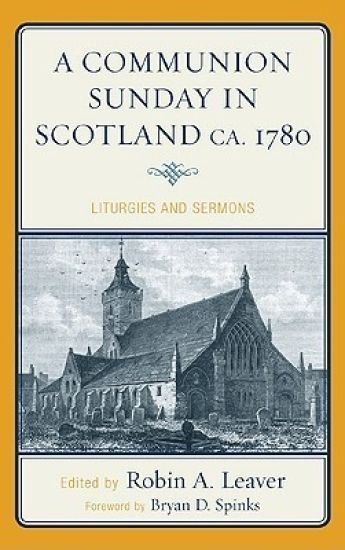
Sources for 17th, 18th, and early 19th-century Eucharistic practices in the Church of Scotland are scarce, in part because each minister was free to draw up the form and content of the services he conducted. In addition, many 19th and 20th century liturgical scholars chose to dismiss this form of public worship, instead focusing on the earlier tradition of the Book of Common Order. A Communion Sunday in Scotland ca. 1780: Liturgies and Sermons addresses the dearth of these liturgical studies by presenting a modern edition of a late 18th-century published account of Communion Sunday in the Church of Scotland. Robin A. Leaver edits and annotates several sermons, prayers, and congregational songs by the Reverend John Logan (1747?-1788), together with relevant background information and comparative documents. Citing Logan's sermons, liturgies, and psalms as a representative model, Leaver demonstrates that there was a developed liturgical structure and form in the Church of Scotland, in which preaching, psalmody, and prayer expressed Calvinist/Presbyterian theology within established patterns of worship. Leaver also provides an overview of Scottish Eucharistic practices from the 16th to the 19th centuries. Appendixes offering a list of Scottish Psalm Tunes and a translation of the Palatinate Liturgy (1563) are followed by a comprehensive bibliography, making this a valuable reference.

Was 1992 a realigning election? Did the midterm elections of 1994 realign the realignment? Will 1996 carry the United States forward on yet another changed trajectory? In this volume of original essays, leading political scientists examine key components of the American agenda and assess the current administration's position in light of historical precedents and future trends. Each conclusion is unique, born of a combination of the empirical record and its interpretation, but essays by Bryan Jones and Larry Dodd help to put the wide-ranging views represented here in long-term perspective.


Ritualized Writing takes readers into the fascinating world of Japanese Buddhist manuscript cultures. Using archival sources that have received scant attention in English, primarily documents from an eighth-century Japanese scriptorium and colophons from sutra manuscripts, Bryan D. Lowe uncovers the ways in which the transcription of Buddhist scripture was a highly ritualized endeavor. He takes a ground-level approach by emphasizing the activities and beliefs of a wide range of individuals, including scribes, provincial patrons, and royals, to reassess the meaning of scripture and reevaluate scholarly narratives of Japanese Buddhist history.Copying scripture is a central Buddhist practice and one that thrived in East Asia. Despite this, there are no other books dedicated to the topic. This work demonstrates that patrons and scribes treated sutras differently from other modes of writing. Scribes purified their bodies prior to transcription. Patrons held dedicatory ceremonies on days of abstinence, when prayers were pronounced and sutras were recited. Transcribing sutras helped scribes and patrons alike realize this- and other-worldly ambitions and cultivate themselves in accord with Buddhist norms. Sutra copying thus functioned as a form of ritualized writing, a strategic practice that set apart scripture as uniquely efficacious and venerable. Lowe employs this notion of ritualized writing to challenge historical narratives about ancient Japan (late seventh through early ninth centuries), a period when sutra copying flourished. He contends that Buddhist practice fulfilled a variety of social, political, and spiritual roles beyond ideological justification. Moreover, he demonstrates the inadequacy of state-folk dichotomies for understanding the social groups, institutions, and individual beliefs and practices of ancient Japanese Buddhism, highlighting instead common organizations across social class and using models that reveal shared concerns among believers from diverse social backgrounds.Ritualized Writing makes broader contributions to the study of ritual and scripture by introducing the notion of scriptural cultures, an analytic tool that denotes a series of dynamic relationships and practices involving texts that have been strategically set apart or ritualized. Scripture, Lowe concludes, is at once a category created by humans and a body of texts that transforms individuals and social organizations who come into contact with it.

Ritualized Writing takes readers into the fascinating world of Japanese Buddhist manuscript cultures. Using archival sources that have received scant attention in English, primarily documents from an eighth-century Japanese scriptorium and colophons from sutra manuscripts, Bryan D. Lowe uncovers the ways in which the transcription of Buddhist scripture was a highly ritualized endeavor. He takes a ground-level approach by emphasizing the activities and beliefs of a wide range of individuals, including scribes, provincial patrons, and royals, to reassess the meaning of scripture and reevaluate scholarly narratives of Japanese Buddhist history.Copying scripture is a central Buddhist practice and one that thrived in East Asia. Despite this, there are no other books dedicated to the topic. This work demonstrates that patrons and scribes treated sutras differently from other modes of writing. Scribes purified their bodies prior to transcription. Patrons held dedicatory ceremonies on days of abstinence, when prayers were pronounced and sutras were recited. Transcribing sutras helped scribes and patrons alike realize this- and other-worldly ambitions and cultivate themselves in accord with Buddhist norms. Sutra copying thus functioned as a form of ritualized writing, a strategic practice that set apart scripture as uniquely efficacious and venerable. Lowe employs this notion of ritualized writing to challenge historical narratives about ancient Japan (late seventh through early ninth centuries), a period when sutra copying flourished. He contends that Buddhist practice fulfilled a variety of social, political, and spiritual roles beyond ideological justification. Moreover, he demonstrates the inadequacy of state-folk dichotomies for understanding the social groups, institutions, and individual beliefs and practices of ancient Japanese Buddhism, highlighting instead common organizations across social class and using models that reveal shared concerns among believers from diverse social backgrounds.Ritualized Writing makes broader contributions to the study of ritual and scripture by introducing the notion of scriptural cultures, an analytic tool that denotes a series of dynamic relationships and practices involving texts that have been strategically set apart or ritualized. Scripture, Lowe concludes, is at once a category created by humans and a body of texts that transforms individuals and social organizations who come into contact with it.

Israel’s exodus from Egypt is the Bible’s enduring emblem of deliverance. It is the archetypal anvil on which the scriptural language of deliverance is shaped. More than just an epic moment, the exodus shapes the telling of Israel’s and the church’s gospel. From the blasting furnace of Egypt, imagery pours forth. In the Song of Moses Yahweh overcomes the Egyptian army, sending them plummeting to the bottom of the sea. But the exodus motif continues as God leads Israel through the wilderness, marches to Sinai and on the Zion. It fires the psalmist’s poetry and inspires Isaiah’s second-exodus rhapsodies. As it pulses through the veins of the New Testament, the Gospel writers hear exodus resonances from Jesus’ birth to the gates of Jerusalem. Paul casts Christ’s deliverance in exodus imagery, and the Apocalypse reverberates with exodus themes. In Echoes of Exodus, Bryan Estelle traces the motif as it weaves through the canon of Scripture. Wedding literary readings with biblical-theological insights, he helps us weigh again what we know and recognize anew what we have not seen. More than that, he introduces us to the study of quotation, allusion, and echo, providing a firm theoretical basis for hermeneutical practice and understanding. Echoes of Exodus is a guide for students and biblical theologians, and a resource for preachers and teachers of the Word.

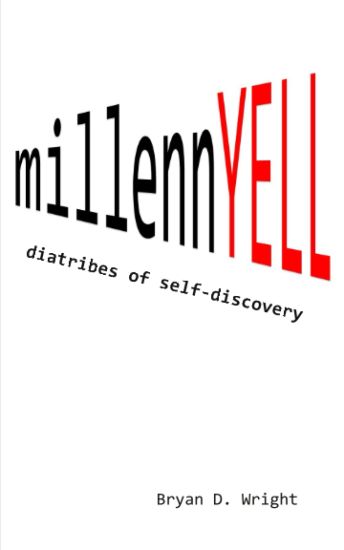
millennYELL: diatribes of self-discovery is a collection of poems intending to complicate the characterization of millennials as naively hopeful or as helplessly impotent. Bryan D. Wright's first book of poetry sweeps the personal, political, social, and cultural minefields left behind by the culture warriors of America's previous generations. His poems are a lament for the loss of the commonweal during the past thirty years of American life and culture -- while also being a rally cry to take action and seek meaning in the alienation pervading American society at the outset of the twenty-first century.Mr. Wright's poems in millennYELL are presented under four main themes of poetic expression - nihilism, longing, despair, and promise - each separated by a timeline of related events in American history from 1990 to 2020. His poetry grapples with key adversities for young adults: the tenuous grounds on which human meaning and action rest, the risks associated with desiring something over nothing, the anxiety that accompanies the pursuit of goals and values, and the latent (and dismal) prospects for success at the outset of every lifetime of endeavor. The poems - disquieting, exacting, and poignant - express key moments of personal anguish and insight that interrupted his prolonged inner dialog on the meaning of adulthood for the first generation to shape the next century and next millennium.

Analytical Techniques and the Air Force Logistics Readiness Officer
Bryan D Main
Hutson Street Press
2025
sidottu

Analytical Techniques and the Air Force Logistics Readiness Officer
Bryan D Main
Hutson Street Press
2025
pokkari

Neutron Detection Utilizing Gadolinium Doped Hafnium Oxide Films
Bryan D Blasy
Hutson Street Press
2025
sidottu

Neutron Detection Utilizing Gadolinium Doped Hafnium Oxide Films
Bryan D Blasy
Hutson Street Press
2025
pokkari