

Kirjahaku
Etsi kirjoja tekijän nimen, kirjan nimen tai ISBN:n perusteella.
1000 tulosta hakusanalla Bryce L. Meyer

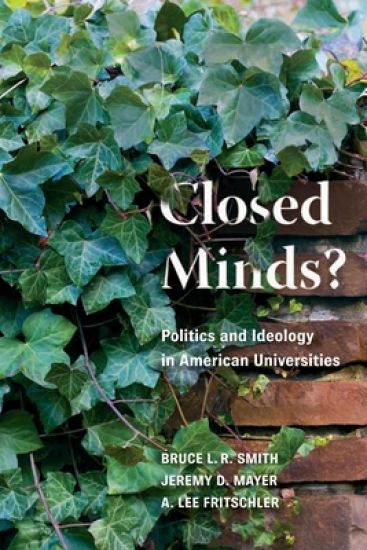
Closed Minds?
Bruce L.R. Smith; Jeremy D. Mayer; A. Lee Fritschler
Brookings Institution
2008
nidottu
Contrary to popular belief, the problem with U.S. higher education is not too much politics but too little. Far from being bastions of liberal bias, American universities have largely withdrawn from the world of politics. So conclude Bruce L. R. Smith, Jeremy Mayer, and Lee Fritschler in this illuminating book. Closed Minds?draws on data from interviews, focus groups, and a new national survey by the authors, as well as their decades of experience in higher education to paint the most comprehensive picture to date of campus political attitudes. It finds that while liberals outnumber conservatives within faculty ranks, even most conservatives believe that ideology has little impact on hiring and promotion. Today's students are somewhat more conservative than their professors, but few complain of political bias in the classroom. Similarly, a Pennsylvania legislative inquiry, which the authors explore as a case study of conservative activism in higher education, found that political bias was ""rare"" in the state's public colleges and universities. Yet this ideological peace on campus has been purchased at a high price. American universities are rarely hospitable to lively discussions of issues of public importance. They largely shun serious political debate, all but ignore what used to be called civics, and take little interest in educating students to be effective citizens. Smith, Mayer, and Fritschler contrast the current climate of disengagement with the original civic mission of American colleges and universities. In concluding, they suggest how universities can reclaim and strengthen their place in the nation's political and civic life.
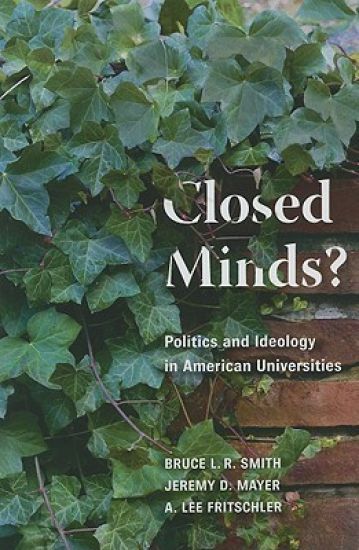
Closed Minds?
A. Lee Fritschler; Bruce L. R. Smith; Jeremy D Mayer
Brookings Institution
2008
sidottu
Contrary to popular belief, the problem with U.S. higher education is not too much politics but too little. Far from being bastions of liberal bias, American universities have largely withdrawn from the world of politics. So conclude Bruce L. R. Smith, Jeremy Mayer, and Lee Fritschler in this illuminating book. Closed Minds? draws on data from interviews, focus groups, and a new national survey by the authors, as well as their decades of experience in higher education to paint the most comprehensive picture to date of campus political attitudes. It finds that while liberals outnumber conservatives within faculty ranks, even most conservatives believe that ideology has little impact on hiring and promotion. Today's students are somewhat more conservative than their professors, but few complain of political bias in the classroom. Similarly, a Pennsylvania legislative inquiry, which the authors explore as a case study of conservative activism in higher education, found that political bias was "rare" in the state's public colleges and universities. Yet this ideological peace on campus has been purchased at a high price. American universities are rarely hospitable to lively discussions of issues of public importance. They largely shun serious political debate, all but ignore what used to be called civics, and take little interest in educating students to be effective citizens. Smith, Mayer, and Fritschler contrast the current climate of disengagement with the original civic mission of American colleges and universities. In concluding, they suggest how universities can reclaim and strengthen their place in the nation's political and civic life.
To find more information about Rowman and Littlefield titles, please visit www.rowmanlittlefield.com.
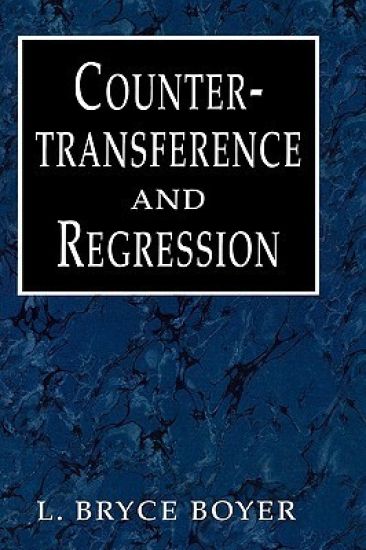
Charting the evolution of Dr Boyer's thinking about treatment of the seriously disordered patient since the publication 15 years ago of "The Regressed Patient", his landmark work on the subject, "Countertransference and Regression" has clinical importance along the theoretical trajectory from Klein and Bion to Ogden. The analyst often fantasizes reciprocally, Boyer maintains, during the patient's reverie toward recovery of early psychological traumata. By tracking their fantasy experiences, the analyst can make metaphorical inferences that - when communicated as interpretations at the right time - enable the patient to mature, together with the patient's introjection of the analyst's supportive optimism.



Memoir of John Veitch is an unchanged, high-quality reprint of the original edition of 1896. Hansebooks is editor of the literature on different topic areas such as research and science, travel and expeditions, cooking and nutrition, medicine, and other genres. As a publisher we focus on the preservation of historical literature. Many works of historical writers and scientists are available today as antiques only. Hansebooks newly publishes these books and contributes to the preservation of literature which has become rare and historical knowledge for the future.

Soldier Boy: The Adventures of Bryce Tyconnel: Book One
Thomas L. Marshall
Createspace Independent Publishing Platform
2013
nidottu
Some years ago, during Sunday Mass at St. Francis, Bryce noticed a fine young man of similar age sitting in a pew, hands raised in supplication as a shaft of sunlight illuminated him. His angelic visage stirred butterflies in Bryce's stomach, and he began to feel a little dizzy. They crossed paths after Mass, in the social hall, and soon enough had bonded. When the boys were not at school or at wrestling practice, they were hunting squirrels in the woods behind Isaac's house, learning how to throw knives, or up in the San Francisco mountains outside Flagstaff, snow skiing. They spent so much time together, glued at the shoulders as Isaac's mother would say, that it displeased his parents. You see, Bryce's working-class family did not meet their social standards. Thus, the story begins. Bryce and Isaac face their first major challenge at the cusp of adulthood with the revelation that they are in love. Their love would be tested early on. Isaac's parents sent him to study pre-law at a Jesuit university in California, and Bryce, not having the means to attend university, joined the army. He trained, received his jump wings and green beret, and was deployed to Iraq, assigned to the British base, Camp Bravo, in Basra, as a sniper. There, he got an upup-closend very personal introduction to warfare, as Isaac was at school, dating. Upon fulfilling his military service commitment, cynical and suffering from PTSD, Bryce returns home. Seeking a way forward, he succeeds in securing a limited business arrangement, and employs Isaac (and wife), launching a free-lance security firm. Homeland Security contracts their firm, Trinity Security, to assassinate a mass murderer in the Philippines. Job completed, they receive a considerable payment, nd begin fleshing out the firm. Bryce and Isaac's personal experiences with homophobia inspire a commitment to equal opportunity hiring. They advertise Trinity Security as an equal opportunity employer, hiring qualified individuals whose backgrounds cry out for justice. Dillon Baxter, a black former Marine who lost an eye at the hands of fellow servicemen, Binta Nguyen, a Vietnam War refugee beleaguered by racism, Casandra Bayard, a psychiatric RN and daughter of a civil rights icon reaches out to a nursing friend, Jeri Kleinfeld, and to others and they find their way to Trinity Security to form the nucleus of the business. Bryce is offered a further business contract of indefinite duration by Colonel Frederick Abernathy, a director at Homeland Security, which leads to additional lucrative assignments. Bryce puts his heart and soul into expanding Trinity Security, building a compound in Calaveras County, which serves both as the business headquarters and, also as a home for the employees whom Bryce treats like family. As Calaveras House begins taking shape, he travels to Ventura to undergo intensive multi-engine, IFR, VSTOL, and seaplane pilot training care of Colonel Abernathy. Bryce and Isaac sustain an affectionate connection, yet neither of them intends to dishonor Isaac's marriage, a problem without a solution, or so they thought. Then tragedy strikes at the end of Soldier Boy that sets the men free to reestablish a loving, intimate bond. Pride of Lions, the second volume in the series, The Adventures of Bryce Tyconnel, is written as a standalone novel. However, it is suggested that for maximum enjoyment, you begin at the beginning, with the 2013 Lambda Literary Foundation Erotic Romance finalist, Soldier Boy.

Le Saint Empire Romain Germanique Et l'Empire Actuel d'Allemagne
Bryce-J
Hachette Livre - BNF
2018
pokkari

Le Saint Empire Romain Germanique Et L'Empire Actuel D'Allemagne (1890)
James Bryce
KESSINGER PUBLISHING, LLC
2009
pokkari

Le Saint Empire Romain Germanique Et l'Empire Actuel d'Allemagne (Éd.1890)
James Bryce
Hachette Livre - BNF
2012
pokkari
Réflexions d'Un Historien Sur La Guerre Dans Le Passé Et Dans l'Avenir
James Bryce
Hachette Livre - BNF
2016
pokkari

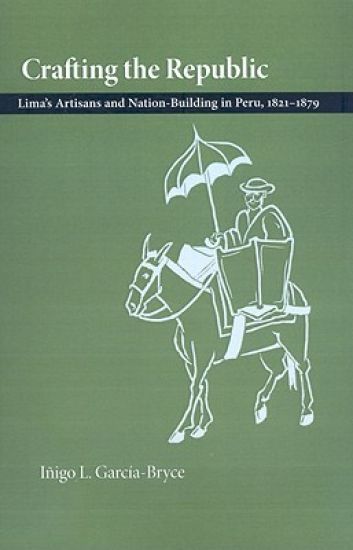
This clearly written, cogently argued assessment of social and political mobilization in nineteenth-century Peru focuses on 5,000 Lima artisans, 70 percent of whom were black, Indian, or mestizo. Garcia-Bryce traces the evolution of these guild artisans into class-conscious workers. His discussion gives special attention to how artisans' declining economic success meant not only a loss of income but undercut gains in social status. It is in this interplay of economics and race that Garcia-Bryce's analysis of the origins of class identity is most revealing.The fate of Lima's artisans, the most numerous of whom were shoemakers, tailors, and carpenters, is discussed against the backdrop of nineteenth-century Liberalism, which sought to align everyone to the 'greater good' of the state while sidestepping demands from special interest groups such as craft workers. Indeed, following the abolition of guilds in 1862, the artisans fully subscribed to the modernization promised by the liberal elites. But when in the 1870s it became clear the state could not deliver on its promises, working-class identity began to emerge, especially fostered by a newly emergent group of artisans, the printers."This is an elegantly written social history that contributes to our understanding of modern Peru and also participates in debates about labor and urban history."--Charles Walker, associate professor of history, University of California, Davis

Rocky Mountain Motor Tariff Bureau, Inc., and Bulk Carrier Conference, Inc., Petitioners, V. United States and Interstate Commerce Commission. U.S. Supreme Court Transcript of Record with Supporting Pleadings
Bryce Rea; Mark L Evans
Gale Ecco, U.S. Supreme Court Records
2011
pokkari


One Thousand Years with Jesus
Matthew Bryce Ervin; Michael L Brown
Resource Publications (CA)
2017
pokkari