Kirjojen hintavertailu. Mukana 11 244 527 kirjaa ja 12 kauppaa.

Kirjahaku

Etsi kirjoja tekijän nimen, kirjan nimen tai ISBN:n perusteella.

1000 tulosta hakusanalla C S Morrison

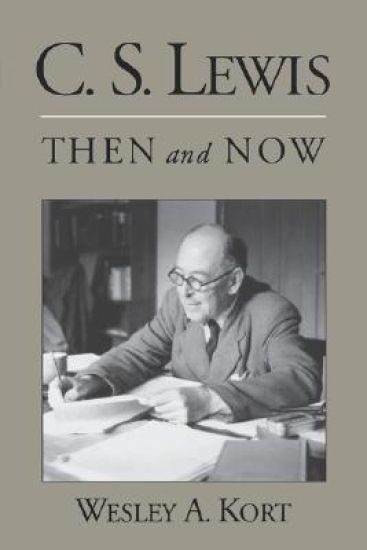
C.S. Lewis Then and Now

C.S. Lewis Then and Now

Wesley A. Kort

Oxford University Press Inc
2004
nidottu
Clive Staples Lewis (1898-1963) was a distinguished scholar of medieval and Renaissance literature who taught at both Oxford University and Cambridge University. After his conversion to Christianity, Lewis began writing Christian apologetic works aimed at a popular audience. It is for these works that Lewis is now best remembered; especially in the U.S., where his books have sold in the millions and continue to be popular today. Perhaps because of this popularity, however, Lewis's Christian writings are generally dismissed by theologians as oversimplified and conceptually flawed. With this book, Wesley A. Kort hopes to rehabilitate Lewis and to demonstrate the value and continuing relevance of his work. Kort not only retrieves Lewis from the now-dated context of his writings, but also wrests him from the hands of evangelicals who have turned his word into gospel and mistaken his attacks on modernity for a retreat from the world. Kort addresses and refutes common prejudices about Lewis and shows that, although Lewis was sharply critical of the materialism and narcissism of modern culture, he nevertheless insisted that only through culture can Christian teachings effectively shape moral character. Lewis's desire for a fruitful, interactive relationship between Christianity and culture sharply distinguishes him from neo-orthodox theology and many contemporary Christian rejections of culture.
C.S. Peirce and the Nested Continua Model of Religious Interpretation
This study develops resources in the work of Charles S. Peirce (1839-1914) for the purposes of contemporary philosophy. It contextualizes Peirce's prevailing influences and provides greater context in relation to the currents of nineteenth-century thought. Dr Gary Slater articulates 'a nested continua model' for theological interpretation, which is indebted to Peirce's creation of 'Existential Graphs', a system of diagrams designed to provide visual representation of the process of human reasoning. He investigates how the model can be applied by looking at recent debates in historiography. He deals respectively with Peter Ochs and Robert C. Neville as contemporary manifestations of Peircean philosophical theology. This work concludes with an assessment of the model's theological implications.
C.S. Lewis

C.S. Lewis

Michelle Ann Abate; Lance Weldy

Red Globe Press
2012
sidottu
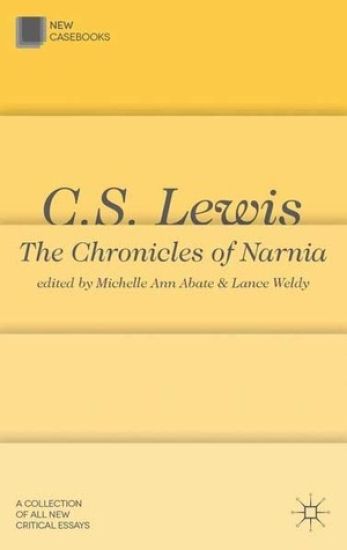
Beginning with the publication of The Lion, the Witch and the Wardrobe in 1950 and concluding with the appearance of The Last Battle in 1956, C. S. Lewis's seven-book series chronicling the adventures of a group of young people in the fictional land of Narnia has become a worldwide classic of children's literature.This stimulating collection of original essays by critics in a wide range of disciplines explores the past place, present status, and future importance of The Chronicles of Narnia. With essays ranging in focus from textual analysis to film and new media adaptations, to implications of war/trauma and race and gender, this cutting-edge New Casebook encourages readers to think about this much-loved series in fresh and exciting ways.
C.S. Lewis

C.S. Lewis

Michelle Ann Abate; Lance Weldy

Red Globe Press
2012
nidottu
Beginning with the publication of The Lion, the Witch and the Wardrobe in 1950 and concluding with the appearance of The Last Battle in 1956, C. S. Lewis's seven-book series chronicling the adventures of a group of young people in the fictional land of Narnia has become a worldwide classic of children's literature.This stimulating collection of original essays by critics in a wide range of disciplines explores the past place, present status, and future importance of The Chronicles of Narnia. With essays ranging in focus from textual analysis to film and new media adaptations, to implications of war/trauma and race and gender, this cutting-edge New Casebook encourages readers to think about this much-loved series in fresh and exciting ways.
C.S. Lewis

C.S. Lewis

S. Loomis

Palgrave Macmillan
2009
sidottu
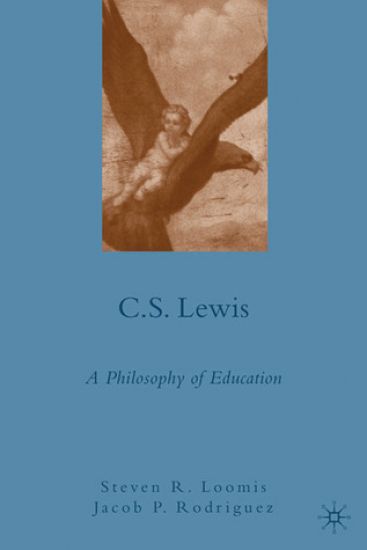
Collaborating with the genius of C.S. Lewis, and particularly his brilliant work The Abolition of Man, the authors offer a multi-facetted, interdisciplinary investigation of perennial questions that impact human development and freedom.
C S Lewis

C S Lewis

Michael White

Abacus
2007
nidottu
In 1997, THE LION, THE WITCH AND THE WARDROBE was voted the most influential book of the twentieth century by teachers, librarians and parents in the UK. The last six US Presidents have all claimed C. S. Lewis to be one of their favourite writers (as have Margaret Thatcher and Tony Blair). He was an acclaimed academic, a renowned Christian thinker and apologist, the author of dozens of non-fiction books and a founder member of The Inklings (with J.R.R. Tolkien). Lewis fought in the First World War trenches and became a famous broadcaster known as 'the apostle to sceptics' during World War II: his newspaper articles and radio programmes were well known. He led what was considered by many of his contemporaries to be a rather bohemian life in Oxford, living with a much older woman, a widow named Janie Moore. Late in life he married an American divorcee who (as documented in the movie SHADOWLANDS) died tragically of cancer four years into their marriage. Michael White's biography is an accessible yet erudite study of a subject who has immense and lasting international appeal.
C.S. Lewis and the Church
C.S. Lewis, himself a layperson in the Church of England, has exercised an unprecedentedly wide influence on the faithful of Anglican, Roman Catholic, Evangelical and other churches, all of whom tend naturally to claim him as one of their own. One of the reasons for this diverse appropriation is the elusiveness of the church in the sense both of his own denomination and of the wider subject of ecclesiology in Lewis writings. The essays contained in this volume critically examine the place, character and role of the Church in Lewis life. The result is a detailed and scintillating picture of the interactions of one of the most distinctive voices in twentieth-century theology with the contemporaneous development of the Church of England, with key concepts in ecclesiology, and with interdenominational matters.
C.S. Lewis and the Church
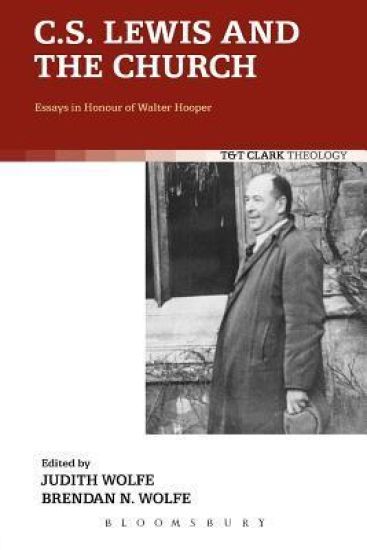
C.S. Lewis, himself a layperson in the Church of England, has exercised an unprecedentedly wide influence on the faithful of Anglican, Roman Catholic, Evangelical and other churches, all of whom tend naturally to claim him as 'one of their own'. One of the reasons for this diverse appropriation is the elusiveness of the church—in the sense both of his own denomination and of the wider subject of ecclesiology—in Lewis' writings. The essays contained in this volume critically examine the place, character and role of the Church in Lewis' life. The result is a detailed and scintillating picture of the interactions of one of the most distinctive voices in twentieth-century theology with the contemporaneous development of the Church of England, with key concepts in ecclesiology, and with interdenominational matters.
C.S. Lewis Called Him Master

C.S. Lewis Called Him Master

Charles Seper

Victor, Broadstreet Johnson Publishing
2007
pokkari
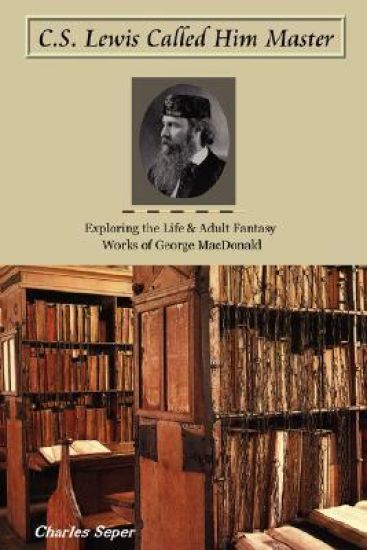
Many readers come to George MacDonald's fantasy literature by way of C.S. Lewis who lauded him as, "my master", or G.K. Chesterton who referred to him as one of the three or four greatest men of the 19th century. However, MacDonald's stories are so complex, so full of twofold meanings, symbolical, metaphorical, and parabolic that many, if not most, readers find themselves perplexed after first coming upon him. "C.S. Lewis Called Him Master" attempts to explain the obscurity behind many of the passages in MacDonald's only two fantasies written for adults, "Lilith", and "Phantastes", while also providing the reader with a brief, but adequate, examination of George MacDonald's life and work. Also contained therein are several rare photos of the MacDonald family, many of them taken by fellow author and family friend Lewis Carroll. "C.S. Lewis Called Him Master" is an essential biography and study aid for students of George MacDonald's most intense works.
C.S. Lewis, Poetry, and the Great War 1914-1918
The life and work of C.S. Lewis after his conversion in 1931 is well known and his reputation shows no signs of diminishing. His earlier years have not been so well studied, particularly between the ages of 16 and 22 when he studied privately and at Oxford, served in the British army, was wounded in France, entered into his affair with Janie Moore, and wrote and published his first book of poems. To correct and augment the limited accounts of this period, Lewis’s life is presented with the general and specific background which makes it more meaningful, particularly as it throws light on his character. The romantic myth of him as a "soldier-poet" is dispelled, largely through an extensive review of the poems in "Spirits in Bondage" and the self-centered life that produced them. A valuable comparison—not to the advantage of Lewis—is drawn with two undoubted soldier-poets, Robert Graves and Siegfried Sassoon. The purpose is not to disparage or belittle Lewis but to show what had to be overcome in his limited and unpleasant early moral character in order to produce the devoted Christian of later years.
C.S. Lewis, Poetry, and the Great War 1914-1918
The life and work of C.S. Lewis after his conversion in 1931 is well known and his reputation shows no signs of diminishing. His earlier years have not been so well studied, particularly between the ages of 16 and 22 when he studied privately and at Oxford, served in the British army, was wounded in France, entered into his affair with Janie Moore, and wrote and published his first book of poems. To correct and augment the limited accounts of this period, Lewis’s life is presented with the general and specific background which makes it more meaningful, particularly as it throws light on his character. The romantic myth of him as a "soldier-poet" is dispelled, largely through an extensive review of the poems in "Spirits in Bondage" and the self-centered life that produced them. A valuable comparison—not to the advantage of Lewis—is drawn with two undoubted soldier-poets, Robert Graves and Siegfried Sassoon. The purpose is not to disparage or belittle Lewis but to show what had to be overcome in his limited and unpleasant early moral character in order to produce the devoted Christian of later years.
C S Lewis

C S Lewis

Colin Duriez

Lion Books
2013
pokkari
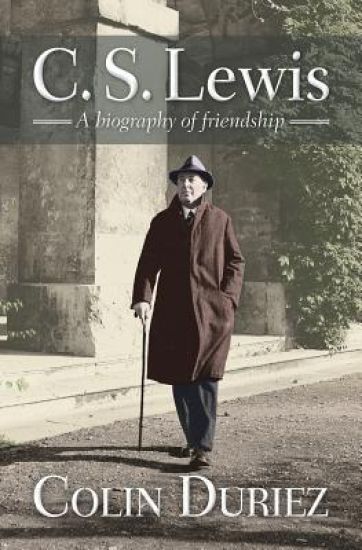
'C.S. Lewis: A Biography of Friendship' is a fascinating and insightful plunge into the life of a literary legend through the friends he keep closest. Through collecting previously unpublished research, interviews and insider knowledge, Colin Duriez has compiled a sparkling biography of C.S. Lewis by studying his closest friends, family and the famous literary society, the Inklings. These key relationships helped to influence his academic thoughts, his personal beliefs and his world-renowned books. So what can we learn from these people? - What kind of impact did his life-long friend, Arthur Greeves, have on the legend? - How influential were J.R.R. Tolkien and the other members of the 'Inklings' on his career and life? - Why did he move in with a single mother twice his age, Janie Moore, and live with her until her death? - Why did he marry so late? - What about his alcoholic and gifted brother? This wonderfully produced book offers a striking and tangible image of the Oxford professor, children's author and out-spoken Christian. It's a joy to read and an ideal gift to Lewis fanatics.
C.S. Lewis

C.S. Lewis

William Gray

Liverpool University Press
1998
pokkari
The works of C.S. Lewis have a wide appeal to a variety of audiences. Lewis is probably most famous for the best-selling The Chronicles of Narnia, although William Nicholson’s Shadowlands will have led many readers to Lewis’s own account of his tragic bereavement in A Grief Observed. However, Shadowlands represents only a small part of Lewis’s controversial life, and omits much that is crucial to an understanding of this fascinating, and in some ways tormented, personality. Lewis enjoyed (to the chagrin of his academic colleagues) a tremendous success as a popular theologian. He was also a successful science fiction writer. And last, but by no means least, he was a brilliant and original academic in the field of English Studies. This book weaves together the very different elements in the complex phenomenon of C.S Lewis, and relates the central concerns of Lewis’s life and work to current thinking about postmodernism, psychoanalysis and the idea of ‘a new Humanism’.
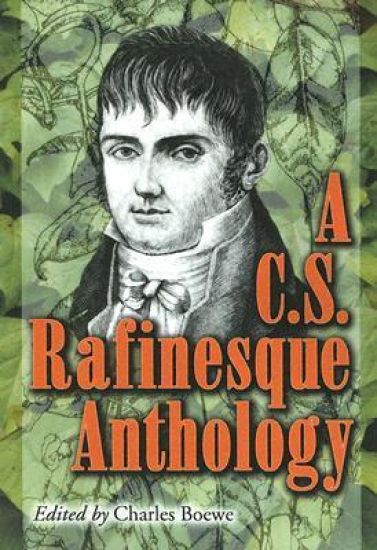
A C.S. Rafinesque Anthology

A C.S. Rafinesque Anthology

C.S. Rafinesque

McFarland Co Inc
2005
pokkari
Among American naturalists, C.S. Rafinesque (1783-1840) is second only to Audubon in the popular interest he sustains. This interest is due in part to his colorful life and provocative personality, but he is also remembered for devising Latin scientific names for more plants than any other naturalist who ever lived--and a great number in the animal kingdom, as well. This passion for nomenclature has kept his name memorable (some would say notorious) among naturalists. Yet his taxonomic writings made up only a part of his extensive oeuvre. Rafinesque's restless mind ranged over areas of inquiry from archaeology to zoology. His published writings in these fields have been difficult to lay hands on and have never been collected. Among such essays now gathered into this volume, two were unavailable until 1949, six were listed only in 1982 and four remained unknown until 2001. The recovery and reprinting of these 12 contributions help to broaden the understanding of his achievements over a lifetime. Arranged in nine sections, 25 topics are offered here (several of which are explored in more than one essay), including "the Origin of Native Americans," "Hebrew Studies," "Utopian Society," "Lightning," "The Milky Way," "Sea Serpents" and "Evolution." Editorial introductions are provided for each topic, and period illustrations--some included in the original Rafinesque publications--enhance the text.
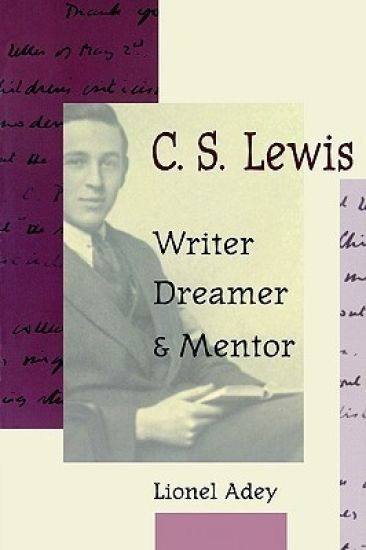
C.S.Lewis

C.S.Lewis

Lionel Adey

William B Eerdmans Publishing Co
1998
pokkari
From early childhood, C. S. Lewis engaged the world around him primarily through the medium of books. He read voraciously, and his own writing covers a broad range of genres. This new study by Lionel Adey is unique in its attempt to trace the development of C. S. Lewis as a maker and reader of books. Adey shows how the two sides of Lewis's personality, the "Dreamer" and the "Mentor," affected his writing in its various modes: literary history and criticism, fiction for adults and for children, poetry, essays and addresses, and letters. Adey also discusses the formative biographical events in Lewis's life and offers an estimate of Lewis's achievement and legacy as a writer.
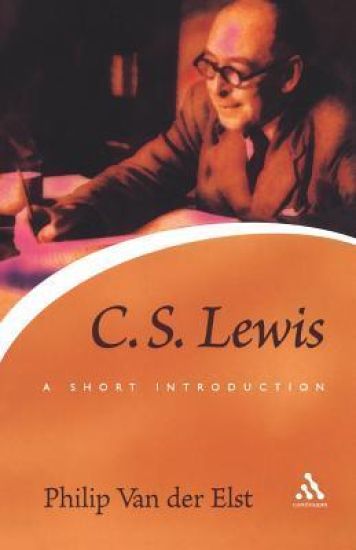
C.S. Lewis: A Short Introduction

C.S. Lewis: A Short Introduction

Philip Vander Elst

Continuum International Publishing Group Ltd.
2005
nidottu
C.S. Lewis (1898-1953) was the most talented and lucid apologist for Christianity that the last century produced. In essays, critical studies, poems, novels and works of autobiography, he turned his formidable literary gifts to the task of re-presenting the Christian view of human destiny to a world bewildered by scientific materialism. He did not shrik the real difficulties that Christian belief encounters, nor did he downplay the cost of faith in an age of self-indulgence. Nevertheless, the radiant happiness and good sense that shine through his prose have never ceased to find new and eager readers, and his books remain part of the canonical wisdom of our culture. Philip Van der Elst surveys the whole of Lewis's vast output and gives a clear and illuminating summary of his stance towards the outstanding questions of our civilisation. Setting the writings within the context of Lewis's own painful life and striking conversion, he shows the enduring importance of a thinker whose vision of modern life was both comprehensive and profoundly optimistic. Van der Elst's book provides a lucid and stimulating introduction; for those already familiar with Lewis's writings it offers a challenging analysis of their meaning and of the continuous thread of argument which runs all through their various themes. An indispensable guide to an indispensable thinker. Philip Van der Elst's previous book, Resisting Leviathan: The Case Against a European State, was published by Claridge Press (Continuum) in 1991.
C.S.Lewis in Context

C.S.Lewis in Context

Doris T. Myers

Kent State University Press
1998
nidottu
Although C. S. Lewis (1898-1963) achieved a level of popularity as a fiction writer, literary scholars have tended to view him as a minor figure working in an insignificant genre-science fiction-or have pigeonholed him as a Christian apologist and moralist. In C. S. Lewis in Context, Doris T. Myers places his work in the literary milieu of his times and the public context of language rather than in the private realm of personal habits or relationships. A central debate early in the 20th century concerned the nature of language: was it primarily objective and empirical, as Charles K. Ogden and Ivor A. Richards argued in The Meaning of Meaning, or essentially metaphorical and impressionistic, the approach of Owen Garfield in Poetic Diction? Lewis espoused the latter theory and integrated it into the purpose and style of his fiction. Myers therefore argues that he was not “out of touch with his time" as some critics claim, but a 20th-century literary figure engaged in the issues of his day. New readings of many of Lewis’s best known works reflect this linguistic approach. For example, Myers analyzes The Pilgrim’s Regress (1933) in terms of a distinction between archetypal and individual metaphor to highlight the work’s strengths and weaknesses. Instead of interpreting That Hideous Strength (1945) conventionally as a defense of Christianity, she reformulates the debate as that of language the facilitator of rule versus language the instrument of tyranny. She also draws a new parallel between the Chronicles of Narnia and Spenser’s Faerie Queen, showing that they are modeled on similar heroic ideals and narrative technique. Out of the Silent Planet (1938), Perelandra (1943), and Till We Have Faces (1956) are discussed in a new light as well. By approaching Lewis’s fiction through the linguistic controversies of his day, Myers not only develops a new framework within which to evaluate his works, but also clarifies his literary contributions. This valuable study will appeal to literary and linguistic scholars as well as to general enthusiasts of Lewis’s fiction.
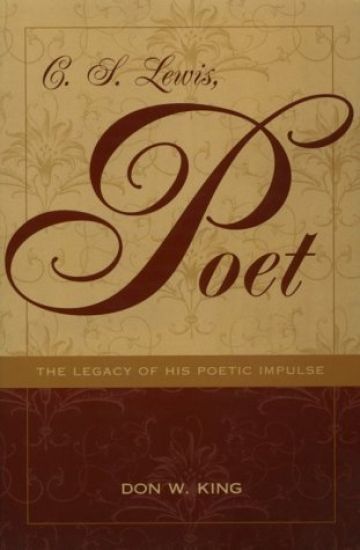
C.S. Lewis, Poet

C.S. Lewis, Poet

Don W. King

Kent State University Press
2001
nidottu
C. S. Lewis is best known as the creator of the fanciful world of Narnia and as a masterful writer of literary criticism and Christian apologetics. But he began his literary career as a poet, under the pseudonym of Clive Hamilton, and only later did he turn to prose writing and find fame. In C. S. Lewis, Poet: The Legacy of His Poetic Impulse Don W. King contends that Lewis's poetic aspirations enhanced his prose and helped make him the master stylist so revered by the literary world. With its careful examination of early diaries and letters, and the inclusion of four of Lewis's previously unpublished narrative poems and eleven of his previously unpublished short poems, this important book explains the man through his writing and considers how Lewis's lifelong devotion to poetry is best realized in his works of prose. Readers and admirers of Lewis will certainly find their understanding of his writing greatly enhanced by this perceptive book.